.
Showing posts with label Prophet Muhammad. Show all posts

Thursday, 14 May 2026

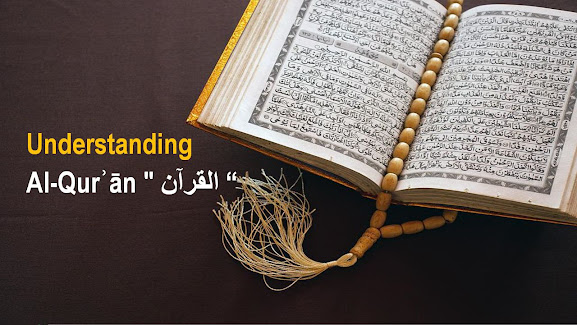
Al-Qurʾān: Overview and Selected verses from: Sürah 47. Muḥammad (The Prophet Muḥammad ﷺ)

There are a number of Surahs / Chapters in Al Qur'an which are named after some of the most revered and important prophets, like Prophets Yūnus (Jonah) - Chapter 10, Hūd (Hud) - Chapter 11, Yūsuf (Joseph) - Chapter 12I, Ibrāhīm (Abraham) - Chapter 14, Muhammad (Muhammad) - Chapter 47 and Nūḥ (Noah) - Chapter 71 - peace be upon them all. These surahs highlight the struggles, teachings, and lessons from the lives of these prophets, serving as timeless reminders of faith, resilience, and devotion to Allah.

We have already published posts on some of these prophets, which can be accessed from our Reference page: Selected verses from Selected Sūrahs of Al-Qurʾān. This post is exclusive to Sürah 47. Muḥammad ﷺ giving the overview and some of the selected verses.

We have already published the Tafseer / Exegesis of the Sürah, which can be accessed from by clicking on the highlighted link:  Sürah 47, Muhammad (The praised one)

Herein under we present an overview entire Sūrah and some of the selected verses for selective reading / references. The following overview includes the context, major themes / subjects and lessons that we can learn from this Sūrah, followed by references to  some of the selected verses already published.

Prophet Muhammad ﷺ 
Although, this surah is named after Prophet Muhammad ﷺ , it is not about his life and critical instructions to him from Allah. However, for the readers of this post who do not know about Prophet Muhammad ﷺ , herein under is a brief about his life and prophethood mission:

Prophet Muhammad ﷺ  was Divinely chosen, as were all previous prophets, with the same mission to show them the right and straight path to their Creator. He is the last of all the previous prophets in a line that includes Abraham, Moses, and Jesus. 
Born in Mecca around 570 CE, he began receiving revelations at about age 40, which were later compiled into the one Book, called Al Qur'an - the last and final scripturas of the total of four Divine Scriptures.
He preached monotheism, justice, charity, mercy, and moral accountability. However, like all prophets, he faced severe persecution at the hands of the affluent polytheists of Makkah and thus migrated to city of Medina in 622 CE — an event known as the Hijrah that marks the beginning of the Islamic calendar. Over the next two decades he became both a spiritual and political leader, uniting much of Arabia. Muslims view him as an example of character, humility, patience, and leadership, while historians regard him as one of the most influential figures in world history.

Surah Muhammad (Surah 47) — Overview
Now coming over to the overview of Surah Muhammad (سورة محمد), the 47th chapter of the Al Qur'an - it has 38 verses with four Rukus, and is part of Juz' 26. Its period of revelation is mostly Medinan. It was revealed during a period when the early Muslim community in Medina was facing military conflict and threats from disbelievers of Makkah and internal hypocrisy while trying to establish itself politically and spiritually.

It may be added here that there are three surahs that were revealed in Medina having a similar framework and are thus so grouped; 
  • Surah Muhammad (the 47th chapter / surah) was revealed just before the Battle of Badr and described how Muslims should fight the disbelievers, the instructions regarding the prisoners of war
  • Surah Al Fath (The 48th chapter): It was revealed in Medina after the Treaty of Hudaybiyyah, and details the circumstances and terms of that treaty along with other general religious advice. The details will be covered in this post.
  • Surah Al Hujurat (the 49th chapter): Its subject-matter is the manners to be observed by the members of the rapidly-growing Muslim community, among themselves and towards its Leader, the Prophet of Allah (peace be upon him). 
  • Main themes:
    • Struggle between faith and disbelief,
    • Sincerity vs hypocrisy,
    • Ethics of war,
    • Obedience to God and the Prophet,
    • Sacrifice and steadfastness,
    • Consequences of rejecting truth.
  • Historical Context
    • After the migration (Hijrah) from Mecca to Medina Prophet Muhammad ﷺ and the Muslims were under military threat from the polytheist Quraysh of Makkah, while at the same time dealing with hypocrites inside Medina, and transitioning from a persecuted minority into an organized community.
  • This surah reflects that stage:
    • Warfare had become unavoidable, 
    • Loyalty and sincerity were being tested, 
    • and the Quran was defining ethical and spiritual principles for the new Muslim society.
Core Themes of the Surah
  • The surah revolves around a contrast between believers who struggle sincerely, and disbelievers/hypocrites who oppose truth or avoid sacrifice.
  • It repeatedly emphasizes: (1) actions matter, (2) faith requires commitment, (3) corruption destroys societies, and (4) worldly power is temporary.
Comprehensive Summary of the Surah
1. Deeds of Believers vs Disbelievers (Verses 1–3)
  • The surah opens by contrasting two groups:
    • Those who reject God and block others from His path: Their deeds become worthless.
    • Those who believe and follow revelation: Their sins are forgiven, and their condition is improved.
    • The Quran frames truth and falsehood as fundamentally different paths.
  • Important verse
    • “Those who believe and do righteous deeds and believe in what has been sent down upon Muhammad… He will remove from them their misdeeds and improve their condition.” (47:2)
    • Main idea: Faith is not only belief — it must produce righteous action.
2. Rules and Ethics of Warfare (Verses 4–6)
  • This is one of the most discussed sections - The surah addresses armed conflict with hostile enemies during war.
  • It discusses: (1) meeting enemies in battle, (2) taking captives, and (3) eventually releasing or ransoming prisoners after war subsides.
  • A key point: The Quran frames fighting here as connected to aggression and persecution faced by the Muslims, not unrestricted violence.
  • Important verse
    • “When you meet those who disbelieve in battle, strike their necks… then bind firmly [the captives]; thereafter either release them graciously or ransom them…” (47:4)
    • This verse is contextualized by classical scholars as relating to battlefield combat during active warfare.
    • The passage also stresses: (1) sacrifice, (2) martyrdom, (3) and divine support for those struggling sincerely.
3. Why Earlier Nations Fell (Verses 10–14)
  • The surah repeatedly asks people to reflect on history. 
  • It points to destroyed civilizations that denied truth, became arrogant, and corrupted themselves.
  • This connects to a recurring Quranic pattern: civilizations collapse morally before they collapse physically.
  • Important verse
    • “Have they not traveled through the land and seen how was the end of those before them?” (47:10)
    • Another major verse contrasts: Paradise, with the condition of those rejecting truth.
      • Verse 15 — Description of Paradise
      • This famous verse describes: rivers of water, milk, wine, and honey.
      • It symbolizes abundance, purity, and eternal reward.
4. The Hypocrites (Verses 16–30)
  • A major section focuses on hypocrisy inside the Muslim community. The surah criticizes people who:
    • Listened to revelation superficially,
    • Avoided sacrifice,
    • Spread discouragement,
    • Feared hardship,
    • or Secretly supported enemies.
  • The Quran portrays hypocrisy as more dangerous than open disbelief because it corrodes the community internally.
  • Important verse
    • “Do they not reflect upon the Quran, or are there locks upon their hearts?” (47:24)
    • This is one of the Quran’s strongest calls toward deep reflection and intellectual engagement with revelation.
5. Obedience and Steadfastness (Verses 31–35)
  • Believers are told that trials are inevitable, sincerity will be tested, and perseverance matters.
  • The surah warns against weakness, surrender, and attachment to worldly comfort.
  • Important verse
    • “So do not weaken and call for peace while you are superior…” (47:35)
    • Classically interpreted in the context of wartime morale and not as a blanket rejection of peace.
  • Published Verses
6. Wealth, Charity, and Detachment (Verses 36–38)
  • The surah ends by reminding believers:
    • worldly life is temporary,
    • greed corrupts,
    • and charity reflects sincerity.
    • Final warning
  • If people abandon God’s cause: they can be replaced by others.
  • Final verse
    • “If you turn away, He will replace you with another people; then they will not be the likes of you.” (47:38)
    • This is both a warning, and a statement that moral responsibility is not tied permanently to any nation or group. That is Some of the Most Important Verses
Main Messages of the Surah
1. Faith requires action - The surah repeatedly joins belief with sacrifice and conduct.
2. Hypocrisy destroys communities - Internal corruption is treated as a major danger.
3. History contains warnings - Past civilizations collapsed due to arrogance and rejection of truth.
4. Conflict must be principled - The surah addresses war realistically but within moral and legal limits.
5. The Quran should be reflected upon deeply - Not merely recited mechanically.

Tone and Style of the Surah
  • Surah Muhammad has a serious and political tone, strong contrasts, warnings, and calls to commitment.
  • Compared with many earlier Meccan surahs, it is more communal and legislative, reflecting the realities of Medina like governance, war, loyalty, and social order. and Relationship to Broader Quranic Themes.
  • The surah connects strongly to broader Quranic themes:
    • Rise and fall of nations,
    • Sincerity vs hypocrisy,
    • Ttemporary nature of worldly power,
    • Accountability,
    • and Moral struggle.
  • It also repeatedly emphasizes that victory and survival are tied not only to military strength, but to moral and spiritual 
In time we will add more selected ayat / verses from this surah.
May Allāh (سبحانه و تعالى‎) help us understand Qur'ān and follow the Sunnah of Prophet Muhammad ﷺ, which is embodiment of commandments of Allah contained in the Qur'ān. May Allah help us to be like the ones He loves and let our lives be lived helping others and not making others' lives miserable or unlivable. May all our wrong doings, whether intentional or unintentional, be forgiven before the angel of death knocks on our door. 
وَمَا عَلَيۡنَاۤ اِلَّا الۡبَلٰغُ الۡمُبِيۡنُ‏ 
(36:17) and our duty is no more than to clearly convey the Message.”
That is Our duty is only to convey to you the message that Allah has entrusted us with. Then it is for you to accept it or reject it. We have not been made responsible for making you accept it forcibly, and if you do not accept it, we shall not be seized in consequence of your disbelief, you will yourselves be answerable for your actions on Day of Resurrection.

May Allah forgive me if my posts ever imply a piety far greater than I possess. I am most in need of guidance.

Reading the Qur'ān should be a daily obligation of a Muslim - Reading it with translation will make it meaningful. But reading its Exegesis / Tafsir will make you understand it fully. It will also help the Muslims to have grasp over social issues and their answers discussed in the Qur'an and other matter related to inter faith so that they are able to discuss issues with non-Muslims with authority based on refences from Qur'an.

Note: When we mention God in our posts, we mean One True God, we call Allah in Islam, with no associates. Allah is the Sole Creator of all things, and that Allah is all-powerful and all-knowing. Allah has no offspring, no race, no gender, no body, and is unaffected by the characteristics of human life.

You may also refer to our exclusive reference pages: 
You may also refer to our Reference Pages  and Understanding Al Qur'an for knowing more about Islam and Qur'ān.
Photo | Reference: | 1 | 2 | 3 | 4 |

An effort has been made to gather explanation / exegesis of the surahs and selected verses of Al-Qurʾān from authentic sources and then present a least possible condensed explanation of the surah. In that the exegesis of the chapters of the Quran is mainly based on the "Tafhim al-Qur'an - The Meaning of the Qur'an" by one of the most enlightened scholars of the Muslim World Sayyid Abul Ala Maududi.  
    In addition, other sources which have been explored and views of other scholars have been incorporated while explaining meaning of a verse. Those desirous of detailed explanations and tafsir (exegesis), may refer to these sites. For expansion of meaning and themes / contextual background help from ChatGPT is also taken.

    Disclaimer: The material for this post has been collected from the references given above. If anyone differs with the material contained in this post, one may consult the references and their authors.  If someone has more material about the subject, he/she is most welcome to share in the comments box to make the post all encompassing.

    If you like Islam: My Ultimate Decision, and to keep yourself updated on all our latest posts to know more about Islam, follow us on Facebook. You may also refer to our Facebook  Group Islam: The Ultimate Truth for more on Islam and Da'wah.

    Please share this page to your friends and family members through Facebook, WhatsApp or any means on social media so that they can also be benefited by it and better understand Islam and the Qur'ān - Insha Allah (Allah Willing) you shall be blessed with the best of both worlds.

    Wednesday, 16 February 2022

    Sunnah of Prophet Muhammad ﷺ - Social Etiquettes - Sneezing in Public

    Sneezing as defined by Medical Encyclopedia is a sudden, forceful, uncontrolled burst of air through the nose and mouth. Sneezing can occur for a variety of reasons that have in common an irritation of the lining (mucous membranes) of the nose or throat. It is rarely a sign of a serious illness.

    This sudden burst of air which is generally moist in substance and if one does not immediately cover one's nose and mouth, its moist vapours can fall on people around and this can be very embarrassing. However, the very act of sneezing is very rewarding for the overall health of the body as the discharge of this burst of air travelling at the speed of about  100 miles per hour is said to containing a million germs that exit of which necessary for cleansing of the body from bacteria and viruses.

    Therefore one should be thankful to Allah for having us rid of harmful germs through act of sneezing. Since Islam is embodiment of etiquettes of various segments of our social life, Prophet Muhammad ﷺ has very specifically mentioned the response of a believer when he sneezes both when alone and in public. There is a Hadith in Sahi Bukhari number 6224 which is about sneezing: 
    The Prophet (ﷺ) said, " If anyone of you sneezes, he should say 'Al-Hamdu lil-lah الْحَمْدُ لِلَّهِ ' (Praise be to Allah), and his (Muslim) brother or companion should say to him, 'Yar-hamuka-l-lah يَرْحَمُكَ اللَّهُ ' (May Allah bestow his Mercy on you). When the latter says 'Yar-hamuka-llah", the former should say, 'Yahdikumul-lah wa Yuslih balakum يَهْدِيكُمُ اللَّهُ وَيُصْلِحُ بَالَكُمْ ‏"‏‏.‏ ' (May Allah give you guidance and improve your condition).

    At another occasion, Abu Huraira has been quoted as saying (Sahi al Bokhari Volume 8, Book 73, Number 242):

    The Prophet said, "Allah likes sneezing and dislikes yawning, so if someone sneezes and then praises Allah, then it is obligatory on every Muslim who heard him, to say: May Allah be merciful to you (Yar-hamuka-l-lah). But as regards yawning, it is from Satan, so one must try one's best to stop it, if one says 'Ha' when yawning, Satan will laugh at him." 

    It has also been narrated by Anas bin Malik (Sahi AL Bokhari Volume 8, Book 73, Number 240):

    Two men sneezed before the Prophet. The Prophet said to one of them, "May Allah bestow His Mercy on you," but he did not say that to the other. On being asked (why), the Prophet said, "That one praised Allah (at the time of sneezing), while the other did not praise Allah." 

    By acting upon these hadiths, we not only thank Allah, but also induce a response by other believers around, for which we pray for them by saying "May Allah give you guidance and improve your condition." Needless to mention here that when one sneezes, he must cover his nose and mouth so that others around are saved of the moist air that follows the sneezing.

    May Allah help us to follow the commands of Allah contained in the Qur'an and sunnah of the Prophet Muhammad ﷺ for not being a good Muslim but also be a useful member of our society. Aameen

    Please refer to our reference page: Sunnah and Hadith of Prophet Muhammad ﷺ to know more about sunnah of Prophet of Allah. You may also refer to our Reference Pages for knowing more about Islam and Qur'ān.

    Disclaimer: The material for this post has been collected from the references as given below. If any one differs with the material contained in this post, one may consult the references and their authors.  If someone has more material about the subject, he/she is most welcome to share in the comments box to make the post all encompassing.
    Photo | References: | 1 | 2 |
    Reading the Qur'ān should be a daily obligation of a Muslim - Reading it with translation will make it meaningful. But reading its Exegesis / Tafsir will make you understand it fully. We should also follow the Sunnah of  Prophet Muhammad ﷺ which augments what is written in the Qur'an.

    If you like Islam: My Ultimate Decision, and to keep yourself updated on all our latest posts to know more about Islam, follow us on Facebook

    Please share this page to your friends and family members through Facebook, WhatsApp or any means on Social Media so that they can also be benefited by it and better understand Islam and the Qur'ān - Insha Allah (Allah Willing) you shall be blessed with the best of both worlds.

    Friday, 30 October 2020

    Why Prophet Muhammad (Peace be upon him) is the most revered of all the Prophets


    For the followers of all Divine faiths, other than Muslims, caricaturing and ridiculing their prophets, holy men and even God is but normal and under the garb of freedom of speech they can draw any caricature or drawing of revered religious personalities is just a matter of fun. But when it comes to Muslims, things are much much more different for them all prophets, and specially the last of all the prophets Muhammad (peace be upon him) is a very serious issue for the revere all prophets of Allah and place them in very high esteem - far above the level of ordinary humans whose caricatures or cartoons does not matter at all.

    The followers of other Divine faiths perhaps do not understand the sensitivity of the issue when someone ridicules their prophet. And specially a prophet who was the last of all the prophets, in fact the seal of the prophethood - meaning by that till the world ends, there would not come any other prophet and that whatever message Allah had intended to convey to the mankind had come to an end. The same message which all the previous prophets, from Adam, Noah, Lot, Abraham, Moses and Christ (peace be upon them all) brought and conveyed to their followers. All Muslims revere all prophets including the few named here and always add "peace be upon him" after their name as a matter of respect. Whereas none of the followers of other faiths even respect their prophets and just call the Abraham, Moses or Christ. Interestingly, there has never been a caricature of their prophets or a drawing thereof.

    But when it comes to Prophet Muhammad (peace be upon him), their rules change in the name of freedom of speech and they come up most horribly figured caricatures depicting Prophet Muhammad (peace be upon him). This naturally intimidates Muslims all over the world and one feel a surge of anger all over the world. 
    Most modern Muslims believe that visual depictions of all the prophets of Islam should be prohibited and are particularly averse to visual representations of Prophet Muhammad (peace be upon him). One concern is that the use of images can encourage idolatry, but also creating an image might lead the artist to claim the ability to create, an ability only ascribed to God.
    The recent incident in France is but one of the many such attempts to defame and debase the very revered personality of Prophet of Islam. And to add fuel to the fire, the French president takes the podium to announce that they would continue with the drawings and caricatures of Prophet Muhammad (peace be upon him). This has also sparked a fury in the people of France which have started targeting Muslims and desecrating masjids in France. I wonder how much damage would be done in action and reactions, but I sincerely believe that one day sanity would prevail and non Muslims will come to terms with Muslims and their sensitivities toward Islam and Prophet Muhammad (peace be upon him).

    And now coming over the question: Why Prophet Muhammad (peace be upon him) is the most revered all the prophets. First of all it goes beyond any doubt that Prophet Muhammad (peace be upon him) is the last prophet sent by God and is The Seal of the Prophets and is the last law-bearing prophet, the apex of man's spiritual evolution. 

    "Muhammad is not the father of any of your men, but (he is) the Messenger of Allah, and the Seal of the Prophets: and Allah has full knowledge of all things." — The Qur'an – Chapter 33 Verse 40

    It is through him that Allah revealed the Qur'an. the last of His Holy Scriptures, the only unadulterated of the all Holy Scriptures revealed before to Prophets Dawood, Musa and Eesa (David, Moses and Jesus, peace be upon them all). For tis very reasons, Muslims all over the world try to live a life as prescribed in the Qur'an and as lived by Prophet Muhammad (peace be upon him). His way of living (Sunnah) and his sayings (Hadith) are central to Muslim belief after Qur'an. 

    Unlike Christ, who is considered as a son of God and even regarded at par with God, Muslims believe that Christ was just a prophet like all prophets before him and like Muhammad who was also given Holy Book, called Injeel in Islam and Bible in English. It is not understood then why Christians should not consider Muhammad as prophet of God and ridicule him in their speeches, writings and drawings. It is something from here that ways of Muslims and followers of other Divine faiths diverge. Despite their hatred to Islam and Prophet Muhammad (peace be upon him, the Muslims give due respect and revere all previous prophets, though they believe that all earlier Holy scriptures have been drastically adulterated by adding human injunctions. Qur'an on the other hand remains unadulterated to this day even after more than fourteen hundred years since its revelation to Prophet Muhammad (peace be upon him) from Allah and brought to him through Angel Jibraeel (Gabriel).

    The Prophet of Allah had to endure extreme hardships at the hands of the non believers of Makkah and there were times that all limits were crossed and he was even manhandled and stoned. Yet under such trying times, Allah came to solace of His dearest prophet and told him that "A painful punishment lies in store for those who cause distress to the Messenger of Allah. (Surah 9. At Tauba verse 61)", and "(Surah Al Hijr 15:95) Surely We suffice to deal with those who scoff at you", "(Surah 33 Al Ahzab :57) Verily those who cause annoyance to Allah and His Messenger, Allah has cursed them in this world and in the Hereafter and has prepared for them a humiliating chastisement."  So even if today, non Muslims are hurting Muslims by ridiculing their revered Prophet, the importance and popularity of Prophet Muhammad (peace be upon him) will not hurt for only those are made a target who become a threat to others in popularity and reverence. 

    Not only Muslims, sensible non Muslims also believe Prophet Muhammad (peace be upon him) to be a model for all mankind. Michael H. Hart in book ‘100 most influential people in the world‘ mentions in his book:
    My choice of Muhammad to lead the list of the world's most influential persons may surprise some readers and may be questioned by others, but he was the only man in history who was supremely successful on both the religious and secular level. Muhammad's role in the development of Islam was far more influential than Jesus' collaboration in the development of Christianity. 
    Prophet Muhammad, Founder of Islam. Important religious, political and military leader who helped to unite Arabia under Islam. Whilst in seclusion in a mountain cave, Muhammad reported receiving a series of revelations from God; these revelations form the verses of the Qur'an, regarded by Muslims as the “Word of God” and around which the Islamic religion is based. From his first experiences in the cave, Muhammad reported receiving messages from God throughout his life. These messages form the Qur'an – which to Muslims is the word of God. Muslims believe Muhammad to be the final prophet in a tradition stretching back to Moses, Abraham and Jesus.
    Barnaby Rogers on is one such writer who has written extensively on Islam and Prophet Muhammad (peace be upon him). His exhaustive "The Prophet Muhammad: A Biography" is wonderful book to be read for it has helped many non Muslims to accept Islam. Herein under are some excerpts from the his book:
    The Prophet Muhammad is a hero for all mankind. In his lifetime he established a new religion, Islam; a new state, the first united Arabia; and a new literary language, the classical Arabic of the Qur'an, for the Qur'an is believed to be the word of God revealed to Muhammad by the angel Gabriel. A generation after his death he would be acknowledged as the founder of a world empire and a new civilization. Any one of these achievements would have been more than enough to permanently establish his genius. To our early twenty-first century minds, what is all the more astonishing is that he also managed to stay true to himself and retained to his last days the humility, courtesy and humanity that he had learned as an orphan shepherd boy in central Arabia. (Source)
    No matter how much the non Muslims ridicule and debase the very personality of Prophet Muhammad (peace be upon him), it goes without sayin that it adds more to his popularity and reverence. And it is for this very reason that more and more non Muslims, socially Christians are entering in to the fold of Islam for they find the ultimate truth in Islam as contained in the Qur'an and as practiced by Prophet Muhammad (peace be upon him) and followed by his followers which are ever on increase every day that passes.

    It is time that sanity should prevail and non Muslims realize that debasing religious personalities, specially when it comes to prophets and in particular Prophet Muhammad (peace be upon him) is affecting peace and religious harmony. They must understand the sensitivities of Muslims toward Prophet Muhammad (peace be upon him) and they should not debase this most revered personality just for fun sake under the grab of freedom of speech.

    Please visit our reference page Understanding Islam: Frequently Asked Q&A to find answers to more of your questions.

    References:  | 1 | 2 | 3 | 4 |
    If you like Islam: My Ultimate Decision, and to keep yourself updated on all our latest posts to know more about Islam, follow us on Facebook

    Please share this page to your friends and family members through Facebook, WhatsApp or any means on Social Media so that they can also be benefited by it and better understand Islam and the Holy Qur'an - Insha Allah (Allah Willing) you shall be blessed with the best of both worlds.

    Sunday, 1 September 2019

    Umar ibn Al Khattab (Al Farooq): Eminent Companion of Prophet Muhammad (peace be upon him)


    Umar ibn Al Khattab was the most powerful caliph of Islam, under whose caliphate, Islam spread to even the most far flung areas of the world, outside the bounds of the Arabian peninsula.  He was an expert Muslim jurist known for his pious and just nature, which earned him the epithet Al-Farooq ("the one who distinguishes (between right and wrong)").

    Umar was born in Makkah to the Banu Adi clan, which was responsible for arbitration among the tribes. His father  Khattab ibn Nufayl, a merchant by trade but was known for his intelligence. Umar was raised by his father as a tough, but literate young man, something uncommon in pre-Islamic Arabia. Umar had a flare for poetry and literature. While still in his teens, Umar learned martial arts, horse riding and wrestling, which made him physically strong, powerful and a renowned wrestler. He was also a gifted orator who succeeded his father as an arbitrator among the tribes.

    When Prophet Muhammad (ﷺ) proclaimed Islam, like many pagans of Makkah, Umar was one of his worst opponent and he very aggressively opposed  Prophet Muhammad (ﷺ) and Islam. So much so that he threatened to kill the Prophet of Allah and resolved to defend the traditional polytheistic religion of Arabia. These were the times when Muslims were not very strong and were very few who were continuously threatens by the non believers.  It was under such trying conditions that Prophet Muhammad (ﷺ) often wished and prayed: 'O, Allah! Strengthen Islam with either Umar or Abu Jahl, whomsoever Thou likest.' 

    It was not until six years later that Umar accepted Islam. It so happened that one day Umar set forth to kill the Prophet of Allah, but was intercepted by one of his friends Nua'im bin Abdullah. When Nua'im came to know of Umar's intentions, he asked him to first inquire about his own house where his sister and her husband had converted to Islam. Umar ran to his sister's house and found them reciting the verses of the Quran He started quarreling with his brother-in-law. His sister intervened and kept on saying "you may kill us but we will not give up Islam". Upon hearing these words, Umar asked his sister to tell them what was something unique in what they were reciting that they were even willing to be killed. His sister then recited verses of Surah Ta Ha: "Verily, I am Allah: there is no God but Me; so serve Me (only), and establish regular prayer for My remembrance (Quran 20:14)." Hearing the verses, Umar wept and declared, "Surely this is the word of Allah." He then went to Prophet Muhammad (ﷺ) with the same sword he intended to kill him with and accepted Islam. 

    From then on, Umar challenged anyone who dared to stop the Muslims from praying, and obviously no one dared to interfere with Umar when he was openly praying. Umar's conversion to Islam granted power to the Muslims and to the Islamic faith in Makkah and from then on Muslims started to offer prayers openly in Masjid al-Haram. Umar from then on was a strong pillar of Prophet Muhammad (ﷺ) and fought many a battle against the armies of non believers and Jews. He was part of the Muslim army that went for the campaign of Tabuk and is reported to have given half of his wealth for the preparation of this expedition. He also participated in the farewell Hajj of Prophet Muhammad (ﷺ) in 632.

    Umar succeeded Abu Bakr as the second caliph of Muslims. In fact Abu Bakr had willed in his life for Umar to succeed him for Umar was well known for his extraordinary will power, intelligence, political astuteness, impartiality, justice and care for poor and underprivileged people. 

    As caliph, Umer's stress was on the well-being of poor. In addition to this Umar, in order to improve his reputation and relation with Banu Hashim, the tribe of Ali, delivered to him his disputed estates in Khyber. In the Ridda wars, thousands of prisoners from rebel and apostate tribes were taken away as slaves during the expeditions. Umar ordered the general amnesty for the prisoners, and their immediate emancipation. This made Umar quite popular among the Bedouin tribes. 

    Under Umar, the sovereign political authority rested with the caliph. He divided the Muslim Empire into provinces and some autonomous territories like in some regions Azerbaijan and Armenia, that had accepted the suzerainty of the caliphate. The provinces were administered by the provincial governors or Wali, the selection of which was made personally by Umar, who was very fastidious in it. Provinces were further divided into districts, there were about 100 districts in the empire. Each district or main city was under the charge of a junior governor or Amir, usually appointed by Umar himself.

    He also instituted the offices of revenue collection, police, treasury, justice and affairs of the military. In some districts there were separate military officers, though the Governor (Wali) was in most cases the Commander-in-chief of the army quartered in the province. Every appointment was made in writing. At the time of appointment an instrument of instructions was issued with a view to regulating the conduct of Governors. On assuming office, the Governor was required to assemble the people in the main mosque, and read the instrument of instructions before them. Umer's general instructions to his officers were:

    Remember, I have not appointed you as commanders and tyrants over the people. I have sent you as leaders instead, so that the people may follow your example. Give the Muslims their rights and do not beat them lest they become abused. Do not praise them unduly, lest they fall into the error of conceit. Do not keep your doors shut in their faces, lest the more powerful of them eat up the weaker ones. And do not behave as if you were superior to them, for that is tyranny over them.

    Under Umar the empire was divided into the following provinces:
    • Arabia divided into two provinces, Mecca and Medina;
    • Iraq divided into two provinces, Basra and Kufa;
    • In the upper reaches of the Tigris and the Euphrates, Jazira was a province;
    • Syria was a province;
    • Palestine divided  into two provinces Iliyā' (إلياء), and Ramlah;
    • Egypt divided into two provinces, Upper Egypt and Lower Egypt;
    • Persia divided into three provinces, Khorasan; Azerbaijan and Faras.
    Umar was known for this intelligence service through which he made his officials accountable. Umar was first to establish a special department for the investigation of complaints against the officers of the State. This department acted as the Administrative court, where the legal proceedings were personally led by Umar. In order to minimize the chances of corruption, Umar made it a point to pay high salaries to the staff.

    Another important aspect of Umer's rule was that he forbade any of his governors and agents from engaging in trade or any sort of business dealings whilst being in a position of power. An agent of Umar by the name of Al Harith ibn K'ab ibn Wahb was once found to have extra money beyond his salary and Umar inquired about his wealth. Al Harith replied that he had some money and he engaged in trade with it. Umar said: By Allah, we did not send you to engage in trade! and he took from him the profits he had made.

    One of the major contribution of Umar was construction of canals to save the people from famine like conditions. Since Medina was at risk of reoccurring famines when crops were lacking and its population was growing rapidly, Umar sought to facilitate the import of grain, beside building of a canal connecting the Nile to the Red Sea and an improvement of port infrastructure in the Arabian coast. When Basra was established during Umer's rule, he started building a nine-mile canal from Tigris to the new city for conveying drinking water and for irrigation.

    He established an advanced administration for the newly conquered lands, including several new ministries and bureaucracies, and ordered a census of all the Muslim territories. During his rule, the garrison cities (amsar) of Basra and Kufa were founded or expanded. In 638, he extended and renovated the Masjid al-Haram (Grand Mosque) in Mecca and Al-Masjid al-Nabawi (Mosque of the Prophet) in Medina.

    Umar also ordered the expulsion to Syria and Iraq of the Christian and Jewish communities of Najran and Khyber. He also permitted Jewish families to resettle in Jerusalem, which had previously been barred from all Jews. He issued orders that these Christians and Jews should be treated well and allotted them the equivalent amount of land in their new settlements. Umar also forbade non-Muslims to reside in the Hejaz for longer than three days. He was first to establish the army as a state department.

    Umar was founder of Fiqh, Islamic jurisprudence.  He is regarded by Sunni Muslims to be one of the greatest Faqih. Umar as a jurist started the process of codifying Islamic Law. In 641, he established Bayt al-mal, a financial institution and started annual allowance for the Muslims. In 638 he decreed that the Islamic calendar should be counted from the year of the Hijra of Muhammad from Mecca to Medina.

    Now please watch the video below and get to know many facets of his personality both as a man and as Caliph of the Muslim Ummah:
    I wonder any Muslim ruler today can be anything even near to what Umar has been. Indeed if there was a Prophet after Muhammad (ﷺ), it would have been Umar ibn al-Khattab. May Allah bless Umar ibn Al Khattab for his services to Islam and the justice system he gave to be followed to establish a regime that Allah has talked about in the Holy Qur'an. Aameen.

    Please refer to our reference page: Eminent Companions of Prophet Muhammad (Peace Be Upon Him)  to know more about other eminent companions.

    You may also refer to our Reference Pages for knowing more about Islam and Quran.

    Photo | References: | 1 | 2 | 3 | 4 | 5 | 6 |
    If you like Islam: My Ultimate Decision, and to keep yourself updated on all our latest posts to know more about Islam, follow us on Facebook

    Please share this page to your friends and family members through Facebook, WhatsApp or any means on Social Media so that they can also be benefited by it and better understand Islam and the Holy Qur'an - Insha Allah (Allah Willing) you shall be blessed with the best of both worlds.

    Tuesday, 18 December 2018

    A Christian convinced of mention of Prophet Muhammad (ﷺ) in Earlier Scriptures Embraces Islam


    Those who seek the truth ultimately find the truth, no matter how much concealed or hidden from the ordinary people by the scholars or the religious clerics. Ordinary non Muslims have no idea how in hidden, referred or in open words, there have been many Divine messages that tell of prophet even after Prophet Jesus (peace be upon him).

    Dr Zakir A Naik is one of the most prominent Muslim scholar of the present times, who has taken upon himself to clear doubts of non Muslims about Islam and the last prophet of Allah, Muhammad (ﷺ). Besides being authority on the Holy Qur'an, he is equally a competent authority on all earlier scriptures including the Old and New Testament, Bible and all holy scriptures of Hindus. He more often than not holds open congregations so that non Muslims could clarify from him any doubts that boggle their mind and clarity these in the light of relevant passages / surahs from the Holy Qur'an in reference to the context of other holy scriptures.

    Recently I came across a video of Dr Zakir in which a Christian woman asked him a question regarding mention of Prophet Muhammad (ﷺ) in the earlier scriptures. The debate is worth listening to in the video given at the end of this post. The later part of the video is so emotional that I being a Muslim myself could not control my emotions and was all tears.

    Scroll down for the video

    However, before you scroll down for the video of a conversation between a Christian woman and Dr Zakir A Naik, let me quote here some mentions that tell of Prophet Muhammad (ﷺ) to come after the Prophet Jesus in some very clear indications. The most glaring evidence of coming of Prophet Muhammad (ﷺ)  by name is mentioned in  the Song of Solomon chapter 5 verse 16:
    "Hikko Mamittakim we kullo Muhammadim Zehdoodeh wa Zehraee Bayna Jerusalem." 
    The above verses in English mean: "His mouth is most sweet: yea, he is altogether lovely. This is my beloved, and this is my friend, O daughters of Jerusalem." In the Hebrew language "im" is added for respect. Similarly im is added after the name of Prophet Muhammad (ﷺ) to make it Muhammadim. In English translation they have even translated the name of Prophet Muhammad (ﷺ) as "altogether lovely", but in the Old Testament in Hebrew, the name of Prophet Muhammad (ﷺ) is yet present.

    In the book of Isaiah It is mentioned in chapter 29 verse 12: 
    "And the book is delivered to him that is not learned, saying, Read this, I pray thee: and he saith, I am not learned."
    And we all know that when the Angel Jibraeel (Gabriel) came to Muhammad and asked him to read (Iqra), Muhammad replied: replied, "I am not learned". This is something already predicted in the Book of Isaiah. [Read first five verses of Surah Al Alaq, Chapter 96]

    There is yet another reference to Prophet Muhammad (ﷺ) when Almighty God speaks to Moses in Book of Deuteronomy chapter 18 verse 18:
    "I will raise them up a Prophet from among their brethren, like unto thee, and I will put my words in his mouth; and he shall speak unto them all that I shall command him."
    Most of the Christians are of the view that this prophecy refers to Jesus (pbuh) because Jesus (pbuh) was like Moses (pbuh), both were prophets and Jews. But it may be pondered that if these two are the only criteria for this prophecy to be fulfilled, then all the Prophets of the Bible who came after Moses (pbuh) such as Solomon, Isaiah, Ezekiel, Daniel, Hosea, Joel, Malachi, John the Baptist, etc. (pbut) will fulfill this prophecy since all were Jews as well as prophets.

    Dr Zakir A Nakik is of the view that from the point of view of Muslims it is Prophet Muhammad (ﷺ) who is like Moses (pbuh):

    • Both had a father and a mother, while Jesus (pbuh) was born miraculously without any male intervention. [Mathew 1:18 and Luke 1:35 and also Al-Qur'an 3:42-47]
    • Both were married and had children. Jesus (pbuh) according to the Bible did not marry nor had children.
    • Both died natural deaths. Jesus (pbuh) has been raised up alive. (4:157-158)

    As for the reference to "brethren", Prophet Muhammad (ﷺ) is from among the brethren of Moses (pbuh) for they are the descendants of Prophet Ismail (Ishmael, son of Prophet Ibraheem, Abraham, peace be upon him) as were the Jews descendants of Isaac (pbuh), the other son of Prophet Ibraheem.

    Since Prophet Muhammad (ﷺ) was unlettered, whatever revelations he received from Almighty God he repeated them verbatim. "I will raise them up a Prophet from among their brethren, like unto thee, and will put my words in his mouth; and he shall speak unto them all that I shall command him." [Deuteronomy 18:18] It may also be noted that both Prophet Muhammad (ﷺ) and Prophet Moses (pbuh) were leader of their people or kings i.e. they could inflict capital punishment, whereas Jesus (pbuh) said, "My kingdom is not of this world." (John 18:36). Prophet Muhammad (ﷺ) and Prophet Moses (pbuh) brought new laws and new regulations for their people. Jesus (pbuh) according to the Bible did not bring   any new laws. (Mathew 5:17-18).

    Both Prophet Muhammad (ﷺ) and Prophet Moses (pbuh) were accepted as Prophets by their people in their lifetime but Jesus (pbuh) was rejected by his people. John chapter 1 verse 11 states, "He came unto his own, but his own received him not."


    Here some authentic references that confirm what has been written in the Holy Quran. In the Holy Qur'an it is mentioned in Chapter 61 Verse 6:
    "And remember, Jesus, the son of Mary, said, 'O Children of Israel! I am the messenger of Allah (sent) to you, confirming the Law (which came) before me and giving glad tidings of a messenger to come after me, whose name shall be Ahmed.' But when he came to them with clear signs, they said, 'This is evident sorcery!' "
    "Ahmed" or "Muhammad" meaning "the one who praises" or "the praised one" is almost the translation of the Greek word Periclytos. In the Gospel of John 14:16, 15:26, and 16:7. The word 'Comforter' is used in the English translation for the Greek word Paracletos which means advocate or a kind friend rather than a comforter.  Paracletos is the warped reading for Periclytos. Jesus (pbuh) actually prophesied Ahmed by name. Even the Greek word Paraclete refers to the Prophet (pbuh) who is a mercy for all creatures.

    Now read the prophecies mentioned in the Old Testament regarding Prophet Muhammad (ﷺ) besides applying to the Jews also hold good for the Christians.
    • John chapter 14 verse 16: "And I will pray the Father, and he shall give you another Comforter, that he may abide with you forever."
    • Gospel of John chapter 15 verse 26: "But when the Comforter is come, whom I will send unto you from the Father, even the Spirit of truth, which  proceedeth from the Father, he shall testify of me."
    • Gospel of John chapter 16 verse 7: "Nevertheless I tell you the truth; it is expedient for you that I go away: for if I go not away, the Comforter will not come unto you; but if I depart, I will send him unto you".
    • Gospel of John chapter 16 verse 12-14"I have yet many things to say unto you, but ye cannot bear them now. Howbeit when he, the Spirit of truth is  come, he will guide you unto all truth: for he shall not speak of himself; but whatsoever he shall hear, that shall he     speak: and he will shew you things to come. He shall glorify me".
    Some Christians say that the Comforter mentioned in these prophecies refers to the Holy Spirit. They fail to realize that the prophecy clearly says that only if Jesus (pbuh) departs will the Comforter come. The Bible states that the Holy Spirit was already present on earth before and during the time of Jesus (pbuh), in the womb of Elizabeth, and again when Jesus (pbuh) was being baptized, etc. Hence this prophecy refers to none other than Prophet Muhammad (ﷺ).

    Lately, however, there is also awakening among Christians to come to realize that Qur'an is book of God and Prophet Muhammad (ﷺ) was a messenger just like the earlier prophets:
    Unfortunately, we have for the most part completely ignored the unity of the Gospel and the Qur’an in terms of their common revelatory source.  However, if we take Jesus’ words seriously, we have the opportunity to receive the Word of God in the Qur’an in accordance with Jesus’ promise that the Spirit of Truth “will take what is mine and declare it to you.”  We can accept the Qur’an as a revelation, not in opposition to the Gospel, but in unity with the Gospel and the will of Jesus.  [7]
    I am sure one day the majority Christians will find much more in the Holy Qur'an that substantiate what has been revealed earlier and that would foster more harmony and love between the people of the Books.

    May Allah bless with the ability to know and acknowledge the truth and come under the fold of Islam - the final and the ultimate Godly religion that was given to through the last of the prophets Muhammad (ﷺ).

    Note: This post is based on information contained in the references given below and are generally based on the interpretations of Holy Scriptures by Dr Zakir A Naik. Should anyone fell differently, he/she may contact the learned scholar for details.

    To read personal accounts of many a celebrity who have reverted to Islam, please visit our page: Embracing Islam: Revert Experiences.


    You may also refer to our Reference Pages for knowing more about Islam and Quran.


    Photo | References: | 1 | 2 | 3 | 4 | 5 | 6 | 7 |
    If you like Islam: My Ultimate Decision, and to keep yourself updated on all our latest posts to know more about Islam, follow us on Facebook

    Please share this page to your friends and family members through Facebook, WhatsApp or any means on Social Media so that they can also be benefited by it and better understand Islam and the Holy Qur'an - Insha Allah (Allah Willing) you shall be blessed with the best of both worlds.

    Saturday, 15 December 2018

    Hadith of the Day: Actions are dependent upon Intentions


    The entire life of the Prophet Muhammad (peace be upon him) is an excellent specimen of how a true Muslim and believer should live his life.  Thus the numerous sayings or Hadiths as these are called of the Prophet of Allah must be correctly understood in reference to the context for their better understanding and implementation in our daily chores and undertakings. 

    One of the very famous Hadith attributed to the Prophet Muhammad (peace be upon him) is:
    "Innamal a’malu binniyat" ~ “Actions are dependent upon their Intentions”
    We must understand that Allah will bless us or otherwise of our actions based on our intentions, for He alone knows what resides inside our thoughts. 

    This [articular saying of the Prophet Muhammad (peace be upon him) is attributed to an event that took place during the migration of Muslims from Makkah to Medina. While most of the Muslims migrated in the name of Allah to preserve His religion from being polluted by the pagans of Makkah, it so happened that one man who when found that the woman he loved was migrating to Medina, he followed suit to be near her and marry her. Thus his intention was not to migrate in the name of Allah but to follow his worldly desires.

    This incident has been narrated on the authority of Omar bin Al-Khattab, who said : I heard the messenger of Allah Sallallahu Alaihi Wasallam say : “Actions are but by intention and every man shall have but that which he intended. Thus he whose migration was for Allah and His messenger, his migration was for Allah and His messenger, and he whose migration was to achieve some worldly benefit or to take some woman in marriage, his migration was for that for which he migrated.” [Bukhari and Muslim]


    It has also been related to the Prophet Muhammad (peace be upon him) as narrated by Imam Muslim,that:
    The first people to be judged on the Day of Judgement was a martyred. Allah asked him, “What have you done in the world?” The martyred replied, “I fought for your religion.” Allah said, “You lie. You fought so that people will call you the dare one.” And you will be judged for your intention accordingly.
    A seeker of knowledge that knowledge and diligent practice read the Qur’an comes before God. Allah asked, “What have you done in the world?” He replied, “I seek knowledge, act upon it, and I read the Qur’an because of Allah.”  Allah said, “You lie. You seek knowledge and you read Qur’an so that others call you religious people.”  
    one with a wealth of rich and famous because his charity come before God.  Allah asked, “What have you done in the world?” He replied, “I spent all the wealth that I have because of You.” God said, “You lie. You do it all so that people call you generous.” 
    Then the Prophet of Allah remarked: “They are the first people to feel the heat of hell fire on the Day of Resurrection.”

    There are many Hadiths that can be quoted on this account, but the purpose here is to highlight the importance of our hidden desires and to reign these as per the dictates of the commandments of the Holy Qur'an and sayings of the Prophet of Allah so that our actions do not go waste and instead of being blessed with for our apparent good and noble actions, we may not displease Allah and suffer His wrath. 

    Watch this beautiful video below on intentions and actions:

    So before embarking upon anything, first set your intentions right and be mindful of the fact that any polluted intention and its consequent action may harm you rather than benefiting from it. Having set your course right, then put in your best effort not to implement your plan but also keep in mind that you may not select a discourse that is illegal or Haram for any such act may ruin your intentions, no matter how good and noble these may be. Then leave it to Allah to make it happen, and whatever is the outcome,rest assured that Allah never wrongs His true believers.

    Photo | References: | 1 | 2 | 3 |
    If you like Islam: My Ultimate Decision, and to keep yourself updated on all our latest posts to know more about Islam, follow us on Facebook

    Please share this page to your friends and family members through Facebook, WhatsApp or any means on Social Media so that they can also be benefited by it and better understand Islam and the Holy Qur'an - Insha Allah (Allah Willing) you shall be blessed with the best of both worlds.

    Tuesday, 27 November 2018

    Muslims in Non Muslim Countries: France


    Muslims first came to France soon after the consolidation of their foothold in Spain in the eighth century. However, they were not successful as in Spain and were defeated at the Battle of Tours in 732, but could hold on for a while in Septimania until 759. The y again ventured into France in the 9th century and were able to gain some success in the Southern France but were again expelled by 975. During the winter of 1543–1544, after the siege of Nice, Toulon was used as an Ottoman naval base under the admiral known as Hayreddin Barbarossa. The Christian population was temporarily evacuated, and Toulon Cathedral was briefly converted into a mosque until the Ottomans left the city. The fall of Muslims in Spain in the 17th century, about fifty thousand Moriscos entered France, according to the research of Henri Lapeyre.

    Muslims have been in France even at the beginning of the 20th century. In 1922, as a sign of recognition from the French Republic to the fallen Muslim tirailleurs, a light infantry which operated ahead of main forces, mainly coming from Algeria, the Great Mosque of Paris was built, which is still serves a major landmark for Muslims in France. 

    In recent times, lot of of Muslim immigrants came to France in the late 1960s and 1970s. Their influx was mainly from the French colonies like Algeria and other North African colonies. Today, Islam is the second-most widely professed religion in France behind Catholic Christianity by number of worshipers. France also has the largest number of Muslims in the Western world primarily due to migration from North African and Middle Eastern countries.

    The majority of Muslims in France belong to the Sunni denomination. While the majority of Muslims in France are of immigrant origin, mainly from Algeria, Morocco and Tunisia, an estimated 100,000 are converts to Islam of indigenous ethnic French background. According to the French polling company IFOP (The Institut français d'opinion publique / French Institute of Public Opinion)  Muslims numbered  between 3 and 4 millions as late as 2016. 

    The great majority of Muslims practice their religion in the French framework of laïcité as religious code of conduct must not infringe the public area. Most of them observe the fast of Ramadan and do not eat pork while many do not drink wine.


    For French Muslims, being religious comes at a cost. The life Muslims have undergone many shades of acceptance, rejection or sidelining in the past two decades. The fallout of 2015 incidents has had a telling effect on how non Muslims view Muslims at large. 

    The publication of caricatures of Prophet Muhammad (peace be upon him) by Charlie Hebdo, a French satirical weekly magazine, successively has left a very bad taste of France about Muslims living in France. The continued government support to the magazine in the name of freedom of expression and speech does not go well with the sentiments of the Muslims which revere the Prophet of Islam above anything else. The stubbornness of the magazine to continue publishing derogatory caricatures had resulted in many sad incidents, which were instigated by one after the other freedom pf expression. Even after the last incident, to add fuel to the fire, the magazine raised printing of copies from three to five million, while the French government granted nearly €1 million to support the magazine. Although majority of Muslims denounce attacks and violence, they also believe that newspapers and media should not take undue advantage to hurt religious sentiments of the Muslims.
    Grande Mosquée - Paris Mosque, France [Photo: Wikimedia Commons / Author: Gryffindor ]

    Muslims are generally discriminated in getting jobs. According to a recent (2018) study (Anti-Muslim Discrimination in France: Evidence from a Field Experiment, conducted by IZA Institute of Labor Economics), French Muslim job seekers are less likely to get a callback for an interview than their Christian counterparts. French Muslims are even less likely to hear back from employers when they are religious. The opposite is true for Christians: being outwardly religious ended up boosting their callback rate. “Consequently, religious Muslims must submit twice as many applications as religious Christians before being called back by the recruiters,” economist Marie-Anne Valfort of Pantheon-Sorbonne University notes in the paper. [3]

    The wearing of Muslim clothing specially by females is the main target of the secular French aspirations. Hijab by Muslim females is generally detested and even not allowed officially and many incidents of expulsions from schools and colleges of Muslim girls have been observed.

    The passage of the controversial national security bill in 2017 has been a source of concern by the Muslims as it significantly expands the state's power to fight terrorism, and generally the Muslims face the fallout of the implementation of the security measures. The bill is even criticized as it poses a historic threat to civil liberties. "This is the first time since the age of de Gaulle that French law will enshrine a provision that will de facto target French minorities," said Patrick Weil, a French constitutional scholar and a leading historian of French immigration. Charles de Gaulle headed a provisional postwar government from 1944 to 1946 and served as president of France from 1959 to 1969. [6]

    Successive governments since the 1980s have tried to create a brand of Islam particular to France, with the dual objective of integrating the country’s Muslim minority and fighting Islamist extremism.  In an interview earlier this year, when the French President Emmanuel Macron said that he plans to “set down markers on the entire way in which Islam is organized in France.” Macron has suggested training imams of Muslim mosques and in keeping with secularism, the training would be in cultural values, not religious texts, in order to foster a generation of imams “made in France.”

    Obviously such ideas are not liked by the Muslims. “The Muslim community is tired and disappointed with a series of ridiculous and humiliating offers,” M’hammed Henniche, the president of the Union of Muslim Associations of Seine-Saint-Denis—a majority-Muslim district northeast of Paris.

    However, despite many such restrictions by the French governments and indifferent attitude by the non Muslim majority, Muslims living in France feel a stronger attachment to their country than they do in much of Europe, despite experiencing high levels of discrimination. Muslims with French citizenship feel very attached to France, with Muslims rating their level of attachment at 4.3 on a scale of five. However, Muslims have also showed lower than average levels of trust in the police. [2]

    You may like to watch a video on the challenges faced by Muslims in France:
    Updated October 2020: The recent spate of unrest in France followed by killing of a school teacher who showed caricatures of Prophet Muhammad (Peace be upon him) is yet another dark day for Muslims in France. The emotional response by the French president Macron has further fueled the fire and the mainstream Christians are presently showing a very hostile attitude towards the Muslims. As per reports, the people of Paris have resorted to showing caricatures by showing videos on large buildings, further provoking and intimidating the sentiments of Muslims. When would sanity prevail in France and when would they would stop playing with the emotions of Muslims in the garb of freedom of speech, is not known. But for now a very volatile situation exists in France.

    Disclaimer: The data for this post has been collected from the references as given below. If any one differs with the material contained in this post, one may consult the references and their authors.  If someone has more material about the subject, he/she is most welcome to share in the comments box to make the post all encompassing.

    To know more about life of Muslims in other non Muslim countries, please visit our page: Islam and Life of Muslims in Non Muslim Countries

    You may also refer to our Reference Pages for knowing more about Islam and Quran.
    Photo French Flag | References: | 1 | 2 | 3 | 4 | 5 | 6
    If you like Islam: My Ultimate Decision, and to keep yourself updated on all our latest posts to know more about Islam, follow us on Facebook

    Please share this page to your friends and family members through Facebook, WhatsApp or any means on Social Media so that they can also be benefited by it and better understand Islam and the Holy Qur'an - Insha Allah (Allah Willing) you shall be blessed with the best of both worlds.

    Twitter Delicious Facebook Digg Stumbleupon Favorites More