.

Wednesday, 6 May 2026

Al Qur’an: The Divine Scripture revealed in localized language (Arabic) yet Universal in message

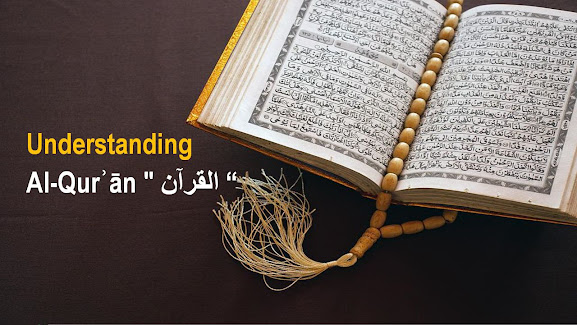
There have been four Divine Scriptures revealed in different languages - yet it is only Al Qur'an, the last of the four scriptures, which is still preserved in the same Arabic language in which it was originally revealed - and preserved till date without any words added or substracted from it. And most importantly, while the it was revealed in a localized language, that is Arabic of its place of revelation, its message remains universal and applicable even today as it was when it was revealed more than fourteen centuries ago.

Today, we share two verses (3rd and 4th) from Surah 43. Az-Zukhruf which talk about its preservation, being part of the Mother Book and its universality despite being revealed in a localized language.

The Verses
“Indeed, We have made it an Arabic Qur’an so that you may understand.
And indeed, it is in the Mother of the Book (Umm al-Kitāb) with Us—exalted and full of wisdom.”

What do these verses mean?
  • 1) “An Arabic Qur’an so that you may understand
    • This emphasizes that the revelation to Prophet Muhammad ﷺ came in the language of his people (Arabic) for clarity and accessibility.
    • The message itself is universal - though the language is localized so the first audience can grasp it directly.
    • This mirrors a broader pattern in revelation: scripture comes in the language of its recipients.
    • Ibn Kathir outlines several key points from these verses regarding the nature and purpose of the Quran:
      • Accessibility Through Language (Verse 3) - The Linguistic Wisdom: Allah revealed the Quran in the Arabic tongue so that the Arabs (to whom it was first addressed) could easily comprehend, reflect upon, and apply its guidance.
      • Addressing Rejection: Regarding the context of the unbelievers' denial, he mentions the commentary of Qatadah on the surrounding verses. If Allah had withdrawn the Quran due to their stubbornness, they would have been doomed. However, out of His infinite mercy, He continued to send the Reminder (Dhikr) so that they might understand and turn back.
    • Sayyid Abul Ala Maududi explains that: The object of taking an oath by the Qur'an is to impress this fact: "We are the Author of this Book and not Muhammad (upon whom be Allah's peace)," and the attribute of the Qur'an chosen for the oath is that it is a "lucid Book". To swear by the Qur'an itself with its this attribute in order to impress that the Qur'an is Divine Word by itself implies this: "O people, this is an open Book before you. Read it intelligently. Its clear and un-ambiguous themes, its language and literary style, its teaching which distinguishes the truth from falsehood, all arc testifying to the fact that none but the Lord of the Universe could be its Author. " Then the sentence: '"We have made it an Arabic Qur'an so that you may understand it." has two meanings:
      • (1) "It is not in any foreign tongue but in your own language; therefore, you can have no difficulty in assessing its value and worth. Had it been in a non-Arabic language, you could have offered the excuse that you could not determine its being Divine, or otherwise, for you did not understand it. But you cannot offer this excuse about this Arabic Qur'an. Its each word is clear to you: its each passage and discourse, both in language and in theme, is plain for you. Now you may see it for yourself whether this could be the word of Muhammad (upon whom be Allah's peace) or of some other Arab."
      • (2) "We have sent this Book in Arabic because We are addressing the Arabs, who can only understand an Arabic Qur'an. The person who disregards this expressly rational ground for sending down the Qur'an in Arabic and regards it as the word of Muhammad (upon whom be Allah's peace) instead of Divine Word only because Muhammad's mother tongue is also Arabic, commits a grave injustice. " (To understand this second meaning, please see Surah Ha-Mim As-Sajdah: 44 and its E.N.'s). 
  • 2) “In the Mother of the Book (Umm al-Kitāb)
    • “Umm al-Kitāb” is commonly understood by classical scholars as:
      • The Preserved Tablet (al-Lawh al-Mahfūẓ)
      • Or the divine source of all revelation with God
    • That means The Qur’an is not a new, disconnected message - It originates from the same eternal divine knowledge as previous scriptures
    • Ibn Kathir explains the verse 4 as Origin in the Preserved Tablet 
      • The "Mother of the Book": Ibn Kathir defines the Umm al-Kitāb (Mother of the Book) as the Al-Lawh Al-Mahfuz (the Preserved Tablet) kept with Allah.
      • The Status of the Quran: He notes that the description "exalted and full of wisdom" means the Quran holds an exalted, supreme status in the heavens and contains deep, irrefutable wisdom, making it superior and clear beyond any confusion or deviation.
    • Sayyid Abul Ala Maududi explains that:
      • "Umm al-Kitab": the "Original Book": the Book from which all the Books sent down to the Prophets have been derived. In Surah AI-Waqi`ah the same thing has been described as Kitab-um-Maknun (the hidden and preserved Book) and in Surah AI-Buruj 22 as Lauh-i Mahfuz (the Preserved Tablet), that is, the Tablet whose writing cannot be effaced, which is secure from every kind of interference. 
      • By saying that the Qur'an is inscribed in Umm al-Kitab, attention has been drawn to an important truth. Different Books had been revealed by Allah in different ages to different Prophets for the guidance of different nations in different languages, but all these Books invited mankind to one and the same Faith: they regarded one and the same thing as the Truth; they presented one and the same criterion of good and evil; they propounded the same principles of morality and civilization; in short, they brought one and the same Din (Religion). The reason was that their source and origin was the same, only words were different; they had the same meaning and theme which is inscribed in a Source Book with Allah, and whenever there was a need, He raised a Prophet and sent down the same meaning and subject-matter clothed in a particular diction according to the environment and occasion. 
      • Had Allah willed to raise the Prophet Muhammad (upon whom be His peace) in another nation instead of the Arabs, He would have sent down the same Qur'an in the language of that nation. In it the meaning and content would have been expressed according to the environments and conditions of the people and land; the words would have been different and the language also different but the teaching and guidance the same basically, and it would be the same Qur'an though not the Arabic Qur'an. This same thing has been expressed in Surah Ash-Shu`ara, thus: "This (Book) has been revealed by the Lord of the worlds. The trustworthy Spirit has come down with it upon your heart so that you may become one of those who are (appointed by God) to warn (the people) in plain Arabic language; and this is also contained in the scriptures of the former peoples." (vv. 192-196). (For explanation, see Ash-Shu`ara: 192196 and the E.N.'s on it). 
  • 3) “Exalted and full of wisdom
    • This highlights:
      • Its lofty status (ʿAliyy)
      • Its perfect wisdom and coherence (Ḥakīm)
      • Connection to the Torah and Gospel
    • The earlier scriptures—Torah and Gospel—fit into this framework in an important way:
      • A shared divine source
      • All revelations come from the same “Umm al-Kitāb”
      • So the Qur’an presents itself as:
      • Confirming earlier revelations (not inventing a new religion)
      • Clarifying and preserving the message
    • This idea appears in other verses too (e.g., Qur’an 5:48). That is Different languages, same message:
      • Torah → revealed in Hebrew (to the Israelites)
      • Gospel → conveyed in the language of Jesus Christ and his people (Aramaic context)
      • Qur’an → revealed in Arabic
    • 43:3 reinforces that language changes, but: The core message (monotheism, guidance, ethics) remains consistent - that is continuity and distinction
    • Sayyid Abul Ala Maududi explains that:
      • This sentence is related both to Kitab-i mubin and to Umm al-Kitab. Thus, it is in praise of both the Qur'an and the Original Book from which the Qur'an has been derived. This praise is meant to impress the fact that if a person does not recognize the true worth of this Book and does not benefit from its wise teachings because of his own folly, it would be his own misfortune. If someone tried to degrade it and found fault with it, it would be his own meanness. It cannot become worthless on account of someone's lack of appreciation of it, and its wisdom cannot be eclipsed by anyone's throwing dust at it. 
      • This is by itself a glorious Book, which stands exalted by its matchless teaching, miraculous eloquence, faultless wisdom and the sublime personality of its great Author. Therefore, none can succeed in minimizing its value and worth. In verse 43:44 Quraish in particular and the Arabs in general have been told that the revelation of the Book for which they are showing such lack of appreciation had provided them a unique opportunity of honor, which if they lost, would subject them to a severe accountability before God.
These verses suggest a balance
Although, all scriptures have been different languages to different people - yet the message remains the same - that is:
  • Continuity (1) Same God, (2) Same ultimate source, and (3) Same essential guidance
  • Distinction The Qur’an is presented as: (1) Final articulation, (2) Preserved form, (3) Universally addressed message
In short, Surah 43:3–4 is saying that while The Qur’an is locally delivered (in Arabic) but universally rooted (in divine knowledge) - it stands in continuity with the Torah and Gospel, not in isolation. That is all are part of a single chain of revelation originating from God. Since no other Divine Scripture is promised, Al Qur'an, the last of the Scriptures would be a beacon of guidance for the entire mankind delivering a universal message. Do we take heed of it?
May Allāh (سبحانه و تعالى‎) help us understand Qur'ān and follow the Sunnah of Prophet Muhammad ﷺ, which is embodiment of commandments of Allah contained in the Qur'ān. May Allah help us to be like the ones He loves and let our lives be lived helping others and not making others' lives miserable or unlivable. May all our wrong doings, whether intentional or unintentional, be forgiven before the angel of death knocks on our door. 
وَمَا عَلَيۡنَاۤ اِلَّا الۡبَلٰغُ الۡمُبِيۡنُ‏ 
(36:17) and our duty is no more than to clearly convey the Message.”
That is Our duty is only to convey to you the message that Allah has entrusted us with. Then it is for you to accept it or reject it. We have not been made responsible for making you accept it forcibly, and if you do not accept it, we shall not be seized in consequence of your disbelief, you will yourselves be answerable for your actions on Day of Resurrection.

May Allah forgive me if my posts ever imply a piety far greater than I possess. I am most in need of guidance.

Reading the Qur'ān should be a daily obligation of a Muslim - Reading it with translation will make it meaningful. But reading its Exegesis / Tafsir will make you understand it fully. It will also help the Muslims to have grasp over social issues and their answers discussed in the Qur'an and other matter related to inter faith so that they are able to discuss issues with non-Muslims with authority based on refences from Qur'an.

Note: When we mention God in our posts, we mean One True God, we call Allah in Islam, with no associates. Allah is the Sole Creator of all things, and that Allah is all-powerful and all-knowing. Allah has no offspring, no race, no gender, no body, and is unaffected by the characteristics of human life.

This verse is part of Selected Verses from Sürah (43) Az-Zukhruf (Ornaments of Gold / luxury)  already published.

You may also refer to our exclusive reference pages: 
You may also refer to our Reference Pages  and Understanding Al Qur'an for knowing more about Islam and Qur'ān.
Photo | Reference: | 1 | 2 | 3 |

An effort has been made to gather explanation / exegesis of the surahs and selected verses of Al-Qurʾān from authentic sources and then present a least possible condensed explanation of the surah. In that the exegesis of the chapters of the Quran is mainly based on the "Tafhim al-Qur'an - The Meaning of the Qur'an" by one of the most enlightened scholars of the Muslim World Sayyid Abul Ala Maududi.  
    In addition, other sources which have been explored and views of other scholars have been incorporated while explaining meaning of a verse. Those desirous of detailed explanations and tafsir (exegesis), may refer to these sites. For expansion of meaning and themes / contextual background help from ChatGPT is also taken.

    Disclaimer: The material for this post has been collected from the references given above. If anyone differs with the material contained in this post, one may consult the references and their authors.  If someone has more material about the subject, he/she is most welcome to share in the comments box to make the post all encompassing.

    If you like Islam: My Ultimate Decision, and to keep yourself updated on all our latest posts to know more about Islam, follow us on Facebook. You may also refer to our Facebook  Group Islam: The Ultimate Truth for more on Islam and Da'wah.

    Please share this page to your friends and family members through Facebook, WhatsApp or any means on social media so that they can also be benefited by it and better understand Islam and the Qur'ān - Insha Allah (Allah Willing) you shall be blessed with the best of both worlds.

    Do not O’ believers ever treat graves as places of guaranteed supernatural intervention - Al Qur'an

    The universe was created by One True God, which though inviable, existed to create, manage and make His subjects accountable. While many believed in His existence, many others did not. God sent countless prophets and messengers to make them follow the path He had defined for His subjects. Yet those who did not believe the prophets and messengers continued to worship their deities, mostly made by their own hands.

    As for those who heeded to the Divine message and accepted the faith of One True God, many out of them still continue to follow the culture and traditions of their forefathers. They not only worshipped their graves, but also make their graves the focal point of enlightenment. They, though, are unaware that they are inadvertently are committing shirk. This is specially true in countries like India where majority of Muslims had reverted to Islam from idol worshipping. Since they found Islam too simple with no fanfare, they devised ways to add a tinge of entertainment while adding supernatural intervention. 

    Let us see what Al Qur'an says about this critical and important deviation from Divine commandments:

    The verse in context
    In Surah Az-Zukhruf, verse 86 says: “Those whom they call upon beside Him have no power of intercession except that one may testify to the Truth by virtue of knowledge.”

    What does this mean?  This verse is addressing a common belief among the pagans of Makkah, and even many reverts: they thought their idols or intermediaries could intercede with Allah on their behalf.

    The Qur’an responds with two key points:
    • No one has independent power to intercede.
    • Any intercession that exists happens only by Allah’s permission, and only for those aligned with truth.
    Thus the core idea behind this verse is: You cannot rely on created beings as spiritual shortcuts to Allah.

    Explanation of the Verse by Eminent Muslim Scholars
    • Ibn Kathir In his Tafsir, Ibn Kathir explains Surah Az-Zukhruf (43:86) by stating that the false deities (idols, angels, or human figures) worshipped alongside Allah have no power to intercede for anyone. Intercession is exclusively permitted for those who bore witness to the truth (Tawhid) consciously and with knowledge. Key Explanations of 43:86 by Ibn Kathir are as under:
      • No Universal Intercession: Those worshipped besides Allah, such as angels or prophets, cannot intercede for the disbelievers who call upon them.
      • Condition of Intercession: Intercession is limited to those who testify that "there is no god except Allah" (Tawhid) with knowledge and sincerity in their hearts.
      • Judgment on False Beliefs: The verse refutes the claim that idols or false gods possess or wordily saints, specially the dead ones, inherent power to intercede for anyone, regardless of their actions.
      • Contextual Usage Examples & Synonyms
        • Usage Example (Disbelief in Intercession): The verse highlights that the polytheists' reliance on idols for intercession is completely futile and baseless, as these idols will have no authority.
        • Usage Example (Submission to Allah): It reinforces that only true followers of monotheism (Tawhid) will benefit from intercession, as stated in the context of the Prophet's message.
        • Power of intercession" relates to the authority to mediate with Allah."
        • Witness to the truth" denotes those who acknowledge Tawhid.
      • Note: For direct viewing of the Tafsir, you can refer to resources like Surah Quran or My Islam. Surah Az-Zukhruf Ayat 86 (43:86 Quran) With Tafsir - My Islam (1) Those whom the people have 
    • Sayyid Abul Ala Maududi, an eminent Muslim scholar from Pakistan had a fair idea of believers visiting graves and trying their supernatural intervention. His explanation of the verse directs at several meanings:
      • (1) Those whom the people have made their deities in the world, will not at all be their intercessors before Allah. Those of them who were wicked, will themselves be presented as culprits there. However, those who had borne witness to the Truth by virtue of knowledge (and not unconsciously) will certainly be able to intercede for others.
      • (2) Those who will be permitted to intercede, will be able to do so only for those who had testified to the Truth consciously (and not heedlessly). They will neither intercede of their own will, nor will have the permission to intercede for anyone who had gone and been led astray from the Truth in the world, or had been affirming the faith in Allah as the only Deity unconsciously as well as serving other deities at the same time
      • (3) If a person says that those whom he has made gods necessarily possess the powers of intercession, and they wield such an influence with Allah that they can have anyone they like forgiven, irrespective of his beliefs and deeds, is totally wrong. No one enjoys such a position with Allah. If the one who claims that another has such powers of intercession, can testify to the truth of this matter by virtue of knowledge, one should have the courage to say so. But if one is not in a position to bear such a testimony, and one is certainly not, it would be sheer folly to invent such a creed on the basis of mere hearsay, or conjecture, and risk one's life hereafter relying only on an imaginary support.
      • Two Important Principles He further explains that Incidentally, this verse also gives two important principles: 
        • First, it shows that bearing a testimony to the truth without knowledge may be reliable in the world, but it is not so before Allah. In the world, whoever affirms the Faith verbally will be regarded as a Muslim and treated as such unless he openly commits an act expressly contradictory to belief. But as before Allah only such a one will be counted as a Muslim, who has uttered Lailaha ill-Allah consciously, with full understanding of what he is denying and what he is affirming according to his best knowledge.
        • Secondly, it gives this principle of the law of evidence that knowledge is a pre-requisite of bearing the evidence. If the bearer of an evidence has no knowledge of the event to which he is bearing evidence, his evidence is meaningless. The same is borne out by a decision given by the Holy Prophet. He said to a witness: "If you saw what happened with your own eyes as you are seeing the sun, then you may bear the witness, otherwise not." (Ahkam al-Qur an by al Jassas).  "
    Applying this to visiting graves or saints
    In many Muslim societies, people visit graves of saints hoping for:
    • Healing
    • رزق (sustenance)
    • Solving personal problems
    We need to distinguish carefully between what is permissible and what is not:
    • ✅ Permissible
      • Visiting graves to remember death
      • Making du‘ā to Allah at a قبرستان (graveyard)
      • Respecting righteous people
    • ❌ Problematic (from Qur’anic perspective)
      • Asking the dead directly: “O saint, give me a child / solve my problem
      • Believing a saint controls outcomes or hears independently everywhere
      • Treating graves as places of guaranteed supernatural intervention
    Any ambiguity about ways of worship or redressing one's grievances is made clear in the 86th verse quoted above. That is Those besides Allah do not possess intercession on their own.

    What do Hadith say?
    Teachings of Muhammad strongly emphasize protecting pure monotheism (Tawḥīd). Some well-known themes from hadith:
    • No exaggeration in honoring graves The Prophet warned not to turn graves into places of worship. He criticized earlier communities who took graves of prophets as worship sites.
    • Du‘ā is directed to Allah alone A famous teaching: “When you ask, ask Allah; when you seek help, seek help from Allah.”
    • Visiting graves is allowed—but for reflection He permitted grave visits to remind people of the Hereafter, not to seek favors from the dead.
    A very pertinent example of asking the pious who are alive rather than those who are not After the Prophet’s death, the companions did not ask the Prophet directly. by visiting his grave. Rather on one occasion when there was drought in Makkah, Umar ibn al-Khattab, the caliph of the time, after the Prophet’s passing, ʿUmar said:

    “O Allah, we used to ask our Prophet to supplicate to You for rain, and You would bless us with rain. Now we ask the uncle of our Prophet to supplicate to You, so grant us rain.”

    Then he asked Abbas ibn Abd al-Muttalib to make duʿā’, and rain came. That clearly shows that after the Prophet’s death, the companions did not ask the Prophet directly. Instead, they asked a living righteous person (al-ʿAbbas) to make duʿā’ for them. This is often cited in discussions about tawassul (seeking means of closeness to God).

    Why this issue persists today
    The verses (43:33–35 and 43:86) connect here:
    • Humans tend to seek tangible intermediaries
    • Cultural traditions mix with religion
    • Emotional needs (grief, desperation) lead people to visible figures (saints, shrines)
    It’s less about rebellion and more about misplaced dependence

    How to avoid “worldly deities” in practice
    Not by harsh judgment, but by re-centering belief:
    • Clarify intention Ask yourself: (1) Am I asking Allah directly?, (2) Or relying on someone/something else as a power?
    • Understand الوسيلة (means) correctly
      • Islam allows Asking a living person to make du‘ā for you
      • But not Assigning divine-like powers to any human
    • Strengthen direct connection with Allah
      • Make du‘ā regularly yourself
      • Learn His names and attributes
      • Build reliance (tawakkul) without intermediaries
    • Educate gently, not confrontationally In many places, practices are cultural. Reform works better through: Teaching,  patience and clarity, not condemnation
    Bottom line
    Verse 43:86 is a direct reminder: No created being—alive or dead—has independent authority to grant your needs or intercede. It redirects all dependence to Allah alone, while still allowing respect for righteous people—but without elevating them to a role that belongs only to God.

    Those who revere saints, specially the dead ones. may find this post difficult to digest as their ancestors have hammered such misguided beliefs in them and they find difficult to find a way out. for such weak believers, the examples of reverts of the western world should be an eye opener who have read and understood Islam and depending and having faith on Allah alone without any intermediaries. Unless the born Muslims read AL Qur'an and its translation from unbiased and neutral resources, they are bound to remain misguided and will continue to commit shirk, though unknowingly and inadvertently.

    May Allāh (سبحانه و تعالى‎) help us understand Qur'ān and follow the Sunnah of Prophet Muhammad ﷺ, which is embodiment of commandments of Allah contained in the Qur'ān. May Allah help us to be like the ones He loves and let our lives be lived helping others and not making others' lives miserable or unlivable. May all our wrong doings, whether intentional or unintentional, be forgiven before the angel of death knocks on our door. 
    وَمَا عَلَيۡنَاۤ اِلَّا الۡبَلٰغُ الۡمُبِيۡنُ‏ 
    (36:17) and our duty is no more than to clearly convey the Message.”
    That is Our duty is only to convey to you the message that Allah has entrusted us with. Then it is for you to accept it or reject it. We have not been made responsible for making you accept it forcibly, and if you do not accept it, we shall not be seized in consequence of your disbelief, you will yourselves be answerable for your actions on Day of Resurrection.

    May Allah forgive me if my posts ever imply a piety far greater than I possess. I am most in need of guidance.

    Reading the Qur'ān should be a daily obligation of a Muslim - Reading it with translation will make it meaningful. But reading its Exegesis / Tafsir will make you understand it fully. It will also help the Muslims to have grasp over social issues and their answers discussed in the Qur'an and other matter related to inter faith so that they are able to discuss issues with non-Muslims with authority based on refences from Qur'an.

    Note: When we mention God in our posts, we mean One True God, we call Allah in Islam, with no associates. Allah is the Sole Creator of all things, and that Allah is all-powerful and all-knowing. Allah has no offspring, no race, no gender, no body, and is unaffected by the characteristics of human life.

    This verse is part of Selected Verses from Sürah (43) Az-Zukhruf (Ornaments of Gold / luxury)  already published.

    You may also refer to our exclusive reference pages: 
    You may also refer to our Reference Pages  and Understanding Al Qur'an for knowing more about Islam and Qur'ān.
    Photo | Reference: | 1 | 2 | 3 |

    An effort has been made to gather explanation / exegesis of the surahs and selected verses of Al-Qurʾān from authentic sources and then present a least possible condensed explanation of the surah. In that the exegesis of the chapters of the Quran is mainly based on the "Tafhim al-Qur'an - The Meaning of the Qur'an" by one of the most enlightened scholars of the Muslim World Sayyid Abul Ala Maududi.  
      In addition, other sources which have been explored and views of other scholars have been incorporated while explaining meaning of a verse. Those desirous of detailed explanations and tafsir (exegesis), may refer to these sites. For expansion of meaning and themes / contextual background help from ChatGPT is also taken.

      Disclaimer: The material for this post has been collected from the references given above. If anyone differs with the material contained in this post, one may consult the references and their authors.  If someone has more material about the subject, he/she is most welcome to share in the comments box to make the post all encompassing. The purpose of this post is to create awareness about who to worship and how to avoid chances of being led to shirk. It does not in any way condemn or refute the beliefs of those who think otherwise.

      If you like Islam: My Ultimate Decision, and to keep yourself updated on all our latest posts to know more about Islam, follow us on Facebook. You may also refer to our Facebook  Group Islam: The Ultimate Truth for more on Islam and Da'wah.

      Please share this page to your friends and family members through Facebook, WhatsApp or any means on social media so that they can also be benefited by it and better understand Islam and the Qur'ān - Insha Allah (Allah Willing) you shall be blessed with the best of both worlds.

      Monday, 4 May 2026

      O’ Men Know! Wealth is not proof of truth or closeness to God - Al Qur'an

      For many, Material success means being of the selected few and thereby their closeness to the Creator. They think God has been very kind to  them that is why they have been chosen from many around them to have wealth and other material means. However, they forget to note that material means are in fact a distraction from one's spiritual life and thus away from the remembrance of their Creator. And when that happens, inadvertently they are failing a test for which God gave them material success to know whether being blessed do they still remember Him or only brag to be the selected few chosen to be close to the God.

      Wealth or material success is in fact not the True Wealth. In fat true wealth is Spiritual: True closeness to God is measured by spiritual riches—such as faith, love, and righteousness—rather than financial status.

      With this premise in the background, we share the verses 43:33–35 from Surah 43. Az-Zukhruf, which together form a very striking passage about wealth, material life, and belief. Let us dwell on the true meaning of these verses and how can we correlate these to our wordily life and how can we pass the Divine test by not be devoured by the love of material success and getting close to our Creator spiritually.

      The Verses 43:33-35
      (43:33) Were it not that people might ˹be tempted to˺ become one community ˹of disbelievers˺, We would have supplied the homes of ˹only˺ those who disbelieve in the Most Compassionate with silver roofs and ˹silver˺ stairways to ascend, (43:34) as well as ˹silver˺ gates and thrones to recline on, (43:35) and ornaments ˹of gold˺. Yet all this is no more than a ˹fleeting˺ enjoyment in this worldly life. ˹But˺ the Hereafter with your Lord is ˹only˺ for those mindful ˹of Him˺.

      Meaning
      These verses describe a hypothetical scenario - If it were not that people might all become one community (inclined toward disbelief), Allah could have given those who reject Him:
      1. houses with silver roofs and stairways,
      2. doors and couches adorned with luxury,
      3. and even golden ornaments.
      But all of this is only the enjoyment of worldly life, while the Hereafter with your Lord is for the righteous.

      What is the point here? The verses are not praising luxury—they are making a powerful argument: If material wealth were a sign of truth, then disbelievers could be given the most wealth of all.

      But that would mislead people into thinking that Rich are always right and the poor are always wrong. That is why Al Qur'an is warning the wealthy in particular and others in general (who are always in quest of more wealth and gain material success) warns that "the love of money is a root of all kinds of evil," and hat greed can drive a person away from God.  

      Remember! Wealth should be viewed as a responsibility and a resource to be managed for God's purposes (such as generosity and caring for others) rather than a reward for a special relationship. 

      This explanation clearly means that wealth is not proof of truth or closeness to God - but a Divine test to gauge the sincerity of the wealthy to their Creator by being humble and charitable and helping the poor from the wealth they have been blessed with. For this very reason, Allah restrains such imbalance to prevent humanity from collectively drifting into false conclusions.

      Explanation by Eminent Muslim Scholars
      • Ibn Khatir
        • Contemptibility of Worldly Wealth: The verses emphasize that gold and silver are insignificant in the sight of Allah, and their abundance is not a reflection of a person's worth or righteousness [35, 33-35].
        • Protection of Faith: Allah withholds excessive wealth from disbelievers to protect believers from being tempted to abandon their faith for material gain [34-35, 33-35].
        • True Reward: The ultimate, lasting prosperity is reserved for the Muttaqun (the pious/righteous) in the Hereafter [34-35, 35].
        • That is were it not that many ignorant people would believe that Our bestowal of wealth is indicative of Our love for the recipient, so they would all come under the banner of disbelief for the sake of wealth – this is what was meant by the words of Ibn ‘Abbaas, al-Hasan, Qataadah, as-Suddi and others – “We would have provided for those who disbelieve in the Most Beneficent (Allah), silver roofs for their houses, and elevators (and stair-ways)” that is, staircases and steps of silver.
      • Sayyid Abul Ala Maududi
        • That is, "This silver and gold whose possession by somebody is the highest blessing and the very climax of good fortune in your sight, is so base and contemptible a thing in the sight of Allah that had there been no danger of all human beings being inclined towards unbelief, He would have made every disbeliever's house of gold and silver. 
        • Since when has the abundance of this worthless commodity become proof of man's nobility and his piety and his spiritual purity? This kind of wealth is even found in the possession of those foul and wicked people whose filthy characters make the whole society stink. And this you have made the criterion of man's greatness of character. " 
      How this reflects today’s world
      These verses feel surprisingly modern because they speak directly to patterns we still see:
      • Wealth is status and a tool to influence
        • Today, billionaires, celebrities, and powerful figures often shape opinions. Platforms amplify voices with money and visibility.
        • People may assume: “They’re successful, so their worldview must be correct.”
        • Through these verses, The Qur’an challenges that assumption directly and negate any such notion that wealth alone is staircase to reach to the Creator.
      • Material success as a measure of worth
        • Modern culture often equates success with luxury homes, expensive lifestyles, and visible status symbols.
        • This is exactly the imagery in the verses: silver roofs, gold, decorated homes.
        • Yet the verses say that all of that is just temporary enjoyment - real success lies in spiritual closeness to Allah, a way that is open to everyone, with disregard to one being rich or poor.
      • The risk of collective misguidance
        • The verse warns that if wealth were overwhelmingly tied to disbelief, society might follow it blindly.
        • Look at trends today:
          • Consumerism shaping identity
          • Social media glorifying luxury lifestyles
          • People chasing appearance over substance
        • It’s not identical, but the principle holds: People are easily influenced by what looks successful.
      • Reframing success
        • The passage redirects attention: Worldly wealth is temporary, while the Real success is moral and spiritual standing (taqwa)
        • This creates a tension with modern values, where long-term spiritual accountability is often ignored.
      In simple terms
      These verses are saying: “Don’t confuse luxury with truth. If material wealth were proof of being right, then it could be given in excess even to those who reject faith—but that would mislead everyone.”

      The Bottom line
      The message is highly relevant today, for:
      • It challenges the idea that visible success equals correctness.
      • It explains why wealth distribution is not a moral indicator.
      • It invites people—believers or not—to question how much they let material success shape their beliefs.
      A deep reflection of these three verses can make a difference in our thinking and approach to the concept of closeness to Allah. For Allah does not want our wealth unless it is taken as a responsibility to help others for the love of Allah, rather than spending wealth as a show off to register personal glory and to show their magnanimity. Let us not deceive Allah for He is well aware of what resides inside us, and certainly we cannot hoodwink our Creator.

      Therefore what the Muslim must do, if he is living a life of hardship in this world and he sees the disbeliever living a life of ease, is not to be sad; rather he should think positively of Allah and understand that Allah, may He be glorified and exalted, is not withholding worldly gain from him because he is insignificant to Him, and He does not give it to the disbeliever as an honour to him; rather it is the other way round. 
      May Allāh (سبحانه و تعالى‎) help us understand Qur'ān and follow the Sunnah of Prophet Muhammad ﷺ, which is embodiment of commandments of Allah contained in the Qur'ān. May Allah help us to be like the ones He loves and let our lives be lived helping others and not making others' lives miserable or unlivable. May all our wrong doings, whether intentional or unintentional, be forgiven before the angel of death knocks on our door. 
      وَمَا عَلَيۡنَاۤ اِلَّا الۡبَلٰغُ الۡمُبِيۡنُ‏ 
      (36:17) and our duty is no more than to clearly convey the Message.”
      That is Our duty is only to convey to you the message that Allah has entrusted us with. Then it is for you to accept it or reject it. We have not been made responsible for making you accept it forcibly, and if you do not accept it, we shall not be seized in consequence of your disbelief, you will yourselves be answerable for your actions on Day of Resurrection.

      May Allah forgive me if my posts ever imply a piety far greater than I possess. I am most in need of guidance.

      Reading the Qur'ān should be a daily obligation of a Muslim - Reading it with translation will make it meaningful. But reading its Exegesis / Tafsir will make you understand it fully. It will also help the Muslims to have grasp over social issues and their answers discussed in the Qur'an and other matter related to inter faith so that they are able to discuss issues with non-Muslims with authority based on refences from Qur'an.

      Note: When we mention God in our posts, we mean One True God, we call Allah in Islam, with no associates. Allah is the Sole Creator of all things, and that Allah is all-powerful and all-knowing. Allah has no offspring, no race, no gender, no body, and is unaffected by the characteristics of human life.

      This verse is part of Selected Verses from Sürah (43) Az-Zukhruf (Ornaments of Gold / luxury)  already published.

      You may also refer to our exclusive reference pages: 
      You may also refer to our Reference Pages  and Understanding Al Qur'an for knowing more about Islam and Qur'ān.
      Photo | Reference: | 1 | 2 | 3 | 4 | 5 |

      An effort has been made to gather explanation / exegesis of the surahs and selected verses of Al-Qurʾān from authentic sources and then present a least possible condensed explanation of the surah. In that the exegesis of the chapters of the Quran is mainly based on the "Tafhim al-Qur'an - The Meaning of the Qur'an" by one of the most enlightened scholars of the Muslim World Sayyid Abul Ala Maududi.  
        In addition, other sources which have been explored and views of other scholars have been incorporated while explaining meaning of a verse. Those desirous of detailed explanations and tafsir (exegesis), may refer to these sites. For expansion of meaning and themes / contextual background help from ChatGPT is also taken.

        Disclaimer: The material for this post has been collected from the references given above. If anyone differs with the material contained in this post, one may consult the references and their authors.  If someone has more material about the subject, he/she is most welcome to share in the comments box to make the post all encompassing.

        If you like Islam: My Ultimate Decision, and to keep yourself updated on all our latest posts to know more about Islam, follow us on Facebook. You may also refer to our Facebook  Group Islam: The Ultimate Truth for more on Islam and Da'wah.

        Please share this page to your friends and family members through Facebook, WhatsApp or any means on social media so that they can also be benefited by it and better understand Islam and the Qur'ān - Insha Allah (Allah Willing) you shall be blessed with the best of both worlds.

        Sunday, 3 May 2026

        A powerful rhetorical question in Al Qur’an: Is Divine guidance a mercy to everyone even if they disbelieve

        Al Qur'an is replete with rhetorical questions mostly posed to the disbelievers when they challenge to word of One True God and show no confidence in the prophets sent to them. The disbelievers  often objected to Al Qur'an revelated to an orphan among them while they, the affluent of Makkah, were left out. In fact what they were saying was that why the Divine guidance not sent to one from them so they could be honoured and respected more.

        In such like environment, Allah poses a counter question as mentioned in the 5th verse of Surah 43. Az Zukhruf (The Golden Ornaments) being shared today along with its explanation and its relevance even to the mindset of all those who still disbelieve in existing of One True God and turn to wordily deities:

        أَفَنَضْرِبُ عَنكُمُ ٱلذِّكْرَ صَفْحًا أَن كُنتُمْ قَوْمًا مُّسْرِفِينَ
        Now, should We despair and stop sending this Admonition to you only because you are a people who have transgressed (all limits)?

        Context of the verse
        Surah Az Zukhruf was revealed in Makkah, where the Prophet Muhammad was facing strong rejection from the Quraysh. Many people were dismissing the Qur’an, mocking it, or refusing to reflect on its message. Thus, verses around 43:5 emphasize:
        • The Qur’an is a Reminder (dhikr) sent for guidance.
        • Even when people persist in wrongdoing or disbelief, Allah does not immediately withdraw guidance.
        • Instead, He continues to send reminders as a form of mercy.
        So the verse is essentially rhetorical: “Should We stop reminding you just because you keep rejecting it?” The implied answer is no—Allah continues to provide guidance despite human stubbornness. Here, Allah is questioning the disbelievers' arrogance. Should He cease revealing the Qur'an simply because they are a people who have exceeded all limits (extravagant/mushrikin) in their disbelief and rebellion? The verse implies that despite their continuous rejection and sins, Allah's mercy allows the guidance (the Quran) to continue reaching them. It is not removed from them just because they choose to act recklessly, even though they deserve for it to be taken away.

        Key meaning
        Allah’s message is not dependent on human acceptance. That is persistent rejection does not mean the truth disappears. Therefore continued revelation is a sign of patience and mercy, not indifference.

        Ibn Kathir explains this verse as a rebuke to the idolaters for rejecting the Qur'an. The verse emphasizes that the Quran is a gracious "Reminder" and guide, and despite the people's stubbornness and excess in disbelief, Allah continues to send it as proof against them rather than abandoning them entirely.

        One of the most enlightened scholars of the Muslim World Sayyid Abul Ala Maududi explains that:
        • In this one sentence the whole history that had taken place since the time the Holy Prophet Muhammad (upon whom be Allah's peace) had proclaimed to be a Prophet till the revelation of these verses during the past few years has been compressed. 
        • This sentence depicts the following picture: A nation has been involved in ignorance, backwardness and depravity for centuries. Suddenly, Allah looks at it with favor. He raises in it an illustrious guide and sends down His own Word to take it out of the darkness of ignorance so that it is aroused from slumber, it gives up superstitions of ignorance and it becomes aware of the truth and adopts the right way of life. 
        • But the ignorant people of the nation and the tribal chiefs turn hostile to the guide, and try their utmost to defeat him and his mission. With the passage of time their hostility and mischief go on increasing; so much so that they make up their mind to kill him. 
        • At this, it is being said: "Should We stop making any efforts to reform you because you are proving to be un-worthy people? Should We withhold sending down this Admonition, and leave you lying in the same wretched state in which you have been lying since centuries ? Do you really think that should be the demand of Our Mercy ? Have you ever considered what doom you would meet when you have turned down the bounty of Allah and persisted in falsehood after the truth has come before you?" 
        Relevance for those who don’t believe
        For someone who does not believe in Allah, the verse carries a few important ideas:
        • Opportunity remains open The message is still being presented—through scripture, reflection, and signs—rather than being withdrawn.
        • Accountability is emphasized If guidance continues to come but is ignored, responsibility increases.
        • It challenges indifference The verse pushes a person to ask: “If this message keeps appearing, is it worth examining more seriously?
        • It reflects divine patience Instead of immediate punishment, there is time given to reconsider, question, and explore.
        In simple terms. the verse is saying: “Even if people reject the truth, should it stop being offered to them? No—the reminder continues.”

        Looking around us, there are lot of people who today, in a life of extreme exposure of information, scientific correlations and jaw dropping realities, who still do not believe in One True God and try to re-mould the Divine scriptures to suit their own likinn -g. Yet despite their rejection and ignorance, the message of One True God remains unchanged, still calling all disbelievers to His very own final religion - Islam.

        It is indeed most remarkable that God, in His glory and sublimity, should care for such people, revealing to them a book which is easy to understand, telling them about what they feel, explaining the inner aspects of their lives, showing them the path delineated by His guidance, relating to them accounts of earlier communities and reminding them of God's law that was in effect during ancient times. Yet they continue to ignore His guidance, turning away from it. Yet, God continues to shower His mercies on them - for God to say that they will be deprived of His care and be ignored for their transgression sounds dreadful. 

        At this, it is being said: " Should We stop making any efforts to reform you because you are proving to be un-worthy people? Should We withhold sending down this Admonition, and leave you lying in the same wretched state in which you have been lying since centuries ? Do you really think that should be the demand of Our Mercy ? Have you ever considered what doom you would meet when you have turned down the bounty of Allah and persisted in falsehood after the truth has come before you? "

        So let those who disbelieve in One True God take heed to Divine kindness and mercy and accept His Divine message which today is much more easy to understand and interpret.

        You may refer to more Selected Verses from Sürah (43) Az-Zukhruf (Ornaments of Gold / luxury)  already published. In time we will add more selected ayat / verses from this surah.
        May Allāh (سبحانه و تعالى‎) help us understand Qur'ān and follow the Sunnah of Prophet Muhammad ﷺ, which is embodiment of commandments of Allah contained in the Qur'ān. May Allah help us to be like the ones He loves and let our lives be lived helping others and not making others' lives miserable or unlivable. May all our wrong doings, whether intentional or unintentional, be forgiven before the angel of death knocks on our door. 
        وَمَا عَلَيۡنَاۤ اِلَّا الۡبَلٰغُ الۡمُبِيۡنُ‏ 
        (36:17) and our duty is no more than to clearly convey the Message.”
        That is Our duty is only to convey to you the message that Allah has entrusted us with. Then it is for you to accept it or reject it. We have not been made responsible for making you accept it forcibly, and if you do not accept it, we shall not be seized in consequence of your disbelief, you will yourselves be answerable for your actions on Day of Resurrection.

        May Allah forgive me if my posts ever imply a piety far greater than I possess. I am most in need of guidance.

        Reading the Qur'ān should be a daily obligation of a Muslim - Reading it with translation will make it meaningful. But reading its Exegesis / Tafsir will make you understand it fully. It will also help the Muslims to have grasp over social issues and their answers discussed in the Qur'an and other matter related to inter faith so that they are able to discuss issues with non-Muslims with authority based on refences from Qur'an.

        Note: When we mention God in our posts, we mean One True God, we call Allah in Islam, with no associates. Allah is the Sole Creator of all things, and that Allah is all-powerful and all-knowing. Allah has no offspring, no race, no gender, no body, and is unaffected by the characteristics of human life.

        You may also refer to our exclusive reference pages: 
        You may also refer to our Reference Pages  and Understanding Al Qur'an for knowing more about Islam and Qur'ān.
        Photo | Reference: | 1 | 2 | 3 | 4 | 5 |

        An effort has been made to gather explanation / exegesis of the surahs and selected verses of Al-Qurʾān from authentic sources and then present a least possible condensed explanation of the surah. In that the exegesis of the chapters of the Quran is mainly based on the "Tafhim al-Qur'an - The Meaning of the Qur'an" by one of the most enlightened scholars of the Muslim World Sayyid Abul Ala Maududi.  
          In addition, other sources which have been explored and views of other scholars have been incorporated while explaining meaning of a verse. Those desirous of detailed explanations and tafsir (exegesis), may refer to these sites. For expansion of meaning and themes / contextual background help from ChatGPT is also taken.

          Disclaimer: The material for this post has been collected from the references given above. If anyone differs with the material contained in this post, one may consult the references and their authors.  If someone has more material about the subject, he/she is most welcome to share in the comments box to make the post all encompassing.

          If you like Islam: My Ultimate Decision, and to keep yourself updated on all our latest posts to know more about Islam, follow us on Facebook. You may also refer to our Facebook  Group Islam: The Ultimate Truth for more on Islam and Da'wah.

          Please share this page to your friends and family members through Facebook, WhatsApp or any means on social media so that they can also be benefited by it and better understand Islam and the Qur'ān - Insha Allah (Allah Willing) you shall be blessed with the best of both worlds.

          Al-Qurʾān: Overview and Selected verses from: Sürah (43) Az-Zukhruf (Ornaments of Gold)

          Wealth is THE biggest weakness of man since time immemorial. Man has been in pursuit of rare metals, diamonds and precious objects. However, god stands out from the list for for most it is the sign one's wealth which helps him lead a luxurious life. That is why believers are warned not to pursue a luxurious life for it distances them from remembrance of Allah and also from one's near and dear ones. the abundance of wealth also induces arrogance and self pride which leads him to occupy corridors of power and rule others, mostly because of the power of wealth.

          In this context, we share today an overview of Surah Az-Zukhruf (43), (Named after the golden ornaments recognized in verse 35 and again in verse 53, this surah dates back to the Second Meccan Period before the Prophet Muhammad’s migration to Medina.), that confronts a very specific mindset: being dazzled by wealth, status, and luxury until truth is ignored. The title “Az-Zukhruf” means “ornaments / glitter / gold adornment”—a perfect symbol for the illusion it critiques. Surah Az-Zukhruf teaches that wealth and luxury are not signs of truth or success but tests that can blind the heart—true honor lies in faith, remembrance of Allah, and prioritizing the Hereafter over the glitter of this world.

          We have already published the Tafseer / Exegesis of the Sürah, which can be accessed from by clicking on the highlighted link:  Surah Az-Zukhruf The Ornaments of Gold. Herein under we will only present an overview entire Sūrah and some of the selected verses for selective reading / references. The following overview includes the context, major themes and subjects and lessons that we can learn from this Sūrah, followed by references to  some of the selected verses already published.

          What the surah is about (core theme)
          At its heart, the surah says: Don’t measure truth by wealth—and don’t let luxury blind your heart. It does this by:
          • Reaffirming revelation as guidance
          • Exposing the logic of the wealthy elites of Makkah
          • Showing how material success can become a veil
          • Reminding that the Hereafter is the real measure of success
          The mindset it challenges (then and now)
          • The mindset it challenges (then and now)
            • As mentioned earlier, this Surah of Al Qur'an confronts the rich and the affluent, those whose wealth gave them status, power and authority. And out of arrogance it has been quoted in this Surah that “Why was this Qur’an not sent down upon a great man from the two cities?” (43:31). That is if at all a prophet was to be chosen from their tribe, why an orphan has been preferred over the rich and powerful.
            • Today’s version
              • “If it were true, powerful people would follow it.”
              • “Success proves correctness.”
              • “Influencers define reality.”
            • The Qur’an rejects this completely.
          • We follow what our society follows
            • “Indeed, we found our forefathers upon a way, and we are following their footsteps.” (43:22) - This is social conformity over truth.
            • Today nothing has changed. Cultural trends and consumer lifestyle norms blind imitation of “successful” people.
          • Wealth as proof of divine favor
            • Those who are gifted, proudly proclaim their closeness to the Divine power, though they hardly believe in it.
            • for them it has been said: “Do they think that what We extend to them of wealth and children is hastening good for them? Rather, they do not perceive.” (related meaning across Qur’anic themes), 
            • Thus, the surah dismantles the idea that possession of wealth approves their status and closeness to the Divine deity - which in fact is nothing but a fallacy.
          The most powerful verse on luxury
          Verses 43:33–35 spell out the illusion of luxury

          “If it were not that people would become one community (in disbelief), We would have made for those who disbelieve… houses with silver roofs, stairways, doors, couches… and gold adornments. But all that is nothing but enjoyment of worldly life, and the Hereafter with your Lord is for the righteous.”

          This is extraordinary. For it means Allah could give unlimited luxury to disbelievers - but that would mislead humanity. Therefore, wealth is not a sign of truth

          Deep lesson: What these verses mean is that luxury is not honor—it is a test. That more wealth one has, more he is put to tests and their apparent comfort many times become more of discomfort and real life tests.

          Another key warning: spiritual blindness
          The following verse, the 36th verse, shows that luxury leads to distraction, which in turn means forgetfulness of Allah that results into spiritual blindness:
           
          Whoever turns away from the remembrance of the Most Merciful, We assign to him a devil who becomes his companion.” (43:36)

          That is a person may feel “successful,  but internally becomes guided by desires and illusions.

          How this relates to the affluent and rich today
          The stage set at the time of this surah has not changed. We have wealth overflowing the vaults, yet nothing seems to change in terms of spiritual hollowness and distance from the One who created us. The surah reads like a direct critique of modern material culture as well:
          • Today’s parallels:
            • Luxury lifestyle obsession (cars, brands, status)
            • Social media glamour culture
            • Success measured by net worth
            • Moral compromise for financial gain
            • Ignoring spirituality due to comfort
          This shows the repetition or the continuation of the same psychology: “If I have more, I must be better.”

          The real danger of luxury (Qur’ānic insight)
          The Qur’an is not ضد (against) wealth itself. The danger is What luxury does to the heart. It:
          • Creates ghaflah (heedlessness)
          • Builds false superiority
          • Weakens dependence on Allah
          • Reduces empathy for the poor
          • Makes آخِرَة (Hereafter) feel distant
          What in the surah being said is that : Luxury doesn’t just decorate life — It can reshape values silently.

          How to protect ourselves from the “lust of luxury”
          The Qur’an and Sunnah give a very practical path:
          • Redefine success
            • “The Hereafter is better and more lasting.” (87:17)
            • Train your mind that Success is closeness to Allah - Not accumulation of wealth and possessions
          • Practice gratitude + detachment
            • Use wealth, but don’t let it own you.
            • Ask regularly: “If this is taken away, am I still at peace?”
          • Give consistently (charity)
            • Nothing breaks the spell of wealth like giving it away.
            • Remember: Zakāh purifies and Sadaqah softens the heart
          • Stay connected to Qur’an
            • 43:36 shows: Distance from remembrance leads to spiritual corruption
            • Therefore cling to recitation of Al Qur'an daily - it will protect from illusions.
          • Remember death and آخِرَة
            • Remember Luxury thrives on forgetting endings.
            • Therefore, regularly reflect on قبر (grave), Accountability and Temporary nature of life
          • Live with simplicity—even if wealthy
            • The Prophet ﷺ lived simply despite access to wealth.
            • Ensure simplicity in life, therefore, for it Protects القلب (heart), builds humility and prevents attachment to wealth and this temporary life.
          One powerful reflection from the surah
          Allah can give luxury to anyone—even those far from Him. So the real question is not: “How much do I have?” - But: “What has it done to my heart?

          Summing up, this surah acts as a reminder to believers that the goodness of God cannot be found within wealth and material power. The surah rejects the claim of disbelievers that prophets, leaders and worthy figures should be marked by their riches and thereby empowers them to refrain from temptations, indulgences and distractions. The surah warns disbelievers who succumb to the “mere enjoyments of this life” (Q43:17) of a terrible and tormented afterlife and it encourages believers to relish not in riches but in their faith and love of God.

          Major Themes / Other references
          some of the major themes and other references of the Surah are as under:
          • Themes
            • Affirmation of the revelation (Verses 2-4 emphasize the Scripture as being “clear” and “truly exalted and authoritative.)
            • Exaltation of God and divinity of the Quran
            • Debate between the believers and disbelievers (In verses 5-19 there occurs a debate between the believers and the disbelievers in which the disbelievers are reprimanded for mocking the revelations and the prophets that have generously been sent down to them by God.)
            • Afterlife (verses 57 through 89 declare the imminent Judgment Day)
            • Angels as daughters (Verses 15-19 discuss the ungrateful disbelievers who consider the angels to be more than just servants of God)
          • Textual notes
            • Jesus as the Word of God (Verses 63-64 additionally discuss Jesus, denouncing the divinity he is given as the son of God and emphasizing him as a special servant who was born by the miraculous word of God)
            • Source of Scripture
            • You and Your Spouses (Surah 43 explicitly states, "Enter Paradise, you and your spouses: you will be filled with joy)
            • The Most Merciful (The divine names Allah and Ar-Rahman ('the Most-merciful) occur eight times throughout this surah)
          • Biblical references
            • Prophet Abraham, peace be upon him (Verses 20-80 of this surah introduce Abraham by way of a narrative of salvation history- a narrative that presents “excerpts of messages from the ‘book’ which, in turn, is clearly understood to be a corpus of literature apart from the rest of the known stories currently available through known tradition.")
            • Prophet Moses, peace be upon him (46-80 which introduce Moses as a messenger and servant of God bearing no “gold bracelets”)
          Now let us share herein some of the selected ayat / verses from this surah already shared:
          In time we will add more selected ayat / verses from this surah.
          May Allāh (سبحانه و تعالى‎) help us understand Qur'ān and follow the Sunnah of Prophet Muhammad ﷺ, which is embodiment of commandments of Allah contained in the Qur'ān. May Allah help us to be like the ones He loves and let our lives be lived helping others and not making others' lives miserable or unlivable. May all our wrong doings, whether intentional or unintentional, be forgiven before the angel of death knocks on our door. 
          وَمَا عَلَيۡنَاۤ اِلَّا الۡبَلٰغُ الۡمُبِيۡنُ‏ 
          (36:17) and our duty is no more than to clearly convey the Message.”
          That is Our duty is only to convey to you the message that Allah has entrusted us with. Then it is for you to accept it or reject it. We have not been made responsible for making you accept it forcibly, and if you do not accept it, we shall not be seized in consequence of your disbelief, you will yourselves be answerable for your actions on Day of Resurrection.

          May Allah forgive me if my posts ever imply a piety far greater than I possess. I am most in need of guidance.

          Reading the Qur'ān should be a daily obligation of a Muslim - Reading it with translation will make it meaningful. But reading its Exegesis / Tafsir will make you understand it fully. It will also help the Muslims to have grasp over social issues and their answers discussed in the Qur'an and other matter related to inter faith so that they are able to discuss issues with non-Muslims with authority based on refences from Qur'an.

          Note: When we mention God in our posts, we mean One True God, we call Allah in Islam, with no associates. Allah is the Sole Creator of all things, and that Allah is all-powerful and all-knowing. Allah has no offspring, no race, no gender, no body, and is unaffected by the characteristics of human life.

          You may also refer to our exclusive reference pages: 
          You may also refer to our Reference Pages  and Understanding Al Qur'an for knowing more about Islam and Qur'ān.
          Photo | Reference: | 1 | 2 | 3 |

          An effort has been made to gather explanation / exegesis of the surahs and selected verses of Al-Qurʾān from authentic sources and then present a least possible condensed explanation of the surah. In that the exegesis of the chapters of the Quran is mainly based on the "Tafhim al-Qur'an - The Meaning of the Qur'an" by one of the most enlightened scholars of the Muslim World Sayyid Abul Ala Maududi.  
            In addition, other sources which have been explored and views of other scholars have been incorporated while explaining meaning of a verse. Those desirous of detailed explanations and tafsir (exegesis), may refer to these sites. For expansion of meaning and themes / contextual background help from ChatGPT is also taken.

            Disclaimer: The material for this post has been collected from the references given above. If anyone differs with the material contained in this post, one may consult the references and their authors.  If someone has more material about the subject, he/she is most welcome to share in the comments box to make the post all encompassing.

            If you like Islam: My Ultimate Decision, and to keep yourself updated on all our latest posts to know more about Islam, follow us on Facebook. You may also refer to our Facebook  Group Islam: The Ultimate Truth for more on Islam and Da'wah.

            Please share this page to your friends and family members through Facebook, WhatsApp or any means on social media so that they can also be benefited by it and better understand Islam and the Qur'ān - Insha Allah (Allah Willing) you shall be blessed with the best of both worlds.

            Twitter Delicious Facebook Digg Stumbleupon Favorites More