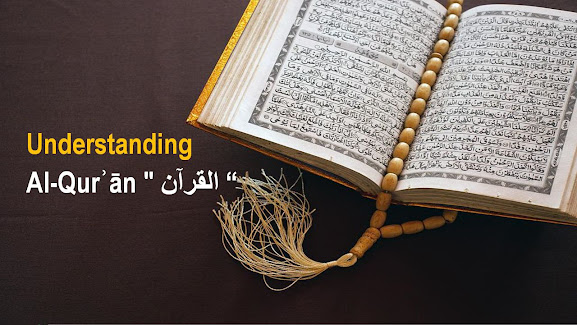


Sūrat Yūsuf is the twelfth surah with 111 ayahs with two rukus, part of the 12th-13th Juzʼ of the Holy Qur'an.
The first part of the segmented posts on the exegesis of Surah Yusuf contained verses 1-22 which dealt with the dreaming of the Prophet Yusuf and its interpretation by his father Prophet Ya'yah (Jacob, peace be upon them both). the plot of his ten brothers and throwing him in a well by deceit and Yusuf's retrieval by a passing convoy and his selling away to a rich merchant. The merchant, sensing the little boy to be from a good family, took him home and raised him like his own son or as a trusted slave.
When the Prophet Yusuf grew up, he grew up to be a handsome young man with captivating beauty. Prophet Muhammad (ﷺ) is believed to have once said, "One half of all the beauty God apportioned for mankind went to Prophet Yusuf and his mother; the other one half went to the rest of mankind."
This beauty of Prophet Yusuf attracted the merchant's lustful wife, Zuleikha, which put the Prophet Yusuf in an awkward situation despite the fact that he remained steadfast to her advances. This second part of the Surah Yusuf (verses 23-35) explains in detail this particular incident.
Let us now read the translation and exegesis in English of the second part (For Arabic Text, please refer to the references given below):
بِسْمِ اللهِ الرَّحْمٰنِ الرَّحِيْمِ
"In the name of Allah, the Most Gracious, the Most Merciful"
وَرَٰوَدَتْهُ ٱلَّتِى هُوَ فِى بَيْتِهَا عَن نَّفْسِهِۦ وَغَلَّقَتِ ٱلْأَبْوَٰبَ وَقَالَتْ هَيْتَ لَكَ قَالَ مَعَاذَ ٱللَّهِ إِنَّهُۥ رَبِّىٓ أَحْسَنَ مَثْوَاىَ إِنَّهُۥ لَا يُفْلِحُ ٱلظَّٰلِمُونَ
(23) And it so happened that the lady in whose house Yusuf was living, sought to tempt him to herself, and one day bolting the doors she said: "Come on now!" Yusuf answered: "May Allah grant me refuge! My Lord has provided an honourable abode for me (so how can I do something so evil)? Such wrong-doers never prosper. (24) And she advanced towards him, and had Yusuf not perceived a sign from his Lord he too would have advanced towards her. Thus was Yusuf shown a sign from his Lord that We might avert from him all evil and indecency, for indeed he was one of Our chosen servants.“Evidence of his Lord (verse 24: Yusuf not perceived a sign from his Lord)” means inspiration from Allah to rouse his conscience to the fact that it was not worthy of him to yield to the temptation by the woman. As regards to the question, “What was that evidence”, it has been stated in the preceding verse, that is: My Lord has shown much kindness towards me. Should I, then, misbehave like this? Such workers of iniquity never fare well. This was the divine evidence that saved Prophet Yusuf in the prime of youth from that great temptation. The significance of “And he would have desired her, if it had not been that he saw the evidence (sign) of his Lord” is this: “Even a Prophet like Yusuf could not have been able to save himself from sin, had not Allah guided him rightly with His evidence. Incidentally, this verse makes plain the nature of the immunity of Prophets from sin. It does not mean that a Prophet is infallible and incapable of committing any error, offense or sin or doing wrong or making a mistake. What it means is this: though a Prophet possesses passions, emotions, and carnal desires like other human beings, and is capable of committing a sin, he is so virtuous and God fearing that he never deliberately cherishes any evil intentions, for he is endowed with such great arguments from his Lord as do not allow the lusts of the flesh overpower the voice of his conscience. And if ever he succumbs inadvertently to any of the human weaknesses, Allah at once sends a revelation to him to set him on the right path. For the consequences of his error do not remain confined to his own person but react on the whole mankind, for even his slightest error might mislead the world to the most horrible sins.
This incident took place in the life of Yusuf because this was essential for his spiritual training: "It was Our will to pass him through this hard test so that he should become immune from indecency and immodesty, for he would have to apply all his powers of piety to withstand such a great temptation, and thus become really so strong as not to yield to such things in future as well." The importance and the need of such a hard training becomes quite obvious, if we keep in view the moral conditions of the Egyptian society of that period. We can have a glimpse of this from (Ayats 30-32). It appears that the women in general and those of high society in particular, enjoyed almost the same sexual freedom as is rampant today in the civilized West and in the Westernized East. Allah made arrangements for the special training of Prophet Yusuf in the house of his master because he had to perform his divine mission in a perverted society, and that too as a ruler and not as a common man. It is thus obvious from the behavior of those women of high rank, who did not feel any shame nor modesty in openly admiring the beauty of the young slave and from that of the lady of the house who was not ashamed of confessing openly that she did her best to tempt him and would continue to do so, that they would have done all they could to allure the young handsome ruler. Thus Allah not only made Prophet Yusuf strong enough to resist such temptations in future by passing him through the hard test, but also filled the ladies with despair of gaining any success in this matter.
The next few verses explain the event when the woman chased Yusuf and in trying to get hold of him, she pulled his shirt from behind which tore away. While this drama was on, the man of the house along with a visitor walked in and saw Yusuf with his shirt torn from the back. Seeing Yusuf in an awkward situation, the woman straightaway blamed Yusuf for making advances on her and demanded her husband to imprison him.
(25) Then both of them rushed to the door, each seeking to get ahead of the other, and she tore Yusuf's shirt from behind. Then both of them found the husband of the lady at the door. Seeing him she said: "What should be the punishment of him who has foul designs on your wife except that he should be imprisoned or subjected to painful chastisement?"When her husband heard the story of the incident, he made this proposal: As each of them accuses the other and there is no eye witness of what happened between the two, the matter should be decided by the help of the circumstantial evidence, by examining the condition of Yusuf’s shirt. Obviously this was a very reasonable way of deciding the matter, and there was, therefore, no need to resort to a miracle. According to some traditions this witness was an infant, lying in the cradle, whom Allah had given the power of speech for giving this evidence. As this story is not supported by any authority, there is no reason why the obvious, plain and reasonable thing should not be accepted that the witness was a wise and experienced member of the family of the wife, instead of having resort to a miracle based on an unauthentic tradition.
(26) Yusuf said: "It is she who was trying to tempt me to herself." And a witness belonging to her own household testified (on grounds of circumstantial evidence): "If his shirt is torn from the front, then she is telling the truth and he is a liar.(27) But if his shirt is torn from behind, then she has lied, and he is truthful."This is what was implied in the evidence: If Yusuf’s shirt is torn from the front, it means that Yusuf is the aggressor and she has struggled to defend her honor. But if the shirt is rent from the back, it is obvious that he must have been running away from her and she must have been tugging from behind. The circumstantial evidence implied another thing. As the witness invited the master’s attention to Prophet Yusuf’s shirt only, it meant that there was no sign at all of violence on the garments of the woman, for had he been the aggressor, there must have been some signs of violence on her garments.
(28) So when the husband saw Yusuf's shirt torn from behind he exclaimed: "Surely, this is one of the tricks of you women; your tricks are indeed great.(29) Yusuf, disregard this. And you - woman - ask forgiveness for your sin, for indeed it is you who has been at fault."
Here it may be of interest to note that in the Bible and Talmud, the incident is described differently:
- And she caught him by his garment, saying: Lie with me: and he left his garment in her hand and fled, and got himself out. And it came to pass, when she saw that he had left his garment in her hand, and was fled forth, that she called unto the men of her house, and spake unto them, saying: See, he hath brought in an Hebrew unto us to mock us; he came in unto me to lie with me, and I cried with a loud voice: And it came to pass, when he heard that I lifted up my voice and cried, that he left his garment with me, and fled, and got himself out. And she laid up his garment by her, until his lord came home...And it came to pass, when his master heard the words of his wife, which she spake unto him, saying: After this manner did thy servant to me; that his wrath was kindled. And Joseph’s master took him, and put him into the prison, a place where the king’s prisoners were bound. (Gen. 39: 12-16, 19-20).
- In Talmud it says: ....hearing the accusation, Potiphar commanded at once that the lad should be whipped severely. Then he carried Joseph before the judges............They ordered that the torn garment should be brought to them and upon an examination of the same, they pronounced Joseph not guilty. (The Talmud Selections, H. Polano, pp. 81-82). Obviously this version is also faulty, for it cannot be imagined that a person of such a high rank would himself take the case to a court that his own slave had tried to assault his wife criminally.
- Incidentally, this Quranic version of the story is a clear proof of the fact that it has no copied stories from the Israelite traditions as the pseudo-orientalists allege, but has, on the other hand, corrected them and told the real facts to the world.
In verses 30-31, the incident during assembly of Zulikeha's friends is mentioned, who had started to ridicule her for having fell for a slave.
(30) And some ladies in the city began to say: "The chief's wife, violently in love with her houseboy, is out to tempt him. We think she is clearly mistaken."
فَلَمَّا سَمِعَتْ بِمَكْرِهِنَّ أَرْسَلَتْ إِلَيْهِنَّ وَأَعْتَدَتْ لَهُنَّ مُتَّكَـًٔا وَءَاتَتْ كُلَّ وَٰحِدَةٍ مِّنْهُنَّ سِكِّينًا وَقَالَتِ ٱخْرُجْ عَلَيْهِنَّ فَلَمَّا رَأَيْنَهُۥٓ أَكْبَرْنَهُۥ وَقَطَّعْنَ أَيْدِيَهُنَّ وَقُلْنَ حَٰشَ لِلَّهِ مَا هَٰذَا بَشَرًا إِنْ هَٰذَآ إِلَّا مَلَكٌ كَرِيمٌ
(31) Hearing of their sly talk the chief's wife sent for those ladies, and arranged for them a banquet, and got ready couches, and gave each guest a knife. Then, while they were cutting and eating the fruit, she signaled Yusuf: "Come out to them." When the ladies saw him they were so struck with admiration that they cut their hands, exclaiming: "Allah preserve us. This is no mortal human. This is nothing but a noble angel!"
(32) She said: "So now you see! This is the one regarding whom you reproached me. Indeed I tried to tempt him to myself but he held back, although if he were not to follow my order, he would certainly be imprisoned and humiliated."The incident quoted above is an open declaration of woman of the house's immoral designs and show that the moral condition of the higher class of the Egyptian society had declined to the lowest ebb. It is quite obvious that the women whom she had invited must have been ladies belonging to the upper most stratum of the society. The very fact that she presented her beloved before them without any hesitation, in order to convince them of his beauty and youth that had urged her to fall in love with him, shows that there was nothing uncommon in this demonstration. Then these ladies did not reproach her but themselves practically demonstrated that, in those circumstances, they themselves would have done the same that she did. Above all, the hostess did not feel that it was immodest to declare openly: No doubt, I sought to seduce him and he succeeded in escaping from me. Yet I am not going to give him up. If he will not do as I bid him, he shall be cast into prison and humbled and disgraced.
Surrounded by lust of the society that were homing on to him due to his beauty that attracted lustful feelings of women to him, Yusuf thus very humbly invokes his Lord to protect him from those traps of sin, for he is afraid of the common human weaknesses and cries out: My Lord, I am weak. I fear lest these temptations should overpower me, I would rather prefer imprisonment to doing such an evil thing into which they are tempting to ensnare me.
(33) Yusuf said: "My Lord! I prefer imprisonment to what they ask me to do. And if You do not avert from me the guile of these women, I will succumb to their attraction and lapse into ignorance." (34) Thereupon his Lord granted his prayer, and averted their guile from him. Surely He alone is All-Hearing, All-Knowing. (35) Then it occurred to them to cast Yusuf into prison for a while even though they had seen clear signs (of Yusuf's innocence and of the evil ways of their ladies).
At this juncture, thus Allah listened to His chosen prophet and helped in being imprisoned so that he may be saved of any harm that may come to him. In fact the chain of events right from the first verse is a continuous training and hardening of Yusuf by Allah by putting him to various tests and his landing into prison still had a meaningful impact on the life of the people of Egypt which was saved due to correct and timely interpretation of the King's dream by imprisoned Yusuf. We will dwell on the time Yusuf spent in the prison in the Third Part in detail.
The mention of the women of Egypt that labelled charges on Prophet Yusuf will again be made in verses 50-53.
The mention of the women of Egypt that labelled charges on Prophet Yusuf will again be made in verses 50-53.
You may now like to listen to Arabic recitation of Sūrat Yūsuf with English subtitles:
You may refer to our post "114 Chapters (Sūrahs) of the Holy Qur'an" for translation, meaning and summary of other chapters (Though not complete but building up from 30th Part backwards for chapters in 30th Part are shorter and easier to understand).
An effort has been made to gather explanation of the surahs of the Holy Qur'an from authentic souses and then present a least possible condensed explanation of the surah. However, those wanting detailed explanations and tafsir (exegesis), may refer to sites the references of which are given above.
Follow @IslamUltimate
Please share this page to your friends and family members through Facebook, WhatsApp or any means on Social Media so that they can also be benefited by it and better understand Islam and the Holy Qur'an - Insha Allah (Allah Willing) you shall be blessed with the best of both worlds.