.

Tuesday, 11 December 2018

Surah Al-Waqi'ah - The (Inevitable) Event: Summary of 56th Chapter of Holy Quran


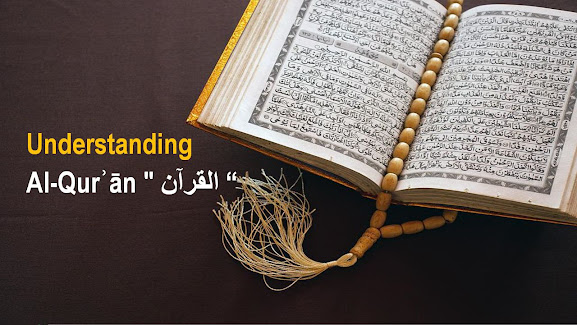
Sūrah Al-Waqi'ah is the fifty sixth surah with 96 ayahs with three rukus, part of the 27th Juzʼ  of the Holy Qur'an.

The surah by the subject it contains is described by many as the Meccan surah. The main theme revolves around the Day of Judgment, rather it very beautifully paints the End Day with lot of details leaving no ambiguity in the minds of the believers and the disbelievers as to how  they will be treated and awarded and rewarded. Though it is a pity that despite forewarning the pagans of Makkah of the punishment that would be meted out to them for their stubbornness to accept the reality of the Day of Resurrection and who continued to mock the Prophet of Allah for frightening them of something that they would not be able to see as they would be long dead.

In fact this surah explains the rewards and punishments as already mentioned in the previous surah, Surah Ar Rehman, the 55th surah of the Holy Qur'an. However, here three types of people are mentioned who would be rewarded and punished for the extra good, good and bad deeds.

The Prophet Muhammad (peace be upon him) has been reported as saying that whoever recites Al-Waqi'ah every night "shall never be afflicted by need". For this reason, the chapter is one of the most recited of the Quran.


Let us now read explanation of the Surah segmented into portions as per the subject matter:

بِسْمِ اللهِ الرَّحْمٰنِ الرَّحِيْمِ 
"In the name of Allah, the Most Gracious, the Most Merciful"

The opening of the surah adequately signifies that it is to answer those pagans and disbelievers who would often mock Prophet Muhammad (peace be upon him) whenever He talked of the afterlife.
1. When the Event (i.e. the Day of Resurrection) befalls. 2. And there can be no denying of its befalling. 3. It will bring low (some); (and others) it will exalt; 4. When the earth will be shaken with a terrible shake. 5. And the mountains will be powdered to dust. 6. So that they will become floating dust particles.
The mention of earthquake here is not the ordinary, or even severe earthquakes, that we witness, which are mostly restricted to an area. But this extraordinary earthquake will be so violent and forceful that it will shake the whole earth to its depths all of a sudden, and it will experience a tremendous jolt and tremors all through.

Having painted the disastrous and inevitable day, Allah mentions three categories of people: the "the foremost", "the companions of the right" and "the companions of the left".The first two groups will enter paradise while the companions of the left will go to hell. Here, "the right" is associated with goodness, the righteous will be seated to the right of God's throne and receive their records of deeds in their right hand. The "foremost" refers to a special group of people who will have even better fate than the companion of the right in the afterlife. 
7. And you (all) will be in three kinds (i.e. separate groups). 8. So those on the Right Hand (i.e. those who will be given their Records in their right hands), Who will be those on the Right Hand? (As a respect for them, because they will enter Paradise). 9. And those on the Left Hand (i.e. those who will be given their Record in their left hands), Who will be those on the Left Hand? (As a disgrace for them, because they will enter Hell). 
The Foremost category on the Day of resurrection will be the most blessed people and will be rewarded the best of the paradise, the Jannat ul Fibrous:
10. And those foremost [(in Islamic Faith of Monotheism and in performing righteous deeds) in the life of this world on the very first call for to embrace Islam,] will be foremost (in Paradise). 11. These will be those nearest to Allah. 12. In the Gardens of delight (Paradise). 13. A multitude of those (foremost) will be from the first generations (who embraced Islam). 14. And a few of those (foremost) will be from the later time (generations). 15. (They will be) on thrones woven with gold and precious stones, 16. Reclining thereon, face to face. 17. They will be served by immortal boys, 18. With cups, and jugs, and a glass from the flowing wine, 19. Where from they will get neither any aching of the head, nor any intoxication. 20. And fruit; that they may choose. 21. And the flesh of fowls that they desire. 22. And (there will be) Houris (fair females) with wide, lovely eyes (as wives for the pious), 23. Like unto preserved pearls. 24. A reward for what they used to do. 25. No dirty, false, evil vain talk will they hear therein, nor any sinful speech (like backbiting, etc.). 26. But only the saying of: Salam!, Salam! (greetings with peace) !
The people falling in the second category are called the People on the Right Hand. Usually, the right hand signifies positivity and here too the people are the blessed one, though a shade lower than that of the Foremost category:
27. And those on the Right Hand, - Who will be those on the Right Hand? 28. (They will be) among thorn-less lote trees, 29. Among Talh (banana-trees) with fruits piled one above another, 30. In shade long-extended, 31. By water flowing constantly, 32. And fruit in plenty, 33. Whose season is not limited, and their supply will not be cut off, 34. And on couches or thrones, raised high. 35. Verily, We have created them (maidens) of special creation. 36. And made them virgins. 37. Loving (their husbands only), equal in age. 38. For those on the Right Hand. 39. A multitude of those (on the Right Hand) will be from the first generation (who embraced Islam). 40. And a multitude of those (on the Right Hand) will be from the later times (generations).
And then the fate of those on the Left has been discussed in detail, telling the disbelievers of their fate and the painting of the picture of the hell which shows their permanent abode for defying the commandments of Allah and the invitation extended to them by the Prophet Muhammad (peace be upon him), which they repeatedly discarded:
41. And those on the Left Hand Who will be those on the Left Hand? 42. In fierce hot wind and boiling water, 43. And shadow of black smoke, 44. (That shadow) neither cool, nor (even) good, 45. Verily, before that, they indulged in luxury, 46. And were persisting in great sin (joining partners in worship along with Allah, committing murders and other crimes, etc.) 47. And they used to say: "When we die and become dust and bones, shall we then indeed be resurrected? 48. "And also our forefathers?"
Here the Prophet of Allah has been asked to stress on the gathering that will be held on the Day of Resurrection to to take stock of the deniers and mockers:
49. Say (O Muhammad ): "(Yes) verily, those of old, and those of later times. 50. "All will surely be gathered together for appointed Meeting of a known Day. 51. "Then moreover, verily, you the erring-ones, the deniers (of Resurrection)! 52. "You verily will eat of the trees of Zaqqum. 53. "Then you will fill your bellies therewith, 54. "And drink boiling water on top of it, 55. "So you will drink (that) like thirsty camels!" 56. That will be their entertainment on the Day of Recompense! 
The arguments from here to verse 74 provide the reasoning to prove both the doctrines of Tauhid and of Hereafter rationally. For it was there two basic doctrines of the Prophet’s (peace be upon him) teaching that the people of Makkah were debating and objecting to at that time.
57. We created you, then why do you believe not? 58. Then tell Me (about) the human semen that you emit. 59. Is it you who create it (i.e. make this semen into a perfect human being), or are We the Creator? 60. We have decreed death to you all, and We are not unable, 61. To transfigure you and create you in (forms) that you know not. 62. And indeed, you have already known the first form of creation (i.e. the creation of Adam), why then do you not remember or take heed? 63. Tell Me! The seed that you sow in the ground. 64. Is it you that make it grow, or are We the Grower? 65. Were it Our Will, We could crumble it to dry pieces, and you would be regretful (or left in wonderment). 66. (Saying): "We are indeed Mughramun (i.e. ruined or lost the money without any profit, or punished by the loss of all that we spend for cultivation, etc.)! 67. "Nay, but we are deprived!" 68. Tell Me! The water that you drink. 69. Is it you who cause it from the rainclouds to come down, or are We the Causer of it to come down? 70. If We willed, We verily could make it salt (and undrinkable), why then do you not give thanks (to Allah)? 71. Tell Me! The fire which you kindle, 72. Is it you who made the tree thereof to grow, or are We the Grower? 73. We have made it a Reminder (for the Hell-fire, in the Hereafter); and an article of use for the travellers (and all the others, in this world). 74. Then glorify with praises the Name of your Lord, the Most Great. 
In the verse 75 below, the usage of La (in Fala) is not an extra character without meaning, as some of the scholars of Tafsir say. Rather it is used at the beginning of an oath when the oath is a negation. This is like when `A'ishah, may Allah be pleased with her said, "La by Allah! Allah's Messenger did not touch any woman's hand at all. So in this way, the meaning is, "No! I swear by the Mawaqi` of the stars. The matter is not as you people claim - about the Qur'an - that it is a result of magic or sorcery, rather it is an Honorable Qur'an.'' Ibn Jarir said, "Some of the scholars of the Arabic language said that the meaning of: 
75. So I swear by Mawaqi (setting or the mansions, etc.) of the stars (they traverse).  76. And verily, that is indeed a great oath, if you but know. 
The oath of stars above implies that just as the system of the celestial bodies is firm and stable, so also is this divine Word (The Holy Qur'an) firm and stable. Allah Who has created that system has also sent down this Word. Just as there exists perfect consistency and harmony among the countless stars and planets found in the countless galaxies of the universe, so also this Book presents a perfectly consistent, and systematic code of life in which detailed guidance has been given, on the basis of belief, about morals, modes of worship, civilization and culture, economic and social life, law and justice, peace and war, in short, about every aspect of human life. Then, just as the system of the heavens set and planned by God is stable and unalterable, and does not ever admit of the slightest variation, so also are the truths and instructions given , in this Book stable and unalterable: no part of these can be changed or displaced in any way. 
77. That (this) is indeed an honourable recital (the Noble Qur'an). 78. In a Book well-guarded (with Allah in the heaven i.e. Al-Lauh Al-Mahfuz). 79. Which (that Book with Allah) none can touch but the purified (i.e. the angels). 80. A Revelation (this Qur'an) from the Lord of the 'Alamin (mankind, jinns and all that exists). 81. Is it such a talk (this Qur'an) that you (disbelievers) deny?
In the verse 82, the word "rizq" probably means livelihood. 
82. And instead (of thanking Allah) for the provision He gives you, on the contrary, you deny Him (by disbelief)! 
Since the disbelieving Quraish regarded the message of the Quran as harmful to their economic interests and feared that if it succeeded it would deprive them of their means of livelihood, the verse may also mean this: You have made the denial of this Quran a question of your economic interests, and for you the question of the right and wrong is of no consequence; the only thing of real importance in your sight is the bread for the sake of which you would least hesitate to oppose the truth and adhere to the falsehood.

In conclusion, man has been warned, as if to say: "You may brad and boast as you like and may shut your eyes to the truths in your arrogance of independence, but death is enough to open your eyes. At death you become helpless: you cannot save your own parents; you cannot save your children; you cannot save your religious guided and beloved leaders. They all die in front of your vary eyes while you look on helplessly. If there is no supreme power ruling over you, and your this assumption is correct that you are all in all in the world, and there is no God, then why don't you restore to the dying person his soul?Just as you are helpless in this, so it is also beyond your power to stop Allah from calling the people to account and mete out rewards and punishments to them. You may or may not believe it, but every dying person will surely see his own end after death. If he belongs to those nearest to God, he will see the good end meant for them if he be from among the righteous, he will see the end prepared for the righteous; and if he be from among the deniers of the truth, he will see the end destined for the criminals.
83. Then why do you not (intervene) when (the soul of a dying person) reaches the throat? 84. And you at the moment are looking on, 85. But We (i.e. Our angels who take the soul) are nearer to him than you, but you see not, 86. Then why do you not, if you are exempt from the reckoning and recompense (punishment, etc.) 87. Bring back the soul (to its body), if you are truthful? 88. Then, if he (the dying person) be of the Muqarrabun (those brought near to Allah), 89. (There is for him) rest and provision, and a Garden of delights (Paradise). 90.  And if he (the dying person) be of those on the Right Hand, 91. Then there is safety and peace (from the Punishment of Allah) for (you as you are from) those on the Right Hand. 92. But if he (the dying person) be of the denying (of the Resurrection), the erring (away from the Right Path of Islamic Monotheism), 93. Then for him is entertainment with boiling water. 94. And burning in Hell-fire.
95. Verily, this! This is an absolute Truth with certainty. 96. So glorify with praises the Name of your Lord, the Most Great.

Uqbah bin Amir Juhni relates that when verse 96 was sent down the Prophet (peace be upon him) commanded that the people put it in their ruku, i.e. they should recite Subhana-Rabbi-yal-Azim in the position of ruku in the Prayer. And when the verse Sabbi-hismi-Rabbi-kal-Aala was sent down, he enjoined that they put it in their sajdah, i.e. they should recite Subhana-Rabbi-yal-Aala in sajdah. (Musnad Ahmad, Abu Daud, Ibn Majah, Ibn Hibban, Hakim). This shows that even the most minor details of the procedure enjoined by the Prophet (peace be upon him) for the Prayer are derived from the allusions given in the Quran.

You may now like to listen to Arabic recitation of Sūrah Al-Waqi'ah with English subtitles:


You may refer to our post "114 Chapters (Sūrahs) of the Holy Qur'an" for translation, meaning and summary of other chapters (Though not complete but building up from 30th Part backwards for chapters in 30th Part are shorter and easier to understand). 

Photo | References: | 1 | 2 | 3 | 4 | 5 | 6 |
An effort has been made to gather explanation of the surahs of the Holy Qur'an from authentic souses and then present a least possible condensed explanation of the surah. However, those wanting detailed explanations and tafsir (exegesis), may refer to sites the references of which are given above.

If you like Islam: My Ultimate Decision, and to keep yourself updated on all our latest posts to know more about Islam, follow us on Facebook

Please share this page to your friends and family members through Facebook, WhatsApp or any means on Social Media so that they can also be benefited by it and better understand Islam and the Holy Qur'an - Insha Allah (Allah Willing) you shall be blessed with the best of both worlds.

Sunday, 9 December 2018

If We Only Had Time


Sometime back, I visited my city of birth and had plans to call on one of my long lost friends. When I had just reached my guest room, I received a message that my friend had passed away moments ago. I was simply stunned to read the message - but he did not have time more than what was granted to him. I went to his funeral and was thinking that while I had come for some other purpose but Allah had actually called me to  attend my friend's funeral.

We commence each day of our life with renewed vigour and aspirations to do many things. Most of us are worried about earning more than yesterday to realise many of our unfinished plans or to buy a better living for our family and children. And most of our lives is spent in such pursuits. But what we normally forget is the bitter fact that while we may have wealth, would we have TIME?


Life is all about time, not wealth, for Allah has promised us that He would make arrangements for our sustenance and living. But He never promises us to give TIME for it may run out of our lives in the click forward of second showing hand of of our watches.

Stressing the importance of time for the Muslims, the Almighty Allah says in the Holy Quran: “By time, indeed, mankind is in loss, Except for those who have believed and done righteous deeds and advised each other to truth and advised each other to patience.” (Quran, Surah Al Asr 103: 1-3).

Surely indeed, those who make best use of their time and are never ignorant of their prayers, and righteous deeds to please Allah by remaining on the straight path and helping others and always keep in mind that time may run out of their lives at anytime - a time that will come unannounced. So a true Muslim should be ready all the time to face the day when the time will stop clicking for him.

Prophet Muhammad (peace be upon him) has been quoted as saying: “Take advantage of five matters before five other matters: your youth before you become old; your health, before you fall sick; your wealth, before you become poor; your free time before you become preoccupied, and your life, before your death” (Musnad Imam Ahmad). All these five things hinge on time. For as long as all is going well, we do not know of the hard times that can befall on us at any time. This cautions us to be ready not only to brave out bad times, bad health, or loss of wealth and last of all the time when the life may end suddenly.

So be ready for the end time and always pray for your forgiveness, continuously seek repentance for one's sins or follies and times aimlessly spent in leisure that took us from remembering Allah. Remember, Time is running out !!

Photo | Reference: | 1 |
If you like Islam: My Ultimate Decision, and to keep yourself updated on all our latest posts to know more about Islam, follow us on Facebook

Please share this page to your friends and family members through Facebook, WhatsApp or any means on Social Media so that they can also be benefited by it and better understand Islam and the Holy Qur'an - Insha Allah (Allah Willing) you shall be blessed with the best of both worlds.

Life of Muslims in Non Muslim Countries: Japan


Islam in Japan is a relatively new religion. The earliest Muslim records of Japan can be found in the works of the Muslim cartographer Ibn Khordadbeh, who has mentioned Japan as the "lands of Waqwaq": "East of China are the lands of Waqwaq, which are so rich in gold that the inhabitants make the chains for their dogs and the collars for their monkeys of this metal. They manufacture tunics woven with gold. Excellent ebony wood is found there.” And: “"Gold and ebony are exported from Waqwaq." Mahmud Kashgari's 11th century atlas indicates the land routes of the Silk Road and Japan in the map's easternmost extent. [1]

From then on, the presence and mention of Muslims is found during the various dynastic rules. Some Portuguese sailors are said to have made a mention of an Arab passenger aboard their ship, who had sailed to the islands in Malacca in 1555 and preached Islam to the people of Japan. The scriptural Islamic made their inroads to Japan in the last quarter of the 19th century when the biography of Prophet Muhammad (peace be upon him) was translated into Japanese. This helped Islam spread and reach the Japanese people. Another important contact was made in 1890 when the Ottoman Empire dispatched a frigate "Ertugrul"  to Japan for the purpose of saluting the visit of Japanese Prince Komatsu Akihito to Constantinople several years earlier. However, the vessel was destroyed in a storm along the coast of Wakayama Prefecture on September 16, 1890. [1]

Tokyo Camii (mosque) in Yoyogi, Tokyo -(Photo WAEDA University - Research Associate Hirofumi Okai)

After the Russian October Revolution,  hundreds of Turko-Tatar Muslim refugees from Central Asia and Russia came to Japan and given asylum. In 1909 the first ethnic Japanese, Kotaro Yamaoka embraced Islam and took the name Omar Yamaoka. He also became the first Japanese to go on the Hajj. During his journey, he also sought the Sultan's approval for building a mosque in Tokyo. This approval was granted in 1910 and the Tokyo Mosque (more on Tokyo mosque a little while later) completed in 1938. However, Kobe Mosque was Japan’s first mosque built in 1935 with the support of the Turko-Tatar community.

Some nationalistic organizations have been instrumental in petitioning the Japanese government on matters such as officially recognizing Islam, along with Shintoism, Christianity and Buddhism as a religion in Japan, and in providing funding and training to Muslim resistance movements in Southeast Asia, such as the Hizbullah, a resistance group funded by Japan in the Dutch Indies. The Greater Japan Muslim League founded in 1930, was the first official Islamic organization in Japan and caused an "Islamic Studies Boom". It was the time when Shūmei Ōkawa managed to complete his translation of the Qur'an.

After the World War II, Turks were the biggest Muslim community in Japan. The Japanese invasion of China and South East Asian regions during the WW II brought the Japanese in contact with Muslims. Those who converted to Islam through them returned to Japan and established in 1953 the first Japanese Muslim organization, the "Japan Muslim Association", which was officially granted recognition as a religious organization in 1968. The economic boom in Japan in the 1980s saw an influx of immigrants to Japan. Today, there are Muslim student associations at some Japanese universities.


As for the total population of Muslims, the estimates are mere speculations as there are no official account available. As per some Japanese scholars, Muslim population is around 70,000, of which perhaps 90% are resident foreigners and about 10% native Japanese. Of the immigrant communities, in order of population size, are Indonesians, Indians, Pakistanis, Bangladeshis, and Iranians. The Pew Research Center estimated that there were 185,000 Muslims in Japan in 2010.

The Japanese have started to realize the importance of growing Muslim population in Japan and wish to understand them better which they call the first step in living in harmony starts from taking an interest in the other party:
“By the end of this century, Muslims will overtake Christians to become the world’s largest religion in terms of followers. In fact, it is not uncommon to find Muslim community in our surroundings. It is important for us to first lend a listening ear to better understand them in order for us to live in harmony with the Muslim community,” says Professor Tanada from the Faculty of Human Sciences, Waseda University. [2]
Japan has seen an increase in people converting to Islam. The majority of Japanese converts are believed to enter the faith upon marriage to foreign Muslim spouses. Shigeru Shimoyama, a spokesman for the Tokyo Camii and a convert himself, estimated in an interview with Nippon News in 2013 that around five Japanese enter the Islamic faith every month. Japanese wrestling icon Antonio Inoki famously converted to Islam in the 1990s, changing his name officially to Muhammad Hussain Inoki, a decision he revealed publicly only recently. Besides becoming an emblem of religious tolerance, Inoki continues to make his mark as an ambassador for world peace on the global stage.[4]

Since the beginning of 1990s, there has been an increasing number of mosques being built across the Japanese archipelago, from Okinawa prefecture all the way to Hokkaido prefecture. Even though there are currently over 90 mosques throughout Japan, most Japanese are unaware of it. The Muslims living in Japan come from diverse backgrounds – nationality, ethnicity, culture, lifestyle, clothing, etc. Some Muslims strictly follow customs and traditions such as prayers and fasting, while others enjoy more freedom. As such, people who have never met or interacted with a Muslim might have misconceptions and stereotypes about them. [2]


Saeed Akhtar of NAHA [Photo]

One of the top concerns for Muslims traveling to non-Muslim countries is food. Nippon Asia Halal Association (NAHA) which is one of the halal certification organizations in Japan, sends out its auditors to visit eateries to ensure that the ingredients and equipment used meet halal standards. NAHA chair Dr. Saeed Akhtar, overseeing the certification process, commends Japanese as “sincere and thorough in complying with halal rules.” Dr Saeed Akhtar, is graduate from the University of Agriculture, Rawalpindi and the University of Agriculture, Faisalabad, Pakistan. He received his PhD in 1999 from the Graduate School of Agricultural and Life Sciences, The University of Tokyo. [3]


The mosque on wheels has the capacity for up to 50 people [Mobile Mosque Executive Committee via AP]

Muslims are given due consideration when it comes to performance of their religious rituals. As Japan prepares to host visitors from around the world for the 2020 Summer Olympics, a Tokyo sports and cultural events company has created a mosque on wheels that its head hopes will make Muslim visitors feel at home. Sakaguchi, the representative director of an Osaka retail company says, "Going forward, I would be so happy if people from Indonesia, Malaysia, Africa, the Middle East and, for example, refugees who are coming from Syria are able to use the mosque as a tool to promote world peace." [6]

However, living in Japan as a foreigner and as a Muslims has its own problems. The main problem arises when one is seen as a non-Japanese, which something instantly known due sharp contrast between the physical appearance. In fact foreigners are known as "gaijin or gaikokujin," literally “people from the outside.” And when it comes to religion, Japanese Christians and Muslims are to a degree seen as somewhat 'different' as they subscribe to what are widely perceived as being foreign ideas. There are many more traditional people who would say that their views make them rather less Japanese. In fact in Japan, one is either Japanese or they are not. [5]

Due to small space available in most of the mosques, the space cramps are felt during larger congregations like during the Ramadan and Eid festivals. “We had to hold the prayers four separate times so all the people lining up could fit in,” explains Haroon Qureshi, secretary-general of the mosque’s Japan Islamic Trust organization. “There must have been 1,000 people waiting to pray.” [4]

The fears over Muslims' presence in the wake of Islamophobia is yet another concern for the Muslims. Although, Islamic terrorism represents no domestic threat in Japan today, and never has in the past, many Muslims feel that while performing their religious rituals in congregations, a cloud hangs over their celebrations and it seems that they are constantly under the ever-watchful eyes of the police. Qureshi, like almost all of Japan’s roughly 100,000 Muslim residents, is no stranger to police surveillance. However, the true extent of the systematic profiling and surveillance of Japan’s Muslim community only came to light in 2010, when over 100 internal Metropolitan Police Department documents were leaked on line. The leak revealed that the police had compiled detailed profiles on 72,000 Muslims and their including personal information. The leak also showed that police had at times planted cameras inside mosques and used undercover agents to infiltrate Islamic nonprofit organizations and halal grocers and restaurants. [4]

Junko Hayashi, 37, a Japanese Muslim who converted to Islam in 2001, has also become the country’s first female Muslim lawyer. Commenting on the leaked police surveillance of Muslims, Hayashi argues “If somebody did something wrong, did something suspicious, then the police have a good reason to watch them. But when you are just being Muslims — acting like a Muslim — it doesn't make sense.” 

A Japanese convert to Islam, who asked that his real name not be used, says that when intelligence officers started regularly visiting him shortly after the 9/11 attacks, he was courteous. “They would come to me at home or at the mosque,” he recalls. “I didn't want to be misunderstood, for them to think I am against them, so I always gave them my time. They always asked me very simple questions about Islam, and eventually I told them they were just wasting time. “There are better ways to use the citizens’ tax money,” he adds with a laugh. He was among those listed in the leaked documents, and was one of the 17 Muslims who took the government to court over the spying.

Herein under watch the video on how ordinary Japanese think about Islam and Muslims:
As can be seen from the video, the general perception about the Muslims is very positive. We do hope, with no case of Muslim terrorism ever taken place in Japan, the life of Muslims in Japan will come to an ease as Japanese authorities start to understand the very peaceful Muslim community of their country.

To know more about life of Muslims in other non Muslim countries, please visit our page: Islam and Life of Muslims in Non Muslim Countries.

You may also refer to our Reference Pages for knowing more about Islam and Quran.

References: | 1 | 2 | 3 | 4 | 5 | 6 | 7 | 8 |
If you like Islam: My Ultimate Decision, and to keep yourself updated on all our latest posts to know more about Islam, follow us on Facebook

Please share this page to your friends and family members through Facebook, WhatsApp or any means on Social Media so that they can also be benefited by it and better understand Islam and the Holy Qur'an - Insha Allah (Allah Willing) you shall be blessed with the best of both worlds.

Friday, 7 December 2018

Three Intentions that can turn your earnings into 'Ibadah (worship)


There are always two ways of doing the same thing: For own leisure and pleasure or to please Allah. And anything we do as a Muslim and firm believer with the intention of pleasing Allah or walk they way as we have been commanded and directed by the Allah, we are blessed in many ways like increase in our earnings, shower of blessings on our families beside being rewarded in the hereafter.

In fact Islam is a unique religion in which everything done with the intention of thanking Allah for having given us the ability to walk His ways and to please Him by doing so. And one's earning money is no exception. If our intention to earn money, from legitimate means only, is to:
  • Fulfill one's daily needs - This is important as if one if not healthy and energetic, he will not be able to sustain his dependent family.
  • Take care of all needs of family dependent on him - this should include their needs like food, shelter, clothing, education, health and entertainment.
  • Helping the poor and needy and spending in way of Islam. (And give them something yourselves out of the wealth of Allah which He has bestowed upon you. [ Al Quran Surah An-Nur, 24:33]) - We have already written a detailed post on charity, both obligatory (zakat) and voluntary. One should not forget one's poor relatives, neighbours and others in need of financial assistance. A part of one's earning should be devoted to this and one should make an intention that whatever one would earn, a portion of it will be diverted for the wellbeing and welfare of people not dependent on him. 
Then whatever we earn and spend in the rightful way will be considered as Ibadah (worship) for these three intentions to earn money and to sustain not only self, one's dependent family and helping the needy and the poor is in fact the only purpose of life of a believing Muslim. So have noble intentions of earning money with the aim that “I am earning so as to eat well to gain strength to be able to worship Allah and do good deeds for His sake and to earn His pleasure.” A Muslim is obliged to keep himself from abuse to fulfill the obligations as well as try to keep the priority in everything, including in money matters. 

However, if the intention of earning money is to amass wealth, even if earned through legitimate means, for one's leisure and worldly pleasures, or to to show off one's status based on one's wealth and with the intention of lowering others by such manner, one has lost the opportunity to make his earning turn into 'Ibadah (worship).


It must be remembered that whenever one transgress the limits to fulfill any desires other than the three listed above, one is likely to get into illegitimate means of earning money. Abu Huraira, one of the most revered companions of the Holy Prophet Muhammad (peace be upon him), has narrated that the Prophet said: A time will come upon the people when one will not care how one gains one's money, legally or illegally. (Bukhari).And this would only happen when one is running after any means to earn money much beyond one's needs to squander it in acts of pomp and show and extravagance to over awe and impress others.

This is unfortunate that today many billionaire Muslims are seen squandering money by booking entire hotels, airplanes or ships for just a few of his family or friends. In one case for the foreign trip of a king of a Muslim country, the gold plated stair case had been transported so that the king could come down from the plane. In an other case, the brother of Muslim king has a such a big fleet of most expensive cars, that even if he he rides one car a day it would be years before the entire fleet would have been driven. 
Believe in Allah and His Messenger (Muhammad), and spend of that whereof He has made you trustees. And such of you as believe and spend (in Allah’s Way), theirs will be a great reward. [ Surah Al-Hadid, 57:7]
So the extravagant rulers and others forget that they have been made trustee of the money which belongs to their the people and squander it away for their own ease and leisure. Such are the acts of  pomp and show which have the Prophet of Allah had us forewarned. and remember this money is not their earned money but usurped from the money from taxing people or taking profit from the natural resources Allah has given them to be used for the welfare of their people.
Abu Said related that the Prophet said: The truthful and trustworthy businessman will be in the company of Prophets, saints and martyrs on the Day of Judgment. (Darimi, Tirmidhi)
So think over what and how you earn and with what intentions. For any foul intentions, you will be certainly questioned on the Day of Justice. So cleanse your thoughts and intentions as regard to earning your livelihood and turn into in  'Ibadah (worship), rather than making it a bane for you not only in this world but in the hereafter too.

Photo | References: | 1 | 2 | 3 |
If you like Islam: My Ultimate Decision, and to keep yourself updated on all our latest posts to know more about Islam, follow us on Facebook

Please share this page to your friends and family members through Facebook, WhatsApp or any means on Social Media so that they can also be benefited by it and better understand Islam and the Holy Qur'an - Insha Allah (Allah Willing) you shall be blessed with the best of both worlds.

Thursday, 6 December 2018

Overview Surah Al Hadid - The Iron: 57th Chapter of the Holy Quran


Surah Al-Ḥadīd is the Fifty Seventh surah with 29 ayats with four rukus, part of the 27th Juzʼ  of the Holy Qur'an. It is one of those five undisputed surah which is known as "Al-Musabbihat," that is surahs begin with the glorification of Allah. The other four surahs are (1) Al-Hashr; (2) As-Saff; (3) Al-Jumu’ah; and (4) At-Taghabun. 

Period of Revelation:
This is unanimously a Madani Surah, and a study of its subject matter shows that it was probably sent down some time during the interval between the Battle of Uhud and the Truce of Hudaibiyah. This was the time when the tiny Islamic State of Madinah had been hemmed in by the disbelievers and the handful of the ill equipped Muslims were entrenched against the combined power of entire Arabia. In this state Islam not only stood in need of the sacrifice of Life from its followers, but it also needed monetary help and assistance. In this Surah a forceful appeal has been made for the same. This view is further strengthened by verse 10 in which Allah has addressed the believers to the effect "Those of you who would spend and fight after the victory can never be equal to those who have spent and fought before the victory." And the same is supported by the traditions that Ibn Marduyah has related on the authority of Hadrat Anas. In respect of the verse: Alam ya'n-i lilladhina aamanu an takhsha'a qulubu- hum li-dhikrillah-i, he says that 17 years after the commencement of the revelation of the Qur'an this verse was sent down to arouse the believers to action. Reckoned thus the period of the revelation of this Surah falls between the 4th and the 5th year after the hijrah.

Theme and Subject Matter:
The theme of this Surah is to exhort the Muslims to spend in the cause of Allah. At the most critical juncture of the history of Islam when it was engaged in a life and death struggle against Arab paganism, this Surah was revealed to persuade the Muslim's to make monetary sacrifices in particular, and to make them realize that Islam did not merely consist in verbal affirmation and some outward practices but its essence and spirit is sincerity towards Allah and His Religion. The faith of the one who was devoid of this spirit and who regarded his own self and wealth as dearer to himself than Allah and His Religion, was hollow and therefore of little worth in the sight of Allah.

For this object, first the attributes of Allah Almighty have been mentioned so that the listeners may fully realize as to Who is addressing them. Then, the following themes have been expressed in sequence:

The inevitable demand of the Faith is that one should not shirk spending one's wealth for the sake of Allah. This would not only be contrary to the Faith but also wrong realistically. For the wealth indeed belongs to Allah, on which man has been given proprietary rights only as His vicegerent. Yesterday this wealth was in other people's possession today it is with one particular man, and tomorrow it will pass into some one else's hand. Ultimately, it will go back to Allah, Who is the inheritor of everything in the universe. Only that much of this wealth will be of any use to a man, which he spends in the cause of Allah during the period it is in his possession.

Although making sacrifices for the sake of Allah is commendable in any case, the true worth of these sacrifices is determined by the nature of the occasion. There is an occasion when the power of paganism is overwhelming and there is a danger that it might subdue and overcome Islam completely; there is another occasion when Islam is in a stronger position in its struggle against un-Islam and the believers are attaining victories. Both these states are not equal as regards their respective importance. Therefore, the sacrifices that are made in these different states would also not be equal. Those who sacrifice their lives and expend their wealth to further promote the cause of Islam when it is already strong cannot attain to the rank of those who struggled with their lives and their wealth to promote and uphold the cause of Islam when it was weak.

Whatever is spent for the cause of the Truth is a loan on Allah, and Allah will not only return it increasing it manifold but will also give from Himself the best reward for it.

In the Hereafter the Light shall be bestowed only on those believers who would have spent their wealth in the cause of Allah. As for the hypocrites who watched and served only their own interests in the world, and who least bothered whether the Truth or falsehood prevailed will be segregated from the believers in the Hereafter although they might have lived in close association with them in the world. They will be deprived of the Light, and they will be counted among the disbelievers.

The Muslims should not behave like those followers of the earlier Books, whose lives have been. spent in the worship of the world and whose hearts have become hardened due to negligence with the passage of time. He cannot be a believer whose heart does not melt at the remembrance of Allah and does not bow to the Truth sent down by Him.

The sincere upholders of the Truth and the true witnesses of the Faith in the sight of Allah are only those believers who spend their wealth in His way sincerely, without any desire of show.

The life of this world is only a short lived spring and a means of pride and show. Its sports and pastimes, its adornments and decorations, its pride of place, its wealth and possessions, for which the people try to vie with one another, are transient. Its likeness is of the crop which flourishes and blooms, then turns pale and then finally is reduced to chaff. The everlasting life is the life hereafter when results of great consequence will be announced. Therefore, if one has to vie with another for something, one should strive for Paradise.

Whatever good man meets with and whatever hardship he suffers in the world, are pre-ordained by Allah. A true believer is he who does not lose heart in affliction and is not puffed up with pride in good times. It is the character of a hypocrite and disbeliever that he is puffed up with pride when Allah favors him with His blessings, behaved boastfully and shows stinginess when called upon to spend in the cause of the same God Who blessed him, and also counsels others to be stingy like himself.

Allah sent His Messengers with clear signs and the Book and the Law of Justice so that the people may adhere to justice; besides, He sent down iron also so that power may be used to establish the Truth and vanquish falsehood. Thus, Allah likes to see as to who from among the people would rise to support and succor His true Religion even at the risk of their lives. These opportunities Allah has created for man's own advantage and development; otherwise Allah does not stand in need of others for His works.

Prophets came from Allah in the past, and by their preaching some people adopted the Right Path, but most of them persisted in wickedness. Then the Prophet Jesus came, whose teachings brought about many moral improvements in the lives of the people, but his community invented monasticism. Now Allah has sent the Prophet Muhammad (upon whom be His peace and blessings). Those who affirm faith in him and pass their life fearing Allah's accountability, will be given by Allah a double share of His mercy and He will bless them with the Light by which they will see and walk the straight path among the crooked paths met with at every step in the life of this world. Although the followers of the earlier revelation regard themselves as the monopolists of Allah's bounties, the fact remains that Allah Himself controls His bounties He may bless with these whomever He pleases.
Please do consult following references to clearly understand this surah for a lot of explanation is required to understand its actual magnitude.

For detailed explanation / tafsir / exegesis, please click Here.

You may now like to listen to Arabic recitation of Surah Al-Ḥadīd with English subtitles:
You may refer to our post "114 Chapters (Sūrahs) of the Holy Qur'an" for translation, meaning and summary of other chapters (Though not complete but building up from 30th Part backwards for chapters in 30th Part are shorter and easier to understand). 

Photo | References: | 1 | 2 | 3 | 4 | 5 | 6
An effort has been made to gather explanation of the surahs of the Holy Qur'an from authentic souses and then present a least possible condensed explanation of the surah. However, those wanting detailed explanations and tafsir (exegesis), may refer to sites the references of which are given above.

If you like Islam: My Ultimate Decision, and to keep yourself updated on all our latest posts to know more about Islam, follow us on Facebook

Please share this page to your friends and family members through Facebook, WhatsApp or any means on Social Media so that they can also be benefited by it and better understand Islam and the Holy Qur'an - Insha Allah (Allah Willing) you shall be blessed with the best of both worlds.

Wednesday, 5 December 2018

Kristiane Verena Backer 's Journey to Islam


Many centuries ago a man in his forties stood in front of the most powerful people of Makkah and proclaimed to them that he had been chosen by the Creator of the universe to be His prophet to spread His divine message to them so that they leave the life of polytheism, invited them to monotheism and to start worshiping none but one and the only Allah. He was not only mocked and laughed at by his audience but was severely ridiculed, teased and bodily harmed along with his meager companions to an extent that he was forced to leave Makkah and emigrated to Medina.  And from then on, his small group of devotees who chose to follow their new faith started to swell and a time came that they all under the patronage of that lone man, now called Prophet Muhammad (peace be upon him), the prophet of Allah, entered Makkah to make it home of Islam.

And from then on, there has been no stopping people from embracing Islam and today, Alhamdollilah, Islam is not only the second largest religion after Christianity, but many non Muslims fear that one day it may overtake the Christianity - and the day doesn't seem to be very far.

In a series of posts on personal accounts of non Muslims reverting to Islam, I have tried to put across personal experiences and reasons why they chose to be Muslims. Each personal account is worth reading. 

While I shared experiences of ordinary people, I also shared personal account of famous Irish singer Sinead O'Connor. Today I am adding one more celebrity with a moving account from how from a top TV anchor and DJ of famous MTV Europe, the German born Kristiane Verena Backer, who proudly embraced Islam.


At the age of 24 Kristiane became one of the leading presenters on MTV Europe where she interviewed many celebrities, major artists and musicians of her time. But then came one person who changed the entire complexion of her future life. 
Kristiane Verena Backer with Imran Khan [Photo]

This man is Imran Khan, then a young talented cricketer and captain of Pakistan cricket team, and presently the prime minister of Pakistan. During their three years' association, Imran Khan gave her a number of books on Islam and she even traveled to Pakistan with him. And reading the books on Islam made her change and take shahada in 1995 and converted to Sunni branch of Islam after living here previous life as a devout Protestant. 

“I was convinced. I converted because I wanted to bring God into my life, and I wanted to purify myself to taste the spiritual fruits I was reading about,” she once told the HuffingtonPost.
I could narrate her experience and how she reached at this critical decision of her life, but it would be much better if you listen to her telling an audience about her journey to Islam. Her life experience provides a jump pad for those who have been inspired by Islam through reading books on Islam or interacting with Muslims, to take their decision to find the ultimate truth of their lives in Islam.

Please watch a video of Kristiane Verena Backer in which she reveals her journey form her hay days of early life to the pinnacle of career with MTV and then taking her ultimate decision to become a Muslimah.  And this video can is so adsorbing, listening to a high profile show biz presenter and celebrity to bow down to oneness of Allah and change her high profile life to that of a devout Muslim. I would say it is a must listen-to video for those who are aspiring to embrace to Islam - this will surely guide them how it feels like taking one big step of their lives into the realm of blessings of Allah.

Please watch the video:

In 2001, she performed Umrah when she visited Madinah and in 2006 performed Hajj rituals after which she wrote her famous book “From MTV to Makkah: How Islam Inspired My Life,” she wrote about her eventful journey from entertainment to ‘inner-tainment’.. And she very proudly claims that she feel elevated and blessed for being a Muslim. Backer now lives in London and works as a fine art consultant.

I commend her for her boldness to step down from the ladder of show biz and start climbing another ladder at the end of which is shining the heavenly light that changes one's life for ever and for good. For whenever takes the first step on the ladder, the entire perspective of life changes and a new meaning is given to one's aspirations, life and goals. May Allah bless her the best of both worlds. Aameen.

To read personal accounts of many a celebrity who have reverted to Islam, please visit our page: Embracing Islam: Revert Experiences.


You may also refer to our Reference Pages for knowing more about Islam and Quran.


Photo | References: | 1 | 2 | 3 |
If you like Islam: My Ultimate Decision, and to keep yourself updated on all our latest posts to know more about Islam, follow us on Facebook

Please share this page to your friends and family members through Facebook, WhatsApp or any means on Social Media so that they can also be benefited by it and better understand Islam and the Holy Qur'an - Insha Allah (Allah Willing) you shall be blessed with the best of both worlds.

What is the Importance of Charity in Islam


Charity is one of the main pillars of Islam to ensure sustenance of those who cannot make their ends meet. Thus by means of charity those who have been blessed with wealth can look after those who cannot live a life and sustain their families. In fact, in Islam, charity is a way to bring balance in society, among poor and the riches. Charity thus is a responsibility of every Muslim to share his wealth with his poor Muslim brethren so that they too could live their lives comfortably. By sacrificing part of one’s wealth and giving it in charity, an individual can not only help in aiding needy from tragedy and misfortune, but can also hope to be protected from difficult times.

In the Holy Qur'an the Divine commandment reads:
“Those who spend their wealth in Allah’s cause are like grains of corn which produce seven ears, each bearing a hundred grains.” (Surah Al Baqarah, 2:261)
Zakat is an obligatory charity incumbent upon all those who earn wealth up to a certain threshold level or have gold, silver or property which is above a prescribed limit, which must be given to the state for equal distribution among the needy. Zakat amounts to 2.5% of all net yearly savings which includes the worth of jewelery. 

However, one must NOT restrict oneself to obligatory charity only, rather one who has any amount above one's needs should give away charity in the name of Allah to those who need it badly more than one himself. Prophet Muhammad (peace be upon him), though hard pressed himself many a times, did not restrict his giving hand and always tried to help the poor Muslims around him. The Prophet of Allah has been oft quoted as saying: 
“Give charity without delay, for it stands in the way of calamity.” (Al-Tirmidhi)
“A charity is due for every joint in each person on every day the sun comes up: to act justly between two people is a charity; to help a man with his mount, lifting him onto it or hoisting up his belongings onto it, is a charity; a good word is a charity; and removing a harmful thing from the road is a charity.” (Al-Bukhari, Muslim) 
Even Your smile for your brother is a charity. Your removal of stones, thorns or bones from the paths of people is a charity. Your guidance of a person who is lost is a charity.” (Bukhari)
Even a glass of drinking water to your thirsty brother is charity. 
The above hadith says it all. One doesn't have to be rich to give charity; even smiling at one's brother can be a charity or even removing a hurdle from a thoroughfare with the intention of paving way for others also comes under the purview of charity. And every act done to help other will have a reward in the hereafter. The Prophet said: “The believer’s shade on the Day of Resurrection will be his charity.” (Al-Tirmidhi).


So this is the spirit of giving charity in Islam that paves way to bring financial justice in any Muslim society. In one case one of the the governors in Caliph Umer's time started sending the money collected through zakat to the central treasury. The Caliph got annoyed on such reimbursement and asked the governor as to why he was not spending the charity money on his own people. The governor replied that he had been doing so but those receiving the charity have become so well off that they have themselves started giving charity. Sine there was no more people to be given charity to, he was reimbursing the surplus money so that it could be sued elsewhere. 

This is the very concept and philosophy of charity in Islam, which teaches us to look after each other, should make our giving hands always expendable to the poor and be thankful to Allah for being so fortunate that they are in a position to help others rather than always vying to fill up our coffers. and such acts of charity should be done quietly without boasting one's act of giving away as a show off of ones wealth. Rather such acts be undertaken in extreme humbleness for the rewards rests with Allah and no one else.
"O believers! Void not your charities by boasting of your favours conferred and injuring, like him who spent his wealth for showing to people and believes not in Allah and Last Day. Then the example of him is like that of a smooth rock on which is dust of earth; now a heavy rain fell upon it leaving it a bare stone. They shall have no control on anything of what they have earned and Allah guides not the infidels."[Surah Al Baqarah 2: 264]
There are many charity organizations around the world which receive charity, whether obligatory (zakat) or voluntary, and spend on the welfare of poor in some down trodden areas and even the war torn countries of the Muslim world. Some are doing very notable and admirable job. However, care must be taken to not to give charity to organizations which support terrorism, for supporting terrorism has never been propagated by Islam.

Recently I came across a video I am sharing below of a woman in Pakistan, who is sustaining poor people entirely on her own for last 35 years - something that I haven't seen well to do people who have money that can feed thousands of people everyday. These are the people who have their rewards resting with Allah and will be honoured for their charitable acts merely to please Allah and serve His people. 


Watch in wonder how this woman feeds hundreds of hungry people from her home, watch the video below with English captions:


Remember, it's not too late, we should be giving - give it a try !!

Photo | References: | 1 | 2 | 3 |
If you like Islam: My Ultimate Decision, and to keep yourself updated on all our latest posts to know more about Islam, follow us on Facebook

Please share this page to your friends and family members through Facebook, WhatsApp or any means on Social Media so that they can also be benefited by it and better understand Islam and the Holy Qur'an - Insha Allah (Allah Willing) you shall be blessed with the best of both worlds.

Twitter Delicious Facebook Digg Stumbleupon Favorites More