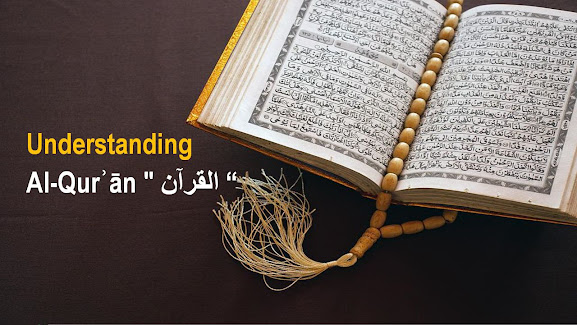
.

Friday, 22 April 2022

What single action of believers forbids indecency and evil

Qur'an is not merely religious book containing some dos and donts as are the famous Ten Commandments. Qur'an in fact is book of complete code of conduct not only for believers but for even non believers and non Muslims. Each word and each verse is indicative of a path that takes a man to rewards and ultimate Paradise, provided each verse and words is acted upon. In fact continuous remembrance of Allah is the true path to success. Those who however shun these directions are liable to adopt a path of indecency and evil.

Herein under we share the 45th verse from Surah 29. Al-Ankabut which indicate a single action that when adopted with complete devotion and concentration lead man from all sources of indecency, lewdness and evil:

اُتۡلُ مَاۤ اُوۡحِىَ اِلَيۡكَ مِنَ الۡكِتٰبِ وَاَقِمِ الصَّلٰوةَ ​ؕ اِنَّ الصَّلٰوةَ تَنۡهٰى عَنِ الۡفَحۡشَآءِ وَالۡمُنۡكَرِ​ؕ وَلَذِكۡرُ اللّٰهِ اَكۡبَرُ ​ؕ وَاللّٰهُ يَعۡلَمُ مَا تَصۡنَعُوۡنَ‏ 
(29:45) (O Prophet), recite the Book that has been revealed to you and establish Prayer. Surely Prayer forbids indecency and evil. And Allah's remembrance is of even greater merit. Allah knows all that you do.

Sayyid Abul Ala Maududi explanation:
The address apparently is directed to the Holy Prophet but, in fact, it is meant for all the believers. Until now they were being counselled patience and reliance on Allah to brave the extreme trying conditions in which they found themselves and the persecutions they were being subjected to on account of their faith. Now they are being told to recite the Qur'an and establish the Salat as a practical device, for these are the two things which endow a believer with a strong character and a wonderful capacity by which he can not only brave successfully the most violent storms of evil and falsehood but can even subdue them. But man can acquire this power from the recitation of the Qur'an and the Prayer only when he does not retrain content with the mere recital of the words but also understands well the Qur'anic teachings and absorbs them in his soul, and his Prayer does not remain confined to physical movements but becomes the very function of his heart and the motive force for his morals and character. The desired quality of the Prayer is being mentioned by the Qur'an itself in the next sentence. As for its recitation, one should know that the recitation which does not reach the heart beyond the throat, cannot even give man enough power to remain steadfast to his faith, not to speak of enabling him to withstand the furies of unbelief. About such people, a Hadith says: "They will recite the Qur'an, but the Qur'an will not go beyond their throats; they will leave the Faith just as the arrow leaves the bow." (Bukhari, Muslim, Mu'atta`). As a matter of fact, the recitation which does not effect any change in a man's way of thinking, and his morals and character, and he goes on doing what the Qur'an forbids, is not the recitation of a believer at all. About such a one the Holy Prophet has said: ;'He who makes lawful what the Qur'an has declared unlawful, has not believed in the Qur'an at all." (Tirmidhi, on the authority of Suhaib Rumi). Such a recitation does not reform and strengthen a maws self and spirit, but makes him even more stubborn against Allah and impudent before his own conscience, and destroys his character altogether. For the case of the person who believes in the Qur'an as a Divine Book, reads it and comes to know what his God has enjoined, and then goes on violating His injunctions, is of the culprit, who commits a crime not due to ignorance but after full knowledge of the law. The Holy Prophet has elucidated this point in a brief sentence, thus: "The Qur'an is a testimony in your favor as well as against you." (Muslim). That is, "If you follow the Qur'an rightly it is a testimony in your favor. Whenever you are called to account for your deeds, here or in the hereafter, you can produce the Qur'an as a testimony in your defense, saying that whatever you did was in accordance with this Book. If what you did was precisely according to it, no jurist in the world will be able to punish you, nor will God in the Hereafter hold you accountable for it. But if this Book has reached you, and you have read it and found out what your Lord demands from you, what He enjoins and what He forbids, and then you adopt an attitude opposed to it, then this Book will be a testimony against you. It will further strengthen the criminal case against you in the Court of God. Then it will in no way be possible for you to escape the punishment, or receive a light punishment, by making the excuse of ignorance."

( Surely Prayer forbids indecency and evil ) This is an important characteristic out of the many characteristics of the Prayer, which has been presented here prominently in view of its relevance to the context. To counter the severe storm of opposition and resistance that the Muslims were experiencing in Makkah, they stood in need of a moral force rather than any material power. To bring about the moral force and develop it suitably two practical devices were pointed out in the first instance, the recitation of the Qur'an and the establishment of the Salat. Now they are being told that the establishment of the Salat is the means through which they can get rid of those evils in which they themselves had been involved before they embraced Islam and in which the non-Muslim Arabs and the non-Arab world around them were involved at that time.
With a little thinking one can easily understand why this special advantage of the Prayer has been particularly mentioned here. Evidently, getting rid of the moral evils is not only useful insofar as it is beneficial for those who attain the moral purity, both here and in the Hereafter, but its inevitable advantage is that it gives them unique superiority over those who might be involved in diverse moral evils, and who might be exerting their utmost to sustain the impure system of ignorance, which nourishes those evils, against the efforts of the morally pure people. Indecent and evil acts are those which man by nature abhors, and which have always been held as evil in principle by the people of every community and society, however depraved and perverted practically. The Arab society in the days of the revelation of the Qur'an was no exception to this. Those people also were aware of the moral virtues and the evils: they valued the good above the evil and there might be none among them, who regarded the evil as identical with the good, or depreciated good. Under such conditions, in a perverted society like that, the emergence of a movement which revolutionized morally members of the same society itself as soon as they came into contact with it, and raised them in character high above their contemporaries, inevitably had widespread effects. The common Arabs could not possibly fail to feel the moral impact of the movement, which eradicated evils and promoted goodness, and instead go on following those who were themselves morally corrupt and were fighting to sustain the system of ignorance, which had been nourishing those evils since centuries. That is why the Qur'an at that time exhorted the Muslims to establish Salat instead of urging them to collect material resources and force and strength that could win over the people's hearts and defeat the enemy without any material force.
The virtue of the Prayer that has been mentioned here has two aspects: its essential and inseparable quality that it restrains from evil and indecent acts, and its desired quality that the one who performs it should in actual fact refrain from evil and indecent acts. As for the first quality the Prayer does restrain people from the evils. Anyone who ponders a little over the nature of the Prayer, will admit that of all the checks and brakes that can be put on man to restrain him from the evils, the Prayer can be the most effective. After all, what check could be more effective than this that man should be called upon five times a day for the remembrance of Allah and made to remind himself again and again that he is not wholly free and independent in this world but is the servant of One God, and his God is He Who is aware of his open as well as hidden acts, even of the most secret aims and intentions of his heart, and a time will surely come when he will have to account for all his deeds before his God. Then he is not only reminded of this but is given practical training at every Prayer time that he should not disobey any of his God's Commands even secretly. From the time that he stands up for the Prayer till its completion man has to perform continuously certain acts in which there is no third person, besides him and his God, who can know whether he has obeyed God's law or , disobeyed it. For instance, if the man's wudu (state of ablutions ) has become void and he stands up for the Prayer, there ca.. be no one, besides him and God, who will know that he is no longer in the state of wudu. If the man has expressed no intention of the Prayer but just goes on performing all the required movements and recites poetry, for instance, instead of the prescribed texts quietly, there is none, besides him and his God who can be aware of the secret that he has not, in fact, performed his Prayer at all. Not with standing this, if a person offers the Prayer five times a day, fulfilling faithfully all the conditions of the Divine law in respect of the cleanliness of the body and dress, and the essentials of the Prayer and its recitation, etc. it means that through this Prayer his conscience is being awakened to life several times a day, he is being helped to-become a responsible and dutiful person, and he is being practically trained that he should, under his own urge of obedience, abide by the law which he has believed in openly as well as secretly, regardless whether there is any external force to make him abide by it or not, and whether the people of the world have any knowledge of his intentions and deeds or not.
Thus considered, one cannot help admitting that the Prayer not only restrains man from the evils and indecencies, but, in fact, there is no other method of training in the world, which may be so effective as the Prayer is in restraining man from the evils. As for the question whether or not man in actual fact refrains from the evils even after attendance at the Prayer, this depends upon the man himself, who is undergoing training for self-reform. If he has the intention to benefit from it, and endeavors for it, the reformatory effects of the Prayer will certainly have their impact on him. Otherwise, evidently, no reformatory device in the world can be effective with a person, who is not prepared to receive any impact of it, or tries to avoid its impact intentionally. This can be explained by an example. The essential quality of food is to nourish the body and develop it. But this advantage can be had only when food is allowed to be assimilated. If a person vomits what he eats after every meal, his food cannot profit him in any way. Just as, keeping such a person in view, one cannot say that food is not nutritious for the body, because so-and-so is becoming a skeleton in spite of eating food, so can no one present the example of an unrighteous offerer of the Prayer and say that the Prayer does not restrain from the evils, because so-and-so is unrighteous in spite of his Prayer. Just as about such a person it will be apt to say that he does not offer the Prayer at all, so about the person who vomits everything he eats, it will be apt to say that he does not eat his food at all.
Precisely the same thing has been reported from the Holy Prophet and some great Companions and their followers. `Imran bin Husain reports that the Holy Prophet said: "He Whose Prayer did not restrain him from the evil and indecent acts, offered no Prayer at all." (Ibn Abi Hatim). -Ibn `Abbas has reported the Holy Prophet as saying: "The Prayer which did not restrain a person from the evil and indecent acts, led him further away from Allah." (Ibn Abi Hatim, Tabarani). A Hadith containing the same theme has been reported by Hasan Basri directly from the Holy Prophet (Ibn Jarir, Baihaqi). Another Hadith reported on the authority of Ibn Mas`ud is to the effect: "He who did not obey the Prayer, offered no Prayer at all, and obedience to the Prayer is that one should refrain from the evil and indecent acts." (Ibn Jarir, Ibn Abi Hatim). Several sayings to the same effect have been reported on the authority of 'Abdullah bin Mas`ud, `Abdullah bin `Abbas, Hasan Basri, Qatadah and A`amash, etc. Imam Ja`far Sadiq has said: "He who wants to know whether his Prayer has been accepted or not, should see how far his Prayer has restrained him from the evil and indecent acts. If he has been restrained from the evils, his Prayer has been accepted." (Ruh al Ma `ani).  
( And Allah's remembrance is of even greater merit. ) This can have several meanings: (1) "That the remembrance of Allah (i.e. Prayer) is a thing of much higher value: it not only restrains from the evils, but, over and above that, it induces people to act righteously and urges them to excel one another in good acts," (2) "that Allah's remembrance in itself is a great thing: it is the best of acts: no act of man is greater in value than this. ` (3) "that Allah's remembrance of you is a greater thing than your remembrance of Him. Allah has said in the Qur'an: "So remember Me: I will remember you'." (Al-Baqarah: 156). Thus, when the servant remembers Allah in the Prayer, inevitably Allah also will remember him, and the merit of Allah's remembering the servant is certainly greater than the servant's remembering Allah. Besides these three meanings, there is another subtle meaning also, which the wife of Hadrat Abud Darda has explained. She says, "Allah's remembrance is not restricted to the Prayer, but, its sphere is much vaster. When a man observes a fast, or pays the Zakat or performs a righteous act, he inevitably remembers Allah. That is why the righteous act emanates from him. Likewise, when a man refrains from an evil act when an opportunity exists for it, even this also is the result of Allah's remembrance. Thus, the remembrance of Allah pervades the entire life of a believer."

Tafsir Ibn-Kathir
(Verily, the Salah prevents from immoral sins and evil wicked deeds) "Prayer has three attributes, and any prayer that contains none of these attributes is not truly prayer: Being done purely and sincerely for Allah alone (Ikhlas), fear of Allah, and remembrance of Allah. Ikhlas makes a person do good deeds, fear prevents him from doing evil deeds, and the remembrance of Allah is the Qur'an which contains commands and prohibitions.'' Ibn `Awn Al-Ansari said: "When you are praying, you are doing good, it is keeping you away from immoral sins and evil wicked deeds and what you are doing is part of the remembrance of Allah which is greater.''

Muhammad Asad Explanation:
( CONVEY [unto others] whatever of this divine writ has been revealed unto thee ) If we assume that verses {45-46} are addressed not merely to the Prophet but to believers in general (an assumption which is strengthened by the plural form of address in the last clause of verse {45} and throughout verse {46}), the above phrase may be taken to mean "whatever of the divine writ has revealed itself to thy understanding".

The term ( الۡمُنۡكَرِ ) al-munkar (rendered by me in other places as "that which is wrong") has here its original meaning of "that which the mind [or the moral sense] rejects", respectively "ought to reject". Zamakshari is more specific, and explains this term as signifying in the above context "that which [men's] intellects disown" or "declare to be untrue" (ma tunkiruhu al-'uqul): in other words, all that runs counter to reason and good sense (which, obviously. must not be confused with that which is beyond man's comprehension). This eminently convincing explanation relates not merely to intellectually unacceptable propositions (in the abstract sense of the term) but also to grossly unreasonable and, therefore, reprehensible actions or attitudes and is, thus, fully in tune with the rational approach of the Qur'an to questions of ethics as well as with its insistence on reasonableness and moderation in man's behaviour. Hence my rendering of al-munkar, in this and in similar instances, as "all that runs counter to reason".

Yusuf Ali  Explanation
The tilawat of the Qur-an implies: (1) rehearsing or reciting it, and publishing it abroad to the world; (2) reading it to ourselves; (3) studying it to understand it as it should be studied and understood (ii. 121); (4) meditating on it so as to accord our knowledge and life and desires with it. When this is done, it merges into real Prayer, and Prayer purges us of anything (act, plan, thought, motive, words) of which we should be ashamed or which would work injustice to others. Such Prayer passes into our inmost life and being, for then we realize the Presence of Allah, and that is true zikr (or remembrance), for remembrance is the bringing to mind of things as present to us which might otherwise be absent to us. And that is the greatest thing in life. It is subjective to us: it fills our consciousness with Allah. For Allah is in any case always present and knows all.

Javed Ahmad Ghamidi Explanation:
([If they are not paying heed, do not care about them, O Prophet and] keep reading that Book ) Ie., the Prophet (sws) should read it himself and also read it out to others.

( which has been revealed to you and be diligent in the prayer. ) This directive is mentioned in the Qur’ān at many instances so that people are able to adhere to their religion and show steadfastness in the cause of inviting others to the truth. Those who tread this path know that steadfastness in this path is achieved through God’s companionship and such is the nearness of the prayer with God it is as if it is His substitute for us in this world. Verse 19 of Sūrah al-‘Alaq وَاقْتَرِبْ وَاسْجُدْ (prostrate and in this way come close to Me) illustrates precisely this reality. Hence if there is a way to achieve the companionship of God while working for His cause, it can only be through His Book and by praying to Him. The most significant way to achieve this is to offer the tahajjud prayer. Thus when the Prophet (sws) was asked to enter into the phase of openly warning others, God told him that if he has to bear the heavy burden and discharge its responsibilities, the Qur’ān was to be read in the night prayers. The reason stated for this was that that time was the most appropriate to find a vacant mind and to understand the Qur’ān. In the words of Imām Amīn Aḥsan Iṣlāḥī, since this time is a special one for peace of mind and for vigilance of the heart, whatever comes out of the tongue goes straight into the heart and moves it deeply. A person accepts it as a testimony of his heart and its effect on others who happen to listen to it is also profound. (Tadabbur-i Qur’ān, vol. 9, 25-26) 

( Undoubtedly, the prayer fends off lewdness and evil.)   Ie., like a sermonizer, the prayer warns a person that when he is overwhelmed with lust and desire and lures get the better of him, he should never forget that one day he will have to appear before God and be answerable to Him for his deeds. Imām Amīn Aḥsan Iṣlāḥī writes:
… Those who offer the prayer – whether in seclusion or in public – while giving due regard to its spirit and requisites are continued to be reminded by it of the facts that are essential to remain on the right path. In particular, the prayer offered in seclusion is the most effective for the life of a person. If a person does not offer the prayer, then his example is that of a driver who is driving his vehicle at full speed, yet he is absolutely heedless and unaware of the sign-boards at the road side that tell him of the right way and also inform him of various dangers. Such a driver in all probability will lead his vehicle into a ditch. (Amīn Aḥsan Iṣlāḥī, Tadabbur-i Qur’ān, vol. 6, 53)
It is evident from this that the prayer guarantees a person’s adherence to religion. It is also apparent from the Qur’ān that a devil is deputed to those who become indifferent to God’s remembrance and evade it and he becomes their permanent companion. The prayer saves a person from this negligence and evasion and also guards him from the onslaughts of Satan. No doubt that these onslaughts continue despite this but continuous adherence to the prayer does not allow Satan to permanently reside in the heart of a person. The prayer continues to ward it off and like a barrier protects his heart and mind. It is for this reason that it has been stressed that it should be offered in times of danger even on foot or on a conveyance.

([This is God’s remembrance] and in reality God’s remembrance is a big thing. ) The implication is that this counsel should not be regarded as trivial or ordinary. Being reminded of God is in fact a great thing. Imām Amīn Aḥsan Iṣlāḥī writes:
 ... It is through it that hearts receive true assurance and comfort:
اَلَا بِذِكۡرِ اللّٰهِ تَطۡمَئِنُّ الۡقُلُوۡبُ. (28:13) (Listen up! Hearts receive assurance from God’s remembrance, (13:28)). And it is a person’s heart which is the source of strength and determination in him. If the heart is strong, there is nothing more powerful than a human being and if the heart is weak, there is nothing more frail than a human being. The real thing that energizes the heart is God’s remembrance and the most appropriate, comprehensive and effective form of it is the prayer. (Amīn Aḥsan Iṣlāḥī, Tadabbur-i Qur’ān, vol. 6, 53)
( [Trust Him because] God knows whatever you people do. ) Earlier, the address was in the singular but at the end it has become plural. The purpose is to explain that the Prophet of God must tread this path come what may; however, same is the guidance for those who intend to adopt God’s religion, adhere to it and become its advocates or helpers of its advocates. Thus it is stated that their Lord is aware of all their deeds and hence they must trust Him; He will not let any of their open or hidden deeds go waste. In fact, He will fully reward them for it.

Please listen to explanation of the ayat by eminent Muslim scholar Nouman Ali Khan:
May Allah help us understand Qur'ān and help us to act upon the commandments of Allah contained therein. Aameen.

For more Selected Verses, please refer to our reference page: Selected Verses from the Qur'anYou may also refer to our Reference Pages for knowing more about Islam and Qur'ān.
Photo | Reference: | 123 | 4 | 5 | 6
Reading the Qur'ān should be a daily obligation of a Muslim - Reading it with translation will make it meaningful. But reading its Exegesis / Tafsir will make you understand it fully.

An effort has been made to gather explanation / exegesis of the surahs of the Qur'ān from authentic sources and then present a least possible condensed explanation of the surah. In that the exegesis of the chapters of the Quran is mainly based on the "Tafhim al-Qur'an - The Meaning of the Qur'an" by one of the most enlightened scholars of the Muslim World Sayyid Abul Ala Maududi.  
In order to augment and add more explanation as already provided, additional input has been interjected from following sources: 
  • Towards Understanding the Quran
  • Tafsir Ibn Khatir
  • Muhammad Asad Translation
  • Javed Ahmad Ghamidi / Al Mawrid
  • Al-Quran, Yusuf Ali Translation
  • Verse by Verse Qur'an Study Circle
In addition the references of other sources which have been explored have also been given above. Those desirous of detailed explanations and tafsir (exegesis), may refer to these sites.

If you like Islam: My Ultimate Decision, and to keep yourself updated on all our latest posts to know more about Islam, follow us on Facebook

Please share this page to your friends and family members through Facebook, WhatsApp or any means on Social Media so that they can also be benefited by it and better understand Islam and the Qur'ān - Insha Allah (Allah Willing) you shall be blessed with the best of both worlds.

Thursday, 21 April 2022

The Barakah of Lailat-ul-Qadr - The Night of Decree

We have share a number of posts on how to add to Barakah during the month of Ramdan. Now that we reached the last third of the month and coming to an end of the blessed month, it is time to bag as much Barakah in these last ten days, for who knows whether we will see the month next year or not. 

The last third (that is the last ten days) of the month of Ramdan are the days to seek refuge from the hellfire. 

It is the period wherein a night comes which is promised by Allah to be better than one thousands months. This night is called Lailat-ul-Qadr ( لیلة القدر  ), The Night of Decree  - the night full of blessings and rewards. The mention of this night is made in the 97th surah of the Qur'an: Surah Al Qadr:
“Verily! We have sent it (this Quran) down in the night of Al-Qadr. And what will make you know what the night of Al-Qadr is? The night of Al-Qadr is better than a thousand months Therein descend the angels and the Ruh (Gabriel) by Allah’s Permission with all Decrees. Peace! until the appearance of dawn. (Quran 97:1-5)

Scroll down for a video on explanation of Surah tul Qadr

No one knows when this night will be for its exact date is uncertain but it sure is among the odd-numbered nights of the last ten days of Ramadan. So that means any night of 21,23, 25, 27 and 29 Ramdan will have this night.

The Prophet Muhammad (peace be upon him) had stressed the importance of this night in many of his advice to his companions and said: "Anyone who finds this night in the odd nights of the last ten days of Ramadan is sure to have been blessed and forgiven of his sins provided he prays as hard as he could to ask forgiveness of his sins."

As per various sources, the Prophet Muhammad (peace be upon him) would not only himself remain awake the entire odd nights of the last ten days of Ramadan but would also urge his family to do so lest they miss the chances of being forgiven of their sins.

An Imam of Haram Makkah gives some very practical advice  Ideas for the last ten days of Ramadan   (1). Give one Riyal in charity every night of last ten days of Ramadan, so if it falls on Lailatul Qadar it's as if you gave charity everyday for 84 years.  (2). Pray two ra'kaat every night, so if it falls on Lailatul Qadar it's as if u prayed everyday for 84 years.  (3). Read Surah ikhlaas three times a night, so if it falls on Lailatul Qadar it's as if u read the whole Quran everyday for 84 years.  He then says spread this as you may find it on your account of good deeds  Allah make us of the victorious. In sha Allah Ameen. 

So each Muslim must endeavour to pray as much as one can and ask for forgiveness of one's sins during the odd nights of last ten days of the Ramadan. May be he is lucky to be praying when The Night of Decree or the Laylat Al Qadr falls. It may be mentioned that the exact day of the night is not mentioned in the Holy Qur'an. Thus the worshipers should not let go of this life time opportunity by praying constantly in the odd days. Who knows one may not live to find this night the next year or not !!

It is sunnah to spend some time in seclusion (itikaf) for a spiritual retreat in the mosque during the last third of Ramadan. ‘Aishah (RA) narrated that “The Prophet (PBUH) used to do a retreat in the mosque during the last ten nights of Ramadan until he died. His wives continued to observe this practice after his death.’ (Al-Bukhari and Muslim). Read more about Itikaf here.

You may like to listen to explanation of Surah tul Qadr and importance of this blessed night in the month of Ramdan by eminent Muslim scholar Nouman Ali Khan:
May Allah help us to understand the simple and most practical religion of all - Islam and allow us to take advantage of the month of Ramadan and concessions given to us in fasting when traveling or being sick. Aameen.

To know more about fasting and importance of month of Ramadan, please consult our reference page: Ramadan - A month of fasting and Blessings. You may also refer to our Reference Pages for knowing more about Islam and Qur'ān.

May Allah show us the right path so that we do not go astray due to what man has interpreted verses of religious scriptures to suit their own religions and faith. Aameen.

Photo | Reference: Surah ii Al Baqarah
If you like Islam: My Ultimate Decision, and to keep yourself updated on all our latest posts to know more about Islam, follow us on Facebook

Please share this page to your friends and family members through Facebook, WhatsApp or any means on Social Media so that they can also be benefited by it and better understand Islam and the Holy Qur'an - Insha Allah (Allah Willing) you shall be blessed with the best of both worlds.

When does Evil become rife on land and sea

This universe was created by Allah and well provisioned for man to live in peace and thank Allah for being blessed with so much around him to live a comfortable life in complete gratitude to Allah. But the machinations of Evil are too lucrative for the man to sway away from the path shown by Allah and get distracted to lewdness and sinful life. It is because of these bad deeds of the man that Evil becomes strife on land and sea and man drown in depths of ignorance, self damage and nuisance for others.

We share today the 41st verse of Surah 30 Ar Rum which explains how evil spreads due to man's own deeds:

ظَهَرَ الۡفَسَادُ فِى الۡبَرِّ وَالۡبَحۡرِ بِمَا كَسَبَتۡ اَيۡدِى النَّاسِ لِيُذِيۡقَهُمۡ بَعۡضَ الَّذِىۡ عَمِلُوۡا لَعَلَّهُمۡ يَرۡجِعُوۡنَ‏ 
(30:41) Evil has become rife on the land and at sea because of men's deeds; this in order that He may cause them to have a taste of some of their deeds; perhaps they will turn back (from evil).
Here "Man's own doings" mean the wickedness and oppression and tyranny, which inevitably appear in human conduct and character as a result of adopting shirk and atheism and ignoring the Hereafter. "Maybe they mend their ways" means that Allah shows the evil consequences of some of the acts of men in this world before the punishment of the Hereafter so that they understand the reality, feel the error of their conjectures and turn to the righteous belief, which the Prophets of Allah have been presenting before man since the earliest times, and besides adopting which there is no other way of ordering human conduct on sound foundations. This subject has been presented at several places in the Qur'an, e.g. in At-Taubah: 126, Ar-Ra'd: 31, As-Sajdah: 21, Al-Tur: 47, reproduced here in under:
[At-Taubah: 126] Do they not see that they are tried every year once or twice? Yet they neither repent nor take heed.
(Ar-Ra'd: 31) And what would have happened were a Qur'an to be revealed wherewith mountains could be set in motion, or the earth cleft, or the dead made to speak? (To show such signs is not at all difficult for) everything rests entirely with Allah. So, do not the people of faith (still look forward to such a sign in response to the demand of the unbelievers and) despair as a result of knowing that had Allah so willed, He could have guided all to the Truth. Misfortune continues to afflict the unbelievers on account of their misdeeds, or to befall on locations close to their habitation. This will continue until Allah's promise (of chastisement) is fulfilled. Indeed Allah does not go back upon His promise.

(As-Sajdah: 21) We shall certainly have them taste some chastisement in this world in addition to the greater chastisement (of the Hereafter); perhaps they will retract (from their transgression).

(Al-Tur: 47,) Surely a chastisement awaits the wrong-doers even before the coming of that Day; but most of them do not know 

Tafsir Ibn-Kathir: ( ظَهَرَ الْفَسَادُ Evil has appeared) "The rain is withheld from the land and this is followed by famine, and it is withheld from the sea, adversely affecting the animals which live in it.'' 

This was recorded by Ibn Abi Hatim, who said: "Muhammad bin `Abdullah bin Yazid Al-Muqri' told us, from Sufyan from Humayd bin Qays Al-A`raj from Mujahid: ( ظَهَرَ الْفَسَادُ فِى الْبَرِّ وَالْبَحْرِ Evil has appeared on land and sea) "Evil on land means the killing of the son of Adam, and evil on the sea means piracy.'' 

According to the first opinion, the phrase, ( ظَهَرَ الْفَسَادُ فِى الْبَرِّ وَالْبَحْرِ بِمَا كَسَبَتْ أَيْدِى النَّاسِ Evil has appeared on land and sea because of what the hands of men have earned, ) means the shortfall in the crops and fruits is because of sins. Abu Al-`Aliyah said: "Whoever disobeys Allah in the earth has corrupted it, because the good condition of the earth and the heavens depends on obedience to Allah.'' 

Hence it says in the Hadith which was recorded by Abu Dawud:

(Any prescribed punishment which is carried out in the land is better for its people than if it were to rain for forty days.) The reason for that is that if the prescribed punishments are carried out, this will deter the people -- most or many of them -- from violating the prohibitions of Allah. If they give up sin, this will be a cause of blessings in the skies and on the earth. So, when `Isa bin Maryam, peace be upon him, comes down at the end of time, he will judge according to this Shari`ah at that time, and will kill the pigs and break the cross and abolish the Jizyah. He will accept nothing except Islam or the sword. When Allah destroys the Dajjal and his followers, and Ya'juj and Ma'juj during his time, it will be said to the earth, bring forth your blessing. Then groups of people will eat from one pomegranate, and will seek shade beneath its skin, and the milk of one pregnant camel will be sufficient for a group of people. This will only be because of the blessings that will result from application of the Shari`ah of Muhammad . The more justice is established, the more the blessings and good things will increase. 

It was reported in the Sahih: (When the evildoer dies, it is a relief for the people, the land, the trees and the animals.) Imam Ahmad bin Hanbal recorded that Abu Qahdham said: "At the time of Ziyad or Ibn Ziyad, a man found a cloth in which were wrapped grains of wheat which were as big as date stones; on it was written: `This grew at a time when justice prevailed.'''

( لِيُذِيقَهُمْ بَعْضَ الَّذِى عَمِلُواْ that He may make them taste a part of that which they have done,) means, He tries them with the loss of wealth, souls and fruits as a test and as a punishment for what they have done.

( لَعَلَّهُمْ يَرْجِعُونَ in order that they may return.) means, from disobedience. This is like the Ayah, (And We tried them with good and evil in order that they might turn.) (7:168).  

Asad Ali Explanation: The growing corruption and destruction of our natural environment, so awesomely - if as yet only partially - demonstrated in our time, is here predicted as "an outcome of what men's hands have wrought", i.e., of that self-destructive - because utterly materialistic - inventiveness and frenzied activity which now threatens mankind with previously unimaginable ecological disasters: an unbridled pollution of land, air and water through industrial and urban waste, a progressive poisoning of plant and marine life, all manner of genetic malformations in men's own bodies through an ever-widening use of drugs and seemingly "beneficial" chemicals, and the gradual extinction of many animal species essential to human well-being. To all this may be added the rapid deterioration and decomposition of man's social life, the all-round increase in sexual perversion, crime and violence, with, perhaps, nuclear annhihilation as the ultimate stage: all of which is, in the last resort, an outcome of man's oblivion of God and, hence, of all absolute values, and their supersession by the belief that material "progress" is the only thing that matters.

Yusuf Ali Explanation: Allah's Creation was pure and good in itself. All the mischief or corruption was introduced by Evil, viz., arrogance, selfishness, etc. As soon as the mischief has come in, Allah's mercy and goodness step in to stop it. The consequences of Evil must be evil, and this should be shown in such partial punishment as 'the hands of men have earned," so that it may be a warning for the future and an invitation to enter the door of repentance.

The ultimate object of Allah's justice and punishment is to reclaim man from Evil, and to restore him to the pristine purity and innocence in which he was created. The Evil introduced by his possession of a limited free-will should be eliminated by the education and purification of man's own will. For, with his will and motives purified, he is capable of much greater heights than a creature not endowed with any free-will.

Javed Ahmad Ghamidi Explanation:
The war and enmity between Rome and Persia mentioned earlier in the sūrah is referred to here. Such disorder has ensued in human history from time to time. In recent times, the first and second world wars are its examples. It ensues when the vested interests of people and the desire to dominate others makes them totally disregard ethical principles and instead of justice and fairness they resort to oppression and injustice.

( has ensued in the land and the sea ) These words are meant to comprehensively cover all places, the way we say expressions like, day and night and morning and evening.

( [This is inviting God] that He make them taste the flavour of some of their misdeeds so that they pay heed ) It is in the Hereafter that people will taste the flavour of all their misdeeds but at times some of their misdeeds are punished in this world. The purpose is to warn people so that they turn to their Lord before the reward and punishment of the Hereafter.

Tafseer Al Qurthubi: Said in Quran that fasad (damage) shown in land and sea because of the doings of mankind. The what is the meaning of fasad?

The scholars differed in interpreting the meaning of “al fasad (damage) on land and at sea”:
Fasad means shirk: Qotadah and As Suddi say: al fasad is shirk, and it is the greatest damage”.
Fasad means murder: Ibnu Abbas, Ikrimah and Mujahid said: “Al fasad on land is the murder of fellow brothers (believers), including Qobil killing Habil. And the facades in the sea are among the kings who seized the boat arbitrarily”.
Fasad means crisis in land: Other scholars say: “Al fasad is drought and lack of vegetation and loss of blessing”. Similar meaning is also mentioned by Ibn Abbas: “Al fasad is the reduction of blessings from the deeds of the servants, so that they repent”. An Nuhas said: “This is the best opinion about the meaning of this verse”.
Fasad means crisis in sea: Ibn Abbas also said: “al fasad in the sea is the reduction of marine products because of human sins”. Athiyyah said: “If the rainfall is low, it is rare for people to dive into the sea, so that the fishermen also lose and the marine mammals are spread out a lot (so they eat small fish, pent).” Ibn Abbas said: “If the rain falls from the sky, then the shells are opened in the sea, and what is found in it which descends from the sky is the jewel”.
Fasad means monetary crisis: Other scholars say: “Al fasad is a monetary crisis and the difficulty of making a living”
Fasad means immorality: Other scholars say: “Al fasad is immorality, robbery and tyranny. So that these things become obstacles to agriculture, development and business”.
May Allah help us understand Qur'ān and help us to act upon the commandments of Allah contained therein. May Allah help us against the machinations of Evil and help us do good things to be saved of Allah's wrath. Aameen.

For more Selected Verses, please refer to our reference page: Selected Verses from the Qur'anYou may also refer to our Reference Pages for knowing more about Islam and Qur'ān.
Photo | Reference: | 1 | 2 | 3 | 4 | 5 | 6 |
Reading the Qur'ān should be a daily obligation of a Muslim - Reading it with translation will make it meaningful. But reading its Exegesis / Tafsir will make you understand it fully.

An effort has been made to gather explanation / exegesis of the surahs of the Qur'ān from authentic sources and then present a least possible condensed explanation of the surah. In that the exegesis of the chapters of the Quran is mainly based on the "Tafhim al-Qur'an - The Meaning of the Qur'an" by one of the most enlightened scholars of the Muslim World Sayyid Abul Ala Maududi.  
In order to augment and add more explanation as already provided, additional input has been interjected from following sources: 
  • Towards Understanding the Quran
  • Tafsir Ibn Khatir
  • Muhammad Asad Translation
  • Javed Ahmad Ghamidi / Al Mawrid
  • Al-Quran, Yusuf Ali Translation
  • Verse by Verse Qur'an Study Circle
In addition the references of other sources which have been explored have also been given above. Those desirous of detailed explanations and tafsir (exegesis), may refer to these sites.

If you like Islam: My Ultimate Decision, and to keep yourself updated on all our latest posts to know more about Islam, follow us on Facebook

Please share this page to your friends and family members through Facebook, WhatsApp or any means on Social Media so that they can also be benefited by it and better understand Islam and the Qur'ān - Insha Allah (Allah Willing) you shall be blessed with the best of both worlds.

Monday, 18 April 2022

Forbidden and Preferred Acts - Part II (selected verses from Qur'an)

Qur'an is full of Divine cautions and warnings to provide guidance to the believers and keep them on the straight path of ultimate salvation. The forbidden and preferred acts are repeated at many a places in the Qur'an to keep reminding the believers not to deviate from the straight path by being lured in by the Satan and his associates and also spell out the preferred accts for them so that they are counted among the blessed and not among the oppressors and evil doers.

In one of earlier posts on the same subject, we shared the 151st verse from Surah 6. Al-An'am, we mentioned six preferred and forbidden acts as spelt out for the believers by Allah. Thes are summed up as under just to recapitulate:
Say to them (O Muhammad!): 'Come, let me recite what your Lord has laid down to you: (i) that you associate nothing with Allah; (ii) and do good to your parents; (iii) and do not slay your children out of fear of poverty. We provide you and will likewise provide them with sustenance; (iv) and do not even draw to things shameful - be they open or secret; (v) and do not slay the soul santified by Allah except in just cause; this He has enjoined upon you so that you may understand;
We now take the next verse that is 152nd verse in continuation of the 151st verse from Surah 6. Al-An'am in which four more preferred and forbidden acts have been commanded.

وَلَا تَقۡرَبُوۡا مَالَ الۡيَتِيۡمِ اِلَّا بِالَّتِىۡ هِىَ اَحۡسَنُ حَتّٰى يَبۡلُغَ اَشُدَّهٗ​ ۚ وَاَوۡفُوۡا الۡكَيۡلَ وَالۡمِيۡزَانَ بِالۡقِسۡطِ​ ۚ لَا نُـكَلِّفُ نَفۡسًا اِلَّا وُسۡعَهَا​ ۚ وَاِذَا قُلۡتُمۡ فَاعۡدِلُوۡا وَلَوۡ كَانَ ذَا قُرۡبٰى​​ ۚ وَبِعَهۡدِ اللّٰهِ اَوۡفُوۡا​ ؕ ذٰ لِكُمۡ وَصّٰٮكُمۡ بِهٖ لَعَلَّكُمۡ تَذَكَّرُوۡنَ ۙ‏ 
(6:152) and do not even draw near to the property of the orphan in his minority except in the best manner; and give full measures and weight with justice; We do not burden anyone beyond his capacity; When you speak, be just, even though it concern a near of kin; and fulfil the covenant of Allah. That is what He has enjoined upon you so that you may take heed.

The best way" will be the one which is based on selflessness, good intentions and the welfare of the concerned orphan, and which is not objectionable in the sight of God or man.  

( Give full measures and weight with justice ) "You shall use full measure and a just balance,'' is a fundamental principle of the Divine Law: Allah has added, "We charge one.....one can bear," to assure people that whoever tries his very best to be just and right in measuring, weighing and carrying out other trade transactions, will be absolved from his responsibility and will not be taken to account, if in spite of his best efforts, there happens to be an unintentional error. 

"Covenant with Allah" is: (i) The solemn agreement which man makes with Allah, (i!) the solemn pledge which he makes with another man in the name of Allah, and (iii) the natural compact that comes into force as soon as one is born in the human society on Allah's earth.

The first two kinds of covenants are intentional and optional, but the third one is a moral and natural obligation. Though man has no option in the choice of the third compact, yet it is as binding as the first two and should be honored as 'much. This is because Allah has given him life with extraordinary physical and mental faculties and furnished the earth for his habitation and provided nourishment, and limitless resources etc., for him. Naturally all this entails some rights of Allah on him. Likewise it entails some, rights of the mother who gives birth to and nourishes him and of the father who brings him up and of the society that affords him many kinds of facilities and opportunities. All these rights become, by their very nature, obligatory on him in varying degrees. It is true that this "Covenant" of man with God and society has not been written in any statute book, nevertheless it has been ingrained by Nature in each and every particle of his body, which itself owes its very existence to this Covenant. A reference to this has been made in Al-Baqarah, ti: 27: "....who break Allah's Covenant after ratifying it: who cut asunder what Allah has ordered to be joined and who produce chaos on the earth." It has again been mentioned in Al-A'raf, VII: 172 to this effect: At the time of the creation of Adam, Allah brought forth all his would-be descendants up to the Last Day, from the loins of mankind, and trade them stand witnesses to the Covenant that He is their Lord.  

Asad Ali  Explanation:
( and do not touch the substance of an orphan - save to improve it - before he comes of age." ) I.e., after the orphan in one's charge has come of age, the former guardian may "touch" his property, legally, by borrowing from it or otherwise utilizing it with the owner's consent. The phrase rendered by me as "save to improve it" reads, literally, "in a manner that is best", which implies the intent of bettering it.

( And [in all your dealings] give full measure and weight, ) This refers metonymically to all dealings between men and not only to commercial transactions: hence my interpolation of "in all your dealings".

( We do not burden any human being with more than he is well able to bear; ) The meaning is that God does not expect man to behave with "mathematical" equity - which, in view of the many intangible factors involved, is rarely attainable in human dealings - but expects him to do his best towards achieving this ideal.

( be just, even though it be [against] one near of kin. ) According to Razi, the phrase "when you voice an opinion" (lit., "when you speak") applies to expressing an opinion on any subject, whether it concerns one personally or not; but the subsequent reference to one's "near of kin" makes it probable that the above injunction relates, in particular, to the giving of evidence in cases under dispute.

( And [always] observe your bond with God: ) The "bond with God" (conventionally translated as "God's covenant") apparently refers here to man's moral obligation to use his inborn gifts - intellectual as well as physical - in the way intended for them by God. The "establishment" of this bond arises from the faculty of reason which, if properly used, must lead man to a realization of his own weakness and dependence on a causative power and, thus, to a gradual cognition of God's will with reference to his own behaviour. This interpretation of the "bond with God" seems to be indicated by the fact that there is no mention of any specific "covenant" in either the preceding or the subsequent verses of the passage under consideration. The deliberate omission of any explanatory reference in this connection suggests that the expression "bond with God" stands for something that is rooted in the human situation as such, and can, therefore, be perceived instinctively as well as through conscious experience: namely, that innate relationship with God which makes Him "closer to man than his neck-vein" ( 50:16 ). For an explanation of the subsequent reference to "what God has bidden to be joined", 

Javed Ahmad Ghamidi Explanation:
( And that do not go near the wealth of an orphan except in the way that is better [for him] until he reaches maturity) The words in which this directive is given are the same as the one above in which people were forbidden from vulgarities. It is said that they should not even go near the wealth of orphans except for their welfare and betterment; they should bear in mind that only that spending from their wealth is lawful which is meant for their protection and development. And this spending too should be done until the time they reach maturity when they themselves are in a position to become responsible for their wealth. 

(And weigh with honesty and full measure.) This is a great commandment and in its essence a corrollary of the scale of justice on which this world exists. Thus if anyone deviates from this, it means that his concept of justice and fairness has become contaminated and the fact that God is just has been forgotten. Obviously, after this, the whole socio-economic system is uprooted and the fabric of the society is totally decimated. The blessings of weighing with full measure are referred to in verse 35 of Sūrah Banī Isrā’īl. It is said that this is the right attitude with regard to its consequences and carries great blessings for the people as well. Imām Amīn Aḥsan Iṣlāḥī writes:
... The blessings of this conduct in the Hereafter are evident. In this world also, with regard to the consequences ... this attitude will reap benefit for people for the prosperity of their livelihood, economic activity, business, trade and a just society. Nations who are dishonest have neither prospered in this world nor will they ever do so. This evil is not a singular evil. It is actually a sign of the existence of many other evils. A nation fraught with this evil is devoid of the concept of justice and fairness. For this reason, it is not only devoid of the ability to create a healthy society, it also sows seeds of disorder in God’s earth. (Amīn Aḥsan Iṣlāḥī, Tadabbur-i Qur’ān, vol. 3, 202) 
(We do not burden a soul with more than it can bear.) This is an on the spot warning. The implication is that whatever directives have been given by God are not beyond the capacity of people. He has given them while fully regarding their abilities and natures. Hence, nothing should be subtracted from them by determining one’s own capacity nor should these be crossed in the name of precaution.

( And when you speak, speak the truth, even if the matter is about your relatives.) This is precisely the same directive that is called qiyām bi al-qisṭ (adherence to justice) in verse 135 of Sūrah al-Nisā’ and verse 8 of Sūrah al-Mā’idah. The implication is that believers should not only adhere to truth and justice, but also whenever they are required to bear witness to these, they must necessarily do so. Relations, emotions and desires should never be a hindrance to this. 

(And fulfil God’s promise.) This is a comprehensive statement. Whether a promise is made to God or to people or is understood, it is in fact a promise to God. This is because people will be held accountable for their promises to Him.

( These are the things God directs you to so that you receive a reminder. ) The actual words are: لَعَلَّكُمْ تَذَكَّرُوْنَ. Earlier the word تَعْقِلُوْنَ and later the word تَتَّقُوۡنَ occurs in the same context. Imām Amīn Aḥsan Iṣlāḥī writes:
… There is a very deep meaningful relationship between تَعَقُّل , تَذَكُّر and تَقْوى. When a person frees himself from blind following and resolves to seriously reflect on something, then this is تَعَقُّل. Through this تَعَقُّل facts found in human nature are revealed to him but are veiled because of a person’s indifference. Revealing of these facts is تَذَكُّر. This تَذَكُّر guides a person to the destination of تَقْوى which epitomizes education and self-purification as well as religion and sharī‘ah … For this reason, as far as the basics and fundamentals of religion are concerned, they do not come from an external source; they are divulged from human nature on the condition that a person after being reminded by God does تَذَكُّر. The sharī‘ah is a treasury that has been extracted from our nature and has been consigned to us, on the condition that we give due regard to it. (Amīn Aḥsan Iṣlāḥī, Tadabbur-i Qur’ān, vol. 3, 204)
Qur'an Wiki Explanation:
“Do not touch the property of an orphan before he comes of age, except to improve it.” Every orphan feels weak within the community because he has lost his father who is supposed to bring him up well and protect him. His weakness, then, imposes a duty on the Muslim community, on the basis of the principle of mutual social solidarity which is central to the Islamic social system. An orphan used to find himself in total loss in pre-Islamic Arabian society. The frequent and varied Qur’anic directives concerning the care that should be taken of orphans, and the stern warning occasionally added to these directives give us an impression of how orphans used to be badly treated in society. This continued to be the case until God selected an honoured orphan from that community to entrust him with the most noble task of all. He made that orphan, Muhammad (peace be upon him), the bearer of His final message to mankind. He also made taking proper care of orphans one of the practices encouraged by Islam which gives its followers this kind of directive. Therefore, anyone who is looking after an orphan must not touch that orphan’s property except in a way which is certain to bring a good return to the orphan. He must protect that property and try to improve it until the orphan comes of age and becomes physically and mentally able to receive his property and make good use of it. Thus, the community adds to its ranks a useful member who obtains his full rights.

“Give just weight and full measure. We do not charge a soul with more than it can bear.” (Verse 152) This clearly applies to commercial transactions and requires people to do their best to ensure that everyone gets what is due to them. The surah provides a direct link between these transactions and faith, because this is the Islamic attitude. It is God who gives this directive and who urges people to give just weight and full measure.

“When you speak, be just, even though it be against one of your close relatives.” Here the Qur’an elevates the human conscience, already refined through a sense of watching God, to the even higher level of being guided by belief in God and the need to fulfil His commandments. Within the context of blood relations there lies a human weakness. People tend to think that family relations dictate mutual support in all situations. A human being knows that he himself is weak and lives only a limited period of time. With his relatives he finds strength. The wider his relations extend, the more firmly established is his existence. It is through his relations that his presence in this world is extended to future generations. For all this, a man is weak when it comes to testifying for or against his relatives or to making a judgement between them and other people. Hence, the Qur’an provides the necessary support so that a Muslim’s conscience prompts him to say words of truth and justice, thinking only of his relationship with God and watching Him alone. This gives him the strength which outweighs by far any support he may have from his relatives, as he places his obligation towards God above his duties to his relatives.

Again this particular instruction seeks to remind people of their covenant with God: “Be true to your covenant with God.” It is part of that covenant that people should speak the truth, even when it affects their relatives. This covenant also requires people to give just weight and full measure and that they do not come near the property of an orphan except to improve it, and to treat human life as sacred, killing no one except in the course of justice. But before all this, the covenant which exists between human beings and God dictates that they must associate no partners with Him. This is a pledge made by them and is strongly impressed on their nature by its very constitution. It is God who has made human nature firmly related to its Creator, feeling His presence through the laws that cover its own existence and the existence of the universe.

The Qur’anic comment on all these directives is a most appropriate one: “This He has enjoined upon you so that you may bear it in mind.” They must always remember this covenant with God in all its details and its binding duties.

These basic rules are made crystal clear. They also provide a summary of the Islamic faith and its social legislation. They start with God’s oneness and they conclude with the mention of man’s covenant with God. They were preceded by a long discourse on sovereignty and the fact that it belongs to God alone.

May Allah help us understand Qur'ān and help us to act upon the commandments of Allah contained therein. Aameen.

For more Selected Verses, please refer to our reference page: Selected Verses from the Qur'anYou may also refer to our Reference Pages for knowing more about Islam and Qur'ān.
Photo | Reference: | 1 | 2 | 3 | 4 |
Reading the Qur'ān should be a daily obligation of a Muslim - Reading it with translation will make it meaningful. But reading its Exegesis / Tafsir will make you understand it fully.

An effort has been made to gather explanation / exegesis of the surahs of the Qur'ān from authentic sources and then present a least possible condensed explanation of the surah. In that the exegesis of the chapters of the Quran is mainly based on the "Tafhim al-Qur'an - The Meaning of the Qur'an" by one of the most enlightened scholars of the Muslim World Sayyid Abul Ala Maududi.  
In order to augment and add more explanation as already provided, additional input has been interjected from following sources: 
  • Towards Understanding the Quran
  • Tafsir Ibn Khatir
  • Muhammad Asad Translation
  • Javed Ahmad Ghamidi / Al Mawrid
  • Al-Quran, Yusuf Ali Translation
  • Verse by Verse Qur'an Study Circle
In addition the references of other sources which have been explored have also been given above. Those desirous of detailed explanations and tafsir (exegesis), may refer to these sites.

If you like Islam: My Ultimate Decision, and to keep yourself updated on all our latest posts to know more about Islam, follow us on Facebook

Please share this page to your friends and family members through Facebook, WhatsApp or any means on Social Media so that they can also be benefited by it and better understand Islam and the Qur'ān - Insha Allah (Allah Willing) you shall be blessed with the best of both worlds.

Sunday, 17 April 2022

A powerful prophetic supplication attributed to Prophet Yunus (Jonah, sws)

To err is human, you mean that it is natural for human beings to make mistakes, but to forgive is divine. This expression is always made when one makes a mistakes and errs, yet merely accepting a mistake is not enough for its occurrence may have hurt someone or even many and may have ruined their lives even. So when one errs, he must not only ask for forgiveness from those who may have been hurt and then also repent one's action and ask forgiveness from God, for hurting someone is least like by Allah.

But when it comes to prophets, the chosen few by none other than Allah, making mistakes or not implementing Allah's directive can have serious ramification. However, prophets are made to realize their mistakes much too early and they immediately return to Allah in repentance and asking for forgiveness. And sometimes saying less is good enough for Allah understands and forgives.

We today share the 87th verse of Surah 21 Al Anbiya in which Prophet Yunus or Zun-nun. "the man of the Fish or the Whale", as mentioned in the Qur'an (Jonah, may peace be upon him) is quoted to have just prayed to Allah when in distress and accepted his mistake. And that was enough for him to be forgiven by Allah.

Here is the background of mentioning of supplication Propeht Yunus (Jonah):
Zun-nun. "the man of the Fish or the Whale", is the title of Jonah (Yunus), because he was swallowed by a large Fish or Whale. He was the prophet raised to warn the Assyrian capital Nineveh. For Nineveh see n. 1478 to x. 98. His story is told in xxxvii. 139-149. When his first warning was unheeded by the people, he denounced Allah's wrath on them. But they repented and Allah forgave them for the time being. Jonah, meanwhile, departed in wrath, discouraged at the apparent failure of his mission. He should have remained in the most discouraging circumstances, and relied on the power of Allah; for Allah had power both over Nineveh and over the Messenger He had sent to Nineveh. He went away to the sea and took a ship, but apparently the sailors threw him out as a man of bad omen in a storm. He was swallowed by a big Fish (or Whale), but in the depth of the darkness, he cried to Allah and confessed his weakness. The "darkness" may be interpreted both physically and spiritually; physically, as the darkness of the night and the storm and the Fish's body; spiritually as the darkness in his soul, his extreme distress in the situation which he had brought on himself. Allah Most Gracious forgave him. He was cast out ashore; he was given the shelter of a plant in his state of mental and physical lassitude. He was refreshed and strengthened, and the work of his mission prospered. Thus he overcame all his disappointment by repentance and Faith, and Allah accepted him.

Now let us share the complete verse with emphasis on the supplication Propeht Yunus (Jonah)made: 

وَ ذَا النُّوۡنِ اِذْ ذَّهَبَ مُغَاضِبًا فَظَنَّ اَنۡ لَّنۡ نَّـقۡدِرَ عَلَيۡهِ فَنَادٰى فِى الظُّلُمٰتِ اَنۡ لَّاۤ اِلٰهَ اِلَّاۤ اَنۡتَ سُبۡحٰنَكَ ​ۖ  اِنِّىۡ كُنۡتُ مِنَ الظّٰلِمِيۡنَ​ ۖ ​ۚ‏

(21:87) And We bestowed Our favour upon Dhu al-Nun. Recall, when he went forth enraged, thinking We have no power to take him to task. Eventually he cried out in the darkness:" There is no God but You, Glorified be You! Truly, I have been of the wrongdoers."

Tafsir Ibn-Kathir: (There is no God but You, Glorified be You! Truly, I have been of the wrongdoers)'' `Awf Al-A`rabi said: "When Yunus found himself in the belly of the fish, he thought that he had died. Then he moved his legs. When he moved his legs, he prostrated where he was, then he called out: `O Lord, I have taken a place of worship to You in a place which no other person has reached.'''

فَاسۡتَجَبۡنَا لَهٗۙ وَنَجَّيۡنٰهُ مِنَ الۡـغَمِّ​ؕ وَكَذٰلِكَ نُـنْجِى الۡمُؤۡمِنِيۡنَ‏  
(21:88) Thereupon We accepted his prayer, and rescued him from grief. Thus do We rescue the believers.

Javed Ahmad Ghamidi Explanation: This supplication is also mentioned in the Book of Jonah and a detailed supplication of similar contents is cited in it. Imām Amīn Aḥsan Iṣlāḥī writes:
... In this supplication, Jonah (sws) has not expressed any desire or demand; he only expressed and confessed his mistake. After this, he left the matter to his Lord accepting that His verdict would be the best and have wisdom and mercy in it because God is absolved of all defects. First of all, he expressed that only God is worthy of worship and obedience and all matters turn to Him. After that, he regarded God to be above and beyond all faults. Then he confessed his mistake that whatever has happened is the consequence of his blemish; he was unjust to his soul and God was never unjust to him. (Amīn Aḥsan Iṣlāḥī, Tadabbur-i Qur’ān, vol. 5, 183)

Tafsir Qur'an Wiki: There are in Jonah’s story some significant points we need to reflect upon. First, Jonah did not initially show enough patience and willingness to endure the difficulties of delivering God’s message. He quickly became fed up, abandoned his people and moved on, angry and frustrated. He felt his situation to be very tight. But God exposed him to a much tighter and harder distress as compared with the opposition of unbelievers. Had Jonah not turned to his Lord in repentance and admitted that he had wronged himself by leaving his position of duty, he would not have been relieved of his distress. It was God’s care that saved him.

The advocates of a message must be ready to bear the burden involved in such advocacy, remain patient in the face of rejection and vicious opposition. When a person is certain of the truth of the message he advocates, he finds the opposition of people who accuse him of false inventions and deliberate lying difficult to handle. Yet to remain patient in the face of such adversity is only part of the duties of such advocacy. Those who are entrusted with delivering a message and advocate the truth must remain patient, face the difficulties and persevere with their advocacy. They must continue to present their message to people and call on them to believe in it, time after time.

Such advocates cannot give in to despair. They cannot give up on people, believing that they will never respond to the truth, no matter how much opposition they face, and how often they are rejected and accused of falsehood. If their hundred attempts to touch people’s hearts meet with failure, their next attempt may have a positive result. Indeed, such a result may come only after one thousand and one attempts. Hence, if they have already tried a thousand times and failed, they should try once more in the hope that, with God’s grace, their next attempt will be more successful.

The way a message must follow in order to touch people’s hearts is neither easy nor comfortable. Positive responses may not be forthcoming. A great heap of false beliefs, erring practices, customs, traditions and situations weigh heavily on people’s hearts and minds. This heap must be removed, and hearts must be revived in every possible way. A touch on every sensitive receptor must be made to try to find the effective nerve. With determination and diligence the right touch will inevitably be made, and a complete transformation of the addressee is achieved. We are often surprised that a thousand attempts may be made with one particular person, but without success. Then a casual gesture, coming at the right time, touches the right cord, and the person concerned goes through a complete transformation without any difficulty. 

You may like to listen to Tafseer of verses 87-88 Surah Al-Anbiya by Shaykh Abdul Nasir Jangda:
May Allah help us understand Qur'ān and help us to act upon the commandments of Allah contained therein. May Allah help us not to err, and if we do, then bestow upon us the sagacity to immediately repent and ask for forgiveness. Aameen.

For more Selected Verses, please refer to our reference page: Selected Invocations / Dua " دُعا " from the Qur'anYou may also refer to our Reference Pages for knowing more about Islam and Qur'ān.
Photo | Reference: | 1 | 2 | 3 | 4 |
Reading the Qur'ān should be a daily obligation of a Muslim - Reading it with translation will make it meaningful. But reading its Exegesis / Tafsir will make you understand it fully.

An effort has been made to gather explanation / exegesis of the surahs of the Qur'ān from authentic sources and then present a least possible condensed explanation of the surah. In that the exegesis of the chapters of the Quran is mainly based on the "Tafhim al-Qur'an - The Meaning of the Qur'an" by one of the most enlightened scholars of the Muslim World Sayyid Abul Ala Maududi.  

In order to augment and add more explanation as already provided, additional input has been interjected from following sources: 
  • Towards Understanding the Quran
  • Tafsir Ibn Khatir
  • Muhammad Asad Translation
  • Javed Ahmad Ghamidi / Al Mawrid
  • Al-Quran, Yusuf Ali Translation
  • Verse by Verse Qur'an Study Circle
In addition the references of  other sources which have been explored have also been given above. Those desirous of detailed explanations and tafsir (exegesis), may refer to these sites.

If you like Islam: My Ultimate Decision, and to keep yourself updated on all our latest posts to know more about Islam, follow us on Facebook

Please share this page to your friends and family members through Facebook, WhatsApp or any means on Social Media so that they can also be benefited by it and better understand Islam and the Qur'ān - Insha Allah (Allah Willing) you shall be blessed with the best of both worlds.

Friday, 15 April 2022

Allah enjoins Three Virtues - and Forbids Three Vices

Man's life is full of pushes and pulls and his entire life passes away in an attempt to live a balanced life. But the forces of evil are always pursuant of anyone trying to push them and live of a life of purity and peace. Allah has always been mindful of this struggle of man, specially when it comes to believers who wish to stay away from the path of evil and follow a righteous path as prescribed in the Qur'an and stressed by the Prophet Muhammad ﷺ. And that is why at umpteen number of times, man has been cautioned to follow the life of virtues, while strictly abstaining the life of vices.

Today in our series of posts on Selected Verses from Qur'an, we share a one verse, the 90th verse of Surah 16 An Nahl, which encourages the believers to adopt a life of virtues with a focus on Justice, Kindness and being good to others while staying away from the vies which include lewdness, acts unbecoming and oppressiveness. And the list of virtues and vices is not long: It is just three virtues to follow and three vices to abstain from. In fact this great verse is a summary of all the dos and don’ts of the Sharī‘ah

اِنَّ اللّٰهَ يَاۡمُرُ بِالۡعَدۡلِ وَالۡاِحۡسَانِ وَاِيۡتَآىـئِ ذِى الۡقُرۡبٰى وَيَنۡهٰى عَنِ الۡفَحۡشَآءِ وَالۡمُنۡكَرِ وَالۡبَغۡىِ​ۚ يَعِظُكُمۡ لَعَلَّكُمۡ تَذَكَّرُوۡنَ‏ 
(16:90) Surely Allah enjoins justice, kindness and the doing of good to kith and kin, and forbids all that is shameful, evil and oppressive. He exhorts you so that you may be mindful.

Eminent Muslim scholar Sayyid Abul Ala Maududi explains that In this brief sentence Allah has enjoined three most important things on which alone depends the establishment of a sound and healthy society:

The first of these is justice which has two aspects.
To make such arrangements as may enable everyone to get one's due rights without stint. Justice does not, however, mean equal distribution of rights, for that would be absolutely unnatural. In fact, justice means equitable dispensation of rights which in certain cases may mean equality. For example, all citizens should have equal rights of citizenship but in other cases equality in rights would be injustice. For instance, equality in social status and rights between parents and their children will obviously be wrong. Likewise those who render services of superior and inferior types cannot be equal in regard to wages and salaries. What Allah enjoins is that the full rights of everyone should be honestly rendered whether those be moral, social, economic legal or political in accordance with what one justly deserves.
The second thing enjoined is "ihsan" which has no equivalent in English. This means to be good, generous, sympathetic, tolerant, forgiving, polite, cooperative, selfless, etc. In collective life this is even more important than justice; for justice is the foundation of a sound society but ihsan is its perfection. On the one hand, justice protects society from bitterness and violation of rights: on the other, ihsan makes it sweet and joyful and worth living. It is obvious that no society can flourish if every individual insists on exacting his pound of flesh. At best such a society might be free from conflict but there cannot be love, gratitude, generosity, sacrifice, sincerity, sympathy and such humane qualities as produce sweetness in life and develop high values.

The third thing which has been enjoined is good treatment towards one's relatives which in fact is a specific form of ihsan. It means that one should not only treat one's relatives well, share their sorrows and pleasures and help them within lawful limits but should also share one's wealth with them according to one's means and the need of each relative. This enjoins on everyone who possesses ample means to acknowledge the share of one's deserving relatives along with the rights of one's own person and family. The Divine Law holds every well-to-do person in a family to be responsible for fulfilling the needs of all his needy kith and kin. The Law considers it a great evil that one person should enjoy the pleasures of life while his own kith and kin are starving. As it considers the family to be an important part of society, it lays down that the first right of needy individuals is on its well-to-do members and then on the others. Likewise it is the first duty of the well-to-do members of the family to fulfill the needs of their own near relatives and then those of others. The Holy Prophet has emphasized this fact in many Traditions, according to which a person owes rights to his parents, his wife and children, his brothers and sisters, other relatives, etc., in accordance with the nearness of their relationships. On the basis of this fundamental principle, Caliph Umar made it obligatory on the first cousins of an orphan to support him. In the case of another orphan he declared that if he had no first cousins he would have made it obligatory on distant cousins to support him. Just imagine the happy condition of the society every unit of which supports its every needy individual in this way-most surely that society will become high and pure economically, socially, and morally. 

In contrast to the above-mentioned three virtues, Allah prohibits three vices which ruin individuals and the society as a whole:
(1) The Arabic word fahsha applies to all those things that are immodest, immoral or obscene or nasty or dirty or vulgar, not fit to be seen or heard, because they offend against recognized standards of propriety or good taste, e.g., adultery, fornication, homo-sexuality, nakedness, nudity, theft, robbery, drinking, gambling, begging, abusive language and the like. Likewise it is indecent to indulge in giving publicity to any of these evils and to spread them, e.g., false propaganda, calumny, publicity of crimes, indecent stories, dramas, films, naked pictures, public appearance of womenfolk with indecent make-ups, free mixing of sexes, dancing and the like.
(2) Munkar applies to all those evils which have always been universally regarded as evils and have been forbidden by all divine systems of law.
(3) Baghy applies to those vices that transgress the proper limits of decency and violate the rights of others, whether those of the Creator or His Creation. 

Yusuf Ali Explanation: Justice is a comprehensive term, and may include all the virtues of cold philosophy. But religion asks for something warmer and more human, the doing of good deeds even where perhaps they are not strictly demanded by justice, such as returning good for ill, or obliging those who in worldly language "have no claim" on you; and of course a fortiori the fulfilling of the claims of those whose claims are recognized in social life. Similarly the opposites are to be avoided; everything that is recognized as shameful, and everything that is really unjust, and any inward rebellion against Allah's Law or our own conscience in its most sensitive form. 

Muhammad Asad Explanation: ( BEHOLD, God enjoins justice, and the doing of good, and generosity towards [one's] fellow-men; ) Lit., "the giving to [one's] kinsfolk (dhu'l-qurba)". The latter term usually denotes "relatives", either by blood or by marriage; but since it occurs here in the context of a comprehensive ethical exhortation, it obviously alludes to man's "kinsfolk" in the widest sense of the term, namely, to his "fellow-men".

(and He forbids all that is shameful and all that runs counter to reason,) The term al-munkar (rendered by me in other places as "that which is wrong") has here its original meaning of "that which the mind [or the moral sense] rejects", respectively "ought to reject". Zamakshari is more specific, and explains this term as signifying in the above context "that which [men's] intellects disown" or "declare to be untrue" (ma tunkiruhu al-'uqul): in other words, all that runs counter to reason and good sense (which, obviously. must not be confused with that which is beyond man's comprehension). This eminently convincing explanation relates not merely to intellectually unacceptable propositions (in the abstract sense of the term) but also to grossly unreasonable and, therefore, reprehensible actions or attitudes and is, thus, fully in tune with the rational approach of the Qur'an to questions of ethics as well as with its insistence on reasonableness and moderation in man's behaviour. Hence my rendering of al-munkar, in this and in similar instances, as "all that runs counter to reason".

Javed Ahmad Ghamidi Explanation: This great verse is a summary of all the dos and don’ts of the sharī‘ah. Imām Amīn Aḥsan Iṣlāḥī writes:

… The foundations of what the Qur’ān directs people to do and what it stops people from doing are also indicated in this verse. The basis of all the dos of the Qur’ān is justice (‘adl), goodness (iḥsān) and spending on kindred and the essence of disorder is found in its don’ts indicated comprehensively by the words lewdness (faḥshā’), evil (munkar) and rebelliousness (baghī). The purpose of mentioning these here is to warn those who are trying their best to oppose the Qur’ān so that they think about the teachings of the Book they are opposing and that doing this is tantamount to opposing justice and goodness and supporting evil and disorder. (Amīn Aḥsan Iṣlāḥī, Tadabbur-i Qur’ān, vol. 4, 438)

The foundations of good and evil that are mentioned in this verse are totally in conformity with human nature. Thus, they have always been established in the religion given by God and the ten commandments of the Torah are based on these and the Qur’ān too has actually explained them as part of its moral directives.

The first thing which the verse directs is justice (‘adl). This means that whatever obligation is imposed on a person viz-a-viz a fellow human being is discharged in the way it exactly is and in an impartial manner, whether his fellow human being is weak or powerful and whether he is liked or disliked by him.

The second thing mentioned in the verse is goodness (iḥsān). It is over and above justice and is the pinnacle of ethics and morality. It means that not only should a right be fulfilled, but that it be fulfilled in a manner that a person is generous and considerate in this regard. A person should give more than what he owes and should be happy to take what is less than his due. This attitude develops in a society the values of sympathy, compassion, sacrifice, sincerity, gratitude and magnanimity. As a result, of these values life becomes sweet and blessed.

The third thing mentioned is spending on one’s near ones. It is one of the most important corollaries of goodness and determines one of its specific forms. It means that one’s near ones are not merely worthy of justice and goodness from a person, they also deserve to be thought of as having a share in one’s wealth. They should never be abandoned in case of need and deprivation and like a person’s own family, their needs should also, as far as possible, be generously fulfilled.

In contrast, the verse has prohibited three things also.

The first of these is lewdness (faḥshā’). It connotes fornication, homosexuality and similar acts of lewdness.

The second thing is evil (munkar). It is the opposite of ma‘rūf and refers to evils which mankind has generally recognized as evils, has always called them evils and so obvious is their evil that no argument is needed to prove it. In every good tradition of religion and culture, they are regarded as bad. At another instance, the Qur’ān, by using the word ithm for them, has clarified that they connote acts which are instrumental in usurping the rights of others.

The third thing is arrogance and rebelliousness (baghī). This of course means that a person takes undue advantage of his power and influence, exceeds his limits and tries to usurp the rights of others whether they are of his Creator or of his fellow human beings.

Explanation Sayyid 'Ibrāhīm Ḥusayn Quṭb: The previous passage ended with a verse that included the following statement: “We have bestowed from on high upon you the book to make everything clear, and to provide guidance and grace, and to give good news to those who submit themselves to God.” (Verse 89) This new passage begins with a clarification giving some glimpses of what the Qur’ān contains of clear guidance, grace and the good news it brings. The passage also includes orders to maintain justice and to act with kindness, particularly to relatives, and to steer away from indecency, evil and transgression, and to remain true to one’s pledges and promises. It forbids going back on oaths once they have been made. All these are essential practices that we must maintain, as the Qur’ān impresses upon us.

The passage also states that those who violate pledges or swear solemn oaths to deceive others will endure tremendous suffering. It also brings good news for those who persevere in the face of adversity. These will certainly be rewarded in accordance with their best actions.

It outlines some of the good manners which must be maintained when reading the Qur’ān, such as seeking refuge with God against Satan, so that he does not come near the place where the Qur’ān is being read. It mentions some of the fabrications the pagans used to repeat about the Qur’ān. Some plainly accused the Prophet of inventing it, while others claimed that a foreigner taught it to the Prophet. The passage concludes by stating the punishment for those who disbelieve after having accepted the faith, and the position of those who are compelled to declare their rejection of the faith while their hearts are full of the certainty of its truth. It tells us about the reward of those who are subjected to oppression on account of their faith, and who strive and fight hard, always remaining patient in adversity. All this serves as clarification, guidance, mercy and good news, as the last verse of the previous passage mentions.

An Order Combining All Goodness{ God enjoins justice, kindness [to all], and generosity to one’s kindred; and He forbids all that is shameful, all reprehensible conduct and aggression. He admonishes you so that you may take heed. (Verse 90)

This book, the Qur’ān, has been revealed in order to bring a nation into existence, and to regulate a community; to establish a different world and initiate a new social order. It represents a world message for the whole of mankind, which does not allow any special allegiance to tribe, nation or race. Faith is the only bond that unites a community and a nation. It puts forward the principles that ensure unity within the community, security and reassurance for individuals, groups, nations and states, as well as complete trust that governs all transactions, pledges and promises.

It requires that justice should be established and maintained, because justice ensures a solid and constant basis for all transactions and deals between individuals and communities; a basis subject to no prejudice, preference or favouritism; a basis influenced by no family relationship, wealth or strength; a basis that ensures equal treatment for all and subjects all to the same standards and laws.

Along with justice, the Qur’ān urges kindness, which relaxes the strictness of absolute justice. It lays the door open for anyone who wishes to win the heart of an opponent to forgo part of what is rightfully his. This means that the chance is available to all to go beyond strict justice, which is both a right and a duty, to show kindness in order to allow wounds to heal or to win favour. 

Kindness has an even broader sense. Every good action is a kindness. The command enjoining kindness includes every type of action and transaction. It thus covers every aspect of life, including a person’s relationship with his Lord, family, community and with the rest of mankind.

Perhaps we should add here that some commentators on the Qur’ān say that ‘justice’ is the obligatory part, while ‘kindness’ is voluntary, but highly encouraged, particularly in so far as matters of worship are concerned. They say that this verse is part of the revelations received by the Prophet in Makkah, when the legal provisions had not as yet been outlined. But the way the verse is phrased uses both justice and kindness in their broadest sense. Moreover, from a purely ethical point of view, both are generally applicable principles, not mere legal provisions.

One aspect of kindness is ‘generosity to one’s kindred’, but it is specially highlighted here in order to emphasize its importance. From the Islamic point of view, this is not based on narrow family loyalty, but on the Islamic principle of common solidarity which moves from the smaller, local circle to the larger, social context. The principle is central to the implementation of the Islamic social system.

The verse proceeds to outline three prohibitions in contrast to the three orders with which it begins, stating that God “forbids all that is shameful, all reprehensible conduct and aggression.” (Verse 90) Under shameful conduct everything that goes beyond the limits of propriety is included, but the term is often used to denote dishonourable assault and indecency. Thus it combines both aggression and transgression. Hence it has become synonymous with shamefulness.

‘Reprehensible conduct’ refers to any action of which pure, undistorted human nature disapproves. Islam also disapproves of any such conduct because it is the religion of pure human nature. Human nature can however become distorted, but Islamic law remains constant, pointing to what human nature is like before distortion creeps in.

Aggression’ in this context denotes injustice as well as any excess that goes beyond what is right and fair. No community can survive when it is based on the spread of shameful, reprehensible conduct and aggression. No community can hope to flourish if it does not stamp out shameful conduct, reprehensible actions and aggression. Hence human nature is bound to rebel against these whenever they are allowed to spread in society.

Human nature will not allow such destructive forces to remain in full play without staging a rebellion. This is inevitable even though such forces may be exceedingly powerful, functioning under the protection of tyrant rulers. In fact the history of humanity is full of such rebellions aiming to purge humanity of such parasites, in the same way that the human body mobilizes its defences to expel any alien organism. The very fact that human nature rebels against them proves that they are alien to proper human life. While God enjoins justice and kindness, He forbids shameful, reprehensible conduct and aggression. This is in perfect accord with what pure human nature desires. It strengthens human nature and supports its resistance to such alien forces. Hence the final comment in the verse tells us that God “admonishes you so that you may take heed.” (Verse 90) The admonition serves to awaken human conscience and support an undistorted human nature. 

Please listen to explanation of the ayat by eminent Muslim scholar Nouman Ali Khan:
May Allah help us understand Qur'ān and help us to act upon the commandments of Allah contained therein. Aameen.

For more Selected Verses, please refer to our reference page: Selected Verses from the Qur'anYou may also refer to our Reference Pages for knowing more about Islam and Qur'ān.
Photo | Reference: | 1 | 2 | 3 | 4 | 5 |
Reading the Qur'ān should be a daily obligation of a Muslim - Reading it with translation will make it meaningful. But reading its Exegesis / Tafsir will make you understand it fully.

An effort has been made to gather explanation / exegesis of the surahs of the Qur'ān from authentic sources and then present a least possible condensed explanation of the surah. In that the exegesis of the chapters of the Quran is mainly based on the "Tafhim al-Qur'an - The Meaning of the Qur'an" by one of the most enlightened scholars of the Muslim World Sayyid Abul Ala Maududi.  
In order to augment and add more explanation as already provided, additional input has been interjected from following sources: 
  • Towards Understanding the Quran
  • Tafsir Ibn Khatir
  • Muhammad Asad Translation
  • Javed Ahmad Ghamidi / Al Mawrid
  • Al-Quran, Yusuf Ali Translation
  • Verse by Verse Qur'an Study Circle
In addition the references of other sources which have been explored have also been given above. Those desirous of detailed explanations and tafsir (exegesis), may refer to these sites.

If you like Islam: My Ultimate Decision, and to keep yourself updated on all our latest posts to know more about Islam, follow us on Facebook

Please share this page to your friends and family members through Facebook, WhatsApp or any means on Social Media so that they can also be benefited by it and better understand Islam and the Qur'ān - Insha Allah (Allah Willing) you shall be blessed with the best of both worlds.

Twitter Delicious Facebook Digg Stumbleupon Favorites More