


Today we dwell on a a very important and subtle question: Who should we be grateful to? - The Means or to the One who creates the means. Why we are asking this question to ourselves is that most of us are always grateful to the means (asbāb اسباب) whenever anything good happens to them instead of instantly bowing their heads to Allah, the true and the only source (Musabbib al-Asbāb مسبب الأسباب). Generally speaking, If we believe in Means for any outcome i.e., if we have put in our faith in the MEANS, we have said to have committed Shirk. If didn’t acquire or adopt the fair جائز MEANS, we violate the Sunnah ( Meaning you just thought the outcome will come automatically as a result of dua only).
So what should we do? Should we not thank a person (the means) who helped us or instead thank only Allah, the creator of the means? Let us dwell on this important issue. However we may , caution here that this is only an education discussion and is not a fatwa or religious decree. Any inferences drawn after reading the post should be applied according to one's own understanding and perception.
The Discussion
The Qur’an and Sunnah don’t ask you to ignore the means (asbāb)—but they firmly teach you to see through them to the One who created them.
- The Qur’anic Foundation: Gratitude is Ultimately for Allah Let us understand this in the light of a Qur'anic verse:
- Surah An-Nahl (16:53): “Whatever blessing you have—it is from Allah.”
- The Source of Everything: Ultimately, gratitude is directed toward Allah (the creator/universe) as the source of all life, beauty, and provision.
- This verse establishes a principle: People, systems, money, opportunities are all are means - The true source (Musabbib al-Asbāb) is Allah.
- So ultimate gratitude belongs to Allah alone
- But What About Thanking People?
- The Sunnah clarifies this beautifully. “Whoever does not thank people has not thanked Allah.” Hadith (reported in Sunan Abu Dawud)
- That clearly means that We must thank people - But not as independent sources, rather as means through which Allah’s favor reached you
- That means thanking people is in fact of thanking Allah
- But there is a caution: Worshipping or depending on them is wrong and considered as Shirk.
- The Balance: Means vs. Creator The Qur’an teaches a middle path:
- Use the Means
- Surah Al-Ma'idah (5:35): “Seek the means (wasīlah) to Him…”
- Work, effort, relationships are all necessary and are important means.
- But when something or the desired results are achieved, one should not boast these as personal glory or a soft corner by a superior. It is Allah alone who created means for you to be successful.
- For this reason Islam asks not to be passive or fatalistic
- Don’t Rely on the Means
- Surah At-Talaq (65:3): “Whoever relies upon Allah—He is sufficient for him.”
- This means Means are used… But trust (tawakkul) is placed in Allah
- A Powerful Prophetic Principle
- The Prophet ﷺ said: “Tie your camel and then trust in Allah.” (Reported in Jami` at-Tirmidhi)
- This summarizes everything:
- Tie the camel - that is usage of means
- Trust Allah - that is despite tying the camel, don’t depend on means - for it is Allah who will protect not the mere rope.
Let us correlate the difference between trust in means or trust in the One who created means for us.
- Today we live in a world of intense (1) Technology, (2) Advancement in Medicine and related fields, (3) AI, (4) Systems and institutions
- But in the presence of technical advancements, the mistake people make is begin to see
- Doctors as healers, Money as provider, and Technology as power
- Qur’anic correction: In such environment, Qur'an emphasises and applies the correction:
- Doctor only treats - It is Allah alone who heals
- Job pays - but Allah provides
- Technology functions - Allah enables
- Use the World Fully—but Correctly That is one should make use of means to study, work, build, innovate
- But at the same time, one must engage with reality—not escape it
- Keep Your Heart Attached to Allah Even while using means, remind yourself: “This is only a means. The real source is Allah.”
- Practice Dual Gratitude
- Say “Alḥamdulillāh” (gratitude to Allah)
- Say “JazākAllāh khayr” / thank you to people
- Avoid Two Extremes
- Extreme 1: Ignoring Means “I’ll just rely on Allah” (without effort) - this not Islamic for Allah does not help those who do not make an endeavour first and then rely on Allah for the outcomes.
- Extreme 2: Worshipping Means “My success is because of me / others only” - such attitude is spiritually dangerous as it against the Islamic teachings. No success is possible unless Allah allows it. So, use means to the best of the ability and then pray to Allah for a favourable outcome.
- Live with Tawakkul and Effort
- Plan like everything depends on effort - but Trust like everything depends on Allah
- This helps in Deepening Connection with Allah: Thanking the Creator helps cultivate a deeper sense of purpose and a "great-fullness" of life and a spiritual awareness of a deep connection with our creator.
- The Qur’an shapes our perception and educates us that we do not live in a world of independent causes… - rather we live in a world of means controlled by a single Will.
- This reflection clears our thought process which leads us to:
- Be grateful to Allah as the ultimate source
- Be thankful to people as the means
- Use the means responsibly
- Depend only on Allah internally
- A powerful summary: Use your hands with the world… But keep your heart with Allah.
The Practical Life Response
Let’s take this out of theory and put it into real-life situations. The goal is to show how a believer lives with action in the world with reliance on Allah and gratitude in the right direction. Let us make it clear through some living scenarios:
- Scenario: Job / Career
- What most people do: “I got this job because of my skills / connections”
- A believer’s mindset:
- You prepare: study, apply, network
- You acknowledge means: recruiter, employer, mentors
- But you believe that the رزق (provision) came from Allah
- Qur’anic grounding: From Surah Hud (11:6) “There is no creature on earth except that its provision is upon Allah.”
- Practical behavior: (1) Say: Alhamdulillah (to Allah), (2) Thank the people involved, (3) Don’t become arrogant or مستقِل (self-reliant in ego)
- Scenario: Illness and Treatment
- What most people do: “The doctor cured me”
- A believer’s mindset: Doctor is the means - and cure is from Allah
- Qur’anic grounding: Surah Ash-Shu‘ara (26:80) “And when I am ill, it is He who cures me.”
- Practical behavior:
- Choose a good doctor and take medicine seriously
- But your heart says: “Shifā’ (healing) is from Allah”
- Scenario: Wealth and Success
- What most people do: “I earned this—I deserve it”
- Qur’anic warning:
- Surah Al-Qasas (28:78) “I was given this because of my knowledge.”
- Note that Allah presents this as arrogance
- A believer’s mindset: Yes, you worked hard - but: (1) Who gave ability? (2) Who gave opportunity? (3) Who created circumstances? - Definitely Allah, who else?
- Practical behavior: Since it is Allah alone who rewards our efforts, we must give give charity in the name of Allah as our gratitude, remain humble rather than being arrogant of our success and never look down on others.
- Scenario: Help from People
- What most people do: They either Over-depend on people or Or ignore gratitude to them.
- Sunnah balance: “Whoever does not thank people has not thanked Allah.” (Jami` at-Tirmidhi)
- A believer’s mindset: “Allah helped me through this person”
- Practical behavior:
- Say: “Thank you” sincerely
- Make duʿā for them
- But don’t attach your heart to them as ultimate providers
- Scenario: Failure and Loss
- What most people do: Blame people, system, and bad luck.
- A believer’s mindset:
- He reviews his mistakes (means matter)
- But he also accepts: Allah’s wisdom as a bigger plan, for Allah never make his true believers lose.
- Qur’anic grounding: Surah Al-Baqarah (2:216) “Perhaps you dislike something while it is good for you…”
- Practical behavior:
- Learn from mistakes and failures, improve upon one's shortcomings and try again, again and again - Never to give up.
- Stay emotionally anchored in Allah
- Avoid bitterness
- Scenario: Technology, AI, Modern Systems
- What most people do:
- They trust systems blindly - and many a times feel controlled by them.
- In fact this is something very worrisome. AI has taken over our thought process and we mostly rely on what AI tells us and with closed eyes, we implement the AI response.
- A believer’s mindset:
- These are tools created by human intellect
- But human intellect itself is a gift from Allah
- So even modern power structures are means, human intellect remains under Allah’s control.
- Practical behavior:
- Use technology and benefit from AI
- But Don’t let it define truth and Don’t let it replace moral judgment.
- Usage of AI without keep absence of knowledge of the subject may be many a times misleading and blind following may lead to incorrect and faulty judgement and thinking.
Synthesis: A Hierarchy of Gratitude
The above discussion leads us to refine our response to who should we be grateful to:
- Primary Focus:
- The Creator is recognized as the ultimate source who provides the "means" to be blessed.
- All success, health, and help originate from the Creator. The Creator brings the means into existence and allows them to work. Thus, True gratitude belongs to the entity that controls the universe and your destiny.
- Secondary Focus: The "means" (people, tools, medicine, or efforts that bridge the gap between a need and a result) are the instruments through which that provision arrives and deserve acknowledgment.
- Living Gratefully: True gratitude is not just a feeling but a "way of being" that appreciates everything—the Giver and the gift—and compels us to act on behalf of what is good.
A Simple Mental Shift (Very Powerful)
We now arrive at a clear understanding which may affect a mental shift in our thinking. Instead of saying: “This person helped me” - Say internally: “Allah helped me through this person”
Final Reflection
A powerful closing line: Your hands deal with the means… But your heart never leaves the One who controls them.
True gratitude involves a dual focus: recognizing the immediate means (people, tools, circumstances) that provide direct benefit, while acknowledging the creator of those means as the ultimate source. While thankfulness is often directed at those who help us directly, profound gratitude traces all goodness back to the fundamental giver - Allah رب العزتalone.
This post should let us live a life rationally rather than emotionally and help us define means clearly and the creator means definitely. If our line of thinking and approach is correct, we will never go astray as to to be grateful to, In sha Allah.
May Allāh (سبحانه و تعالى) help us understand Qur'ān and follow the Sunnah of Prophet Muhammad ﷺ, which is embodiment of commandments of Allah contained in the Qur'ān. May Allah help us to be like the ones He loves and let our lives be lived helping others and not making others' lives miserable or unlivable. May all our wrong doings, whether intentional or unintentional, be forgiven before the angel of death knocks on our door.
وَمَا عَلَيۡنَاۤ اِلَّا الۡبَلٰغُ الۡمُبِيۡنُ
(36:17) and our duty is no more than to clearly convey the Message.”
That is Our duty is only to convey to you the message that Allah has entrusted us with. Then it is for you to accept it or reject it. We have not been made responsible for making you accept it forcibly, and if you do not accept it, we shall not be seized in consequence of your disbelief, you will yourselves be answerable for your actions on Day of Resurrection.
May Allah forgive me if my posts ever imply a piety far greater than I possess. I am most in need of guidance.
Reading the Qur'ān should be a daily obligation of a Muslim - Reading it with translation will make it meaningful. But reading its Exegesis / Tafsir will make you understand it fully. It will also help the Muslims to have grasp over social issues and their answers discussed in the Qur'an and other matter related to inter faith so that they are able to discuss issues with non-Muslims with authority based on refences from Qur'an.
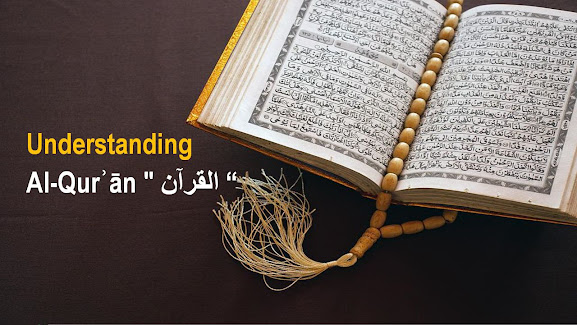
Photo | Resource Sources: Personal understanding refined by ChatGPT and google
For more Q&A about Understanding Islam, please refer to our reference page: Understanding Islam - Frequently asked Q&A. You may also refer to our refference page: Scholars' Viewpoint on important issue related to Islam to know more about Islam.
If you like Islam: My Ultimate Decision, and to keep yourself updated on all our latest posts to know more about Islam, follow us on Facebook. You may also refer to our Facebook Group Islam: The Ultimate Truth for more on Islam and Da'wah.
Please share this page to your friends and family members through Facebook, WhatsApp or any means on Social Media so that they can also be benefited by it and better understand Islam and the Holy Qur'an - Insha Allah (Allah Willing) you shall be blessed with the best of both worlds.




0 comments:
Post a Comment