.

Wednesday, 3 August 2022

Islamic viewpoint on LGBTQ

Immorality and same sex relations are not new. It dates back to as old as the history of the world. The notorious people of Lot (Prophet Lut, may peace be upon him) as mentioned in the Qur'an were the people who indulged in same sex relations and despite warnings being sounded to them by the revered prophet, they did not abandoned their way of life till they were caught up by the wrath of God and were destroyed, save a few with the Prophet Lot.

Please read our exclusive post: Prophet Lut (Lot) and Allah's wrath on his people for details on the above said historical event as mentioned in Qur'an.

However lately, the community of same sex advocates have gained momentum and in many country the community has been legalized and the same sex marriages allowed by law. It is unfortunate that this community is gaining foothold in the Islamic countries and the new found members despite being practicing Muslims have adopted this peculiar way of life and even support their decision.

Now the question arises: Is there any place of LGBTQ in Islam. Many scholars have given their viewpoint. However it must be understood that the basic foundation of Islam pivots on PURITY. Allah commands Muslims to be pure in thought, relations, affairs and adornment. The sexual matters are discussed threadbare in Qur'an and Sunnah. The essence of purity in sexual  matter is based on the exclusive relation between husband and wife. There is no concept of sex beyond this pure and sacred relation. So much so that even in the sexual relationship of husband and wife, restrictions are placed to approach one's wife if she is mensurating and the anal copulation for these two things are declared impure.

Secondly, there is to be no relation outside a marriage. For Islam has perfectly defined the limits of establishment of a family. The concept of family is based on mutual trust and purity between husband and wife. Therefore both men and women are prohibited to wear and raiment which is revealing in public which should entice lewdness in the onlooker. Likewise both men and woman are advised to keep their gaze low so as not to stare ate the opposing sex lest may induce sexual pleasure. Also guarding parts of one's shame is strictly ordered for such actions lead to lewdness and disturb the moral fiber of the society. 
(Surah 24 An Nur:30) (O Prophet), enjoin believing men to cast down their looks and guard their private parts. That is purer for them. Surely Allah is well aware of all what they do.
In Islam even a woman is advised not to appear before close relations which are Na-Mahram, that is relations with which she can get married. Likewise, a man and woman are commanded NOT to undress against anyone or reveal their parts of shame other than husband and wife.
It is not lawful for a man to cast a full gaze at the other women except at his own wife or the mahram women of his family. The chance look is pardonable but not the second look which one casts when one feels the lure of the object. The Prophet (peace be upon him) has termed such gazing and glancing as wickedness of the eyes.
So this in nutshell is the concept of morality in Islam in which there is no place for LGBTQ for it transgresses the very dictates of purity in Islam and cause of lewdness in the society. Those Muslims who are part of the LGBTQ community and yet claim to be practicing Muslims need to have serious reappraisal of their faith and tenants of Islam which has strictly laid down limits of allowable relations. 

To understand the Islamic viewpoint on LGBTQ, we have selected an exclusive lecture by Professor Javed Ahmad Ghamidi, in which he discusses the matter under discussion threadbare in the light of Qur'an. Javed Ahmad Ghamidi a Pakistani Muslim theologian, Quran scholar, Islamic modernist, exegete and educationist, on the subject. The video is in Urdu, but has English subtitles for those who cannot understand Urdu:
May Allāh (سبحانه و تعالى‎) help us understand Qur'ān and help us to act upon the commandments of Allah contained therein. May Allah help us to maintain our intimate relations pure and clean and that we do not transgress the limits set forth for us. May we be like the ones He loves and let our lives be lived helping others and not making others life miserable or unlivable. May all our wrong doings, whether intentional or unintentional, be forgiven before the angel of death knocks on our door. 

وَمَا عَلَيۡنَاۤ اِلَّا الۡبَلٰغُ الۡمُبِيۡنُ‏ 
(36:17) and our duty is no more than to clearly convey the Message.”
That is our duty to convey only to you the message that Allah has entrusted us with. Then it is for you to accept it or reject it. We have not been made responsible to make you accept it forcibly, And if you do not accept it, we shall not be seized in consequence of your disbelief, You will yourselves be answerable for your actions on Day of Resurrection.

May Allah forgive me if my posts ever imply a piety far greater than I possess. I am most in need of guidance.

Disclaimer: The views expressed in the video above are that of the concerned scholar . We have shared these view as added information in better understanding of Islam. The reader may or may not agree with the view owing to their own perception. If any one differs with the material contained in this post, one may consult the references and their authors.  If someone has more material about the subject, he/she is most welcome to share in the comments box to make the post all encompassing.

Photo | 

For more Scholarly views and videos, please read our reference page: Scholars' Viewpoint on Important Issues Related to Islam.

You may also refer to our Reference Pages for knowing more about Islam and Quran.
If you like Islam: My Ultimate Decision, and to keep yourself updated on all our latest posts to know more about Islam, follow us on Facebook

Please share this page to your friends and family members through Facebook, Twitter, WhatsApp or any means on Social Media so that they can also be benefited by it and better understand Islam and the Holy Qur'an - Insha Allah (Allah Willing) you shall be blessed with the best of both worlds.

Tuesday, 2 August 2022

Four Actions: Never part with these ever in your life

Qur'an is a Divine Book of guidance for those who ponder over every word of it and live a life according to what has been understood. In fact the entire Qur'an is full of guidance so that a believer should never fall into the trap of the Satan and continue to strengthen his faith in Allah and live a life in utter thankfulness for he could not seek guidance unless Allah willed and unless he endeavoured to seek guidance. Those who seek guidance and then remain steadfast are the ones who are among the blessed ones.

But the struggle of a believer does not end here. Once he is on the straight path, then he should never part with the following four actions ever in his life, for these are the four actions that will earn him continuous bounties and blessings of Allah, thus peace of mind and felling of contentment and happiness:

1. Remembrance of Allah
If ever we have a glance over our life, we will realize that the bounties Allah has bestowed upon us are far greater than the reward points we may have earned of our deeds. Therefore we should always be thankful to Allah for His blessings on us. And those who remember Allah and are thankful to Allah, they are promised that Allah shall always be near them, listening to their supplications and would never leave them, as promised by Allah in the 152nd verse of Surah 2. Al Baqarah (The Cow) shared as under:
فَاذۡكُرُوۡنِىۡٓ اَذۡكُرۡكُمۡ وَاشۡکُرُوۡا لِىۡ وَلَا تَكۡفُرُوۡنِ‏ 
(2:152) So remember Me and I shall remember you; give thanks to Me and do not be ungrateful to Me for My favours.
In its verbal signification "remembrance"  implies: to remember; to praise by frequently mentioning; to rehearse; to celebrate or commemorate; to make much of; to cherish the memory of as a precious possession. SO we must remember Allah as much as we can and talk to Him as if  He is somewhere very near and attentively listening to us.

2. Thankfulness
If we look around, there is so much in abundance that Allah has created just for us for our sustenance. And those who have a lot of it or even a small portion of it should ever be thankful to Allah for there are many who are deprived of these blessings. Just compare the lush green yielding fields to vast stretched dried up lands and deserts where living is devoid of bliss.

In the 7th verse of Surah 14 Ibraheem (Abraham), Allah promises that if your are thankful of me, I shall bless you with much more:

وَاِذۡ تَاَذَّنَ رَبُّكُمۡ لَـئِنۡ شَكَرۡتُمۡ لَاَزِيۡدَنَّـكُمۡ​ وَلَـئِنۡ كَفَرۡتُمۡ اِنَّ عَذَابِىۡ لَشَدِيۡدٌ‏ 
(14:7) Also call to mind when your Lord proclaimed: "If you give thanks, I will certainly grant you more; but if you are ungrateful for My favours, My chastisement is terrible.

In the above said verse, both a pleasing promise and harsh verdict is given. Pleasing tidings for those who are thankful of blessings  of Allah and are thus promised more. But very harsh tidings for those who despite enjoying bounties of Allah are thankless and ungrateful - for them a terrible chastisement is promised. So let us always be thankful of Allah and be always contended with what has been given to us, lest we fall prey to chastisement of Allah.

3. Repentance 
No one can claim to be utter pious for despite one's utmost, one may fall prey to Satan's machination and commit sin knowingly or even unknowingly. So even if one is very sure of one's strong and dot less character, one should still repent for the sins one may have committed in ignorance , the one's only Allah knows. And quite certainly those who sin knowingly must immediately repent and ask for forgiveness for Allah promises that even one has sins as high as space between the earth and the heavens, He would forgive him, provided he sincerely repents.
Repentance or penitence is the feeling or showing sorrow and regret for having done wrong. In fact whenever we sin or faulter, a feeling of guilt or moral scruple triggers in us a counter action that instantly compels us to feel bad and ashamed of our sinful actions and repent. Those who are habitual sinners, this feeling by and by fades away from their conscious and then they fall into  an immeasurably deep gulf or great space where nothing but darkness engulfs them forever.

Here we would like to share the anecdote of Prophet Younis (Jonah, peace be upon him) who when being dejected by the negative attitude of his people, abandoned them and went to a ship and was then thrown into the sea, only to be gulped by a whale. There he remained in the dark belly of the whale. He then repented and ask for forgiveness with sincerity. God accepted his repentance and forgave him and was delivered alive on the coast. Read the complete story of in our earlier post: Prophet Younis (Jonah) and Allah's Displeasure 

Please find a number of verses from Qur'an in our series of posts: Selected Verses from Qur'an under heading Forgiveness/ Repentance.

Herein under we share one of the many verses from Qur'an wherein Allah asks His servants to repent immediately if they son, and be rest assured that He is oft forgiving and merciful (ayah 110 of Surah 4. An Nisa):
وَ مَنۡ يَّعۡمَلۡ سُوۡٓءًا اَوۡ يَظۡلِمۡ نَفۡسَهٗ ثُمَّ يَسۡتَغۡفِرِ اللّٰهَ يَجِدِ اللّٰهَ غَفُوۡرًا رَّحِيۡمًا‏ 
And whoever does evil or wrongs himself but afterwards seeks Allah's forgiveness, he will find Allah Oft-Forgiving, Most Merciful
The above said Ayah 110 tells us that all sins, whether they affect others or affect one’s own self i.e. whether they violate the rights of human being or the right of Allah subhanahu wa ta’ala, can be forgiven by one’s repenting and praying for forgiveness. But, it is necessary to know the reality of showing repentance and seeking forgiveness. Mere verbal declarations of, “I seek Allah’s forgiveness” and, “I turn to Him in repentance” are not acts of genuine repentance as such.

Therefore, according to a consensus of Ulema / Scholars, the person who is involved in some sin, is not ashamed of it and does not leave it or, at least, does not resolve to leave it in the future, then, his verbal declaration of Astaghfirullah  " أستغفر الله " is an open mockery of repentance.

Invocations / Dua " دُعا "
The invocations / supplications (Dua / دُعا) are the powerful tool in the hands of believers through which they are able to connect to their Creator through one-to-one connection by getting into a deeper spiritual state.

In fact Allah loves his servants the most when he is in that spiritual state, with closed eye, invoking His blessings. Prophet Muhammad ﷺ is reported to have said "Dua is the very essence of worship." There are many special supplications mentioned in the Qur'ān which believers must remember and often include in their supplications for these have been specially chosen for them. We have listed many of these in our Reference Page: Selected Invocations / Dua " دُعا " from Quran 

Herein under we share the 60th verse of Surah Mu'min:

وَقَالَ رَبُّكُمُ ادۡعُوۡنِىۡۤ اَسۡتَجِبۡ لَـكُمۡؕ اِنَّ الَّذِيۡنَ يَسۡتَكۡبِرُوۡنَ عَنۡ عِبَادَتِىۡ سَيَدۡخُلُوۡنَ جَهَنَّمَ دَاخِرِيۡنَ
(40:60) Your Lord said: “Pray to Me, and I will accept your prayers. Surely those who wax too proud to worship Me shall enter Hell, utterly abased.”
We have only highlighted the portion of Praying to Allah/making Dua and invocations, and Allah will surely answer the prayers. In this verse it is stressed upon the believers that all forms of worship are in fact a form of invocation and Allah always listens to His servants when they bow in front of Him and also prostrate in sincerity and belief that their prayers will be answered. 

It is believed that invocations help ease one's hardships that one is in, but also remove further hardships that were to befall upon him but have been lifted because of his prayers and supplications. Invocations not help ease one's difficult times and also become a reason for increase in one's means of sustenance.

Thus these four actions are a gift from Allah for the believers with which they not only remember Allah all the times, thank Him for his blessings and bounties, but also help them to repent whenever they faulter and help them to rise again and start afresh. Therefore Never part with these four actions ever in your life to be among the blessed.
May Allāh (سبحانه و تعالى‎) help us understand Qur'ān and follow the Sunnah of Prophet Muhammad ﷺ, which is embodiment of commandments of Allah contained in the Qur'ān. May Allah help us to be like the ones He loves and let our lives be lived helping others and not making others life miserable or unlivable. May all our wrong doings, whether intentional or unintentional, be forgiven before the angel of death knocks on our door. 
May Allah forgive me if my posts ever imply a piety far greater than I possess. I am most in need of guidance.

Reading the Qur'ān should be a daily obligation of a Muslim - Reading it with translation will make it meaningful. But reading its Exegesis / Tafsir will make you understand it fully. It will also help the Muslims to have grasp over social issues and their answers discussed in the Qur'an and other matter related to inter faith so  that they are able to discuss issues with Non Muslims with authority based on refences from Qur'an.

For more Q&A about Understanding Islam, please refer to our reference page: Understanding Islam - Frequently asked Q&A

If you like Islam: My Ultimate Decision, and to keep yourself updated on all our latest posts to know more about Islam, follow us on Facebook

Please share this page to your friends and family members through Facebook, WhatsApp or any means on Social Media so that they can also be benefited by it and better understand Islam and the Holy Qur'an - Insha Allah (Allah Willing) you shall be blessed with the best of both worlds.

Monday, 1 August 2022

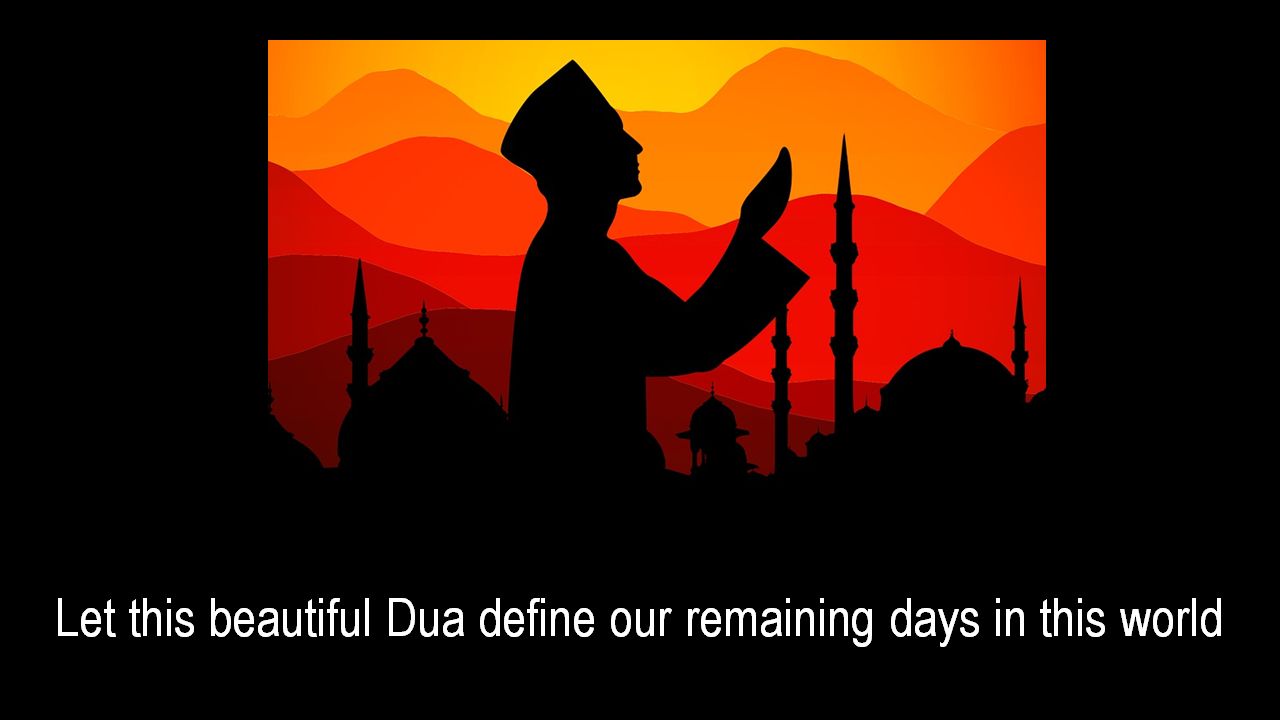
Let this beautiful Invocation / Dua " دُعا " define our remaining days in this world

I have been sharing many invocations / Duas " دُعا "  from various surahs of the Qur'an shared in our series of posts on our reference page: Selected Invocations / Dua " دُعا " from the Qur'an. Each one of these invocations are heart moving if one recites these from the sincerity of depths of one's heart.  Continuing my effort to provide beautifully worded invocations from Qur'an, Sunnah and even by other sources, today I share a invocation that would rally move you and you would never forget to recite it at least once daily:

اللَّهُمَّ اجْعَلْ خَيْرَ عُمْرِي آخِرَهُ ، وَخَيْرَ عَمَلِي خَوَاتِمَهُ ، وَخَيْرَ أَيَّامِي يَوْمَ أَلْقَاكَ 
"Oh Allah, make the best part of my life the end of it. And make the best of my deeds my final actions. And make the best of my days be the Day in which I get to meet You" 

Please concentrate each word of this invocation, and you will find your heart flowing with your lips as you recite it, provided you recite it from the depths of your heart and total sincerity.  What a beautiful day that would be if we die reciting this Dua. What better day it would be if we were doing a deed that pleases Allah. What better day to die the day Allah is pleased with us. And what a blessed day it would be when we meet our Creator with a heavy load in our right hand and none in our left hand.

Such blessed day could happen if our entire remaining life is lived as per dictates of Qur'an and Sunnah. Form now on  let us make a pledge to be respectful to our parents and elders and be loveable by our children. If our parents are no more, let us pray for their forgiveness and make charities on their behalf so that Allah forgives them. Let us rear our children as per the role model based on commandments of Allah and Sunnah. Let our children be a source of prayers for us when we are no more. Let our children be praying for us when we would be long forgotten by others.
May Allāh (سبحانه و تعالى‎) help us understand Qur'ān and help us to act upon the commandments of Allah contained therein. May Allah help us to be like the ones He loves and let our lives be lived helping others and not making others life miserable or unlivable. May all our wrong doings, whether intentional or unintentional, be forgiven before the angel of death knocks on our door. 
May Allah forgive me if my posts ever imply a piety far greater than I possess. I am most in need of guidance.

For more Selected Verses, please refer to our reference page: Selected Invocations / Dua " دُعا " from the Qur'anYou may also refer to our Reference Pages for knowing more about Islam and Qur'ān.
Photo |
Reading the Qur'ān should be a daily obligation of a Muslim - Reading it with translation will make it meaningful. But reading its Exegesis / Tafsir will make you understand it fully.

An effort has been made to gather explanation / exegesis of the surahs of the Qur'ān from authentic sources and then present a least possible condensed explanation of the surah. In that the exegesis of the chapters of the Quran is mainly based on the "Tafhim al-Qur'an - The Meaning of the Qur'an" by one of the most enlightened scholars of the Muslim World Sayyid Abul Ala Maududi.  

In order to augment and add more explanation as already provided, additional input has been interjected from following sources: 
  • Towards Understanding the Quran
  • Tafsir Ibn Khatir
  • Muhammad Asad Translation
  • Javed Ahmad Ghamidi / Al Mawrid
  • Al-Quran, Yusuf Ali Translation
  • Verse by Verse Qur'an Study Circle
In addition the references of  other sources which have been explored have also been given above. Those desirous of detailed explanations and tafsir (exegesis), may refer to these sites.

If you like Islam: My Ultimate Decision, and to keep yourself updated on all our latest posts to know more about Islam, follow us on Facebook

Please share this page to your friends and family members through Facebook, WhatsApp or any means on Social Media so that they can also be benefited by it and better understand Islam and the Qur'ān - Insha Allah (Allah Willing) you shall be blessed with the best of both worlds.

Sunday, 31 July 2022

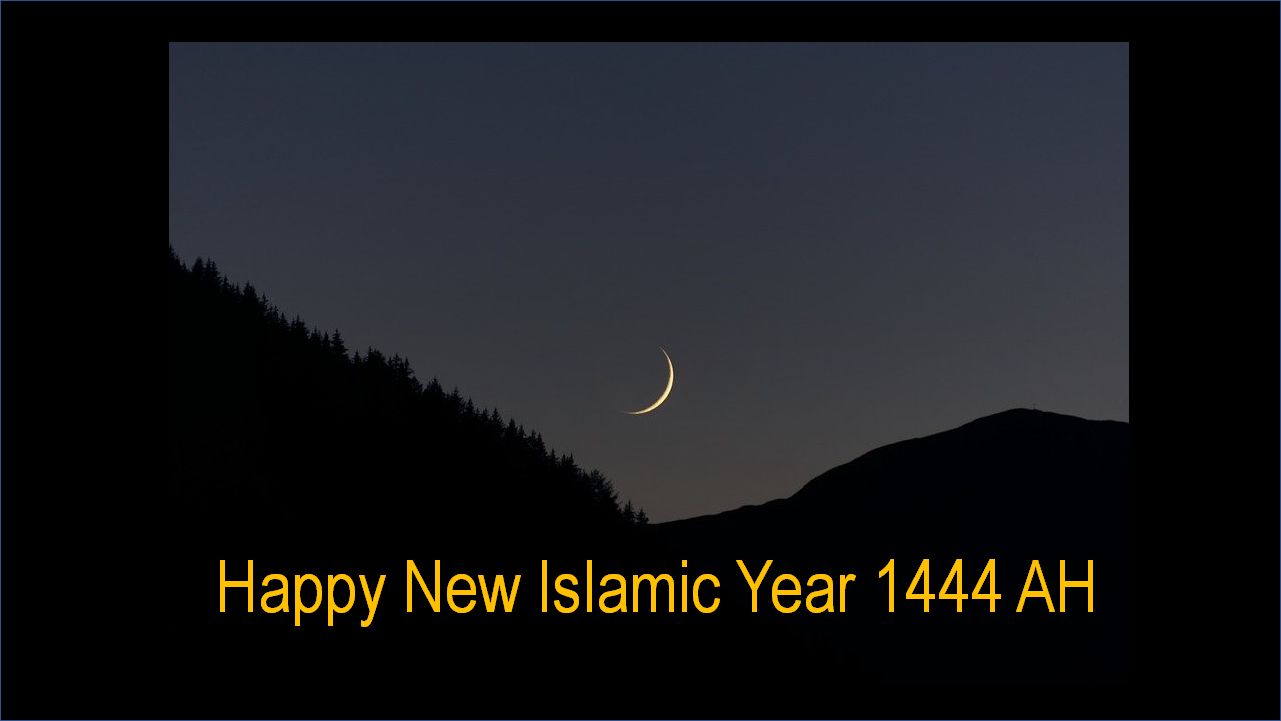
May Allah bless the Mankind in the New Islamic Year 1444 AH

30th July 2022 marks the beginning of the new Islamic year 1444 AH.  We pray to Allah that this new year brings peace and blessing to the entire mankind all over the world. May peace prevails and all those struggling for peace and independence may succeed.  May this new year be the best year for the entire mankind and all dark shadows be lifted from over us and give way to bright sunshine to spread happiness everywhere. Ameen

For those not familiar with the Islamic Calander, let us add a few lines for their information:
  • Unlike the Gregorian Calander that is based on the movement of the sun and each new day begins with the dawn of the sun, the Islamic Calander is based on the movement of the moon and each Islamic month commences with the sighting of the new moon and each day commences after the sunset.
  • The Gregorian Year is suffixed with letters CE / AD, while the Islamic Year is suffixed AH (After Hijrah) or (Latin: Anno Hegirae, "in the year of the Hijrah").
  • The Hijrah commences with the migration of Prophet Muhammad ﷺ in 622 CE from Makkah to Medinah.
  • The Islamic calendar is called The Hijri calendar (Arabic: ٱلتَّقْوِيم ٱلْهِجْرِيّ, Romanized: al-taqwīm al-hijrī), consisting of 12 lunar months in a year of 354 or 355 days.
  • Since each month commences with the sighting of the new moon,thus each month can have 29 or 30 days depending on the visibility of the moon, astronomical positioning of the earth and weather conditions. 
  • The Hijrah or the Islam Year 1444 AH commences as per the Gregorian calendar from approximately 30 July 2022 to 18 July 2023.
In the 35th verse of Surah 9 At Tauba, Allah mentions about the division of the entire year in 12 months:
اِنَّ عِدَّةَ الشُّهُوۡرِ عِنۡدَ اللّٰهِ اثۡنَا عَشَرَ شَهۡرًا فِىۡ كِتٰبِ اللّٰهِ يَوۡمَ خَلَقَ السَّمٰوٰتِ وَالۡاَرۡضَ مِنۡهَاۤ اَرۡبَعَةٌ حُرُمٌ​ ؕ ذٰ لِكَ الدِّيۡنُ الۡقَيِّمُ ۙ فَلَا تَظۡلِمُوۡا فِيۡهِنَّ اَنۡفُسَكُمۡ​ ؕ وَقَاتِلُوا الۡمُشۡرِكِيۡنَ كَآفَّةً كَمَا يُقَاتِلُوۡنَكُمۡ كَآفَّةً​  ؕ وَاعۡلَمُوۡۤا اَنَّ اللّٰهَ مَعَ الۡمُتَّقِيۡنَ‏ 
[9:36] Surely the reckoning of months, in the sight of Allah, is twelve months, laid down in Allah's decree on the day when He created the heavens and the earth; and out of these months four are sacred. That is the true ordainment. Do not, therefore, wrong yourselves, with respect to these months. And fight all together against those who associate others with Allah in His Divinity in the manner that they fight against you all together,36 and know well that Allah is with the God-fearing.
This means that ever since Allah created the sun, the moon and the earth, the new moon takes place only once in a month; thus the year has always been of twelve months.

The formal commencement of numbered Hijrah Calendar:
In pre-Islamic Arabia, it was customary to identify a year after a major event which took place in it. Thus, according to Islamic tradition, Abraha, governor of Yemen, then a province of the Christian Kingdom of Aksum (Ethiopia), attempted to destroy the Kaaba with an army which included several elephants. The raid was unsuccessful, but that year became known as the Year of the Elephant, during which Muhammad was born (sura al-Fil). Most equate this to the year 570 CE, but a minority use 571 CE.

The first ten years of the Hijra were not numbered, but were named after events in the life of Muhammad according to Abū Rayḥān al-Bīrūnī:[27]
  • The year of permission.
  • The year of the order of fighting.
  • The year of the trial.
  • The year of congratulation on marriage.
  • The year of the earthquake.
  • The year of enquiring.
  • The year of gaining victory.
  • The year of equality.
  • The year of exemption.
  • The year of farewell.
In c. 638 (17 AH), Abu Musa, one of the officials of the Caliph Umar (r. 634–644) in Basrah, complained about the absence of any years on the correspondence he received from Umar, making it difficult for him to determine which instructions were most recent. This report convinced Umar of the need to introduce an era for Muslims. After debating the issue with his counsellors, he decided that the first year should be the year of Muhammad's arrival at Medina (known as Yathrib, before Muhammad's arrival).[28] Uthman ibn Affan then suggested that the months begin with Muharram, in line with the established custom of the Arabs at that time. The years of the Islamic calendar thus began with the month of Muharram in the year of Muhammad's arrival at the city of Medina, even though the actual emigration took place in Safar and Rabi' I of the intercalated calendar, two months before the commencement of Muharram in the new fixed calendar.[2] Because of the Hijra, the calendar was named the Hijri calendar.

The 12  Islamic Months are named as under{
  • Muharram " ٱلْمُحَرَّم " – A sacred month, so called because battle and all kinds of fighting are forbidden (ḥarām) during this month. Muharram includes Ashura, the tenth day.
  • Safar " صَفَر " – Supposedly named this because pre-Islamic Arab houses were empty this time of year while their occupants gathered food.
  • Rabi Al-Awwal " رَبِيع ٱلْأَوَّل " – The month of Spring - Also means to graze, because cattle were grazed during this month. Also a very holy month of celebration for many Muslims, as it was the month the Prophet Muhammad was born.
  • Rabi Al-Thani " رَبِيع ٱلثَّانِي‎ " -  the second spring, the last spring
  • Jamada Al-Awwal " جُمَادَىٰ ٱلْأُولَىٰ‎ " - Often considered the pre-Islamic summer. Jumādā may also be related to a verb meaning "to freeze" and another account relates that water would freeze during this time of year.
  • Jamada Al-Thani " جُمَادَىٰ ٱلثَّانِيَة‎ " - the second of parched land, the last of parched land
  • Rajab  " رَجَب‎ " – A Sacred Month: This is the second sacred month in which fighting is forbidden. Rajab may also be related to a verb meaning "to remove", so called because pre-Islamic Arabs would remove the heads of their spears and refrain from fighting.
  • Sha’ban  " شَعْبَان‎ " – The Harbinger of the month of Ramadan : Marked the time of year when Arab tribes dispersed to find water. Sha‘bān may also be related to a verb meaning "to be in between two things". Another account relates that it was called thus because the month lies between Rajab and Ramadan.
  • Ramadan  " رَمَضَان‎ " – The Month of Fasting (The burning heat):  Burning is related to fasting as with an empty stomach one's worldly desire will burn. Supposedly so called because of high temperatures caused by the excessive heat of the sun. Ramaḍān is the most venerated month of the Hijri calendar. During this time, Muslims must fast and not do anything sinful from pre-dawn until sunset and should give charity to the poor and needy.
  • Shawwal  " شَوَّال‎ " – The Month of Reward : Female camels would normally be in calf at this time of year and raise their tails. At the first day of this month, the Eid al-Fitr, "Festival of Breaking the Fast" begins, marking the end of fasting and the end of Ramadhan.
  • Dhul Qadah  " ذُو ٱلْقَعْدَة‎ " – A Sacred Month: This is a holy month during which war is banned. People are allowed to defend themselves if attacked.
  • Dhul Hijjah  " ذُو ٱلْحِجَّة " – The 10 Best Days (The Month of Hajj): During this month Muslim pilgrims from all around the world congregate at Mecca to visit the Kaaba. The Hajj is performed on the eighth, ninth and the tenth of this month. Day of Arafah takes place on the ninth of the month. Eid al-Adha, the "Festival of the Sacrifice", begins on the tenth day and ends on the thirteenth, and this is a fourth holy month during which war is banned.
May Allāh (سبحانه و تعالى‎) help us understand Qur'ān and follow the Sunnah of Prophet Muhammad ﷺ, which is embodiment of commandments of Allah contained in the Qur'ān. May Allah help us to be like the ones He loves and let our lives be lived helping others and not making others life miserable or unlivable. May all our wrong doings, whether intentional or unintentional, be forgiven before the angel of death knocks on our door. 

May Allah forgive me if my posts ever imply a piety far greater than I possess. I am most in need of guidance.

Reading the Qur'ān should be a daily obligation of a Muslim - Reading it with translation will make it meaningful. But reading its Exegesis / Tafsir will make you understand it fully. It will also help the Muslims to have grasp over social issues and their answers discussed in the Qur'an and other matter related to inter faith so  that they are able to discuss issues with Non Muslims with authority based on refences from Qur'an.

Photo | Resource references: | 1

For more Q&A about Understanding Islam, please refer to our reference page: Understanding Islam - Frequently asked Q&A

If you like Islam: My Ultimate Decision, and to keep yourself updated on all our latest posts to know more about Islam, follow us on Facebook

Please share this page to your friends and family members through Facebook, WhatsApp or any means on Social Media so that they can also be benefited by it and better understand Islam and the Holy Qur'an - Insha Allah (Allah Willing) you shall be blessed with the best of both worlds.

Saturday, 30 July 2022

Judge in accordance with Allah's Commandments - and do not dispute on behalf of the dishonest

No two people or a community can thrive peacefully unless justice is ensured equally to everyone without any prejudice to social status or position of opposing sides. Many a nations have been wiped out where the elite and so called socially highly placed few were given privileged decisions by the judges and the ordinaries were deprived to get their rightful rights. 
Justice is the quality of being just; righteousness, equitableness, or moral rightness: to uphold the justice of a cause. rightfulness or lawfulness, as of a claim or title; justness of ground or reason: to complain with justice. the moral principle determining just conduct.

Islam places justice at the highest pedestal of any society for which many a commandments of Allah mentioned in the Qur'an and upheld in numerous hadith of the Prophet Muhammad  ﷺ.  The essence of these justice related verses is that whenever a judge has to decide between two people, the basic criteria should be uphold of the righteousness and even an enemy of Islam is the aggrieved party, he should be afforded justice in an Islamic state and the opposing party though Muslim be punished for falsehood and malefice intentions. Although the verse points towards a special incidence, yet its implications and application are true for all times to come since then, even today!!

In this regard, we share the 105th verse of Surah 4. An Nisa, where in a case is mentioned in which a Muslim levied false accusation against an innocent Jew who could not prove his innocence. While the Muslim backed by his clan and forcefully put across his claim, though based on falsehood, hoping to get decision in his favour from the court of Prophet Muhammad  ﷺ. The details of the case are given in the explanation of the verse below:

اِنَّاۤ اَنۡزَلۡنَاۤ اِلَيۡكَ الۡكِتٰبَ بِالۡحَـقِّ لِتَحۡكُمَ بَيۡنَ النَّاسِ بِمَاۤ اَرٰٮكَ اللّٰهُ​ ؕ وَلَا تَكُنۡ لِّـلۡخَآئِنِيۡنَ خَصِيۡمًا ۙ‏ 
(4:105) (O Messenger!) We have revealed to you this Book with the Truth so that you may judge between people in accordance with what Allah has shown you. So do not dispute on behalf of the dishonest,
In fact, verses from 105 till 115 discuss very important issues concerning an event that occurred in the time of Prophet Muhammad  ﷺ about how to judge between two people and how to uphold justice no matter who is right or who is wrong. Justice must be upheld in its total and utmost purity, impartiality and neutrality.

The above said verse, and the following verses up to 115 were revealed before a case was to be decided by Prophet Muhammad  ﷺ:
There was in the Bani Zafar clan of the Ansar, a man known as Ta'mah or Bashir bin-Ubairiq. He stole the armor of another Ansari and hid it in the house of a Jew. When an investigation started into the theft, the owner of the armor placed the matter before the Holy Prophet and told him that he suspected Ta'mah of the theft. But the accused and his relatives and many other people of the Bani Zafar clan conspired and laid the guilt at the door of the Jew, who asserted that he was innocent of the thing. But Ta'mah's people went on pleading his case vehemently. They argued: "The statement of the Jew who is an enemy of the Truth and who disbelieves in Allah and His Messenger cannot be trusted; whereas we are Muslims, and, therefore, should be trusted." The Holy Prophet was naturally influenced by the seeming correctness of the argument and was about to acquit Ta'mah and give a warning to the plaintiff for bringing a false charge against a Muslim, and decide the case against the Jew, when this Revelation came and disclosed the reality of the matter.
It is true that even if the Holy Prophet had, as a judge, decided the case in the light of the evidence produced before him, he would not have incurred any blame, for judges have to give their decision according to the evidence that is presented before them and sometimes people do succeed in getting wrong judgments in their favor by misrepresentation. But the matter had another side: if the Holy Prophet had decided the case against the Jew at that time, when a bitter convict was raging between Islam and kufr, the enemies of Islam would have got a strong moral weapon against him, nay, against the Islamic Community and the Islamic Mission. They would have carried on a bitter propaganda against Islam, saying, "There is no justice among the Muslims; they practice prejudices and partisanship inspire of the fact that they preach against them as has been shown by this decision against the Jew". That is why, Allah directly intervened in the case to save them from this danger.

In this passage (vv. 105 - 115) on the one hand, those Muslims who tried to shield the guilty one of their own clan, have been strongly rebuked for their partisanship, and, on the other, the Muslims in general have been taught that they should not allow partisanship to stand in the way of justice. It is sheer dishonesty that one should plead the cause of one's own party man, even though he may he in the wrong, and oppose the man of the opposite party, even though he may he right.

For reference, we just share a few following verses that caution Muslim judges and supporters of wrongdoer for Allah knows the truth and does like the transgressors and those hiding the truth:
(4:107) Do not plead for those who are dishonest to themselves; Allah does not love him who betrays trust and persists in sin.
(4:108) They can hide (their deeds) from men but they cannot hide (them) from Allah for He is with them even when they hold nightly counsels that are unpleasing to Allah. Allah encompasses all their doings.
(4:109) You pleaded on their behalf in this worldly life but who will plead with Allah on their behalf on the Day of Resurrection, or who will be their defender there?
(4:112) But he who commits either a fault or a sin, and then casts it upon an innocent person, lays upon himself the burden of a false charge and a flagrant sin.
(4:113) (O Messenger!) But for Allah's favour and mercy upon you, a party of them had resolved to mislead you, yet they only misled them selves, and could not have harmed you in any way. Allah revealed to you the Book and Wisdom, and He taught you what you knew not. Great indeed has been Allah's favour upon you.

The explanation of Ibn Kathir is rather long and can be read here

Muhammad Asad Explanation:
The "thou" in this and the following two verses - as well as in verse {113} - refers, on the face of it, to the Prophet; by implication, however, it is addressed to everyone who has accepted the guidance of the Qur'an: this is evident from the use of the plural "you" in verse {109}. Consequently, the attempt on the part of most of the commentators to explain this passage in purely historical terms is not very convincing, the more so as it imposes an unnecessary limitation on an otherwise self-explanatory ethical teaching of general purport.

Yusuf Ali  Explanation
We skip the story which has already mentioned above. And share the summary of comments by Yususf Ali;
The general lesson is that the righteous man is faced with all sorts of subtle wiles; the wicked will try to appeal to his highest sympathies and most honourable motives to deceive him and use him as an instrument for defeating justice. He should be careful and cautious, and seek the help of Allah for protection against deception and for firmness in dealing the strictest justice without fear or favour. To do otherwise is to betray a sacred trust; the trustee must defeat all attempts made to mislead him.

Tafsir Qur'an Wiki:
We have bestowed this book on you from on high, setting forth the truth, so that you may judge between people in accordance with what God has taught you. Hence, do not contend with those who betray their trust. Seek God’s forgiveness, for God is indeed Much-Forgiving, Merciful. And do not argue on behalf of those who are false to their own selves. Indeed God does not love those who betray their trust and persist in sinful action. They conceal their doings from men, but they cannot conceal them from God; for He is present with them when, in the darkness of the night, they agree all manner of sayings which displease Him. God certainly encompasses [with His knowledge] whatever they do. You may well argue on their behalf in the life of this world, but who is there to argue on their behalf with God on the Day of Resurrection, or who will be their advocate? (Verses 105-109)
 
The style here is very firm, smacking of anger in support of the truth. Real concern for justice is felt throughout the passage. The first aspect of this is the reminder to God’s Messenger of the fact that God’s book was, in truth, bestowed on him from on high so that he may arbitrate between people in accordance with what God imparted to him of true knowledge. This reminder is followed by an order requiring him never to defend those who betray their trust. He must not contend for them or argue on their behalf. He is further directed to seek God’s forgiveness for such arguments in their defence: “We have bestowed this book on you from on high, setting forth the truth, so that you may judge between people in accordance with what God has taught you. Hence, do not contend with those who betray their trust. Seek God’s forgiveness, for God is indeed Much-Forgiving, Merciful.” (Verses 105-6)

Please listen to explanation of the ayat by eminent Muslim scholar Nouman Ali Khan:
May Allāh (سبحانه و تعالى‎) help us understand Qur'ān and follow the Sunnah of Prophet Muhammad ﷺ, which is embodiment of commandments of Allah contained in the  Qur'ān. May Allah help us to be like the ones He loves and let our lives be lived helping others and not making others life miserable or unlivable. May all our wrong doings, whether intentional or unintentional, be forgiven before the angel of death knocks on our door. 
وَمَا عَلَيۡنَاۤ اِلَّا الۡبَلٰغُ الۡمُبِيۡنُ‏ 
(36:17) and our duty is no more than to clearly convey the Message.”
That is Our duty is only to convey to you the message that Allah has entrusted us with. Then it is for you to accept it or reject it. We have not been made responsible to make you accept it forcibly, And if you do not accept it, we shall not be seized in consequence of your disbelief, You will yourselves be answerable for your actions on Day of Resurrection.

Reading the Qur'ān should be a daily obligation of a Muslim - Reading it with translation will make it meaningful. But reading its Exegesis / Tafsir will make you understand it fully. It will also help the Muslims to have grasp over social issues and their answers discussed in the Qur'an and other matter related to inter faith so  that they are able to discuss issues with Non Muslims with authority based on refences from Qur'an.

May Allah forgive me if my posts ever imply a piety far greater than I possess. I am most in need of guidance.

Note: When we mention God in our posts, we mean One True God, we call Allah in Islam, with no associates. Allah is the Sole Creator of all things, and that Allah is all-powerful and all-knowing. Allah has no offspring, no race, no gender, no body, and is unaffected by the characteristics of human life.

For more Selected Verses, please refer to our reference page: Selected Verses from the Qur'anYou may also refer to our Reference Pages  and Understanding Al Qur'an for knowing more about Islam and Qur'ān.
Photo | Tafsir References: | 1 | 2 | 3 | 4

An effort has been made to gather explanation / exegesis of the surahs of the Qur'ān from authentic sources and then present a least possible condensed explanation of the surah. In that the exegesis of the chapters of the Quran is mainly based on the "Tafhim al-Qur'an - The Meaning of the Qur'an" by one of the most enlightened scholars of the Muslim World Sayyid Abul Ala Maududi.  
In order to augment and add more explanation as already provided, additional input has been interjected from following sources: 
  • Towards Understanding the Quran
  • Tafsir Ibn Khatir
  • Muhammad Asad Translation
  • Javed Ahmad Ghamidi / Al Mawrid
  • Al-Quran, Yusuf Ali Translation
  • Verse by Verse Qur'an Study Circle
In addition the references of other sources which have been explored have also been given above. Those desirous of detailed explanations and tafsir (exegesis), may refer to these sites.

If you like Islam: My Ultimate Decision, and to keep yourself updated on all our latest posts to know more about Islam, follow us on Facebook

Please share this page to your friends and family members through Facebook, WhatsApp or any means on Social Media so that they can also be benefited by it and better understand Islam and the Qur'ān - Insha Allah (Allah Willing) you shall be blessed with the best of both worlds.

Friday, 29 July 2022

10 Virtues (of Muslim Men and Women) for which Allah promises a mighty reward

Life is defined as any system capable of performing functions such as eating, metabolizing, excreting, breathing, moving, growing, reproducing, and responding to external stimuli. This definition is true for both humans and animals. Refining this statement for humans only, we find a life of men with wisdom, intellect and motivation of varying degrees. Each man is trying to run a marathon but many give away after a few miles due to lack of stamina, motivation and resilience. Or simply put, life  is a tug of war wherein men at both sides push and pull but finally one side gives way. That is success overtakes the meek and weak who settle down with a torturing defeat.

Likewise, when we see life from a Divine point of view, we conclude that life is a test of faith for the believing men and women. Thus a Muslim man's (and women) ultimate life objective is to worship the creator Allah SWT (English: God) by abiding by the Divine guidelines revealed in the Qur'an and the Tradition of the Prophet. 

In Islam, the Earthly life is merely a test, determining one's afterlife, either in Jannah (Paradise) or in Jahannam (Hell). Thus those who will pass the test, a very difficult one with hurdles, trials, difficulties, death of a near and dear one, loss of wealth and position, are the one's who will be declared successful by the Divine yardstick.

We have already published a number of posts on believing men and women who will be rewarded not only in this life but in the life of the hereafter for their true faith, immense belief in Allah and His plan that he set forth for them and finally succeeding. Today we share a very elaborate verse from Surah 33. Al Ahzab (The Clans) which lists down seven categories of believing Muslim men and women whom Allah will forgive and award them a mighty reward. 
In this verse, a number of Muslim virtues are specified here, but the chief stress is laid on the fact that these virtues are as necessary to women as to men. Both sexes have spiritual as well as human rights and duties in an equal degree, and the future "reward" of the Hereafter.
اِنَّ الۡمُسۡلِمِیۡنَ وَ الۡمُسۡلِمٰتِ وَ الۡمُؤۡمِنِیۡنَ وَ الۡمُؤۡمِنٰتِ وَ الۡقٰنِتِیۡنَ وَ الۡقٰنِتٰتِ وَ الصّٰدِقِیۡنَ وَ الصّٰدِقٰتِ وَ الصّٰبِرِیۡنَ وَ الصّٰبِرٰتِ وَ الۡخٰشِعِیۡنَ وَ الۡخٰشِعٰتِ وَ الۡمُتَصَدِّقِیۡنَ وَ الۡمُتَصَدِّقٰتِ وَ الصَّآئِمِیۡنَ وَ الصّٰٓئِمٰتِ وَ الۡحٰفِظِیۡنَ فُرُوۡجَہُمۡ وَ الۡحٰفِظٰتِ وَ الذّٰکِرِیۡنَ اللّٰہَ کَثِیۡرًا وَّ الذّٰکِرٰتِ ۙ اَعَدَّ اللّٰہُ لَہُمۡ مَّغۡفِرَۃً وَّ اَجۡرًا عَظِیۡمًا
Surely the men who submit (to Allah) and the women who submit (to Allah), the men who have faith and the women who have faith, the men who are obedient and the women who are obedient, the men who are truthful and the women who are truthful; the men who are steadfast and the women who are steadfast, the men who humble themselves (to Allah) and the women who humble themselves (to Allah), the men who give alms and the women who give alms, the men who fast and the women who fast, the men who guard their chastity and the women who guard their chastity, the men who remember Allah much and the women who remember Allah much: for them has Allah prepared forgiveness and a mighty reward.

Note: The given verse cannot be understood unless its relevance and background is studied first. In fact from verse 28-35 should be read very carefully as these carry solutions to many asocial issues that Muslims may confront as had been confronted by none other than the Prophet of Allah himself. These verses in fact are addressed to the wives of the Prophet Muhammad and through these verses the Prophet has been asked to convey to them the Divine message for they are not ordinary women. Please read the explanation of verses 28-34 from our earlier post: Exegesis/Tafsir Surah 33. Al Ahzab (The Clans). However, it must be borne in mind that the instructions given above to the Holy Prophet's wives are not exclusively meant for them but the Muslim society as a whole should reform itself in accordance with them. 

Now lets read the explanation / tafsir / exegesis of the 35th verse by various Muslim scholars.

Sayyid Abul Ala Maududi:
1. ( the men who submit (to Allah) and the women who submit (to Allah) "Who have surrendered themselves to Allah : Who have accepted Islam as a code of life for themselves, and have decided to follow it in their lives, and who have no wish to resist the Islamic way of life and thought, but have adopted the way of obedience and submission to it. 

2. ( the men who have faith and the women who have faith ) "Who are believing": Whose obedience is not merely outward nor unwilling but who sincerely regard the guidance given by Islam as based on the truth whose faith is that the way shown by the Qur'an and the Holy Prophet Muhammad (upon whom be Allah's peace and blessings) is the only right and straight way in following which alone lies their true success. That which has been declared as wrong by Allah and His Prophet is certainly wrong even according to their judgment and that which has been declared as right by Allah and His Prophet is certainly right even according to their thinking and sense. Psychologically and intellectually also they do not regard as improper any injunction that has been enjoined by the Qur'an and Sunnah, and do not remain on the lookout to change it somehow to suit their own desire or mold it according to the current trends of the world, avoiding at the same time the blame that they have effected a change in the Command given by Allah and His Prophet. The Holy Prophet has described the true state of faith in a Hadith in these words:
"He who reconciled himself to Allah as his Lord and to Islam as his Way of Life and to Muhammad as his Messenger, has the true taste of Faith." (Muslim)
In another Hadith, he has explained it thus: "None of you becomes a believer until the desires of his self become subordinate to what I have brought." (Sharh as-Sunnah) 
3. ( the men who are obedient and the women who are obedient ) That is, "They do not rest content with mere belief but are obedient practically also. They are not the sort of the people who would honestly believe that what Allah and His Messenger have commanded was true but would violate it in practice: that they would sincerely regard what Allah and His Messenger have forbidden as bad but would go on following the same in practical life." 

4. ( the men who are truthful and the women who are truthful ) hat is, "They are truthful in their speech and honest in thou dealings. They do not deal in lies, deceptions, frauds and forgeries. They utter with their tongues only what their conscience approves as true. They practice and perform only what they honestly find to be in accordance with righteousness and truth, and they are honest in all their dealings with others." 

5. ( the men who are steadfast and the women who are steadfast ) That is, "They patiently and steadfastly bear and face all the obstacles, dangers, difficulties and losses that they might have to encounter in following the right way taught by Allah and His Messenger and in establishing Allah's Religion in the world; no fear and no temptation and no lust of the self can succeed in diverting them from the right way."

6. ( the men who humble themselves (to Allah) and the women who humble themselves (to Allah) ) That is, "They are free from pride, vanity and haughtiness: they have full understanding of the reality that they arc servants and they have no other position than that of servitude. Therefore, their hearts as well as their bodies remain bowed before Allah, dominated by fear of Him. They never display the attitude which is the hall-mark of the lives of those who are fearless of God and arc involved in arrogance. " From the sequence it appears that the mention of Khushu' (expression of humility) in particular along with the general attitude of the fear of God implies the Prayer, for the mention of the practice of charity and fast has been made just after it. 

7. ( the men who give alms and the women who give alms, ) This does not only imply payment of the obligatory Zakat, but it also includes general charity. It means to say that they spend their wealth freely in the way of Allah and they are not at all niggardly in the matter of helping the servants of Allah as much as they can. No orphan and no sick or afflicted person, no weak or disabled person, no poor and needy one remains deprived of their support in their dwelling; and if there arises the need for monetary help for promoting the cause of Allah's Religion, they arc never miserly in expending their wealth for that purpose. 

8. ( the men who fast and the women who fast ) This includes both the obligatory and the voluntary fasts. 

9. ( the men who guard their chastity and the women who guard their chastity ) This has two meanings: (1) They refrain from adultery; and (2) they avoid nudity. One should also note that nudity does not only mean being naked but it is also nudity to put on a thin dress which shows the body, or is so tight-fitting that it reveals all the outlines of the body. 

10. ( the men who remember Allah much and the women who remember Allah much  ) "Remember Allah much" means that one should mention Allah's name in one way or other at all times in every business of life. Man cannot develop such a state of the mind unless the thought of God becomes deeply embedded in his heart. When this idea has passed beyond his conscious mind and settled deep in his subconscious and unconscious mind, then only he will remember and mention God's name in whatever he does and in whatever he says. He will begin with bismillah when he eats and say al-hamdu lillah when he finishes; he will remember Allah when he goes to bed, and mention Allah's name when he gets up. In his conversation also he will again and again pronounce bismillah, al-hamdu-lillalh, insha-Allah, ma sha Allah, etc. and ask for Allah's help in every matter, and thank Him for every blessing. He will seek His mercy in every affliction, and turn to Him in every trouble. He will fear Him on encountering every evil, and ask for His forgiveness when he happens to have committed an error and will pray to Him for fulfillment of every need. In short, in every state and in every business of life his function will be to remember Allah.
This. In fact, is the essence of the Islamic life. For all other acts of worship there is a prescribed time when they are performed, and one is free when one has performed them. But this is the worship which has no special time; it has to be performed constantly so that it links up the man's life with Allah and His service permanently. The other worships and religious acts themselves also become meaningful only when the heart of man remains inclined to Allah not only at the time when the act is actually being carried out but at all times when the tongue is uttering Allah's name constantly. In such a state as this worship and religious acts develop and flourish in a man's life precisely in the same manner as a plant grows in a congenial climate and environment. Contrary to this, the example of the religious services and worships which are carried out only on special times and occasions in the life which is devoid of this constant remembrance of Allah is of the plant which has been planted in an un-congenial climate, and which is growing only due to the special attention and care of the gardener. This very thing has been explained by the Holy Prophet in a Hadith, thus:
"Mu'adh bin Anas Juhani relates that a person asked the Holy Prophet of Allah. who among those who fight in the way of Allah will get the highest reward? He replied: The one who remembers Allah the most. The man asked: Who among the observers of the fast will get the highest reward? He replied: The one who remembers Allah the most. The man then asked the same question about the offerer of the Prayer, the payer of the Zakat and charities and the performer of Hajj and the Holy Prophet in every case gave the same answer, saying: He who remembers Allah the most." (Musnad Ahmad) 

for them has Allah prepared forgiveness and a mighty reward ) This verse plainly tells what qualities and characteristics are of real worth in the sight of Allah. These are the basic values of Islam which have been compressed into one sentence. As regards these, there is no difference between the man and woman. However, as for their life-activity, the two sexes have separate spheres to function. The males have to function in some particular spheres and the females in some others. But if they possess these qualities and characteristics equally, Allah will raise them to equal ranks and bless them with equal rewards. It will in no way affect their rank and reward if one carried out household chores and the other performed the duties of caliphate and enforced the Shari'ah injunctions; one reared children in the house and the other went to the battlefield and fought for the sake of Allah and His religion.

Javed Ahmad Ghamidi Explanation:
In reality, [ men and women who are Muslims,]Ie., those who have accepted Islam as their religion. When this word is mentioned with īmān the way it is here, then it signifies the external form of Islām, ie., the state of consigning one’s self to God which manifests itself in the words, deeds and limbs of a person, and after seeing which everyone knows that that person has adopted the obedience of God and His Messenger and that no sphere of his life is now outside its ambit.

[ true believers] Īmān is the inner facet of religion and here it implies the full faith one has about the promises of God together with His true cognizance. Thus a person who believes in God in such a manner that he submits himself totally to him and is satisfied over His decisions in the utmost manner, is called a mu’min (true believer).

[worshippers] The actual word is: قُنُوْت. It is an inner expression of a person which sets him at the obedience of his Lord with full sincerity and dedication. This is the most prominent manifestation of the relationship between the Lord and His worshippers in the inner-self of a believer. Thus قَانِتِيْنَ are people who always serve God and in no circumstances become rebellious against their Lord. Sorrow, happiness, vivacity, exuberance and moments of bliss or grief do not swerve them from their obedience. Even sexual impulses, strong desires and onslaughts of emotions do not make them stumble before their Lord. Their hearts acknowledge His grandeur and greatness and they consider the sharī‘ah a set of divine directives given by God to them in His very presence and can’t even think of evading what is given in this manner.

[truthful] Ie., there is no contradiction between their intention, words and deeds. The Qur’ān calls the opposite conduct “hypocrisy” and this as “ikhlāṣ.”

[ patient] In Arabic, patience means to restrain oneself from restlessness and anxiety. This is its initial meaning. Then the meaning of showing perseverance and resolve while encountering hardships and hindrances was incorporated into it. Thus the patience which is mentioned in the verse is not something akin to weakness and frailty that a person is forced to adopt when he is helpless and weak; on the contrary, it is the fountainhead of determination and resolve and the pinnacle of human character. It is because of patience that a person becomes internally strong and instead of complaining about the dreadful experiences of life, welcomes them accepting them whole-heartedly and considers them to be from God. Viewed thus, a patient person is one who diligently adheres to his stance while fighting greed and fear and is fully content and happy with the decisions of His Lord.

[ humble before God] The word used for this in verse is: خٰشِعِيْن. The humility and servility which is engendered in a person as a result of comprehending the awe, grandeur and majesty of God is called khushū‘ by the Qur’ān. This is an internal feeling of a person which makes him submit himself to God and also produces in him the feelings of mercy and love for other human beings.

[ charitable] One level of spending in the way of God is that one should pay the obligatory zakāh from his wealth. A higher level is that he considers whatever wealth remains with him after spending on his personal and business needs to be the right of the society and whenever he sees someone in need, he whole-heartedly helps him. The third and highest level in this regard is that he fulfils the needs of others while sacrificing his own needs and ignoring his own desires. The word “charitable” can be used for all these three levels of people. However, when enumerating the qualities of a person, he is called a mutaṣaddiq (as is in the verse under discussion), it would primarily refer to the highest level mentioned above. In other words, this quality in a person means that he is a generous and large-hearted person who is always on the look out to spend in the way of God. This actually is a manifestation of the previously mentioned khushū‘ – this time in relation to human beings. It was for this reason that the prayer and spending in the way of God are generally mentioned adjacently in the Qur’ān.

[ who fast,] It specifically targets disciplining the soul and nurturing patience. The Qur’ān says that its objective is to achieve piety (taqwā). Thus al-ṣā’imīn (those who fast) are people who have such a strong desire to become pious that they often fast to attain it. It follows from this that these people are the ones who abstain from evil, desist from vulgarity and their life is an embodiment of the highest of morals.

[guard their private parts] This is a consequence of disciplining the soul and of piety. This expression which refers to people who refrain from nudity, lewdness and vulgarity also occurs in some other verses of the Qur’ān. The implication is that they guard their chastity and modesty to the utmost. Thus except at instances they are allowed to reveal themselves, they never do so whether in private or in public. They also do not wear clothes which reveal body parts which have sexual attraction in any manner for the opposite gender. It is this extent of abstaining from vulgarity that produces the society in which chastity reigns supreme and men and women instead of trying to reveal their bodies are anxious to conceal them as much as they can.

[and remember God in abundance] When the thought of his Lord takes firm ground in the heart of a person, he does not consider it enough to merely worship his God at the specified times of the day. When he sees a sign of God, his tongue spontaneously utters the words سُبْحَانَ اللّٰهِ (glory be to Allah). He begins all his tasks and routines by saying بِسْمِ اللّٰهِ (in the name of Allah). When he receives a favour from his Lord, he expresses his gratitude by the words الْحَمْدُ لِلّٰهِ (gratitude is for Allah). He never expresses his intention for something without uttering the words اِنْ شَاءَ اللّٰه (if Allah wills) and مَا شَاءَ اللّٰه (what Allah wills). He seeks God’s help in all his affairs. He asks Him for His mercy on every calamity that befalls him. He turns to him in every hardship. He remembers God before going to sleep and begins his day by pronouncing His name. In short, at all instances and at all moments, he is constantly in contact with his Lord. Not only this; when he prays, he remembers God; when he fasts, he remembers God; when he recites the Qur’ān, he remembers God, when he spends on the poor, he remembers God; when he abstains from sin, he remembers God; when he falls in sin, he remembers God and becomes anxious to seek forgiveness from Him.

One form of this remembrance is reflection: when we look at the world created by God, we see an astounding variety in the countless creatures He has created; we see the astounding products of human intellect around us; we see stormy seas and flowing rivers, lush green vegetation, abundant rain and the sequence of days and nights. We witness the outcome of winds and clouds. We also see how the heavens and the earth have been made and the astonishing way in which they are built; their benefits and uses for us are also apparent to us; they have a purpose and meaning to them; then we have the signs of God that are found not only in the world around us but also in the world within us; every now and then, these signs appear in new and more enchanting forms. When a believer reflects on these signs of God, his heart and mind are filled with the remembrance of God. Consequently, he spontaneously declares: “God! You have not made this world without a purpose; it is against Your knowledge and stature to do something meaningless and purposeless; I know this world will definitely culminate in a day of judgement in which will be punished those who spent their lives thinking that the world had been created by a merry-maker for merry making; I seek refuge with you from their fate.”

[ God has prepared for them also forgiveness and a great reward.] When a person reaches the pinnacle of morality with regard to his Creator and his fellow human beings, the qualities which emerge in him are these ten stated in this verse. The Qur’ān has not added to this list. They reflect the pinnacle of religion. The Qur’ān urges its followers to try to engender these qualities in themselves. Its return is God’s forgiveness and that great reward which a believer can desire. If there is a level beyond this, then it is that of prophethood and about it, it is well-known that it is not achieved by any effort; it is God-gifted. 

Tafsir Qur'an Wiki:
These qualities grouped together in this one verse work together to form a Muslim’s character. These are: self surrender to God, faith, devotion, being true to one’s word, patience in adversity, humility before God, being charitable, fasting, being mindful of one’s chastity, and remembering God at all times. Each quality has its own role to play in a Muslim’s life.

The first two qualities are expressed in the two Arabic words islām and īmān, which mean ‘submission’ and ‘belief’ respectively. There is a strong interrelation between the two, or we can say that both are two sides of the same coin. Submission is the outcome of belief and true belief gives rise to submission. ‘Devotion’ means obedience that results from submission and belief, though inner acceptance, not external pressure. ‘Truthfulness’ is the quality essential for every Muslim. Whoever does not possess this quality cannot be within the ranks of the Muslim community. God says in the Qur’ān: “It is only those who do not believe in God’s revelations that invent falsehood.” (16: 105) Thus, a liar is expelled from the ranks of the community which always remains true to its word, the Muslim community.

The next quality is ‘patience in adversity’. In fact a Muslim cannot fulfil the requirements and duties of his faith without this quality. Islam needs patience in adversity at every step. Muslims have to be patient, resisting desire, bearing the harm inflicted by others, overcoming impediments, patiently addressing weaknesses and crookedness in other people, and going through the tests of either an easy life or hardship. Essentially, both are difficult predicaments.

‘Humility before God’ is an inner quality that reflects how we feel God’s majesty deep in our hearts and how truly and willingly we obey and fear Him. ‘Being charitable’ indicates purification from greed and self indulgence. It also reflects care for others and kindness to them, as well as mutual security within the Muslim community. It is an act of gratitude to God for what He gives us and represents our discharging our duty on wealth.

‘Fasting’ is considered a quality because of its regular and consistent nature. It reflects an attitude that rises above the essential needs of life, enhancing man’s willpower and giving supremacy within man’s constitution to human qualities. ‘Being mindful of one’s chastity’ involves not only the element of purity but also the proper control of the most profound and powerful desire in man. In fact, no one can achieve such proper control except one who is a God-fearing believer and who seeks God’s help. This quality also regulates relations between people and aims to elevate the meeting between man and woman to a level that is higher than that of the urge of the flesh. It makes this meeting subject to God’s law and serves the purpose of creating both sexes to populate the earth and build human life on it.

‘Remembering God at all times’ provides the link between all human activity and man’s faith. It makes man mindful of God at every moment.

He thus constantly retains his strong bond with Him. Moreover, his mind and heart beam with happiness and the light of life. Those who reflect all these qualities, essential as they are for the building of Islamic character, are the ones for whom “God has prepared forgiveness of sins and a mighty reward.”

In conclusion we should note how the Sūrah gives an account of the qualities of all Muslims, men and women, after it paid special attention at the beginning of this part to the Prophet’s wives. Women are mentioned side by side with men, as part of the Islamic effort to give women their rightful position in society and establish society’s attitude to women on the right basis. In their bond with God and in the Islamic duties of purification, worship and practical conduct, men and women are seen to be in the same position.

Please listen to explanation of the ayat by eminent Muslim scholar Nouman Ali Khan:
May Allāh (سبحانه و تعالى‎) help us understand Qur'ān and follow the Sunnah of Prophet Muhammad ﷺ, which is embodiment of commandments of Allah contained in the  Qur'ān. May Allah help us to be like the ones He loves and let our lives be lived helping others and not making others life miserable or unlivable. May all our wrong doings, whether intentional or unintentional, be forgiven before the angel of death knocks on our door. 
وَمَا عَلَيۡنَاۤ اِلَّا الۡبَلٰغُ الۡمُبِيۡنُ‏ 
(36:17) and our duty is no more than to clearly convey the Message.”
That is Our duty is only to convey to you the message that Allah has entrusted us with. Then it is for you to accept it or reject it. We have not been made responsible to make you accept it forcibly, And if you do not accept it, we shall not be seized in consequence of your disbelief, You will yourselves be answerable for your actions on Day of Resurrection.

Reading the Qur'ān should be a daily obligation of a Muslim - Reading it with translation will make it meaningful. But reading its Exegesis / Tafsir will make you understand it fully. It will also help the Muslims to have grasp over social issues and their answers discussed in the Qur'an and other matter related to inter faith so  that they are able to discuss issues with Non Muslims with authority based on refences from Qur'an.

May Allah forgive me if my posts ever imply a piety far greater than I possess. I am most in need of guidance.

Note: When we mention God in our posts, we mean One True God, we call Allah in Islam, with no associates. Allah is the Sole Creator of all things, and that Allah is all-powerful and all-knowing. Allah has no offspring, no race, no gender, no body, and is unaffected by the characteristics of human life.

For more Selected Verses, please refer to our reference page: Selected Verses from the Qur'anYou may also refer to our Reference Pages  and Understanding Al Qur'an for knowing more about Islam and Qur'ān.
Photo | Tafsir References: | 1 | 2 | 3 | 4 |

An effort has been made to gather explanation / exegesis of the surahs of the Qur'ān from authentic sources and then present a least possible condensed explanation of the surah. In that the exegesis of the chapters of the Quran is mainly based on the "Tafhim al-Qur'an - The Meaning of the Qur'an" by one of the most enlightened scholars of the Muslim World Sayyid Abul Ala Maududi.  
In order to augment and add more explanation as already provided, additional input has been interjected from following sources: 
  • Towards Understanding the Quran
  • Tafsir Ibn Khatir
  • Muhammad Asad Translation
  • Javed Ahmad Ghamidi / Al Mawrid
  • Al-Quran, Yusuf Ali Translation
  • Verse by Verse Qur'an Study Circle
In addition the references of other sources which have been explored have also been given above. Those desirous of detailed explanations and tafsir (exegesis), may refer to these sites.

If you like Islam: My Ultimate Decision, and to keep yourself updated on all our latest posts to know more about Islam, follow us on Facebook

Please share this page to your friends and family members through Facebook, WhatsApp or any means on Social Media so that they can also be benefited by it and better understand Islam and the Qur'ān - Insha Allah (Allah Willing) you shall be blessed with the best of both worlds.

Twitter Delicious Facebook Digg Stumbleupon Favorites More