.
Showing posts with label Reference Page: Specific Subject. Show all posts

Monday, 20 April 2026

Ten most powerful verses of Al Qur'an that challenge how we think, live, and understand reality

Al-Qurʾān, the last of the four Divine Scripture is a book of wisdom for those who can ponder over and reflect on every verse of Al Qur'an. For the ordinaries, these are apparent meanings which provide guidance to live our day to day life as per the Divine directions. However, each verse of Al Qur'an has far deeper meaning for these embody the Divine Wisdom, and only those who can stop at each verse, reflect while keeping in the context of the revelation and decipher the hidden Divine Wisdom to look into the future.

There are many verse in Al Qur'an that require deep reflection by men of wisdom - but out of these many, we share ten most powerful verses that challenge how we think, live, and understand reality —even today. Herein under, we only mention the verses - for detailed explanation and exegesis, links are given under each verse which have been published earlier. For the remaining, we will provide links as and when new posts are written.

1. Change begins within
  • Allah does not change the condition of a people until they change what is within themselves.” (13:11)
  • Why it matters today, because it:
    • Counters victim mentality, 
    • Emphasizes personal and societal responsibility. and 
    • Applies to nations, communities, and individuals
  • Change is not only external — it is moral and internal.
  • For detailed explanation/tafsir by scholars, link to our earlier post: A single verse lays down three foundational truths about: Life, Destiny and Moral Responsibility
2. Purpose of existence
The Qur’an speaks about the purpose of human creation in multiple places, each adding a layer to the overall picture. When you bring them together, a very profound and balanced understanding emerges.
  • Other Verses about Creation / Human Existence: The subject is mentioned in many a verses in different Surahs / Chapter of Al Qur'an. Some are appended below:
    • The Core Purpose
    • Life as a Test
    • Human Role: Viceregency (Khilāfah): “Indeed, I will place a خليفة (vicegerent) on earth…” (2:30)
    • Worship Through Gratitude and Recognition: “…He gave you hearing, sight, and hearts so that you may be grateful.” (16:78)
    • Knowing Allah Through His Signs: “And among His signs is that He created for you spouses… indeed in that are signs for people who reflect.” (30:21) (and many similar verses)
    • Ultimate Return to Allah: “Does man think he will be left without purpose?” (75:36)
    • Diversity as Part of the Purpose:
3. Limits and responsibility
4. Reality of worldly life
5. Equality of humanity
6. Signs of true faith
  • Believers are those whose hearts tremble when Allah is mentioned…” (8:2)
  • Why it matters because it:
    • Distinguishes real faith vs cultural identity
    • Calls for inner transformation, not labels
  • Faith is what moves your heart, not what you claim.
  • For detailed explanation/tafsir by scholars, link to our earlier post: What are the true emotional and spiritual signs of faith in Islam
7. Knowledge vs ignorance
8. Insight of the learned
9. Meaningful creation
10. The definition of success (Surah Al-‘Asr)
  • By time, indeed mankind is in loss — except those who believe, do righteous deeds, and advise truth and patience.” (103:1–3)
  • Why it matters because it defines success in four conditions:
    • Faith
    • Action
    • Truth
    • Patience
  • Without these, even a “successful” life is a loss.
  • For detailed explanation/tafsir by scholars, link to our earlier post: Exegesis of Surah Al 'Asr (The Time)
Deeper Reflection
It will be seen that across these verses, a pattern emerges:
  • Purpose over pleasure
  • Character over status
  • Truth over illusion
  • Accountability over denial
This points towards the fact that The Qur’an does not just inform — it confronts, corrects, and reorients how we see ourselves and the world.

Bringing it all Together
The Qur’an does not give a single narrow purpose, but a multi-dimensional one:
  • Spiritual → Worship and know Allah (51:56)
  • Moral → Be tested in deeds (67:2)
  • Social → Act as responsible stewards (2:30)
  • Intellectual → Reflect on signs (30:21)
  • Emotional → Live with gratitude (16:78)
  • Existential → Return to Allah with accountability (75:36)
The Qur’anic vision of life is that you are created to know Allah, live righteously, serve responsibly, and return consciously.

We will try to dig out more verses that require of us deep reflection to explore and understand the Divine Wisdom so as to benefit from AL Qur'an and shape our lives as per the Divine Wisdom.
May Allāh (سبحانه و تعالى‎) help us understand Qur'ān and follow the Sunnah of Prophet Muhammad ﷺ, which is embodiment of commandments of Allah contained in the Qur'ān. May Allah help us to be like the ones He loves and let our lives be lived helping others and not making others' lives miserable or unlivable. May all our wrong doings, whether intentional or unintentional, be forgiven before the angel of death knocks on our door. 
وَمَا عَلَيۡنَاۤ اِلَّا الۡبَلٰغُ الۡمُبِيۡنُ‏ 
(36:17) and our duty is no more than to clearly convey the Message.”
That is Our duty is only to convey to you the message that Allah has entrusted us with. Then it is for you to accept it or reject it. We have not been made responsible for making you accept it forcibly, and if you do not accept it, we shall not be seized in consequence of your disbelief, you will yourselves be answerable for your actions on Day of Resurrection.

May Allah forgive me if my posts ever imply a piety far greater than I possess. I am most in need of guidance.

Reading the Qur'ān should be a daily obligation of a Muslim - Reading it with translation will make it meaningful. But reading its Exegesis / Tafsir will make you understand it fully. It will also help the Muslims to have grasp over social issues and their answers discussed in the Qur'an and other matter related to inter faith so that they are able to discuss issues with non-Muslims with authority based on refences from Qur'an.

Note: When we mention God in our posts, we mean One True God, we call Allah in Islam, with no associates. Allah is the Sole Creator of all things, and that Allah is all-powerful and all-knowing. Allah has no offspring, no race, no gender, no body, and is unaffected by the characteristics of human life.

For more verses on Selected Subjects, please refer to our reference page: Selected Verses from Al Qur'an about a Specific Subject (Reference Page) to know more about what Qur'an says about specific subjects and our reference page: Selected Verses from the Qur'an

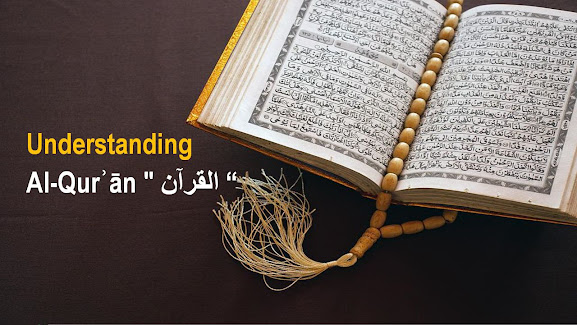
You may also refer to our Reference Pages  and Understanding Al Qur'an for knowing more about Islam and Qur'ān.
Photo

Disclaimer: The material for this post has been collected from the references given above. If anyone differs with the material contained in this post, one may consult the references and their authors.  If someone has more material about the subject, he/she is most welcome to share in the comments box to make the post all encompassing.

If you like Islam: My Ultimate Decision, and to keep yourself updated on all our latest posts to know more about Islam, follow us on Facebook. You may also refer to our Facebook  Group Islam: The Ultimate Truth for more on Islam and Da'wah.

Please share this page to your friends and family members through Facebook, WhatsApp or any means on social media so that they can also be benefited by it and better understand Islam and the Qur'ān - Insha Allah (Allah Willing) you shall be blessed with the best of both worlds.

Wednesday, 9 July 2025

Who is He

Beleiving in something that is unseen has always been contested by many since ages. Although a large number of prophets came to enlighten these, yet there always existed a doubt about the presence of the Divine being. While the earlier generations had no access toscience and natural discoveries, even the people of the men of the science age are found hesitant to acknowledge the existance of any Divine being whaich made the  entire universe and is managing it flawlessly since time immemorial.

There are many a argument by some people who replace belief in God with belief in:
  • Science
  • Human capability
  • Empirical evidence
  • They say: “If it can’t be measured, tested, or proven, it’s not real.”
Sometimes, belief in God feels inconvenient:
  • It requires submission, humility, and moral accountability: Since man by nature is greedy and does not want to be dominated or subdued, and wishes no one to take stock his acts of morality, thus the shirk to acknowledge the presence of a Divine Being, lest they have to live a life of submission.
  • People want to live on their terms — not under divine guidance: let their lives by guided and governed by the Divne Being.If we look around, men are always on the look out if they are not being watched, and if yes, the break all barriers, spped their cars beyond limits and laugh for not being caught. A one hour power shut down in New York city saw one of the worst rowdism and people broke into stores and shops and looted what came in their hands. This shows that man doe not want to be guided by the rules and want to live their own lives on their own terms. And if this just a worldy example, how could they accept living by the guidelines and commandments of a unseen Divine Being.
  • So rejecting that invisble Divine Being becomes easier than surrendering to Him.
For such people, The Qur’an asks: “Have hearts with which they do not understand, eyes with which they do not see, and ears with which they do not hear…”  (Qur’an 7:179)

This isn’t a judgment of intelligence — it means the soul has become veiled. Repeated sin, arrogance, or neglect can lead to spiritual numbness.

In Islam, disbelief isn't just a logical error — it's a spiritual disconnection. The Qur’an:
  • Acknowledges that people will differ in belief
  • Invites them through reason, mercy, and reflection
  • Warn against arrogance and heedlessness
Although, many disbeleivers of a supreme Divine Being know in their hearts of its presence, yet their arrogance compels them to pronounce it publically. When Abraha Al-Ashram, the Christian viceroy of Yemen (then ruled by the Abyssinians), mounted a fierce attack on Makkah with the aid of elephants, a beast unknown to people of Makkah, the elders of polythetists looked up to sky and begged for their protection. Even today, Hindus know there is a Divinine Deity they call Bhagwan, yet their pride in their thousands year old faith does not allow them to acknowledge it.


It can thus be said that people don’t believe in a Divine Being for many reasons — some intellectual, some emotional, some societal. But belief in a Divine Being isn’t just about proving something; it’s about being open to the truth, humbling the ego, and being willing to see with both the mind and the heart.

With this premise, we begin a series of posts based on verses from Qur'an in which that invisible and unseen Divine Being, we call Allah and others call him God, asks questions from those who do not beleive in Him and tells them to ponder over His replies not with a mathematical approach where 2+2 is always 4 or any scientific theory. 

Herein under are some of the questions Allah asks those doubtful minds and then answers them Himself so that sanity prevails and they finally believe in the presence of a Divine Being without who the world could not have been there at all or could not have been running smoothly in a celestial movement of a universe that contains trillions of planets revolving around their core stars:
  • Who is He Who heeds the prayers of the distressed when he calls out to Him
  • Who is it that has created the heavens and the earth and sent down for you water from the sky and then We caused to grow therewith orchards full of beauty whose trees you could never grow.
  • Who is it Who has made the earth a place of resort, and has caused rivers to flow in its midst, and has placed upon it firm mountains, and has placed a barrier between two masses of water?
  • Who is it Who guides you through the darkness on land and sea? And Who sends winds as heralds of good tidings ahead of His Mercy?
  • Who is it Who creates in the first instance and then repeats it? Who is it Who provides you with sustenance from the heavens and the earth?
  • And then man is asked: Who is better: Allah or the false gods that they associate with Him as His partners?
In time we will keep adding the detailed Divine replies to the questions posed above and add more too for calrity of thought about the Divine Being many are not willing to beleive in.

You may also like consult our reference page on: Who is Allah to know more about the invisibe Divine Dierty man people have doubts about

May Allāh (سبحانه و تعالى‎)  help us understand Qur'ān and follow the Sunnah of Prophet Muhammad ﷺ, which is embodiment of commandments of Allah contained in the Qur'ān. May Allah help us to be like the ones He loves and let our lives be lived helping others and not making others' lives miserable or unlivable. May all our wrong doings, whether intentional or unintentional, be forgiven before the angel of death knocks on our door. 

وَمَا عَلَيۡنَاۤ اِلَّا الۡبَلٰغُ الۡمُبِيۡنُ‏ 
(36:17) and our duty is no more than to clearly convey the Message.”
That is Our duty is only to convey to you the message that Allah has entrusted us with. Then it is for you to accept it or reject it. We have not been made responsible for making you accept it forcibly, and if you do not accept it, we shall not be seized in consequence of your disbelief, you will yourselves be answerable for your actions on Day of Resurrection.

Reading the Qur'ān should be a daily obligation of a Muslim - Reading it with translation will make it meaningful. But reading its Exegesis / Tafsir will make you understand it fully. It will also help the Muslims to have grasp over social issues and their answers discussed in the Qur'an and other matter related to inter faith so that they are able to discuss issues with non-Muslims with authority based on refences from Qur'an.

May Allah forgive me if my posts ever imply a piety far greater than I possess. I am most in need of guidance.

Note: When we mention God in our posts, we mean One True God, we call Allah in Islam, with no associates. Allah is the Sole Creator of all things, and that Allah is all-powerful and all-knowing. Allah has no offspring, no race, no gender, no body, and is unaffected by the characteristics of human life.

For more Selected Subjects based on verses from Qur'an, please refer to our reference page: Selected Verses from Al Qur'an about a Specific Subject (Reference Page) to know more about what Qur'an says about specific subjects and our reference page: Selected Verses from the Qur'an. .

You may also refer to our Reference Pages  and Understanding Al Qur'an for knowing more about Islam and Qur'ān.
    Photo | Tafsir References: |  12 | 3 | 3 | 4

    An effort has been made to gather explanation / exegesis of the surahs and selected verses of the Qur'ān from authentic sources and then present a least possible condensed explanation of the surah. In that the exegesis of the chapters of the Quran is mainly based on the "Tafhim al-Qur'an - The Meaning of the Qur'an" by one of the most enlightened scholars of the Muslim World Sayyid Abul Ala Maududi.  
    In addition, references of other sources which have been explored have also been given above. Those desirous of detailed explanations and tafsir (exegesis), may refer to these sites. For expansion of meaning and themes / contextual background help from ChatGPT is also taken.

    Disclaimer: The material for this post has been collected from the references given above. If anyone differs with the material contained in this post, one may consult the references and their authors.  If someone has more material about the subject, he/she is most welcome to share in the comments box to make the post all encompassing.

    If you like Islam: My Ultimate Decision, and to keep yourself updated on all our latest posts to know more about Islam, follow us on Facebook. You may also refer to our Facebook  Group Islam: The Ultimate Truth for more on Islam and Da'wah.

    Please share this page to your friends and family members through Facebook, WhatsApp or any means on social media so that they can also be benefited by it and better understand Islam and the Qur'ān - Insha Allah (Allah Willing) you shall be blessed with the best of both worlds.

    Friday, 14 March 2025

    Responding to a misinterpreted verse of Qur’an - God excellent Planner or Deceiver

    Arabic is one of the most rich language of all the languages being spoken in the world today. And when it comes to the Quranic Arabic, it become much more difficult to interpret and unless an exegete or scholar is thoroughly mastered the Quranic Arabic and well versant with the history and environment prevailing at the time of revelation of a particular verse, the meaning of the Qur'an may not accurate. This is the reason why many non Muslims who when read the translation of Qur'an, they come across verses that confuse them and thus result in misinterpretation of some verses as a means of point scoring for having found a flaw.

    Recently, when I shared one of the 99 attributes of Allah in my group, a non Muslim asked me to add yet one more attribute of Allah being a deceiver. When I asked as as to how has he concluded such an unbecoming attribute associated with Allah, he readily quoted the 54th verse of Surah 3.Al-i'Imran given here in under:
    وَمَكَرُوۡا وَمَكَرَاللّٰهُ ​ؕ وَاللّٰهُ خَيۡرُ الۡمَاكِرِيۡنَ
    The actual and contextual meaning of the verse (3:54) is "Then they schemed (against the Messiah), and Allah countered their schemes by schemes of His own. Allah is the best of schemers." 

    But it is generally misinterpreted and the word "وَاللّٰهُ خَيۡرُ الۡمَاكِرِيۡنَ" is translated as Allah is the bigger deceiver in the above verse.  

    Like the objector mentioned above, the verse from Surah Al-Imran (3:54), is often cited for having a dual meaning regarding Allah's role in planning and deception. Let us explain the verse with reference to the context and it will be clear at the end of the explanation that Allah is the best of planners and NOT best of deceivers.

    First understand the word Makr that is so confusing to some:
    • In the context of the Quran and Islamic teachings: the Arabic word "makr" (مكر) generally refers to "deception, plotting, or cunning," but can also be used to describe God's strategy or plan, often in a way that is beyond human comprehension. 
    • Here's a more detailed explanation:
      • General Meaning: Makr, in modern Arabic, often implies evil plotting or cunning. 
      • In the Quran: The Quran uses "makr" to describe both human and divine actions, with the context determining the specific meaning. 
      • Divine Makr: When used in the context of Allah (God), "makr" can refer to Allah's subtle and often hidden plans, which are beyond human understanding. 
      • Human Makr: When used in the context of humans, "makr" generally refers to deceitful or cunning actions. 
    • Example: The verse in Al-Anfal:30, "Remember when the disbelievers plotted to imprison, kill or expel you. They plotted, and Allah planned something else, and Allah is the best of planners." (Al-Anfal:30) illustrates how humans plot (makr), but Allah's plan (makr) is superior. 
    The Context
    This verse appears in the context of the story of the plot against Prophet 'Isa (Jesus, peace be upon him) by those who sought to kill him. In this particular situation, the enemies of Jesus, having failed to refute his message, decided to deceive the people and crucify him. However, Allah had a different plan. Instead of allowing Jesus to be crucified, Allah raised him up to Himself and instead a man resembling Prophet Isa was caught and subsequently crucified. Thus those who thought they were plotting against him were outwitted by the Divine will. 

    The Dual Meaning
    The dual meaning here revolves around the two concepts:
    • Allah as the Best Planner: The verse emphasizes that while humans and disbelievers may have their own plans (in this case, to kill Jesus), Allah's plan supersedes all others. His wisdom and knowledge are perfect, and no matter how much effort people put into their schemes, Allah's plan will always prevail. The verse assures the believers that Allah is in control, and His plan is always the best.
    • Allah as the Best Deceiver (in the sense of outwitting): The term "deceiver" (makr) can be interpreted in this context not in the negative sense of dishonesty or evil, but in the sense of outwitting or thwarting the plans of the enemies. In Arabic, "makr" has the connotation of plotting or devising a strategy, which can be used to describe both positive and negative actions, depending on the context. While the enemies were planning to deceive, Allah's plan was superior and outmaneuvered theirs. Allah’s "deception" (makr) here refers to how He thwarted the enemies' plans in a way that was beyond their understanding, showing that human schemes are nothing compared to the infinite power and wisdom of Allah.
    • Changing Face
      • It is presumed that the face of man who helped the Romans disclosing the whereabouts of Jesus (sws) in his secluded abode at the mount of olive Jesus was made to resemble Jesus (sws). Consequently, the Jews crucified him and kept on humiliating him. On the other hand, they were not even able to lay hands on Jesus (sws).
      • And as for who was crucified, let us read Surat An-Nisā' (The Women) - سورة النساء: And [for] their saying, "Indeed, we have killed the Messiah, Jesus, the son of Mary, the messenger of Allah ." And they did not kill him, nor did they crucify him; but [another] was made to resemble him to them. And indeed, those who differ over it are in doubt about it.
    Contextual Understanding
    In Islamic theology, Allah is never seen as engaging in deception or lying in the way that humans do. The concept of "deception" in this context is different from its negative human connotation. It's about outwitting or turning a situation around to fulfill a higher purpose, which is often described as "divine wisdom." The key here is understanding that Allah's "deception" is part of His perfect justice and control, ensuring that the outcome aligns with His will.

    And in the very next verse, Allah unfolds his scheme to Jesus:

    (3:55) (And it was part of His scheme) when Allah said: 'O Jesus! I will recall you51 and raise you up to Me and will purify you (of the company) of those who disbelieve,52 and will set your followers above the unbelievers till the Day of Resurrection. Then to Me you shall return, and I will judge between you regarding what you differed.

    This verse thus demonstrates the supremacy of Allah's will and plan, showing that no matter how powerful or clever human schemes may seem, Allah's plan is always the most potent. The dual meanings of "planner" and "deceiver" highlight Allah's ultimate control over all affairs, and that His wisdom will always outshine the efforts of those who seek to oppose His divine plan.

    You may now like to watch an informative video explaining the 54th verse of Surah 3. Al' Imran:

    May Allāh (سبحانه و تعالى‎)  help us understand Qur'ān and follow the Sunnah of Prophet Muhammad ﷺ, which is embodiment of commandments of Allah contained in the Qur'ān. May Allah help us to be like the ones He loves and let our lives be lived helping others and not making others' lives miserable or unlivable. May all our wrong doings, whether intentional or unintentional, be forgiven before the angel of death knocks on our door. 

    وَمَا عَلَيۡنَاۤ اِلَّا الۡبَلٰغُ الۡمُبِيۡنُ‏ 
    (36:17) and our duty is no more than to clearly convey the Message.”
    That is Our duty is only to convey to you the message that Allah has entrusted us with. Then it is for you to accept it or reject it. We have not been made responsible for making you accept it forcibly, and if you do not accept it, we shall not be seized in consequence of your disbelief, you will yourselves be answerable for your actions on Day of Resurrection.

    Reading the Qur'ān should be a daily obligation of a Muslim - Reading it with translation will make it meaningful. But reading its Exegesis / Tafsir will make you understand it fully. It will also help the Muslims to have grasp over social issues and their answers discussed in the Qur'an and other matter related to inter faith so that they are able to discuss issues with non-Muslims with authority based on refences from Qur'an.

    May Allah forgive me if my posts ever imply a piety far greater than I possess. I am most in need of guidance.

    Note: When we mention God in our posts, we mean One True God, we call Allah in Islam, with no associates. Allah is the Sole Creator of all things, and that Allah is all-powerful and all-knowing. Allah has no offspring, no race, no gender, no body, and is unaffected by the characteristics of human life.

    You may read more posts on similar theme in our series of posts related to: The Rebuttal: Countering disinformation being spread about Islam (Reference Page)

    For more Selected Subjects, please refer to our reference page: Selected Verses from Al Qur'an about a Specific Subject (Reference Page) to know more about what Qur'an says about specific subjects.

    You may also refer to our Reference Pages  and Understanding Al Qur'an for knowing more about Islam and Qur'ān.
    | Tafsir References: | 1 | 2 | 3 |

    An effort has been made to gather explanation / exegesis of the surahs and selected verses of the Qur'ān from authentic sources and then present a least possible condensed explanation of the surah. In that the exegesis of the chapters of the Quran is mainly based on the "Tafhim al-Qur'an - The Meaning of the Qur'an" by one of the most enlightened scholars of the Muslim World Sayyid Abul Ala Maududi.  
    In addition, references of other sources which have been explored have also been given above. Those desirous of detailed explanations and tafsir (exegesis), may refer to these sites. For expansion of meaning and themes / contextual background help from ChatGPT is also taken.

    Disclaimer: The material for this post has been collected from the references given above. If anyone differs with the material contained in this post, one may consult the references and their authors.  If someone has more material about the subject, he/she is most welcome to share in the comments box to make the post all encompassing.

    If you like Islam: My Ultimate Decision, and to keep yourself updated on all our latest posts to know more about Islam, follow us on Facebook. You may also refer to our Facebook  Group Islam: The Ultimate Truth for more on Islam and Da'wah.

    Please share this page to your friends and family members through Facebook, WhatsApp or any means on social media so that they can also be benefited by it and better understand Islam and the Qur'ān - Insha Allah (Allah Willing) you shall be blessed with the best of both worlds.

    Friday, 1 September 2023

    Selected Verses from Al Qur'an about a Specific Subject (Reference Page)

    Dear readers! Our blog, Islam: My Ultimate Decision, has been on air since 2018 and since expanded to a great dimension from merely sharing the revert experiences of non-Muslims to complete exegesis / tafsir of Al Qur'an, Hadith and Sunnah of Prophet Muhammad ﷺ, Q & As about various queries of non-Muslims and much more.

    However, as the blog continuously expands, our substance is increasing making it difficult to access our posts specific to a subject. Like for instance our reference page on Selected Verses from Qur'an has been divided into so many sections on single page with a large number of diverse subjects. We have already segregated these subjects for the ease of our readers. This reference page would lead to our specific posts dedicated to one single subject. 

    Some of the reference pages specific to a subject already published are shared herein under:
    In time we will expand this reference page for more sub reference pages specific to subjects already mentioned in Selected Verses from the Qur'an.
    May Allāh (سبحانه و تعالى‎) help us understand Qur'ān and follow the Sunnah of Prophet Muhammad ﷺ, which is embodiment of commandments of Allah contained in the Qur'ān. May Allah help us to be like the ones He loves and let our lives be lived helping others and not making others' lives miserable or unlivable. May all our wrong doings, whether intentional or unintentional, be forgiven before the angel of death knocks on our door. 
    وَمَا عَلَيۡنَاۤ اِلَّا الۡبَلٰغُ الۡمُبِيۡنُ‏ 
    (36:17) and our duty is no more than to clearly convey the Message.”
    That is Our duty is only to convey to you the message that Allah has entrusted us with. Then it is for you to accept it or reject it. We have not been made responsible for making you accept it forcibly, and if you do not accept it, we shall not be seized in consequence of your disbelief, you will yourselves be answerable for your actions on Day of Resurrection.

    Reading the Qur'ān should be a daily obligation of a Muslim - Reading it with translation will make it meaningful. But reading its Exegesis / Tafsir will make you understand it fully. It will also help the Muslims to have grasp over social issues and their answers discussed in the Qur'an and other matter related to inter faith so that they are able to discuss issues with non-Muslims with authority based on refences from Qur'an.

    May Allah forgive me if my posts ever imply a piety far greater than I possess. I am most in need of guidance.

    Note: When we mention God in our posts, we mean One True God, we call Allah in Islam, with no associates. Allah is the Sole Creator of all things, and that Allah is all-powerful and all-knowing. Allah has no offspring, no race, no gender, no body, and is unaffected by the characteristics of human life.

    You may also refer to our Reference Pages  and Understanding Al Qur'an for knowing more about Islam and Qur'ān.
    If you like Islam: My Ultimate Decision, and to keep yourself updated on all our latest posts to know more about Islam, follow us on Facebook

    Please share this page to your friends and family members through Facebook, WhatsApp or any means on social media so that they can also be benefited by it and better understand Islam and the Qur'ān - Insha Allah (Allah Willing) you shall be blessed with the best of both worlds.

    Twitter Delicious Facebook Digg Stumbleupon Favorites More