.

Tuesday, 5 July 2022

Basic Articles of Faith

A few days back, a non Muslim friend asked me what do you Muslims really believe in? And I explained to him that we not only believe in One True God, called Allah in Arabic language, Who has no parallels or associates. And we do believe in all the prophets and divine books that have been reveled before the final divine book, The Quran.

To further my point, I narrated to him the 285th verse of the Surah Al Baqarah (The Cow) the second chapter of Quran, which embodies the basic articles of faith spelt out for the Muslims by Allah:

اٰمَنَ الرَّسُوۡلُ بِمَاۤ اُنۡزِلَ اِلَيۡهِ مِنۡ رَّبِّهٖ وَ الۡمُؤۡمِنُوۡنَ​ؕ كُلٌّ اٰمَنَ بِاللّٰهِ وَمَلٰٓـئِكَتِهٖ وَكُتُبِهٖ وَرُسُلِهٖ لَا نُفَرِّقُ بَيۡنَ اَحَدٍ مِّنۡ رُّسُلِهٖ​ وَقَالُوۡا سَمِعۡنَا وَاَطَعۡنَا​ غُفۡرَانَكَ رَبَّنَا وَاِلَيۡكَ الۡمَصِيۡرُ‏ 
The Messenger has believed in the Guidance which has been sent down to him from his Lord, and those who believe in the Messenger have also sincerely accepted the same. They all believe in Allah, His Angels, His Books and Messengers. And they say, "We do not discriminate against any of His Messengers. We have heard the Message and submitted to it. Our Lord, we look up to You for forgiveness, for to You we shall all return."

Sayyid Abul Ala Maududi explains that in this verse, the basic articles of Faith have been restated briefly. Belief in Allah, His Angels, His Books and in all of His Messengers without exception and discrimination against any and in the accountability to Him at the end of this life are the five basic articles of Faith. After the acceptance of these, the attitude for a Muslim is to submit obediently to each and every commandment of Allah. At the same time, he should not become vain on account of his good acts but should pray to Allah to forgive and show forbearance to him.

The famous 14th century scholar and exegetist Ibn-Kathir explains this verse saying that each of the believers believes that Allah is the One and Only and the Sustainer, there is no deity worthy of worship except Him and there is no Lord except Him. The believers also believe in all Allah's Prophets and Messengers, in the Books that were revealed from heaven to the Messengers and Prophets, who are indeed the servants of Allah. Further, the believers do not differentiate between any of the Prophets, such as, believing in some of them and rejecting others. Rather, all of Allah's Prophets and Messengers are, to the believers, truthful, righteous, and they were each guided to the path of righteousness, even when some of them bring what abrogates the Law of some others by Allah's leave. Later on, the Law of Muhammad, the Final Prophet and Messenger from Allah, abrogated all the laws of the Prophets before him. So the Last Hour will commence while Muhammad's Law remains the only valid Law, and all the while a group of his Ummah will always be on the path of truth, apparent and dominant.

Muhammad Asad Explanation: Lit., "we make no distinction between any of His apostles": these words are put, as it were, in the mouths of the believers. Inasmuch as all the apostles were true bearers of God's messages, there is no distinction between them, albeit some of them have been "endowed more highly than others" (see verse {253}).

Yousaf Ali explains this verse as under:
  • This Surah started with the question of Faith (ii 3-4), showed us various aspects of Faith and the denial of Faith, gave us ordinances for the new People of Islam as a community, and now rounds off the argument again with a confession of Faith and of its practical manifestation in conduct ("we hear and we obey"), and closes on a note of humility, so that we may confess our sins, ask for forgiveness, and pray for God's help and guidance.
  • It is not for us to make any distinction between one and another of God's apostles: we must honor them all equally, though we know that God in His wisdom sent them with different kinds of mission and gave them different degrees of rank.
  • When our faith and conduct are sincere, we realize how far from perfection we are, and we humbly pray to God for the forgiveness of our sins. We feel that God imposes no burden on us that we cannot bear, and with this realization in our hearts and in the confession of our lips, we go to Him and ask for His help and guidance.
Explanation Qur'an Wiki: The Qur’ān refers to that privileged community of believers who are the archetype of faith, and to all succeeding communities modelled on their example. This community is honoured by, and greatly appreciates, being mentioned in the same breath as God’s Messenger.

The Messenger’s faith springs directly from the revelations he receives from God, the ultimate truth. It is a degree of faith that cannot be described except by one who has experienced it; it remains beyond comprehension for those mortals who have not experienced divine revelation and is, therefore, totally unique and exclusive to God’s Messenger himself. That is why it is such an honour for ordinary believers to he mentioned side by side with God’s Messenger.

The sūrah defines the nature and parameters of this faith. It is a comprehensive and universal faith, commensurate with the far-reaching and historic role the Muslim community is destined to inherit and take on in the world. It is a commitment that identifies humanity, throughout its history, as being of only two main groups: the believers who represent the party of God, and the unbelievers who constitute the party of Satan.

“Each one of them believes in God...” According to Islam, belief in God is the foundation of a Muslim’s understanding of life, and of the code governing his life, morals, economic and all other activities. It means believing in God as the Supreme Being, the Lord of everything and the sole object of reverence and worship. He is the ultimate authority over man’s conscience and behaviour in every single aspect of his life.

God has no partners in His Godhead and Lordship over the world. He is the Creator and the active ruler of the whole cosmos, and no other power interferes with His organisation and running of the physical world or of life in it. He is the sole provider of life and sustenance for all creation. He is the only and ultimate cause of what befalls the world, without whose will and knowledge nothing, great or small, happens or comes into being in this world.

Nothing and no one but God Almighty should be adored and worshipped, in any sense of the word. God is the supreme authority to be obeyed, and all temporal authority is derived from Him, and from total adherence to His teachings and commands and the laws He lays down. An imperative of faith in God is submission to, and acceptance of, the principles and values He has set out for the moral, social, legal and economic spheres of life. Faith in this sense sets man free from control and manipulation by all other forces, powers and authorities, and from the fetters of obligation or submission to anyone or anything other than God Almighty.

“... and His angels...” This is an important aspect of belief in the unseen, the unknowable which lies beyond human perception or understanding, or, to use the Islamic term ghayb, as already discussed at the beginning of the sūrah. Man’s ability to perceive and accept a world above and beyond the physical world whose existence he can discern and verify sets him above the rest of creation and confers on him his human qualities. This belief puts into proper perspective man’s natural curiosity for what lies beyond the material physical world, which he instinctively and clearly perceives to exist. Without this clear perspective and vision, man resorts to myth and superstition, leading to imbalance and instability.

Angels are a fact of ghayb that humans cannot perceive by conventional sensory or intellectual means. But man has an instinctive urge to look beyond the world that he can see; and God, in His infinite wisdom, has seen to it that this natural and legitimate human urge is satisfied in order to save man the frustration and suffering he would otherwise inevitably encounter. There is sufficient evidence to show that those individuals and communities who have chosen to defy human nature and reject all notion of a world beyond have fallen victim to utterly farcical and fallacious superstitions that have blurred their vision, undermined their mental well-being, and turned their lives into a series of negative and destructive obsessions.

Like other aspects of ghayb, belief in the angels widens man’s perception and understanding of the world around him. It is no longer restricted to what he can see and feel, which is only a small part of reality. He feels safer in the company of these faithful creatures, fellow believers in God’s oneness, who pray constantly for man’s redemption, and in the comforting thought that they are there to help and guide him spiritually. Furthermore, the mere knowledge of this fact is a blessing from God to those who believe in Him and His angels.

“... and His books and His messengers. We make no distinction between any of His messengers.” According to the Islamic view, belief in God’s books and messengers follows logically and naturally from belief in God Himself. To believe in God is to believe in the truth of all that is revealed by Him, and in the honour and integrity of all the messengers He has commissioned, and in the unity of the source of the messages they have preached. A Muslim has no notion of discrimination between God’s messengers. They all preached Islam in various versions, suited to the circumstances of the communities they addressed. Muĥammad, (peace be upon him), was the last and final of those Prophets and messengers who has delivered the final, complete and universal version of Islam, which will remain valid for the rest of time.

The Muslim community, therefore, inherits the legacy of God’s religion on earth in its totality, which places a grave responsibility on Muslims. As bearers of God’s banner on earth, they are the custodians of the greatest gift to mankind. Their mission is to promote and establish the Islamic order, and to stand up to chauvinistic, oppressive and totalitarian ideologies of all kinds, whenever they are advocated, anywhere in the world.

The Muslim community, or ummah, is undoubtedly the legitimate heir to the greatest treasure of guidance, light, confidence and fulfilment, as well as certainty and knowledge, ever made available to mankind. Those deprived of its benefits and blessings might as well be living in darkness and confusion. Their life is inevitably plagued with scepticism, cynicism, unhappiness, spiritual suffering and deprivation.

The history of mankind has seen countless individuals and communities deprived of the sustenance and happiness of faith. The agony and miserable experiences of many a sensitive and troubled heart have been most eloquently and passionately preserved for posterity in poetry, literature and art. There are those, however, who are immune to religious faith and have no desire for knowledge beyond the material world. They go through life with little or no humanity, hardly better than animals. They eat and survive and fend for themselves ruthlessly. They oppress, tyrannize and corrupt others in order to further their own interests and desires. They are despised by God and by their fellow human beings.

Human societies deprived of the grace and blessings of faith in God are miserable despite their affluence, barren despite their wealth, and restive despite their apparent freedom, security and peace. There are, even today, obvious examples of such unfortunate societies, a fact denied only by the arrogant.

Those who truly believe in God and His angels, books and messengers, know well that they shall return to their Lord, and so they turn to Him in obedience and submission, seeking His mercy and forgiveness. “And they say, ‘We hear and we obey. Grant us Your forgiveness, our Lord; to You we shall all return.’“ 

This submission is an expression of their faith. They heed and obey every commandment received from God in affirmation of His oneness and in recognition of the validity of His order in every aspect of life. No submission can be sincere without adherence to God’s guidance and implementation of His rule in every sphere. Man’s faith cannot be complete if he turns his back on God’s teachings and seeks moral, social, economic or political guidance elsewhere. Faith is a quality firmly entrenched in man’s heart and is only given credence when expressed in actions.

With submission and obedience to the Lord comes a feeling of inadequacy and deficiency in paying one’s dues towards God. Thus believers appeal to the merciful God to overlook their failures and shortcomings: “... Grant us Your forgiveness, our Lord...”

The appeal for forgiveness follows the assertion of total submission and obedience. It is then followed by certainty in one’s fate here in this life and in the life to come. God’s word is the final and ultimate truth; everything shall return to Him; He is omnipotent; His will is done and His power unchallenged; His forgiveness, mercy and grace provide the way to escape punishment for sins we commit.

“To You we shall all return.” This statement implies belief in the hereafter, which, from the Islamic point of view, is another essential aspect of faith in God. Islam asserts that God has created man and made him His vicegerent on earth on the basis of a clear covenant encompassing all man’s activities on earth. Throughout his earthly existence man is on probation. When his probation is over, he shall be judged and made accountable for his actions. Thus belief in the Day of Judgement and man’s accountability for his deeds is a correlative of belief in God. This faith plays a central role in shaping and guiding a believer’s conscience and behaviour, and his perception of values and consequences in this life. A believer will live in obedience to God, promoting good and supporting the truth, regardless of whether the result of his endeavour in this world is happiness or suffering, gain or loss, victory or defeat, recompense or deprivation, or even death. The reward he seeks for passing the test of life is in the hereafter. Were the whole world to stand in opposition to him in this pursuit, and were his very life to be threatened, it would not dissuade him. He is dealing directly with God Almighty, fulfilling his obligation towards Him and looking forward to the reward He has in store for him.
 
This short Qur’ānic verse encapsulates the basic concept of the unity and integrity of the Islamic belief. It is a simple and clear belief in the unity of God, His angels, His books and messengers, with no distinction among those messengers whatsoever, based on total obedience and submission to God and an unshakeable faith in the Day of Judgement.
 
Such is Islam, a faith perfectly suited to epitomize the full and final divine message. It reflects the procession of faith which began with the creation of man and continued throughout the generations. It has been expounded and elucidated by messenger after messenger, according to the intellectual and social development of the recipient communities. With the Prophet Muhammad (peace be upon him), the message is brought to full maturity and its complete unity is declared, leaving man with the task of understanding its principles and details, and implementing it in his life. 
Islam is a religion that recognizes man as a unique being; neither animal nor inanimate, neither angelic nor Satanic. Islam takes a holistic, rather than a fragmented, view of man. It allows for his weaknesses as well as his strengths, treating him as an integrated being comprising a physical aspect with instincts, impulses and natural drives, and a discerning intellectual power, and a soul with spiritual passions and yearnings. It requires of man only such tasks as he is able to fulfil, maintaining that delicate balance between obligations and abilities, with fairness and without duress, satisfying the needs of body, mind and soul in perfect harmony. The corollary to that concept is man’s freedom to choose and bear full responsibility for his choice.
May Allāh (سبحانه و تعالى‎) help us understand Qur'ān and follow the Sunnah of Prophet Muhammad ﷺ, which is embodiment of commandments of Allah contained in the Qur'ān. May Allah help us to be like the ones He loves and let our lives be lived helping others and not making others life miserable or unlivable. May all our wrong doings, whether intentional or unintentional, be forgiven before the angel of death knocks on our door. 

May Allah forgive me if my posts ever imply a piety far greater than I possess. I am most in need of guidance.

Reading the Qur'ān should be a daily obligation of a Muslim - Reading it with translation will make it meaningful. But reading its Exegesis / Tafsir will make you understand it fully. It will also help the Muslims to have grasp over social issues and their answers discussed in the Qur'an and other matter related to inter faith so  that they are able to discuss issues with Non Muslims with authority based on refences from Qur'an.

Photo | References: | 1 | 2 | 3 | 4 | 5 | 6 |
For more Q&A about Understanding Islam, please refer to our reference page: Understanding Islam - Frequently asked Q&A

If you like Islam: My Ultimate Decision, and to keep yourself updated on all our latest posts to know more about Islam, follow us on FacebookYou may also refer to our Facebook  Group Islam: The Ultimate Truth for more on Islam and Da'wah.

Please share this page to your friends and family members through Facebook, WhatsApp or any means on Social Media so that they can also be benefited by it and better understand Islam and the Holy Qur'an - Insha Allah (Allah Willing) you shall be blessed with the best of both worlds.

Sunday, 3 July 2022

Traits of the Righteous

Qur'an is a book of guidance for those who seek guidance from it and have faith in Allah. The guidance is only available for those who not only have faith, walk on the straight path, Sirat e Mustaqeem, but also possess certain character traits. These traits have been spelt out at many places in the Qur'an and we have been sharing the relevant verses so that believers are reminded time and again and follow these traits.

The post today also spells out traits of the righteous as mentioned in the 35th verse of Surah 22, Al Hajj, shared herein under:

الَّذِيۡنَ اِذَا ذُكِرَ اللّٰهُ وَجِلَتۡ قُلُوۡبُهُمۡ وَالصّٰبِرِيۡنَ عَلٰى مَاۤ اَصَابَهُمۡ وَالۡمُقِيۡمِى الصَّلٰوةِ ۙ وَمِمَّا رَزَقۡنٰهُمۡ يُنۡفِقُوۡنَ‏  
Whose hearts shiver whenever Allah is mentioned, who patiently bear whatever affliction comes to them, who establish Prayer, and who spend (for good purposes) out of what We have provided them

Here fear of Allah means that the righteous always are on the look out of deviating from the guidelines provided to them in the Qur'an and are fearful of anger of Allah if they do so for this is tantamount to displeasing Allah by going against His commandments. Here instead of being fearful, the word "awe" should have been used as this combines a feeling of reverential respect mixed with fear or wonder.

Yusuf Ali explains that in this verse some qualities of Allah's devotees are mentioned here, in ascending order: 
  • (1) Humility before Allah makes them receptive, and prepares them to listen to Allah's Message;
  • (2) fear of Allah, which is akin to love, touches their heart, and penetrates through their inmost being; 
  • (3) they are not afraid of anything in mortal life; they take their trials patiently, and they go on in a course of righteousness with constancy; 
  • (4) their prayer now is not a matter of form, but a real communion with Allah, with a sense of confidence such as a faithful servant feels in the presence of a kind and loving master; and 
  • (5) gratitude to Allah, as shown by practical acts of charity to all fellow-creatures.
Ibn-Kathir describes the good provision (and who spend out of what We have provided for them.) which Allah has given them. They spend on their families and servants, and on the poor and needy; they treat people kindly while remaining within the limits set by Allah. This is in contrast to the hypocrites, who are the opposite of all this, as we have discussed in the Tafsir of Surah Bara'ah; to Allah be praise and blessings.

Muhammad Asad notes that Ar-rizq ("provision of sustenance") applies to all that may be of benefit to man, whether it be concrete (like food, property, offspring, etc.) or abstract (like knowledge, piety, etc.). The "spending on others" is mentioned here in one breath with God-consciousness and prayer because it is precisely in such selfless acts that true piety comes to its full fruition. It should be borne in mind that the verb anfaqa (lit., "he spent") is always used in the Qur'an to denote spending freely on, or as a gift to, others, whatever the motive may be.

Javed Ahmed Ghamidi notes that this style meant to urge and exhort should be kept in mind and so should be the relationship between the prayer and charity as without it the wisdom of religion cannot be understood.

Explanation Qur'an Wiki: The mere mention of God’s name stirs in them a feeling of awe that manifests itself in their actions. “Who patiently bear whatever befalls them.” They do not object to whatever happens to them by God’s will. They also “attend regularly to their prayer,” showing thus that they worship God as He wishes to be worshipped. Moreover, they do not grudgingly hold on to what they have. Rather, they “spend in charity out of what We provide for them.” Thus a close link is established between faith and worship rituals. The latter derive from faith and are manifestations of it. Hence, they are described as symbols set up by God. What is important in all this is that life itself derives its colour from faith, ensuring unity between beliefs and actions.

You may also read our previous posts which are interconnected to our present post:
May Allāh (سبحانه و تعالى‎) help us understand Qur'ān and help us to act upon the commandments of Allah contained therein. May Allah help us to be like the ones He loves and let our lives be lived helping others and not making others life miserable or unlivable. May all our wrong doings, whether intentional or unintentional, be forgiven before the angel of death knocks on our door. 

Note: When we mention God in our posts, we mean One True God, we call Allah in Islam, with no associates. Allah is the Sole Creator of all things, and that Allah is all-powerful and all-knowing. Allah has no offspring, no race, no gender, no body, and is unaffected by the characteristics of human life.

Reading the Qur'ān should be a daily obligation of a Muslim - Reading it with translation will make it meaningful. But reading its Exegesis / Tafsir will make you understand it fully. It will also help the Muslims to have grasp over social issues and their answers discussed in the Qur'an and other matter related to inter faith so  that they are able to discuss issues with Non Muslims with authority based on refences from Qur'an.

May Allah forgive me if my posts ever imply a piety far greater than I possess. I am most in need of guidance.

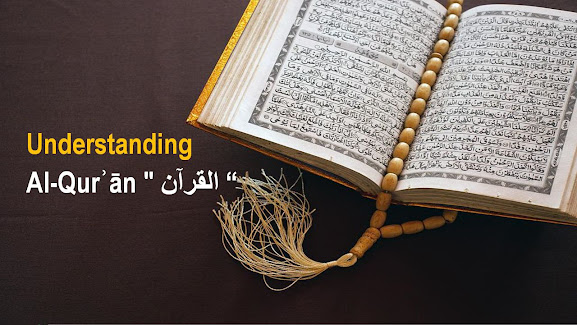
For more Selected Verses, please refer to our reference page: Selected Verses from the Qur'anYou may also refer to our Reference Pages  and Understanding Al Qur'an for knowing more about Islam and Qur'ān.
Photo | Tafsir References: | 1 | 2 | 3 | 4 | 5 | 6 |

An effort has been made to gather explanation / exegesis of the surahs of the Qur'ān from authentic sources and then present a least possible condensed explanation of the surah. In that the exegesis of the chapters of the Quran is mainly based on the "Tafhim al-Qur'an - The Meaning of the Qur'an" by one of the most enlightened scholars of the Muslim World Sayyid Abul Ala Maududi.  
In order to augment and add more explanation as already provided, additional input has been interjected from following sources: 
  • Towards Understanding the Quran
  • Tafsir Ibn Khatir
  • Muhammad Asad Translation
  • Javed Ahmad Ghamidi / Al Mawrid
  • Al-Quran, Yusuf Ali Translation
  • Verse by Verse Qur'an Study Circle
In addition the references of other sources which have been explored have also been given above. Those desirous of detailed explanations and tafsir (exegesis), may refer to these sites.

If you like Islam: My Ultimate Decision, and to keep yourself updated on all our latest posts to know more about Islam, follow us on Facebook

Please share this page to your friends and family members through Facebook, WhatsApp or any means on Social Media so that they can also be benefited by it and better understand Islam and the Qur'ān - Insha Allah (Allah Willing) you shall be blessed with the best of both worlds.

Saturday, 2 July 2022

How to perform Hajj: Step by Step Guide

Alhamdolillah, the most sacred Islamic month of  Dhuʻl-Hijjah " ذُو ٱلْحِجَّة " has dawned and many million lucky Muslims are heading towards sacred city of Makkah / Mecca, Saudi Arabia for the realization of life long dream of performing Hajj, the Pilgrimage. The Hajj rituals are spanned over six days between the eighth and 13th days of the month of  Dhuʻl-Hijjah.

Hajj is a unique occasion. Muslims from all over the world, coming from different cultures, speaking different languages come and perform the Hajj rituals together. No one is white or black, or wealthy ir poor, for everyone is clad in same two unstiched clothed, with one aim: To Please Allah and seek His forgiveness. Subhan Allah!!

Hajj, the fifth pillar of Islam, is mandatory religious duty for all adult able bodied Muslims that must be carried out at least once in their lifetime, provided they are physically and financially capable of undertaking the journey, and of supporting their family during their absence from home. Those despite financially capable of affording going yo Hajj, yet are incapable of undergoing the rigours of the journey and rather tough rituals of Hajj for almost a week, can ask some family friend or relative to perform Hajj on their behalf (called Hajj e Badal - Hajj on behalf) provided that particular person should have already performed his Hajj. 
Just a little brief about Ka'bah, the cubicle building clad in black cloth situated in the middle of the white marbled floor called Mutaf in Masjid Al Haram, Makkah, It is at the place where the tawaf, the anti-clockwise circumambulation arounds by performers of Hajj and Umra the Ka'bah, takes place. The foundations of Ka'bah were laid by Prophet Abraham (Ibraheem, may peace be upon him) with the help of his son Ismail in biblical times. It been a place of worship of Allah. 

Following two verse from Surah 22. Al Hajj mention God's commandment to Prophet Ibraheem (Abraham, peace be upon him) for building of Ka'bah and calling people to it for pilgrimage:

وَاِذۡ بَوَّاۡنَا لِاِبۡرٰهِيۡمَ مَكَانَ الۡبَيۡتِ اَنۡ لَّا تُشۡرِكۡ بِىۡ شَيۡـئًـا وَّطَهِّرۡ بَيۡتِىَ لِلطَّآئِفِيۡنَ وَالۡقَآئِمِيۡنَ وَ الرُّكَّعِ السُّجُوۡدِ‏ 

Call to mind when We assigned to Abraham the site of the House (Kabah), directing him: "Do not associate aught with Me" and "Keep My House pure for those who walk around it,45 and for those who stand and who bow down and who prostrate themselves (in worship), (Surah 22 Al Hajj :26) 

وَاَذِّنۡ فِى النَّاسِ بِالۡحَجِّ يَاۡتُوۡكَ رِجَالًا وَّعَلٰى كُلِّ ضَامِرٍ يَّاۡتِيۡنَ مِنۡ كُلِّ فَجٍّ عَمِيۡقٍ ۙ‏ 

(22:27) and publicly proclaim Pilgrimage for all mankind so that they come to you on foot and mounted on lean46 camels from every distant point 

But with times, idolaters put idols of their gods both inside and outside the cubicle until it was finally cleansed of all worldly gods by Prophet Muhammad ﷺ when he took over the city of Makkah. Since that day on, Ka'bah is the most sacred place of worship for the Muslims around the world. Prophet Muhammad ﷺ performed his only Hajj in 632 AD before his final departure from the world. 

Hajj is, put simply, complex. There are several different ways of performing it, and numerous schools of Islamic thought, between which lie many scholarly differences. Here is a breakdown of the steps included in performing hajj.  

Before 8th of Dhuʻl-Hijjah, when the Hajj formally commences, millions of pilgrims reach Makkah. However, be fore starting their journey, each pilgrim makes an intention to perform Hajj and assumes the state of Ihram. Ihram for men is two unstitched plain white clothe garments while for women it is any loose garments that are not revealing of woman's adornment, only keeping her face, hands and feet visible. The wearing of Iḥrām is must as all flights over fly the limits of Miqat " مِيْقَات ", a boundary around Makkah before which all pilgrims of either Umra or Hajj must be in sate of Ihram.  

After entering in the sate of Ihram, the intended Hajj pilgrims should continuously recite  Talbiyah " ٱلتَّلبِيَة ." It is a prayer invoked by the pilgrims as a conviction that they intend to perform the Hajj only for the glory of Allah. Talbiyah is repeatedly invoked during the Hajj, or pilgrimage, upon putting on the Ihram, so the pilgrims can purify and rid themselves of worldly concerns.

لَبَّيْكَ ٱللَّٰهُمَّ لَبَّيْكَ، لَبَّيْكَ لَا شَرِيكَ لَكَ لَبَّيْكَ، إِنَّ ٱلْحَمْدَ وَٱلنِّعْمَةَ لَكَ وَٱلْمُلْكَ لَا شَرِيكَ لَكَ

"Transliteration: labbayka -llāhumma labbayka, labbayka lā šarīka laka labbayka, ʾinna -l-ḥamda wa-n-niʿmata laka wa-l-mulka lā šarīka laka"

“Here I am [at your service] O God, here I am. Here I am [at your service]. You have no partners (other gods), here I am. To You alone is all praise and all excellence, and to You is all sovereignty. There is no partner to You.” 

Upon reaching Makkah, all pilgrims must perform Umra and then take of their Iḥrām and continue with their supplications and prayers till 8th of Dhuʻl-Hijjah.

Graphic representation of Hajj  rituals (Photo: Wikipedia/Source: Hajj1.ar.svg/Author AsceticRose

The Hajj Rituals: The Hajj rituals commence from 8th of Dhuʻl-Hijjah till 13th of Dhuʻl-Hijjah, Herein under the step by step guide to perform Hajj:

The Mina tent city (Photo: Wikipedia)

8th Dhuʻl-Hijjah
  • On the eighth of Dhuʻl-Hijjah , pilgrims reenter state of Iḥrām. Now they do not need to go to Miqat to enter into sate of Ihram. 
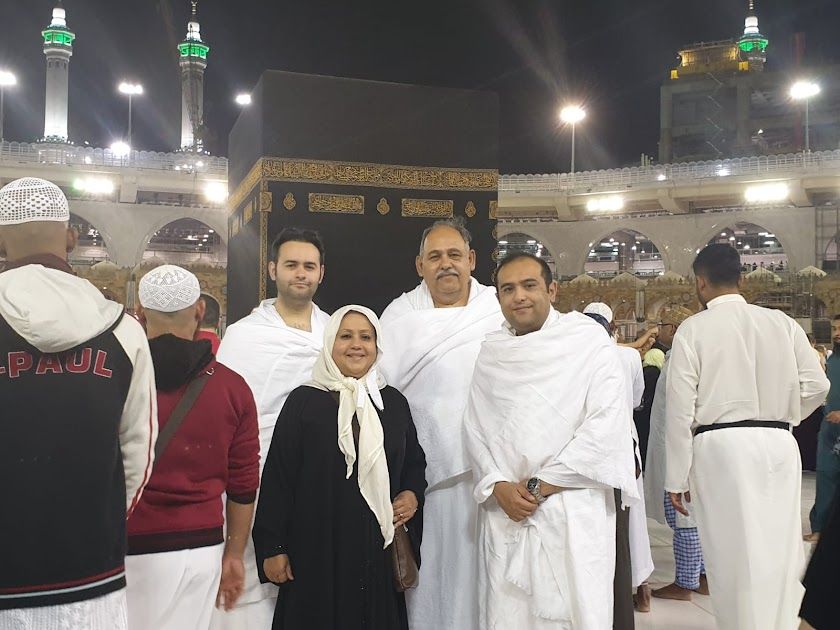
My family in state of Iḥrām, Alhamdolillah December 2021
  • From wherever they are in Makkah, they get into state of Iḥrām to commence the Hajj rituals.  From now they must adhere to the Hajj etiquettes which includes the following The same rules apply to all pilgrims when they are entering into state of Ihram before departing for Hajj/Umra from their homes or places where they assume state of Ihram)
  • Do not fight or quarrel with others.
  • Do not curse, talk sinfully or use any bad language.
  • Do not use perfume. This includes scented soaps, shampoos, wipes, lotions etc.
  • Do not cut, pluck or remove any hair or nails. (Broken nails can be removed).
  • Do not engage in any sexual activity.
  • Do not kill, hunt or help others hunt any animals.
  • Do not marry, propose or help others to marry.
  • Remember: The Ihram is a state of mind and, just like when you begin praying or fasting, certain things which would ordinarily be halal for you are now haram. 

  • On this day all pilgrims move to the camp city of Medina where elaborate arrangements of boarding and lodging of all pilgrims are extensively made. They may do so by foot (the 8 kilometer journey) or by buses and cars. The pilgrims will spend the day in Mina, only setting out the next morning at dawn. Most of the time in Mina is spent in prayer and remembering Allah.
9th Dhuʻl-Hijjah
  • This is the Hajj Day or the The Day of Arafat, which is considered one of the most important days, not just of Hajj, but of the Islamic calendar. 
  • On this day, the pilgrims will leave their tent city at Mina and move en masse to the Maidan e Arafat (The Arafat grounds). The distance from Mina to Arafat is 14.4 kilometer, which is again footed or reached in buses and cars. 
Jabal e Rehmat (Mount of Mercy) Photo
  • In the Maidan e Arafat, there is Mount Mercy which was the scene of the Prophet Muhammad’s final sermon.  
Masjid e Nimra, Maidan e Arafat (Photo: Mecca.net/source)
  • The pilgrims will stay here throughout the day and will attend to the Hajj Sermon which is made from the Masjid e Namra located in the same venue. Besides the entire day is spent in making reverent prayers, supplications and dua.
  • Elsewhere in the world, many Muslims choose to fast on this day.
  • After sunset, its time to move again, this time to Muzdalifah – a 9 km trip – where pilgrims will offer the Maghrab and Isha prayers combines and spend the rest of the night under the open sky with no tents on the ground. It is a strange experience staying under the stars sharing this beautiful night along with all other millions of pilgrims. 
  • During the stay here, usually men collect pebbles for the rites that follow on the 10th of Dhuʻl-Hijjah.
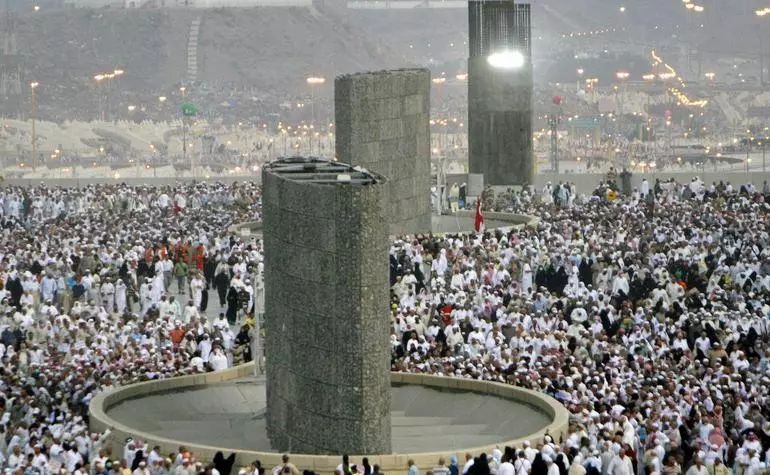
The pillars at Jamarat (Photo)
10th of Dhuʻl-Hijjah:
  • Just after the pre dawn prayer on the morning of the day, all pilgrims move back to Mina.
  • The 10th of Dhul-Hijjah is Eid al-Adha, a day celebrated by Muslims around the world as the greater of the two Muslim holidays.
  • On this day the pilgrims will perform the first rami, throwing seven pebbles at the largest of three columns known as Jamarat. This act is a symbolic stoning of the devil, based on historical tradition. God told Abraham to sacrifice his son, the story goes, as proof of faith. It is believed that at this spot in Mina, the devil appeared and tried to dissuade Abraham from heeding the command. Abraham responded by throwing stones to scare him off.
  • After casting their stones, pilgrims must perform the sacrifice. Completing the story, when Abraham went to sacrifice his son, he found God had placed a ram there to be slaughtered instead. It is better to do the slaughtering of the animal by oneself. However if due to rush or ill health one cannot so it himself, he can buy an animal for which a ticket is issued and the sacrifice of the animal is done under the government arrangement.
  • After the sacrifice, pilgrims trim or shave (men only) their hair and remove their ihram clothes.
  •  Many will then proceed to Makkah to perform tawaf and sa’ee, first circling the Kaaba seven times, then walking seven times between the hills of Safa and Marwa.
11-13th of Dhuʻl-Hijjah: On each day, they will again symbolically stone the devil – this time throwing seven pebbles at each of the three pillars. With the hardest part behind them, pilgrims will now spend the next two or three days in Mina.

When their time in Mina is finished, the pilgrims return to Makkah to perform the final circulation of the Kaaba, a “farewell” tawaf.
Majid e Nabavi (The Prophet's Mosque) - (Photo)

From here on, many return to their homes via Jeddah airport. However, many prefer to go to the city of Medinah, the final resting place of Prophet Muhammad at Masjid al Nabavi, the second holiest city in Islam. However, is not part of the pilgrimage. But along with the life time opportunity to be in the holy lands, how can someone miss out the second holiest place of Islam. Here many people offer 40 prayers in eight days as a ritual. Even otherwise being in the city of Medina is a great blessing for it has been the city where once our Prophet Muhammad  ﷺ established the first real Islamic state and from here the Islam spread to all nook and corners of the world.
May Allāh (سبحانه و تعالى‎) bless us the chance to perform Hajj and Umra, at least once in our life times to be close the holiest of places of Islam and pray for our forgiveness.
May Allah help us understand Qur'ān and help us to act upon the commandments of Allah contained therein. May Allah help us to be like the ones He loves and let our lives be lived helping others and not making others life miserable or unlivable. May all our wrong doings, whether intentional or unintentional, be forgiven before the angel of death knocks on our door. 

May Allah forgive me if my posts ever imply a piety far greater than I possess. I am most in need of guidance.

Reading the Qur'ān should be a daily obligation of a Muslim - Reading it with translation will make it meaningful. But reading its Exegesis / Tafsir will make you understand it fully. It will also help the Muslims to have grasp over social issues and their answers discussed in the Qur'an and other matter related to inter faith so that they are able to discuss issues with non-Muslims with authority based on refences from Qur'an.

Please refer to our page: Dhu al-Hijja (ذُو ٱلْحِجَّة): The month of Pilgrimage - The Hajj to know more about Dhu al-Hijja and Hajj.

Photo | Source references: | 1 | 2 | 3 | 4 | 5 |

For more Q&A about Understanding Islam, please refer to our reference page: Understanding Islam - Frequently asked Q&A

If you like Islam: My Ultimate Decision, and to keep yourself updated on all our latest posts to know more about Islam, follow us on Facebook

Please share this page to your friends and family members through Facebook, WhatsApp or any means on Social Media so that they can also be benefited by it and better understand Islam and the Holy Qur'an - Insha Allah (Allah Willing) you shall be blessed with the best of both worlds.

Thursday, 30 June 2022

Hajj Mubarak for those performing Hajj - Specially Reverts

Today marks the first of Dhuʻl-Hijjah " ذُو ٱلْحِجَّة " , the last month of the Islamic Colander 1443 AH / 2022. Millions of Muslim pilgrims from all over the world have already started to arrive in the Saudi Arabian city of Makkah/Mecca for the performance of the Hajj (The Pilgrimage), the fifth pillar of Islam. On 9th of Dhuʻl-Hijjah, all pilgrims will assemble in the Maidan-e-Arafat (The Arafat Ground) for the performance of Hajj. 

May Allah bless all pilgrims and accept their presence in the Holiest City of Islam and accept their Hajj rituals and erase from them all earlier sins and misdeed and keep them on the righteous straight path for remaining part of their lives. 
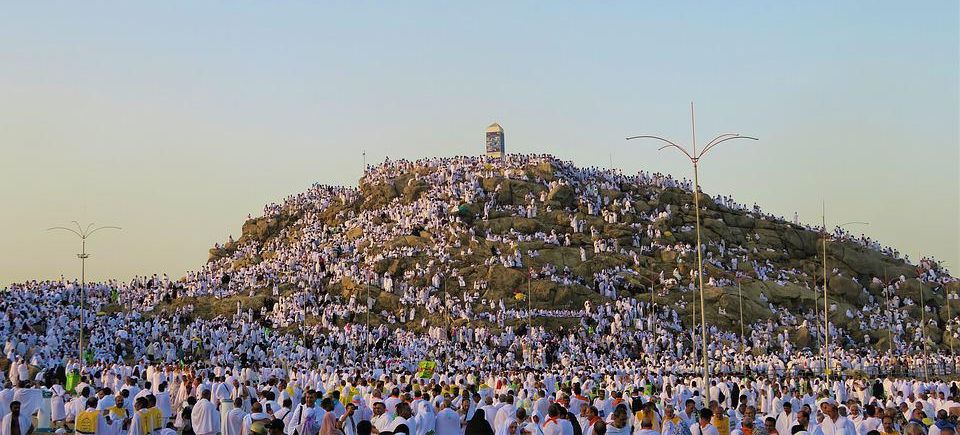
Pilgrims on the Mount of Arafat on 9th of Dhuʻl-Hijjah

Dhuʻl-Hijjah literally means "Possessor of the Pilgrimage" or "The Month of the Pilgrimage". The Hajj is performed on the eighth, ninth and the tenth of this month. Day of Arafah takes place on the ninth of the month. Eid al-Adha, the "Festival of the Sacrifice", begins on the tenth day and ends on sunset of the 13th. And thus end the formalities of the Hajj.

The importance of Hajj is well explained in the 197th verse of Surah 2. Al Baqarah (The Cow) as under:

اَلۡحَجُّ اَشۡهُرٌ مَّعۡلُوۡمٰتٌ ​ۚ فَمَنۡ فَرَضَ فِيۡهِنَّ الۡحَجَّ فَلَا رَفَثَ وَلَا فُسُوۡقَۙ وَلَا جِدَالَ فِى الۡحَجِّ ؕ وَمَا تَفۡعَلُوۡا مِنۡ خَيۡرٍ يَّعۡلَمۡهُ اللّٰهُ ​ؕ وَتَزَوَّدُوۡا فَاِنَّ خَيۡرَ الزَّادِ التَّقۡوٰى وَاتَّقُوۡنِ يٰٓاُولِى الۡاَلۡبَابِ‏ 
(2:197) The months of Hajj are well known. Whoever intends to perform Pilgrimage in these months shall abstain from sensual indulgence, wicked conduct and quarrelling; and whatever good you do, Allah knows it. Take your provisions for the Pilgrimage; but, in truth, the best provision is piety. Men of understanding, beware of disobeying Me.

That is:
  • While in the state of ihram, not only intercourse between husband and wife is prohibited but that sort of conversation too, which might excite sexual passions. 
  • Though all sorts of evil deeds are unlawful at all times, they become all the more grave when committed during the course of Hajj.  
  • One cannot even rebuke a servant.
  • Before the advent of Islam, taking of provisions for the pilgrimage journey was considered to be a worldly act and it was expected that a pious than would go to the House of Allah without any worldly goods. Here it is declared that it is no virtue to go without provisions on pilgrimage to Makkah. Real virtue is that one should fear God, obey Him and keep one's life pure. If a pilgrim does not take any provisions with him, but commits evil deeds without any fear of Allah, he makes a profitless show of piety. In the sight of Allah and men, such a man will dishonour both himself and the pilgrimage he is performing. On the other hand, if a pilgrim has fear of Allah embedded in his heart and keeps his morals pure, he will gain honour with Allah and men, though he may have provided himself fully with provisions. 
It has been reported by Narrated Ibn Abbas (as it appears in Tirmidhi that the Prophet (peace and blessings of Allah be upon him) said, "No good deeds done on other days are superior to those done on these (first ten days of Dhuʻl-Hijjah)." Then some companions of the Prophet said, "Not even Jihad?" He replied, "Not even Jihad, except that of a man who does it by putting himself and his property in danger (for Allah's sake) and does not return with any of those things." 

The chronology of events day wise are enumerated below commencing from 9th of  Dhuʻl-Hijjah:
  • The first 9 days of Dhuʻl-Hijjah for fasting
  • The first 10 nights of Dhuʻl-Hijjah for standing (Qiyaam) in Tahajjud
  • The 8th, 9th and 10th of Dhu al-Hijjah as the days of Hajj
  • The 9th of Dhuʻl-Hijjah as the Day of Arafah
  • Takbirut Tashreeq is observed from the 9 Dhuʻl-Hijjah till 13 Dhu al-Hijjah
  • The 10th of Dhu al-Hijjah as the Night of Eid
  • Eid al-Adha (Festival of the Sacrifice) begins on the 10th day of Dhuʻl-Hijjah and ends on sunset of the 13th Dhuʻl-Hijjah
May Allāh (سبحانه و تعالى‎) accept the Hajj of pilgrims this year and all those who have performed Hajj before. May Allah also grant means for those who have not yet performed Hajj and bless them the opportunity to perform Hajj at least once in their life time. Ameen.

May Allah help us understand Qur'ān and help us to act upon the commandments of Allah contained therein. May Allah help us to be like the ones He loves and let our lives be lived helping others and not making others life miserable or unlivable. May all our wrong doings, whether intentional or unintentional, be forgiven before the angel of death knocks on our door. 

May Allah forgive me if my posts ever imply a piety far greater than I possess. I am most in need of guidance.

Reading the Qur'ān should be a daily obligation of a Muslim - Reading it with translation will make it meaningful. But reading its Exegesis / Tafsir will make you understand it fully. It will also help the Muslims to have grasp over social issues and their answers discussed in the Qur'an and other matter related to inter faith so  that they are able to discuss issues with Non Muslims with authority based on refences from Qur'an.

Photo (Pixabay) | Resource references: | 1 | 2 |
For more Q&A about Understanding Islam, please refer to our reference page: Understanding Islam - Frequently asked Q&A

If you like Islam: My Ultimate Decision, and to keep yourself updated on all our latest posts to know more about Islam, follow us on Facebook. You may also refer to our Facebook  Group Islam: The Ultimate Truth for more on Islam and Da'wah.

Please share this page to your friends and family members through Facebook, WhatsApp or any means on Social Media so that they can also be benefited by it and better understand Islam and the Holy Qur'an - Insha Allah (Allah Willing) you shall be blessed with the best of both worlds.

Tuesday, 28 June 2022

Who is the worst man ever?

Men have always to make choices in their lives and the decision comes after lot of thinking and deliberations. But we often see men who are extraordinarily selfish, manipulative, and unkind and always siding with the wrong people? What makes them do so is a vast subject altogether.

While there are many ills that cast a dark shadow on the character of a man, to my mind the worst man ever is the man who knows the truth and what is right, yet sides with the demagogues, power wielding people and politicians or the mafia. These men knowing the truth, make bad decisions of their lives, generally for money or looking for a chance to walk in the power corridors. 

While the ordinaries do not make much difference, the doom comes when men of pen write in favour of the criminals and knowing their dark character, portray them as the noble and pious. Some men of media today fall into this category who blatantly tell lies to cover and shield the lies of the wicked who pay them handsomely.

By doing so, they not only breached the trust vested in them, they supported the evil and wrongdoing of others. In order to ensure discontinuation of this ill of the society which badly hurts the moral fiber of the people, the following verse 107 of Surah An Nisa is an eye opener:

وَلَا تُجَادِلۡ عَنِ الَّذِيۡنَ يَخۡتَانُوۡنَ اَنۡفُسَهُمۡ​ ؕ اِنَّ اللّٰهَ لَا يُحِبُّ مَنۡ كَانَ خَوَّانًا اَثِيۡمًا ۙ​ ۚ‏ 
(4:107) Do not plead for those who are dishonest to themselves; Allah does not love him who betrays trust and persists in sin.
The verse implies that whoever commits a breach of trust with others in fact commits a breach of trust with his own self first. For the powers of his head and heart have been placed at his disposal as a trust, and by misusing them he is forcing those powers to support him in acts which involve a breach of trust. In doing so the person concerned suppresses his conscience, which God has placed as a sentinel over his moral conduct, with the result that it is rendered incapable of preventing him from acts of wrong and iniquity. It is only after a man has already carried out this cruel suppression of conscience within himself that he is able to commit acts of sin and iniquity outwardly.
Sometimes the wicked and the criminal minded people are so cunning that they appear noble and get away with deceiving people for quite sometime. This is their catching time and harbour people under their wings to be used for their evil designs at a later stage. And the generally not very innocents, who have a clue as to where they are tilting, yet are detracted and repent later on. But such tactics doesn't auger well these days because of very versatile social network en force, Yet, these people elect to carry on for the lucrative incentives are far more that a few dollar of siding with those following the right part.

So beware men, always side with the truth specially when you have known it. For if even after that you side with the cheaters and liers, you will find a very disgraceful place in the society.
May Allāh (سبحانه و تعالى‎) help us understand Qur'ān and help us to act upon the commandments of Allah contained therein. May Allah help me and all my readers to always side with the truth and may Allah always help us to be in the straight path so that we help those who are truthful and fighting a war against the criminals and their supporters.
May Allah help us to be like the ones He loves and let our lives be lived helping others and not making others life miserable or unlivable. May all our wrong doings, whether intentional or unintentional, be forgiven before the angel of death knocks on our door. 
May Allah forgive me if my posts ever imply a piety far greater than I possess. I am most in need of guidance.

Reading the Qur'ān should be a daily obligation of a Muslim - Reading it with translation will make it meaningful. But reading its Exegesis / Tafsir will make you understand it fully. It will also help the Muslims to have grasp over social issues and their answers discussed in the Qur'an and other matter related to inter faith so  that they are able to discuss issues with Non Muslims with authority based on refences from Qur'an.

Photo | references: | 1

For more Q&A about Understanding Islam, please refer to our reference page: Understanding Islam - Frequently asked Q&A

If you like Islam: My Ultimate Decision, and to keep yourself updated on all our latest posts to know more about Islam, follow us on Facebook

Please share this page to your friends and family members through Facebook, WhatsApp or any means on Social Media so that they can also be benefited by it and better understand Islam and the Holy Qur'an - Insha Allah (Allah Willing) you shall be blessed with the best of both worlds.

In what sate would you like to Die?

Death is one of the most dreadful and haunting word for any living man. Even a man on deathbed is not willing to hear this scary word nor he would like someone mention to him of his hopeless sate and think of him dying. Ask anyone how and in what state he would like to meet the angel of death, he may simply shrug of his shoulders or try to change the topic of conversation from death to living.

To some this post may seem scary, but if this post has been opened, I would request to read it to the end.  We all know that Death is the irreversible cessation of all biological functions that sustain an organism. Death will come to us whether we like it or not. Qur'an very simply puts this as :

كُلُّ نَفْسٍ ذَائِقَةُ الْمَوْتِ ۗ 
Every soul shall taste death

So no matter how advance the science and medical may go, death will still beget the man and there is no exceptions even in the oldest of history books. Many prophets are said to have reached 1000 years of life, yet they still met the angel of death and went back to Heavens.

Thus the question is not whether we will live forever or that we would not die. The question is In what sate would you like to Die? Do we have a choice. Well to a great extent yes. Apart from accidental sudden deaths as result of earthquakes, drowning or dying as a result of fire in a building or its collapse or being hit by a stray bullet when walking on the road or even someone firing indiscriminately for fun or out of frustration. 

Well to my reckoning, there are two possibilists: Dying in a way that displeases God and dying in a state that is pleases God. Let us go into details of these two possibilities:
  • Many may laugh out on my listing for majority of people love merry making, "enjoying" their lives disregarding all Divine Commandments. The acts that displease God are those that take the attention of a servant of Allah away from his Creator. These could be (1) singing or dancing, (2) acts of fornication or acts of gay/lesbian, (3) teasing someone or putting someone in pain or hardship, (4) usurping others' means of sustenance, (5) hurting someone for self pleasure, (6) Watching pornographic material, (7)  wearing tempting or revealing clothes, specially by women, (8) not observing hijab by Muslim women etc.
  • On the contrary the acts that please Allah are those wherein a servant of Allah is busy in acts of pleasing Alla, that is acts that have been oft repeated in Qur'an. Some of these are (1) Offering prayers, (2) Reciting Qur'an, (3) helping others who are in distress, (4) Spending in way of Allah, that is giving out charity or sadaqa, (5) Performing Hajj or Umra, (6) Observing hijab or wearing clothes that are not tempting or revealing, (7) Staying some time in masjid after the prayers and busying oneself in supplications, (8) Offering Tahajjud prayers, specially by waking up at night while the rest are asleep.
كُلُّ نَفْسٍۢ ذَآئِقَةُ ٱلْمَوْتِ ۗ وَنَبْلُوكُم بِٱلشَّرِّ وَٱلْخَيْرِ فِتْنَةًۭ ۖ وَإِلَيْنَا تُرْجَعُونَ 
Every soul will taste death. And We test you with evil and with good as trial; and to Us you will be returned. (21:35)
That is  in our life of probation on this earth, our virtue and faith are tested by many things: some are tested by calamities, and some by the good things of this life. If we prove our true mettle, we pass our probation with success. In any case all must return to Allah, and then will our life be appraised at its true value. The above two conditions point towards these tests and trials. So let not fail when our time of death arrives.

We should also remember that when someone's time is up, the Angel of death does not wait for us for even a second to give us respite come out of disco to take our souls, or to dress modestly or to stop the fornication (Zina ) and all the bad deeds we are indulging in. Death reaches us wherever we are and whatever situation we might be in. The Angel of death never disobey Allah's command like we do. It is we who disobey Allah that leads to our salvation or doom as preferred by us.
May Allāh (سبحانه و تعالى‎) help us understand Qur'ān and help us to act upon the commandments of Allah contained therein. May Allah help is remembering Him and when the angel of death approaches us, we should be busy in an act that please God and ensures our salvationYa Allah! We ask you for a good ending and making Jannah (Paradise) our final abode.
May Allah help us to be like the ones He loves and let our lives be lived helping others and not making others life miserable or unlivable. May all our wrong doings, whether intentional or unintentional, be forgiven before the angel of death knocks on our door. 
May Allah forgive me if my posts ever imply a piety far greater than I possess. I am most in need of guidance.

Reading the Qur'ān should be a daily obligation of a Muslim - Reading it with translation will make it meaningful. But reading its Exegesis / Tafsir will make you understand it fully. It will also help the Muslims to have grasp over social issues and their answers discussed in the Qur'an and other matter related to inter faith so  that they are able to discuss issues with Non Muslims with authority based on refences from Qur'an.

Photo

For more Q&A about Understanding Islam, please refer to our reference page: Understanding Islam - Frequently asked Q&A

If you like Islam: My Ultimate Decision, and to keep yourself updated on all our latest posts to know more about Islam, follow us on Facebook

Please share this page to your friends and family members through Facebook, WhatsApp or any means on Social Media so that they can also be benefited by it and better understand Islam and the Holy Qur'an - Insha Allah (Allah Willing) you shall be blessed with the best of both worlds.
Monday, 27 June 2022

Alhamdolillah: We have crossed our 1000 Posts Milestone

Praise be to Allah " اَلۡحَمۡدُ لِلّٰهِ " - It is a very honored day for me at Islam: My Ultimate Decision as my  blog has crossed our 1000th Posts Milestone today. I bow my head in complete humility in front of Allah, the Almighty, for showing me this great day. I am also grateful to all my readers from all over the world who read and supported my effort and encouraged me to go on and on.

Looking back to 2018 when I started this blog, I had a very limited scope in my mind about the main theme of the blog. The aim then was to know why people leave their religion of birth and embrace Islam. And for that I shared a number of posts of the "revert experiences" and got to know the first hand knowledge of the Why of my question. These experiences were really very educative and opened up my horizon and working knowledge of other religions.

Then I thought of another idea that those reverting to Islam would have many questions, queries about Islam and would be in quest to know more and more about Islam, Qur'an, Sunnah of the Prophet Muhammad ﷺ and other subjects related to Islam. Therefore I expanded the scope of the blog and from then on there has been no limit to my expansion of the blog. and today my blog is divided into many sub-sections to deal with various aspects of Islam as under:
Perhaps the main sub section of my blog is to provide in depth exegesis / Tafsir of all 114 Chapters (Sūrahs) of the Holy Qur'an based on the explanation by some of the most revered scholars / exegetes of Qur'an. We have completed almost three fourth of Qur'an while remaining is in hand. 

Then we also opened a sub section for  Selected Verses from the Qur'an to share some important verses the knowledge of which may come handy for frequent references and knowing some special subjects of emphasis from Qur'an. Also we shared some of the  Selected Invocations / Dua " دُعا " from Quran so that invoke many blessings of Allah in the language He has asked us in the Qur'an.

We also shared life of Muslims in the non Muslim countries in our sub section of  Islam and Life of Muslims in Non Muslim Countries so that we know how our Muslim brethren are sticking to their faith despite many challenges and hurdles. 

Our sub section Understanding Islam - Frequently Asked Q&A provides answers to many a queries and questions raised by the reverts for knowing more about Islam. And much more. We also share posts on important issues by eminent Muslim scholars in our sub section: Scholars' Viewpoint on Important Issues Related to Islam  to provide first hand knowledge based on the scholars' wisdom and knowledge of Islam and Qur'an.

We request our readers to continue supporting us by reading and sharing our posts so that word of Islam spreads and more people know more about Islam and Qur'an and many a misgiving and Islamophobic mindset is put to rest. We may add here that we do not share any ads in our blog because sometimes nude ads get into this otherwise clean blog and to ensure its sanctity. Moreover this blog is handled single handedly by me. So please pray Allah grant me strength to continue with noble task I have taken upon myself. May Allah forgive me if my posts ever imply a piety far greater than I possess. I am most in need of guidance from Allah.

May Allāh (سبحانه و تعالى‎) help us understand Qur'ān and help us to act upon the commandments of Allah contained therein. May Allah help us to be like the ones He loves and let our lives be lived helping others and not making others life miserable or unlivable. May all our wrong doings, whether intentional or unintentional, be forgiven before the angel of death knocks on our door. 

Reading the Qur'ān should be a daily obligation of a Muslim - Reading it with translation will make it meaningful. But reading its Exegesis / Tafsir will make you understand it fully. It will also help the Muslims to have grasp over social issues and their answers discussed in the Qur'an and other matter related to inter faith so  that they are able to discuss issues with Non Muslims with authority based on refences from Qur'an.

Photo |  Please refer to Quick Reference Pages to know what all we contributed so far to spread the knowledge about Islam Qur'an and Sunnah of Prophet Muhammad ﷺ.

If you like Islam: My Ultimate Decision, and to keep yourself updated on all our latest posts to know more about Islam, follow us on Facebook

Please share this page to your friends and family members through Facebook, WhatsApp or any means on Social Media so that they can also be benefited by it and better understand Islam and the Holy Qur'an - Insha Allah (Allah Willing) you shall be blessed with the best of both worlds.
Twitter Delicious Facebook Digg Stumbleupon Favorites More