However, living without rules, etiquettes and adhering to the social values of the group of people or society can make him just sit on the wall, all by himself for people need to integrate based on some moral values and laws enacted by man or religion so as to avoid chaos and confusion on earth. The birth of a baby and its further growth from learning to walk, holding hands, responding to calls by its parents is but one example of how so many people is involved in rearing a child, both at home, school, colleges and on and on.
It is said that “Man only becomes man among Men”. Man is born with some inborn potentialities. It is society and the social heritage, which determines the manner in which his innate potentialities express themselves in society. Emotional development and intellectual maturity is not possible without society. Therefore, society determines our mental equipment’s. It shapes our identity, our thoughts and our emotions. [1]
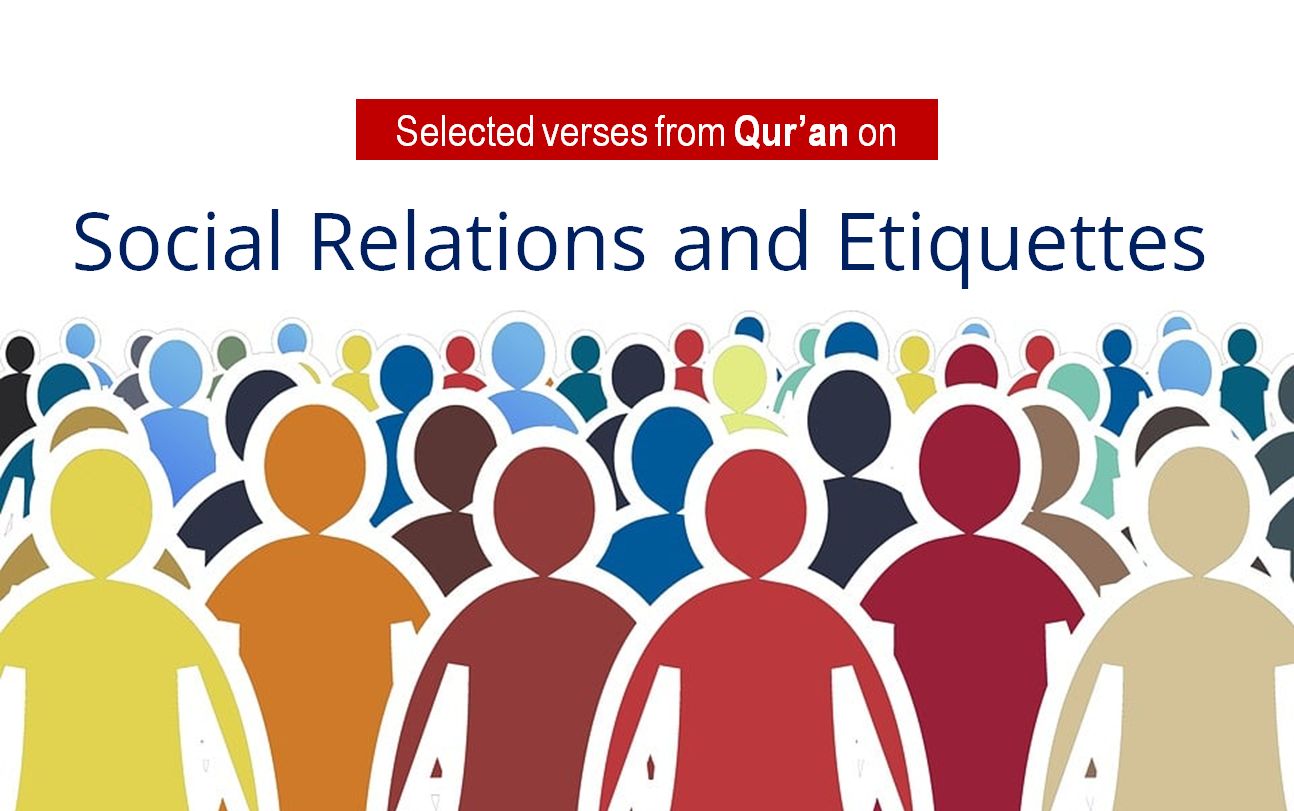
Islam, which some think it a mere religion, is much more than just Divine Commandments of DOs and DONTs. Islam gives out a complete conduct of life which allows a man, a group of people and societies to coexist peacefully, respecting each other's rights and bounds. We have been sharing verses from Qur'an related to social relations and etiquettes. In this post, we have gathered all such posts to provide a ready reckoner to know what Islam says about Social Relations and Etiquettes.
Herein under are already published posts on the subject and we will keep adding new posts as and when published:
- Postpone Loan (or even right off) if Debtor is in Hardship (Surah 2. Al-Baqara: 280)
- Restrain their anger, and forgive others (Surah 3 Al i Imran (The Family of Imran):134)
- Do not usurp property of orphans (Surah 4. An-Nisaa:2)
- When greeted upon, greet back in a better worded greeting (Surah 4. An-Nisaa:86)
- Raiment of Modesty and Righteousness (Surah 7. Al-A'raf: 26)
- Be Good to Your Parents (Surah 17. Al-Israa:23) (Surah 13. Ar-Ra'd:11)
- Enjoining Good and Forbidding Wrong
- Etiquette of speech for a believer - Speak Good Always (Surah 2 Al Baqarah:83)
- Social Etiquettes of Islam: Say (O Prophet) enjoin believing men to cast down their looks (Surah 24 An Noor:30)
- Walk on earth Gently (Surah 25. Al Furqan (The Criterion):63)
- Do not turn away your face from others in contempt... Adopt Humility (Surah 31. Luqman:18)
- Always speak the right word - the Truth (Surah 33 al Ahzab:70)
- How Islam guides to ensure Sanctity of Interpersonal Relations (Surah 49. Al-Hujurat:11)
- Do not Backbite and be Excessively Suspicious (Surah 49. Al-Hujurat:12)
- Make room for others in gatherings (Surah 58. Al Mujadilah:11)
- (Matters related to divorce) Allah provides sustenance from whence one never even imagined (Surah 65. At Talaq:2-3)
- He who purified himself shall prosper (Surah 87. Al-A'la:14)
We hope this compilation will help our readers to know Islam better than before.
May Allāh (سبحانه و تعالى) help us understand Qur'ān and follow the Sunnah of Prophet Muhammad ﷺ, which is embodiment of commandments of Allah contained in the Qur'ān. May Allah help us to be like the ones He loves and let our lives be lived helping others and not making others' lives miserable or unlivable. May all our wrong doings, whether intentional or unintentional, be forgiven before the angel of death knocks on our door.
وَمَا عَلَيۡنَاۤ اِلَّا الۡبَلٰغُ الۡمُبِيۡنُ
(36:17) and our duty is no more than to clearly convey the Message.”
That is Our duty is only to convey to you the message that Allah has entrusted us with. Then it is for you to accept it or reject it. We have not been made responsible for making you accept it forcibly, and if you do not accept it, we shall not be seized in consequence of your disbelief, you will yourselves be answerable for your actions on Day of Resurrection.
Reading the Qur'ān should be a daily obligation of a Muslim - Reading it with translation will make it meaningful. But reading its Exegesis / Tafsir will make you understand it fully. It will also help the Muslims to have grasp over social issues and their answers discussed in the Qur'an and other matter related to inter faith so that they are able to discuss issues with non-Muslims with authority based on refences from Qur'an.
May Allah forgive me if my posts ever imply a piety far greater than I possess. I am most in need of guidance.
Note: When we mention God in our posts, we mean One True God, we call Allah in Islam, with no associates. Allah is the Sole Creator of all things, and that Allah is all-powerful and all-knowing. Allah has no offspring, no race, no gender, no body, and is unaffected by the characteristics of human life.
For more Selected Verses, please refer to our reference page: Selected Verses from the Qur'an. You may also refer to our Reference Pages and Understanding Al Qur'an for knowing more about Islam and Qur'ān.
If you like Islam: My Ultimate Decision, and to keep yourself updated on all our latest posts to know more about Islam, follow us on Facebook. You may also refer to our Facebook Group Islam: The Ultimate Truth for more on Islam and Da'wah.
Please share this page to your friends and family members through Facebook, WhatsApp or any means on Social Media so that they can also be benefited by it and better understand Islam and the Qur'ān - Insha Allah (Allah Willing) you shall be blessed with the best of both worlds.