.
Showing posts with label Thankfulness. Show all posts

Wednesday, 29 July 2026

Prostration: The ultimate expression of absolute humility and thankfulness

Thanking one another is one of the most universal expressions of human civilization. Across cultures, people instinctively express gratitude because they recognize that they have received a benefit they did not owe to themselves. Gratitude acknowledges goodness, strengthens relationships, and reflects humility rather than entitlement. Thanking others may be expressed physically by hugging or a thank you note or a small gift.

This also helps us understand why sujūd (prostration) is the highest form of gratitude to Allah. If we naturally thank fellow human beings with words, gifts, smiles, or acts of appreciation for relatively small favors, then how should we thank the One who gave us life, faith, intellect, health, sustenance, family, forgiveness, and every blessing we possess? Ordinary words alone cannot fully express such gratitude. The believer therefore lowers the most honored part of the body—the forehead—to the ground before the Creator. In sujūd, gratitude reaches its fullest expression: the heart acknowledges the Giver, the tongue praises Him, and the body itself testifies in humble submission. This is why the Qur'an culminates Surah An-Najm with the command: "So prostrate yourselves before Allah and worship Him" (53:62)—the ultimate response to recognizing His countless favors, which is being shared in this post..

Thus prostration is the ultimate expression of humility and thankfulness, the two of the greatest qualities encouraged in the Qur'an and the Sunnah. They complement one another: humility is recognizing our true position before Allah and before people, while thankfulness is recognizing the source of every blessing. A humble heart naturally becomes grateful, and a grateful heart naturally becomes humble. Before we go on to the mode of thanking our Creator, let us briefly understand what are these two terms:

What is humility?
Humility (tawāḍuʿ) is not thinking poorly of yourself; rather, it is thinking of yourself truthfully. It is acknowledging that every ability, achievement, and blessing comes from Allah and that no one has reason to be arrogant. Allah says:

"Do not turn your cheek in contempt toward people, nor walk through the earth exultantly. Indeed, Allah does not like every self-deluded and boastful person." (Qur'an 31:18) - And He says:

"The servants of the Most Merciful are those who walk upon the earth humbly..." (Qur'an 25:63)

The Prophet ﷺ said: "No one humbles himself for the sake of Allah except that Allah raises him in status." (Sahih Muslim, Hadith 2588)

What is thankfulness?
Thankfulness (shukr) is recognizing Allah as the Giver of every blessing and expressing gratitude with the heart, the tongue, and one's actions. Allah says:

"If you are grateful, I will surely increase you; but if you are ungrateful, indeed My punishment is severe." (Qur'an 14:7), and

"Whatever blessing you have is from Allah." (Qur'an 16:53)

The Prophet ﷺ would stand in prayer until his feet became swollen. When asked why he exerted himself so much although his sins had been forgiven, he replied: "Should I not be a grateful servant?" (Sahih al-Bukhari 1130; Sahih Muslim 2819)

This teaches that gratitude is not merely spoken—it is lived.

How do we express thankfulness in absolute humility
The last verse of Surah An-Najm is among the most powerful commands in the Qur'an which tell us how to thank Allah in total humility: In the 62nd verse of Surah  An Najm it is said:

 ۩فَاسْجُدُوا لِلَّهِ وَاعْبُدُوا
"So prostrate yourselves before Allah and worship Him." (Surah An-Najm 53:62)

This command comes after an entire surah that establishes Allah's absolute majesty, the truthfulness of revelation, the certainty of resurrection, the fate of earlier nations, and the futility of worshipping anything besides Him. It is therefore no coincidence that the surah concludes not with another argument, but with an act of worship. Once the truth has become clear, the only fitting response is to bow.

Note: Wherever the symbol ۩ appears in Al Qur'an, it is recommended to prostrate.

What is prostration (Sujūd)?
Linguistically, sujūd means to lower oneself, to humble oneself, and to submit completely. In Islamic worship it is the physical act of placing the forehead, nose, both palms, both knees, and the toes of both feet upon the ground solely for Allah.

Yet the Qur'an presents sujūd as much more than a bodily movement. It is the moment when:
  • the intellect surrenders to Divine wisdom,
  • the heart acknowledges its dependence,
  • the ego is broken,
  • the servant admits his complete poverty before the Creator.
The Prophet ﷺ said: "The nearest a servant comes to his Lord is while he is prostrating, so increase your supplications." — Sahih Muslim, Hadith 482

The closest point is not when a believer is standing proudly, but when he is lying upon the earth from which he was created.

Why is prostration the ultimate expression of humility?
Allah created man from dust. Human beings naturally wish to lift their heads, display their status, protect their dignity and be admired by others. Sujūd reverses all of these instincts.

In prostration the highest part of the body, the forehead, touches the lowest place, the earth;
wealth, rank, intelligence and beauty disappear;
kings and labourers look identical;
only servanthood remains.

It is a declaration that: "Nothing about me deserves worship. Everything about You deserves worship."

That is why Satan's downfall began with refusing to prostrate before Adam (38:74-76). Pride prevented submission. Every sincere sujūd therefore destroys a little of the arrogance that destroyed Iblis.

Why is sujūd the highest expression of thankfulness?
Thankfulness (shukr) is not merely saying Alhamdulillah. The Qur'an teaches that gratitude has three dimensions:
  • The heart recognises the Giver.
  • The tongue praises Him.
  • The limbs obey Him.
Sujūd combines all three simultaneously.

The Prophet ﷺ would perform Sujūd ash-Shukr (the prostration of gratitude) upon receiving joyful news or experiencing Allah's favour, demonstrating that overwhelming gratitude naturally expresses itself through prostration.

When one is in the posture of prostrations, suddenly everything start to feel meaningless for while one is pressing his forehead on the ground in absolute humility. One's family, life, job, go back in the background while the countless unseen blessings start to come to one's mind. This is the time when mere words begin to feel insufficient and one's body resists from getting up when in the presence of its Creator.

Why does Surah An-Najm end with prostration?
The entire surah gradually leads the listener toward surrender. The surah gradually builds up a 

1. Revelation is true
The Prophet ﷺ did not speak from personal desire. "Nor does he speak from his own desire. It is nothing but revelation revealed." (53:3-4). If revelation is from Allah, then submission becomes the only rational response.

2. False gods are exposed
The idols al-Lāt, al-'Uzzā, and Manāt are shown to possess no divine authority (53:19-23). When every false object of worship falls, only Allah remains worthy of prostration.

3. Every soul is responsible
The surah declares: "No bearer of burdens shall bear the burden of another." (53:38) That is each individual must personally stand before Allah. Thus each individual must also personally bow before Him. No one can perform that surrender on another's behalf.

4. Every effort belongs to Allah
Success is not inherited since "Man will have only what he strives for." (53:39). Sujūd thus becomes the practical proof that one's striving is directed toward Allah alone.

5. Allah is the ultimate end
One of the most profound verses of the surah states: "And to your Lord is the final destination." (53:42). That is if every journey ends with Allah, then why should our worship end anywhere else? Therefore our final destination deserves our first prostration.

Why did the Companions immediately prostrate?
When the Prophet ﷺ recited Surah An-Najm publicly for the first time, he ended with: "So prostrate to Allah and worship Him." Thereafter, he himself immediately prostrated, and his companions too prostrated. The scene was so overwhelming by the force of the recitation that even many of the pagan Quraysh instinctively fell into prostration. This incident is authentically reported in Sahih al-Bukhari.

It illustrates that the Qur'an speaks not only to the intellect but also to the innate human disposition (fiṭrah). When hearts are momentarily stripped of pride, they recognize the truth and incline toward submission.

Reflections from classical and contemporary scholars
1. Ibn Kathir Ibn Kathir explains that after establishing the truth of revelation, exposing idolatry, and reminding people of resurrection and accountability, Allah concludes with a direct command to worship Him alone. The proper response to all the evidence presented in the surah is immediate obedience through prostration.

2. Al-Tabari Al-Tabari understands the verse as a decisive conclusion: abandon every form of worship directed to other than Allah and devote all acts of humility and worship exclusively to Him.

3. Sayyid Abul A'la Maududi Maududi notes that the surah first appeals to reason, then to history, then to conscience, and finally to the human heart. After all these proofs, argument ends and worship begins. Genuine knowledge of Allah must culminate in humble submission.

4. Nouman Ali Khan Nouman Ali Khan often emphasizes that Islam is not merely about being intellectually convinced. Real faith transforms the body. When the Qur'an reaches the heart, it naturally brings the forehead to the ground. Sujūd is faith made visible.

Lessons for us today
Modern society encourages self-glorification, independence, and constant self-promotion. The Qur'an teaches the opposite: true honor lies in humble servitude to Allah. This verse teaches that true knowledge should lead to worship. The Qur'an is not merely meant to be admired intellectually; it is meant to transform the heart into humility and obedience. In a world that often glorifies human achievement, wealth, or ego, the verse reminds us that the highest honour belongs to the one who bows before Allah alone. Every truth established in the surah ultimately calls us to one practical response: submit, worship, and live in devotion to the Creator.

Sujūd reminds us that:
  • every blessing comes from Allah;
  • every achievement is by His permission;
  • every difficulty is under His wisdom;
  • every success should lead to gratitude, not pride;
  • every sin should lead to repentance, not despair.
A believer who regularly prostrates with understanding gradually becomes less arrogant, more thankful, more patient, and more conscious of Allah.

A final reflection
Surah An-Najm begins by drawing our attention upward—to the star that descends from the heavens—and ends by directing our foreheads downward to the earth. This movement is deeply symbolic. Divine guidance descends from above, and the appropriate human response is to lower oneself in humble worship. The one who truly recognizes Allah's greatness cannot remain standing in pride. He bows, placing his forehead on the ground from which he was created, acknowledging that every blessing is from Allah, every return is to Allah, and every act of gratitude finds its highest expression in sujūd. Thus, the command "So prostrate yourselves to Allah and worship Him" (53:62) is not merely the conclusion of the surah—it is the natural culmination of faith itself.
May Allāh (سبحانه و تعالى‎) help us understand Qur'ān and follow the Sunnah of Prophet Muhammad ﷺ, which is embodiment of commandments of Allah contained in the Qur'ān. May Allah help us to be like the ones He loves and let our lives be lived helping others and not making others' lives miserable or unlivable. May all our wrong doings, whether intentional or unintentional, be forgiven before the angel of death knocks on our door. 
وَمَا عَلَيۡنَاۤ اِلَّا الۡبَلٰغُ الۡمُبِيۡنُ‏ 
(36:17) and our duty is no more than to clearly convey the Message.”
That is Our duty is only to convey to you the message that Allah has entrusted us with. Then it is for you to accept it or reject it. We have not been made responsible for making you accept it forcibly, and if you do not accept it, we shall not be seized in consequence of your disbelief, you will yourselves be answerable for your actions on Day of Resurrection.

May Allah forgive me if my posts ever imply a piety far greater than I possess. I am most in need of guidance.

Reading the Qur'ān should be a daily obligation of a Muslim - Reading it with translation will make it meaningful. But reading its Exegesis / Tafsir will make you understand it fully. It will also help the Muslims to have grasp over social issues and their answers discussed in the Qur'an and other matter related to inter faith so that they are able to discuss issues with non-Muslims with authority based on refences from Qur'an.

Note: When we mention God in our posts, we mean One True God, we call Allah in Islam, with no associates. Allah is the Sole Creator of all things, and that Allah is all-powerful and all-knowing. Allah has no offspring, no race, no gender, no body, and is unaffected by the characteristics of human life.

You may refer to more Selected Verses from Sürah (53) An-Najm النجم‎ (The Star) already published.

You may also refer to our exclusive reference pages: 
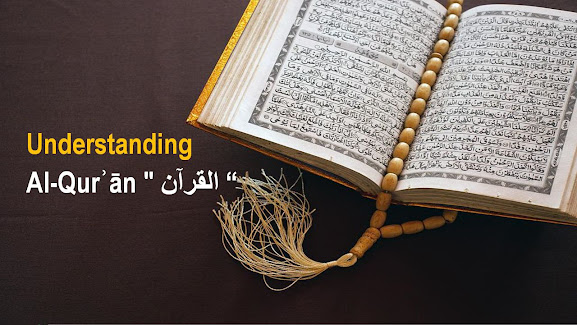
You may also refer to our Reference Pages  and Understanding Al Qur'an for knowing more about Islam and Qur'ān.
Photo | Reference: | 12 | 3 |

An effort has been made to gather explanation / exegesis of the surahs and selected verses of Al-Qurʾān from authentic sources and then present a least possible condensed explanation of the surah. In that the exegesis of the chapters of the Quran is mainly based on the "Tafhim al-Qur'an - The Meaning of the Qur'an" by one of the most enlightened scholars of the Muslim World Sayyid Abul Ala Maududi.  
    In addition, other sources which have been explored and views of other scholars have been incorporated while explaining meaning of a verse. Those desirous of detailed explanations and tafsir (exegesis), may refer to these sites. For expansion of meaning and themes / contextual background help from ChatGPT is also taken.

    Disclaimer: The material for this post has been collected from the references given above. If anyone differs with the material contained in this post, one may consult the references and their authors.  If someone has more material about the subject, he/she is most welcome to share in the comments box to make the post all encompassing.

    If you like Islam: My Ultimate Decision, and to keep yourself updated on all our latest posts to know more about Islam, follow us on Facebook. You may also refer to our Facebook  Group Islam: The Ultimate Truth for more on Islam and Da'wah.

    Please share this page to your friends and family members through Facebook, WhatsApp or any means on social media so that they can also be benefited by it and better understand Islam and the Qur'ān - Insha Allah (Allah Willing) you shall be blessed with the best of both worlds.

    Monday, 19 August 2019

    Four Things a Muslim Should Never Leave


    Islam is a wonderful religion for it provides immense opportunities to a true believer to live a blessed life. And the most amazing thing is that to be blessed, one doesn't have to work very hard. Small things, gestures, prayers, thankfulness and repentance is all what is needed to draw blessing from Allah.

    Today a friend shared four things with me that a Muslim should never leave to stay blessed and receive Allah's unlimited rewards and bounties for Allah is always on the lookout for His servants who are busy remembering Him and seeking His pleasure. 

    Without going into any further premise, let me go down straight to these small four acts which would take him closer to Allah:

    Being Thankful to Allah
    Yes, simply thankfulness. If we carry out a reappraisal of ourselves, we will find that Allah has given us far more than we truly deserve, and many of these blessings have been without even asking. Instead of lamenting of not having what others have, we must always be thankful for what we have and other do not have. A very large portion of the world population lives in deprivation and utter poverty. But we only look towards those who have a better car, house, job or worldly pleasures better than us. But we never compare ourselves with those who are suffering and cannot even afford a good meal in a day.

    So thank Allah all the time for what has been given to us and what others do not have. The more one thanks Allah, the more pleased Allah is and gives them more:

    وَاِذۡ تَاَذَّنَ رَبُّكُمۡ لَـئِنۡ شَكَرۡتُمۡ لَاَزِيۡدَنَّـكُمۡ​ وَلَـئِنۡ كَفَرۡتُمۡ اِنَّ عَذَابِىۡ لَشَدِيۡدٌ‏ 
    "Also call to mind when your Lord proclaimed: "If you give thanks, I will certainly grant you more; but if you are ungrateful for My favours, My chastisement is terrible." [Surah Ibrahim 14:7]

    In the above verse, Allah promises more to those who thank Him and are grateful to Him for having been blessed. But along with it comes a warning too: "But if you are ungrateful for My favours, My chastisement is terrible.

    Allah tests His servants by giving them more even without asking to see whether they are grateful to Him or boast to others of their own abilities due to which they are being better than others. When such an approach of being ungrateful starts to take place, it invokes Allah's wrath and needless to mention "Allah's chastisement is terrible."

    So always be grateful and thankful to Allah for it will usher in more blessings to you and your family. And do not forget to help others who have been blessed less as Allah has blessed us for we never truly deserved His bounties.

    Remembering Allah
    No matter in which condition you may be, never forget to remember Allah. The more you remember Allah, the more He will remember you:

    فَاذۡكُرُوۡنِىۡٓ اَذۡكُرۡكُمۡ وَاشۡکُرُوۡا لِىۡ وَلَا تَكۡفُرُوۡنِ
    "So remember Me and I shall remember you; give thanks to Me and do not be ungrateful to Me for My favours." [Surah Al Baqarah 2: 152]‏  

    The above quoted verse says it all and is an add up to what has been written earlier. Those who remember Allah, they will be reciprocated accordingly. In fact remembering Allah is thanking Him so as not being ungrateful to Him for His favours. Offering prayers five times a day no matter where one may is the best form of thanking Allah. 

    Praying (Dua)
    Dua (prayer) is the most powerful tool in the hands of a true Muslim to invoke Allah's pleasures and goodwill. Those who profusely pray to allah whenever in need or even otherwise are never returned empty handed:

    وَقَالَ رَبُّكُمُ ادۡعُوۡنِىۡۤ اَسۡتَجِبۡ لَـكُمۡؕ اِنَّ الَّذِيۡنَ يَسۡتَكۡبِرُوۡنَ عَنۡ عِبَادَتِىۡ سَيَدۡخُلُوۡنَ جَهَنَّمَ دَاخِرِيۡنَ
    "Your Lord said: “Pray to Me, and I will accept your prayers. Surely those who wax too proud to worship Me shall enter Hell, utterly abased.” [Surah Mu'min 40:60]

    Allah categorically says here that "you should not pray to others but pray to Me." To understand the spirit of this verse well, three points should be comprehended properly:
    • First, man should pray only to Allah and not the wordily deities who are themselves dependent upon Allah's mercy. Pray to the One Who is All- Hearing and All-Seeing and is Possessor of supernatural powers. And the real motive of prayer for man is the internal feeling that the natural means and resources of the material world are not enough to remove any of his troubles and to fulfill any of his needs, or are not proving to be enough. Therefore, a true believer must invoke that Being even without having seen Him; he invokes Him at all times, at all places, and under all circumstances; he invokes Him in solitude, aloud as well as in a low voice, and even in the depths of his heart. He does so inevitably on the basis of the belief that that Being is watching him everywhere, is also hearing whatever he has in his heart, and possesses such absolute powers that, it can come to the help of the supplicant wherever he is, and can help him out of every trouble and difficulty. After having known this truth about the prayer, it remains no longer difficult for man to understand that the one who invokes another than Allah for help, commits shirk absolutely and purely and clearly, for he believes those attributes to be belonging to the other being, which only belong to Allah. Had he not believed the other being to be an associate of Allah in the divine attributes, he would never have even thought of invoking it for help.
    • Second, one should fully understand that man’s merely thinking about a being that it is the possessor of powers and authority, does not necessitate that it should actually become possessor of the powers and authority. Being possessor of powers and authority is a factual matter, which is not dependent on somebody’s understanding or not understanding it. The one who is actually the Possessor of the powers will in any case remain the Possessor whether man regards Him so or not. And the one who is not in reality the possessor, will not be able to have any share whatever in the powers only because man has believed it to be possessing the powers. There is none else in this Universe, who may have any power to hear the prayers and to answer them or reject them. Those who entertain the belief that some prophets, saints, angels, jinns, planets or imaginary gods also are shareholders in the powers, the reality will not change in any way whatsoever. The Owner will remain the Owner and the helpless servants will remain the servants.
    • Thirdly, the one who invokes others than Allah behaves like the supplicant who takes his petition to a government office, but leaving aside the real officer who has authority, presents it before one of the other supplicants who may be present there with his petition, and then starts imploring him humbly, saying: you possess all the powers, and yours is the only authority here; so, you alone can fulfill my needs. Such a conduct, in the first place, is in itself highly foolish, but in a case like this it also amounts to high insolence, because the real officer who has the authority, is present and before his very eyes applications and petitions are being made before another, apart from him. Then this ignorance and folly reaches its height when the person before whom the petition is being presented makes the petitioner understand over and over again that he himself is a petitioner like him and possesses no power at all, and that the real officer who has the powers is present, and he should make his petition before him. But in spite of this counsel and warning, the foolish person goes on saying: You are my lord, you alone can fulfill my need.
    Keeping these three things in view, one should try to understand what Allah has said here: Call upon Me, I shall answer your prayers, it is for Me to accept them.

    In the verse above, Dua (prayer) and ibadat (worship) have been used as synonyms. The prayer of the first sentence has been called worship in the second. This makes it explicit that prayer itself is worship, rather the essence of worship.

    According to Numan bin Bashir, the Prophet (peace be upon him) said: The prayer is the very essence of worship. Then he recited this verse. (Ahmad, Tirmidhi, Abu Daud, Nasai, Ibn Majah, Ibn Abu Hatim, Ibn Jarir). According to Anas, the Prophet (peace be upon him) said: Prayer is the marrow of worship. (Tirmidhi). Abu Hurairah says that the Prophet (peace be upon him) said: Allah becomes angry with him who does not ask Him for anything. (Tirmidhi).

    It would be pertinent to mention here the enigma that often causes confusion in the minds is also resolved. In connection with prayer, people say that when the evil or the good destiny is in the control of Allah and whatever He has already decreed in accordance with His dominant wisdom and expedience has to take place inevitably. What is then the use of the prayer? This is a serious misunderstanding which destroys the importance of prayer from the heart of man, and with this false notion even if man prays, his prayer would be soulless. The above verse of the Quran removes this misunderstanding in two ways:
    • In the first place, Allah says in clear words: Call upon Me: I will answer your prayers. This proves that fate or destiny is not something which, God forbid, might have tied the hands of Allah Himself also, and the powers to answer the prayer might have been withdrawn from Him. The creatures have no power to avert or change the decrees of Allah: but Allah Himself certainly has the power to change His decrees and decisions on hearing a servant’s prayer and petition. 
    • The other thing that has been stated in this verse is that whether a prayer is accepted or not, it is never without an advantage. The servant by presenting his petition before his Lord and by praying to Him acknowledges His Lordship and Supremacy and admits his own servitude and helplessness before Him. This expression of servitude is in itself worship, rather the essence of worship of whose reward the servant will in no case be deprived, irrespective of whether he is granted the particular thing for which he had prayed or not.
    The aspect of prayer (dua) is explained in the sayings of the Prophet (peace be upon him). Salman Farsi relates that the Prophet (peace be upon him) said: Nothing can avert destiny but the prayer. (Tirmidhi). That is, no one has the power to change the decisions of Allah but Allah Himself can change His decisions, and this happens when the servant prays to Him.

    However, while praying one must be very mindful of one's language. Abu Hurairah says that the Prophet (peace be upon him) said: Whenever one of you prays, he should not say: O God, forgive me if You so please, show me mercy if You so please, grant me provisions if You so please, but he should say definitely: O God, fulfill my such and such need. (Bukhari).

    There the Prophet (peace be upon him) said: Pray to Allah with the certainty that He will answer it. (Tirmidhi). The servant’s prayer is granted provided that he does not pray for a sin or for severing connections with the kindred. 

    Continuous Astaghfar [Repentance]
    "Astaghfar" means to pray to Allah that He may protect the supplicant from the evil consequences and poisonous influences of His transgressions and misdeeds, both in this world and the hereafter.

    وَمَا كَانَ اللّٰهُ لِيُعَذِّبَهُمۡ وَاَنۡتَ فِيۡهِمۡ​ؕ وَمَا كَانَ اللّٰهُ مُعَذِّبَهُمۡ وَهُمۡ يَسۡتَغۡفِرُوۡنَ‏ 
    "But Allah was not to chastise them while you are in their midst; nor was Allah going to chastise them while they sought His forgiveness." [Surah Anfal 8:33]

    Asking for forgiveness of Allah is to accept that one has sinned or done a bad deed that may have hurt others. But repentance  / astaghfar means taking a solemn pledge of not repeating the sin again. Those who recognize that they have been negligent and heedless and have been guilty of iniquity, and thus seek Allah's forgiveness and strive to reform themselves are one of the most liked servants of Allah. For they not only acknowledge their sins and ask for forgiveness, but also pledge to reform themselves so as not to repeat any such act that displeases Allah.

    Allah promises the believers that those who wholeheartedly confess and sincerely repent, would be forgiven:
    فَمَنۡ تَابَ مِنۡۢ بَعۡدِ ظُلۡمِهٖ وَاَصۡلَحَ فَاِنَّ اللّٰهَ يَتُوۡبُ عَلَيۡهِؕ اِنَّ اللّٰهَ غَفُوۡرٌ رَّحِيۡمٌ‏ 
    But whosoever repents after his crime and does righteous good deeds (by obeying Allah), then verily, Allah will pardon him (accept his repentance). Verily, Allah is Oft Forgiving, Most Merciful." [Surah al-Maa’idah 5:39]  
    Usually Muslims say "Astaghfirullah" when they see someone doing an utterly bad deed. Astaghfirullah  literally translates to "I seek forgiveness in Allah". But remember, as explained earlier, forgiveness is the first step, which must be followed by repentance for without pledging wholeheartedly not to reform oneself, asking for forgiveness bears no meaning.

    So what do we do when we err, sin or do a wrong thing? Here are four steps one should so straightaway:
    • Ask forgiveness from the one who we have harmed and try to make good the loss so incurred to him
    • Beg for mercy and forgiveness from Allah (glorified and exalted be He).
    • Regret from the heart of the heart for the sin so committed.
    • Refrain from re-committing a sin or misdeed immediately.
    • Take a solemn pledge never to return to any sin or wrongdoing again.
    Here it must be remembered that the sin / wrongdoing or transgression involved infringes on the rights of other (s), then one must return the infringed rights back to the individual to whom they belong. And then thereafter, try one's level best not to sin, err, or do a thing that is contrary to teachings of Islam.

    Remember no priest, saint or a holy man can listen to your confession and assure you of your forgiveness. This matter is directly between the sinner and the God. For Allah is the Most Ever Forgiving and in fact All Forgiving. It is for this attribute of Allah that He is called Al Ghaffar  (الغفار) - The All-Forgiving, The Absolver,  Al-Ghafur (الغفور) - The Forgiving, The Pardoner, Al-'Afuw (العفو) - The Pardoner 

    For details please read our earlier post on Repentance which also contains an enlightening commentary on "How do we know that our repentance has been accepted."

    Photo | References: | 1 | 2 | 3 |
    Photo | For more Q&A about understanding Islam click here
    If you like Islam: My Ultimate Decision, and to keep yourself updated on all our latest posts to know more about Islam, follow us on Facebook

    Please share this page to your friends and family members through Facebook, Twitter, WhatsApp or any means on Social Media so that they can also be benefited by it and better understand Islam and the Holy Qur'an - Insha Allah (Allah Willing) you shall be blessed with the best of both worlds.

    Friday, 7 December 2018

    Three Intentions that can turn your earnings into 'Ibadah (worship)


    There are always two ways of doing the same thing: For own leisure and pleasure or to please Allah. And anything we do as a Muslim and firm believer with the intention of pleasing Allah or walk they way as we have been commanded and directed by the Allah, we are blessed in many ways like increase in our earnings, shower of blessings on our families beside being rewarded in the hereafter.

    In fact Islam is a unique religion in which everything done with the intention of thanking Allah for having given us the ability to walk His ways and to please Him by doing so. And one's earning money is no exception. If our intention to earn money, from legitimate means only, is to:
    • Fulfill one's daily needs - This is important as if one if not healthy and energetic, he will not be able to sustain his dependent family.
    • Take care of all needs of family dependent on him - this should include their needs like food, shelter, clothing, education, health and entertainment.
    • Helping the poor and needy and spending in way of Islam. (And give them something yourselves out of the wealth of Allah which He has bestowed upon you. [ Al Quran Surah An-Nur, 24:33]) - We have already written a detailed post on charity, both obligatory (zakat) and voluntary. One should not forget one's poor relatives, neighbours and others in need of financial assistance. A part of one's earning should be devoted to this and one should make an intention that whatever one would earn, a portion of it will be diverted for the wellbeing and welfare of people not dependent on him. 
    Then whatever we earn and spend in the rightful way will be considered as Ibadah (worship) for these three intentions to earn money and to sustain not only self, one's dependent family and helping the needy and the poor is in fact the only purpose of life of a believing Muslim. So have noble intentions of earning money with the aim that “I am earning so as to eat well to gain strength to be able to worship Allah and do good deeds for His sake and to earn His pleasure.” A Muslim is obliged to keep himself from abuse to fulfill the obligations as well as try to keep the priority in everything, including in money matters. 

    However, if the intention of earning money is to amass wealth, even if earned through legitimate means, for one's leisure and worldly pleasures, or to to show off one's status based on one's wealth and with the intention of lowering others by such manner, one has lost the opportunity to make his earning turn into 'Ibadah (worship).


    It must be remembered that whenever one transgress the limits to fulfill any desires other than the three listed above, one is likely to get into illegitimate means of earning money. Abu Huraira, one of the most revered companions of the Holy Prophet Muhammad (peace be upon him), has narrated that the Prophet said: A time will come upon the people when one will not care how one gains one's money, legally or illegally. (Bukhari).And this would only happen when one is running after any means to earn money much beyond one's needs to squander it in acts of pomp and show and extravagance to over awe and impress others.

    This is unfortunate that today many billionaire Muslims are seen squandering money by booking entire hotels, airplanes or ships for just a few of his family or friends. In one case for the foreign trip of a king of a Muslim country, the gold plated stair case had been transported so that the king could come down from the plane. In an other case, the brother of Muslim king has a such a big fleet of most expensive cars, that even if he he rides one car a day it would be years before the entire fleet would have been driven. 
    Believe in Allah and His Messenger (Muhammad), and spend of that whereof He has made you trustees. And such of you as believe and spend (in Allah’s Way), theirs will be a great reward. [ Surah Al-Hadid, 57:7]
    So the extravagant rulers and others forget that they have been made trustee of the money which belongs to their the people and squander it away for their own ease and leisure. Such are the acts of  pomp and show which have the Prophet of Allah had us forewarned. and remember this money is not their earned money but usurped from the money from taxing people or taking profit from the natural resources Allah has given them to be used for the welfare of their people.
    Abu Said related that the Prophet said: The truthful and trustworthy businessman will be in the company of Prophets, saints and martyrs on the Day of Judgment. (Darimi, Tirmidhi)
    So think over what and how you earn and with what intentions. For any foul intentions, you will be certainly questioned on the Day of Justice. So cleanse your thoughts and intentions as regard to earning your livelihood and turn into in  'Ibadah (worship), rather than making it a bane for you not only in this world but in the hereafter too.

    Photo | References: | 1 | 2 | 3 |
    If you like Islam: My Ultimate Decision, and to keep yourself updated on all our latest posts to know more about Islam, follow us on Facebook

    Please share this page to your friends and family members through Facebook, WhatsApp or any means on Social Media so that they can also be benefited by it and better understand Islam and the Holy Qur'an - Insha Allah (Allah Willing) you shall be blessed with the best of both worlds.

    Twitter Delicious Facebook Digg Stumbleupon Favorites More