.

Sunday, 20 February 2022

How to have personal experience of Faith

Faith is confidence in what we hope for and the assurance that the Allah is working, even though we cannot see it. Faith knows that no matter what the situation, in our lives or someone else's that Allah is working in it. This is how we define and know what faith is.

But how can one really have the personal experience of faith. I have shared many posts based on verses of Qur'an on faith and how a believer can inculcate true and firm faith in himself that there is no god but Allah, the Creator of the entire universe, who created us and will take us back one day for an endless life in the Heavens, In Sha Allah (God willing), and Hell, may Allah protect us from the blazing fire of hell.

But today I came across a short clip by the eminent Muslim scholar Dr Israr Ahmed. And he so eloquently and beautifully explained how one can have personal experience of faith by correlating it with Wiliam Wordsworth beautifully versed poem "I wondered lonely as a cloud", commonly known as The Daffodils. This is the how scholars explain issues by corelating these with something that we get absorbed between the two and learn to understand the true meaning.  

Dr. Israr Ahmad, (1975–2002) was a Pakistani Islamic theologian, philosopher, and Islamic scholar who was followed particularly in South Asia as well as by South Asian Muslims in the Middle East, Western Europe, and North America.

Before you watch  the video below, I would request you to read the poem "I wondered lonely as a cloud" which will allow you better understand the lecture, though Dr Israr related the verses of the poem in his lecture. Now please watch the video below: 

Photo |
For more Scholarly views and videos, please read our reference page: Scholars' Viewpoint on Important Issues Related to IslamYou may also refer to our Reference Pages for knowing more about Islam and Quran.
If you like Islam: My Ultimate Decision, and to keep yourself updated on all our latest posts to know more about Islam, follow us on Facebook

Please share this page to your friends and family members through Facebook, Twitter, WhatsApp or any means on Social Media so that they can also be benefited by it and better understand Islam and the Holy Qur'an - Insha Allah (Allah Willing) you shall be blessed with the best of both worlds.

How Angels and Satan influence life of a Man

A man's life is full of pushes and pulls - or in other words it is a tug of war between man's ego and conscience that finally decides man's direction for life. The power of both is enormous and these two opposites are always at war with each other to win over the battle and control the heart and mind of the man.
Before we share a very informative video in our series of posts on Scholars' viewpoint, let us be very clear right from the outset about these two terms:
  • Ego, in psychoanalytic theory, that portion of the human personality which is experienced as the “self” or “I” and is in contact with the external world through perception. There is nothing wrong with having an ego - there is nothing wrong with feeling important - but the ego needs to be regulated. The problems arise when it affects your decision making, your mood, or it turns you into a victim, an underdog, or it makes you feel superior to others in order to justify your behaviour. And if one gives due weightage to his self and considers him above others in decision making and feel it beyond his dignity to consult others, he is likely to make erratic and wrong decisions. 
  • There are seven different Ego States, and six of those ego states are unhealthy. The unhealthy Ego States are: Selfish, Pleaser, Rebellious, Master Manipulator, Critical, and Enabling. Selfish – In the Selfish ego state, people are reckless and demanding.
  • Conscience is a cognitive process that elicits emotion and rational associations based on an individual's moral philosophy or value system. Conscience stands in contrast to elicited emotion or thought due to associations based on immediate sensory perceptions and reflexive responses, as in sympathetic central nervous system responses. In common terms, conscience is often described as leading to feelings of remorse when a person commits an act that conflicts with their moral values. The Islamic concept of Taqwa is closely related to conscience. In the Qur’ān verses 2:197 & 22:37 Taqwa refers to "right conduct" or "piety", "guarding of oneself" or "guarding against evil".
Knowing something about ego and conscience, we can safely assume that it is Satan who induces in a man and tries to downplay the conscience of the man which stops him from taking erratic decisions. Conscience thus is that faculty of man which makes him humble, rationale and sober - something good that only angels can persuade a man to be so.

I leave the premise here and take you to a very logical viewpoint of a scholar that will make you understand how angels and Satan are continuously at war between us to lead or mislead us.

Please watch the video below on the issue by Maulana Wahiduddin Khan, an Islamic scholar and peace activist known for having written a commentary on the Quran and having translated it into contemporary English and talking on issues related to Islam:
I hope we will give more space to angels than satan in our lives so as to be in peace and make rational decisions and be on the righteous path.

Disclaimer: The views expressed in the video above are that of the concerned scholar . We have shared these view as added information in better understanding of Islam. The reader may or may not agree with the view owing to their own perception.   If someone has more material about the subject, he/she is most welcome to share in the comments box to make the post all encompassing.

Photo | References: | 1 | 

For more Scholarly views and videos, please read our reference page: Scholars' Viewpoint on Important Issues Related to Islam.

You may also refer to our Reference Pages for knowing more about Islam and Quran.
If you like Islam: My Ultimate Decision, and to keep yourself updated on all our latest posts to know more about Islam, follow us on Facebook

Please share this page to your friends and family members through Facebook, Twitter, WhatsApp or any means on Social Media so that they can also be benefited by it and better understand Islam and the Holy Qur'an - Insha Allah (Allah Willing) you shall be blessed with the best of both worlds.

Saturday, 19 February 2022

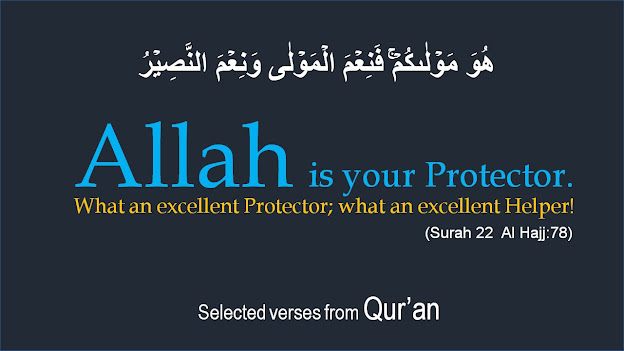
Allah is your Protector - What an excellent Protector; what an Excellent Helper!

Today, in our series of posts on Selected Verses from Qur'an, we share a very important verse, the 78th verse from Surah 22. Al Hajj, that explains the true faith so explicitly that if one only adheres to the Divine commandment contained herein, he can be a true practical Muslim and faithful to Allah. and it is for those believers Allah promises to be their Protector - and what an excellent Protector and Excellent Helper He is:

وَجَاهِدُوۡا فِى اللّٰهِ حَقَّ جِهَادِهٖ​ؕ هُوَ اجۡتَبٰٮكُمۡ وَمَا جَعَلَ عَلَيۡكُمۡ فِى الدِّيۡنِ مِنۡ حَرَجٍ​ؕ مِلَّةَ اَبِيۡكُمۡ اِبۡرٰهِيۡمَ​ؕ هُوَ سَمّٰٮكُمُ الۡمُسۡلِمِيۡنَ ۙ مِنۡ قَبۡلُ وَفِىۡ هٰذَا لِيَكُوۡنَ الرَّسُوۡلُ شَهِيۡدًا عَلَيۡكُمۡ وَتَكُوۡنُوۡا شُهَدَآءَ عَلَى النَّاسِ​ ​ۖۚ فَاَقِيۡمُوا الصَّلٰوةَ وَاٰتُوا الزَّكٰوةَ وَاعۡتَصِمُوۡا بِاللّٰهِؕ هُوَ مَوۡلٰٮكُمۡ​ۚ فَنِعۡمَ الۡمَوۡلٰى وَنِعۡمَ النَّصِيۡرُ
(22:78) Strive in the cause of Allah in a manner worthy of that striving. He has chosen you (for His task), and He has not laid upon you any hardship in religion. Keep to the faith of your father Abraham. Allah named you Muslims earlier and even in this (Book), that the Messenger may be a witness over you, and that you may be witnesses over all mankind. So establish Prayer, and pay Zakah, and hold fast to Allah. He is your Protector. What an excellent Protector; what an excellent Helper!
Strive in the cause of Allah in a manner worthy of that striving " The Arabic word jihad is very comprehensive. It includes every kind of effort, exertion, conflict and war. Jihad for the cause of Allah means that it should be performed for His service and for His approval against those who prevent others from following His Way. The performance of jihad also requires that one should first of all fight against his own self in order to subdue it. For there can be no true jihad unless one fights against his evil self and subdues his desires and lusts to the obedience of Allah. The Prophet (peace be upon him) himself has emphasized the need for this jihad. Once when the warriors for the cause of Allah returned from jihad, he said: You have returned from the lesser jihad to the greater jihad. They asked: What is that greater Jihad. The Prophet (peace be upon him) replied: It is the jihad against his own desires and lusts.

Moreover, the battlefield for jihad is, in fact, the whole world, and Islam demands that one should exert his utmost against all the rebels of Allah and the wicked powers with all of his heart and mind and body and wealth.

He has chosen you "The direct addressees of this were the companions of the Prophet (peace be upon him), for they were the first who had the honor to be chosen for this service; others have been addressed only indirectly being their followers. This thing has been mentioned in the Quran in other ways as well. For reference, see (Surah Al-Baqarah, Ayat 143) and (Surah Aal-Imran, Ayat 110).

(for His task), and He has not laid upon you any hardship in religion."  “(Allah) has not placed upon you in religion any hardship”. That is, the creed you have been given is very simple and straightforward and the laws and regulations you have to obey are practicable. You are free within its bounds to make as much progress as you can. This was to impress that the lives of the Muslims were free from all those useless and unnatural restrictions which had been imposed upon the former communities by their priests and law givers. The negative aspect of the same thing has been mentioned in (Surah Al-Aaraf, Ayat 157): He enjoins them to follow virtue and forbids them from evil: He makes pure things lawful for them and impure things unlawful. He relieves them of their burdens and frees them from the shackles that bound them.

"  Keep to the faith of your father Abraham. Though Islam may be called the religion of Prophets Noah, Moses, Jesus, etc. yet the Quran emphasizes over and over again that it is the religion of Prophet Abraham (peace be upon them all). Therefore, you should follow it. This is for three reasons.
(1) The first addressees of the Quran were the Arabs who were more familiar with Prophet Abraham (peace be upon him) than with any other Prophet and acknowledged him to be a holy personage and their leader.

(2) Prophet Abraham (peace be upon him) alone was the person whom the Jews, the Christians, the Muslims and the mushriks of Arabia and of the adjoining countries unanimously acknowledged as a great Prophet.

(3) When the Quran invites all these communities to follow the way of Abraham, it in fact, admonishes them that all their religions had been invented long after Prophet Abraham and, therefore, were not trustworthy because they contradicted many things taught by him. As for the mushriks of Arabia, they also acknowledged that idol worship among them had been started by Amr bin Luhayy, who was a leader of Bani Khuzaah, and had brought an idol, called Hubal, from Moab in about 600 B.C. So the religion to which Prophet Muhammad (peace be upon him) invited them was the same pure, un-adulterated religion which was taught by Prophet Abraham (peace be upon him).
For further details, see explanation of (verses 134, 135 of Surah 2. Al-Baqarah)and (verses 65, 96 of Surah 3. Aal-Imran) and (verses 120, 123 of Surah 16. An-Nahal).

Allah named you Muslims earlier and even in this (Book), " Here the word “you” has not been addressed exclusively to those believers who lived at the time of the revelation of this verse, or those who believed after its revelation. It includes all those human beings, who, from the beginning of human history, believed in Tauhid, the Hereafter, Prophethood and the divine Books. They were not Jews, Christians, etc. but Muslims in the sense that they had surrendered themselves to Allah. Likewise the followers of the Prophet Muhammad (peace be upon him) are not Muhammadans but Muslims.

that the Messenger may be a witness over you, and that you may be witnesses over all mankind "  For explanation see ( verse 143 of Surah Al-Baqarah).

So establish Prayer, and pay Zakah, and hold fast to Allah. " “Hold fast to Allah”: Follow exclusively the guidance and the law of Allah: obey Him alone: fear Him and have all your hopes and expectations in Him: invoke Him alone for help: trust in Him and pray to Him for all your needs.

Javed Ahmad Ghamidi Explanation:
"And [moreover, to discharge the responsibilities of your status,] strive in the way of God in the most befitting way." A governing noun is suppressed in the verse. The expression فِي اللّٰهِ is actually فِي سَبِيْلِ اللّٰهِ. This directive has been given in deference to the status for which they have been selected, as mentioned in the succeeding verses. The implication is that they should try to convey God’s message in a conclusive way to whole mankind and leave no stone unturned in this task. Moreover, if they face any hindrance in this cause, they should try to overcome it by using all the powers of their heart and mind, body and soul and also expend all their wealth and resources.

" He has selected you " Ie., chosen them just as He selects certain individuals among the progeny of Adam for prophethood and messenger-hood. Earlier, the Israelites were also similarly selected but because of their defiance and rebelliousness, they earned God’s wrath and were cursed.  

" and not placed any constraint on you in [the] sharī‘ah [He has given you]." This is stated here because this sharī‘ah does not have the same severity as that of the Israelites. The reason for this reduction probably being that the Israelites remained in the direct rule of God’s government but this was not the case with the Ishmaelites. About them, the directive of God is that they will carry out this duty under their rulers. 

" He has chosen the community of your father – Abraham – for you." Ie., in the real Islam in which there is no trace of Judaism or Christianity and which is the community of Abraham (sws), their father. God has made it their religion and sharī‘ah after some revival, reformation and addition. The reference of the father is given to urge the Ishmaelites: this is not something strange for them: it is the religion of their father and what more religion and community than the religion and community of the father can be dearer to the children. Moreover, also evident from this is that it is primarily the Ishmaelites who have been chosen for this responsibility. All those who convert into Islam by accepting this message become secondarily included in this responsibility. It is precisely for this reason that in Sūrah al-Baqarah the Ishmaelites are referred to as the “middle community” (اُمَّةً وَّسَطًا). On one side of them are God and His Messenger, and on the other are all the nations of the world (النَّاس). In verse 33 of Sūrah Āl-i ‘Imrān, the words آل ابراهيم are used for this purpose. When the Israelites were carrying out this obligation, the centre of their religious communication was the Bayt al-Maqdis. After the advent of Muḥammad (sws), it lost this status and it too was entrusted to the Ishmaelites. Thus, now until the Day of Judgement, the centre of the true message of God is the ancient House which Abraham (sws) and Ishmael (sws) built with their sacred hands in Makkah and which is called بَيْتُ اللّٰهِ,   البَيْت, الْبَيْتُ العَتِيْقِ and الْمَسْجِدُ الْحَراَم. 

" It was he who had earlier named you Muslim " This is a reference to the prayer of Abraham (sws) cited in these words in Sūrah al-Baqarah: رَبَّنَا وَاجْعَلْنَا مُسْلِمَيْنِ لَكَ وَمِن ذُرِّيَّتِنَآ اُمَّةً مُّسْلِمَةً لَّكَ (Our Lord! And make us obedient to you and institute from our progney a nation that is obedient to you) The words اُمَّةً مُّسْلِمَةً are used for the ummah that is under discussion here.

" and in this [Qur’ān] also [your name is Muslim]; chosen you so that the messenger bears witness [to this religion] before you and you bear witness [to it] before all the people of the world." This is an explanation of the selection mentioned earlier: it was done to bear witness to the religion of truth. This bearing witness is not mere preaching and persuasion; besides this, it is also the manifestation of the worldly retribution of God according to which if the Muslim ummah adheres to the truth and keeps communicating it to all the nations of the world while being faithful to its contents and with full certainty, then it will be granted dominance over those who do not accept faith and if it deviates from it, then it will be subjected to the punishment of disgrace and subservience through these very nations. Thus its very existence becomes a witness to what it says with its pen and tongue. It is because of this that the word “bearing witness” (شهاده) is used instead of preaching. This in fact is conclusive communication of truth which when happens becomes a basis of God’s judgement both in this world and in the next. After Muḥammad (sws), this arrangement has been made by the Almighty for this conclusive communication at the global level. 

" So, be diligent in the prayer and pay zakāh and hold strongly to God." Ie., they should strongly adhere to the guidance He has bestowed upon them and trust His help in all circumstances. At another instance (3:102), what is stated here is mentioned by the words: اِعْتَصِمُوْا بِحَبْلِ اللّٰهِ (hold strongly to the rope of God).

He only is your Guardian. So, what a good guardian and what a good helper!

Qur'an Wiki:
When the Muslim community has such a proper relation with God and an appropriate lifestyle, it can discharge its awesome responsibility: “And strive hard in God’s cause as you ought to strive.” This is a veracious and comprehensive description, indicating a massive responsibility that requires adequate preparation and the mustering of equipment and resources.

“And strive hard in God’s cause as you ought to strive.” This includes striving against one’s enemies, laziness, evil and corruption. All these must be equally resisted. It is God who has assigned to you this massive responsibility and chosen you to fulfil it: “It is He who has chosen you.” This choice adds to the seriousness of the responsibility, which means that it cannot be shrugged off or abandoned. Indeed it is an honour God has bestowed on the Muslim community for which it should be infinitely grateful.

Moreover, the assigned task is entwined with God’s grace: He “has laid no hardship on you in [anything that pertains to] religion.” Indeed, the religion of Islam, with all its duties, worship and laws always observes man’s nature and abilities. It aims to satisfy human nature and release man’s abilities so that they are used constructively. Human nature must neither be suppressed nor left without control.

Moreover, the Islamic way of life has a long history in human life, linking the past with the present. It is “the creed of your forefather Abraham.” It is the system that has continued on earth since the time of Abraham, without any long gap that allows the divine faith to be totally distorted, as happened in some periods prior to Abraham’s time.

God has given the name ‘Muslim’ to the community that believes in His oneness, and this name remained the same whether in olden days or in the Qur’ān: “It is He who has named you Muslims, in bygone times and in this [book].”

Islam means surrendering oneself totally to God, attributing no share of Godhead to anyone else. Thus, the Muslim community has enjoyed the same system across successive generations, and with successive messages and messengers, up to the time of the Prophet Muhammad (peace be upon him). It was then that the divine message was entrusted to the Muslim community. Thus, the past, present and future are interlinked as God wants. Thus, “the Messenger might bear witness for you and that you might bear witness for all mankind.” The Prophet is, thus, a witness defining the way the Muslim community should follow, pointing out right and wrong, and the Muslim community fulfils the same task with regard to humanity at large. It occupies the position of trustee by virtue of the standards established by its laws, education and concepts relating to life and to the universe. Needless to say, the Muslim community cannot fulfil this role unless it implements God’s message fully in life. When the Muslim community abandoned this role and deviated from the divine code of living, God removed it from this leadership, leaving it trailing well behind. It will continue to be in this humiliating position until it resumes its role chosen for it by God.

To ensure such a return, it must be fully prepared for it. Hence the order: “Attend regularly to your prayer, and pay out your zakāt, and hold fast to God. He is your Guardian: the best of guardians and the best to give support.” Prayer provides a link between the weak and mortal individual and the source of power, while zakāt provides a strong link between members of the community, ensuring security for all. Holding fast to God is the strong tie that is never severed.

Please listen to explanation of the ayat by eminent Muslim scholar Nouman Ali Khan:
May Allah help us understand Qur'ān and help us to act upon the commandments of Allah contained therein. Aameen.

For more Selected Verses, please refer to our reference page: Selected Verses from the Qur'anYou may also refer to our Reference Pages for knowing more about Islam and Qur'ān.
Photo | Reference: | 1 | 2 | 3 | 4 | 5 | 6 | 7
Reading the Qur'ān should be a daily obligation of a Muslim - Reading it with translation will make it meaningful. But reading its Exegesis / Tafsir will make you understand it fully.

An effort has been made to gather explanation / exegesis of the surahs of the Qur'ān from authentic sources and then present a least possible condensed explanation of the surah. In that the exegesis of the chapters of the Quran is mainly based on the "Tafhim al-Qur'an - The Meaning of the Qur'an" by one of the most enlightened scholars of the Muslim World Sayyid Abul Ala Maududi.  
In order to augment and add more explanation as already provided, additional input has been interjected from following sources: 
  • Towards Understanding the Quran
  • Tafsir Ibn Khatir
  • Muhammad Asad Translation
  • Javed Ahmad Ghamidi / Al Mawrid
  • Al-Quran, Yusuf Ali Translation
  • Verse by Verse Qur'an Study Circle
In addition the references of other sources which have been explored have also been given above. Those desirous of detailed explanations and tafsir (exegesis), may refer to these sites.

If you like Islam: My Ultimate Decision, and to keep yourself updated on all our latest posts to know more about Islam, follow us on Facebook

Please share this page to your friends and family members through Facebook, WhatsApp or any means on Social Media so that they can also be benefited by it and better understand Islam and the Qur'ān - Insha Allah (Allah Willing) you shall be blessed with the best of both worlds.

Friday, 18 February 2022

Can Existence of Allah be proved by Logic (Scholars' Viewpoint)

Man has always believed in one Supreme Being they think that that being created the universe and everything around them and even them.  That Supreme Being has been called by different names by followers of Divine Religions and even by non-believers like Hindus and non-believers of the time of advent of Islam. 

Yet despite this belief, man has always been inquisitive about evidence of existence of God for as science expands people think that science will come with a plausible answer to this most complex issue of all times. Even the atheists who claim that they do not believe in God still have a hidden understanding that there is some supreme being that controls the world. We have earlier on posted a few posts by different scholars as to Who Created God and Challenging existence of God, or Is there any creator, apart from Allah, who provides you your sustenance? 

However, please remember that this is just an academic discussion as no one answers this question with any amount of logic and knowledge. Thus, we must have blind faith in the existence of Allah and be thankful to Him for all that he created for us for our comfort and blessed us with knowledge to differentiate between right and wrong, and evil and good.

Now, listen to this yet another thought-provoking explanation by eminent Muslim scholar of present times, Nouman Ali Khan:

وَمَا عَلَيۡنَاۤ اِلَّا الۡبَلٰغُ الۡمُبِيۡنُ‏ 
(36:17) and our duty is no more than to clearly convey the Message.”
That is our duty to convey only to you the message that Allah has entrusted us with. Then it is for you to accept it or reject it. We have not been made responsible for making you accept it forcibly, and if you do not accept it, we shall not be seized in consequence of your disbelief, you will yourselves be answerable for your actions on Day of Resurrection.

May Allāh (سبحانه و تعالى‎) help us understand Qur'ān and help us to act upon the commandments of Allah contained therein. May Allah help us to be like the ones He loves and let our lives be lived helping others and not making others' lives miserable or unlivable. May all our wrong doings, whether intentional or unintentional, be forgiven before the angel of death knocks on our door. 

May Allah forgive me if my posts ever imply a piety far greater than I possess. I am most in need of guidance.

Disclaimer: The views expressed in the video above are those of the scholar concerned. We have shared this view as added information in better understanding of Islam. The reader may or may not agree with the view owing to their own perception. If anyone differs with the material contained in this post, one may consult the references and their authors.  If someone has more material about the subject, he/she is most welcome to share in the comments box to make the post all encompassing.

For more Scholarly views and videos, please read our reference page: Scholars' Viewpoint on Important Issues Related to Islam.

You may also refer to our Reference Pages for knowing more about Islam and Quran.
If you like Islam: My Ultimate Decision, and to keep yourself updated on all our latest posts to know more about Islam, follow us on Facebook

Please share this page to your friends and family members through Facebook, Twitter, WhatsApp or any means on social media so that they can also be benefited by it and better understand Islam and the Holy Qur'an - Insha Allah (Allah Willing) you shall be blessed with the best of both worlds.

Thursday, 17 February 2022

How to achieve Salvation

Every believer aims at living a life that would help him attain the best of both worlds and finally a comfortable blessed abode in the paradise. For the worldly life, every believer aim at deliverance from the power and effects of sin and preservation from destruction or failure. This can only be achieved if one is conditioned himself and is chosen a life that lived as to please his Creator and no one else.
Wikipedia defines Salvation as the state of being saved or protected from harm or a dire situation. In religion and theology, salvation generally refers to the deliverance of the soul from sin and its consequences.
Many are of the opinion that merely doing good and avoiding sins would salvage him from the scrutiny on the Day of Judgement when actions, both and good, will be weighed and one rewarded accordingly. 

But in Islam, the ultimate salvation lies in living a life in this worldly world if it is lived in total submission to Allah and every action taken to please Allah while fearing of Allah's wrath if indulging in sins and satanic ways. For Muslims, the criterion for salvation lies in pleasing Allah alone and pleasing and fearing none else. This does not mean that one should abandon one's family and seclude him from the world and remaining busy in worship of Allah. 

The real test of a believer lies in living a worldly life, have family and children and seek a good living. Yet one should be mindful of not displeasing Allah and if for some reason he feels that his worldly obligations are at tangent to pleasing Allah, he must apply corrections so as not to invite anger of Allah.

Please watch the video below on the issue by Maulana Wahiduddin Khan, an Islamic scholar and peace activist known for having written a commentary on the Quran and having translated it into contemporary English and talking on issues related to Islam:
May Allah help us understand Qur'ān and help us to act upon the commandments of Allah contained therein and keep our final aim at pleasing Allah and none else to be blessed with total salvation when the world ends and a new life for us begins. Aameen.

For more Scholarly views and videos, please read our reference page: Scholars' Viewpoint on Important Issues Related to Islam.
Reading the Qur'ān should be a daily obligation of a Muslim - Reading it with translation will make it meaningful. But reading its Exegesis / Tafsir will make you understand it fully.

If you like Islam: My Ultimate Decision, and to keep yourself updated on all our latest posts to know more about Islam, follow us on Facebook

Please share this page to your friends and family members through Facebook, WhatsApp or any means on Social Media so that they can also be benefited by it and better understand Islam and the Qur'ān - Insha Allah (Allah Willing) you shall be blessed with the best of both worlds.

Wednesday, 16 February 2022

Sunnah of Prophet Muhammad ﷺ - Social Etiquettes - Sneezing in Public

Sneezing as defined by Medical Encyclopedia is a sudden, forceful, uncontrolled burst of air through the nose and mouth. Sneezing can occur for a variety of reasons that have in common an irritation of the lining (mucous membranes) of the nose or throat. It is rarely a sign of a serious illness.

This sudden burst of air which is generally moist in substance and if one does not immediately cover one's nose and mouth, its moist vapours can fall on people around and this can be very embarrassing. However, the very act of sneezing is very rewarding for the overall health of the body as the discharge of this burst of air travelling at the speed of about  100 miles per hour is said to containing a million germs that exit of which necessary for cleansing of the body from bacteria and viruses.

Therefore one should be thankful to Allah for having us rid of harmful germs through act of sneezing. Since Islam is embodiment of etiquettes of various segments of our social life, Prophet Muhammad ﷺ has very specifically mentioned the response of a believer when he sneezes both when alone and in public. There is a Hadith in Sahi Bukhari number 6224 which is about sneezing: 
The Prophet (ﷺ) said, " If anyone of you sneezes, he should say 'Al-Hamdu lil-lah الْحَمْدُ لِلَّهِ ' (Praise be to Allah), and his (Muslim) brother or companion should say to him, 'Yar-hamuka-l-lah يَرْحَمُكَ اللَّهُ ' (May Allah bestow his Mercy on you). When the latter says 'Yar-hamuka-llah", the former should say, 'Yahdikumul-lah wa Yuslih balakum يَهْدِيكُمُ اللَّهُ وَيُصْلِحُ بَالَكُمْ ‏"‏‏.‏ ' (May Allah give you guidance and improve your condition).

At another occasion, Abu Huraira has been quoted as saying (Sahi al Bokhari Volume 8, Book 73, Number 242):

The Prophet said, "Allah likes sneezing and dislikes yawning, so if someone sneezes and then praises Allah, then it is obligatory on every Muslim who heard him, to say: May Allah be merciful to you (Yar-hamuka-l-lah). But as regards yawning, it is from Satan, so one must try one's best to stop it, if one says 'Ha' when yawning, Satan will laugh at him." 

It has also been narrated by Anas bin Malik (Sahi AL Bokhari Volume 8, Book 73, Number 240):

Two men sneezed before the Prophet. The Prophet said to one of them, "May Allah bestow His Mercy on you," but he did not say that to the other. On being asked (why), the Prophet said, "That one praised Allah (at the time of sneezing), while the other did not praise Allah." 

By acting upon these hadiths, we not only thank Allah, but also induce a response by other believers around, for which we pray for them by saying "May Allah give you guidance and improve your condition." Needless to mention here that when one sneezes, he must cover his nose and mouth so that others around are saved of the moist air that follows the sneezing.

May Allah help us to follow the commands of Allah contained in the Qur'an and sunnah of the Prophet Muhammad ﷺ for not being a good Muslim but also be a useful member of our society. Aameen

Please refer to our reference page: Sunnah and Hadith of Prophet Muhammad ﷺ to know more about sunnah of Prophet of Allah. You may also refer to our Reference Pages for knowing more about Islam and Qur'ān.

Disclaimer: The material for this post has been collected from the references as given below. If any one differs with the material contained in this post, one may consult the references and their authors.  If someone has more material about the subject, he/she is most welcome to share in the comments box to make the post all encompassing.
Photo | References: | 1 | 2 |
Reading the Qur'ān should be a daily obligation of a Muslim - Reading it with translation will make it meaningful. But reading its Exegesis / Tafsir will make you understand it fully. We should also follow the Sunnah of  Prophet Muhammad ﷺ which augments what is written in the Qur'an.

If you like Islam: My Ultimate Decision, and to keep yourself updated on all our latest posts to know more about Islam, follow us on Facebook

Please share this page to your friends and family members through Facebook, WhatsApp or any means on Social Media so that they can also be benefited by it and better understand Islam and the Qur'ān - Insha Allah (Allah Willing) you shall be blessed with the best of both worlds.

Monday, 14 February 2022

Believers!! Be Ambassadors of Islam

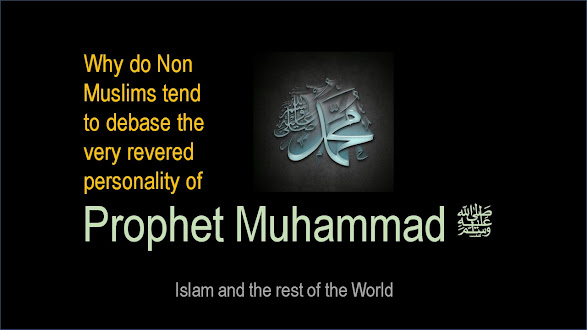
Over the years the spread of Islamophobia is gaining momentum and the minds of a large segment of non Muslims is being polluted by the world media, mostly in hands of the non Muslims, to belittle the Muslims and created hatred against them. There have been many instances in which derogatory caricatures of Prophet Muhammad ﷺ have been published to tarnish the image of the last of the prophets of Allah.

Likewise, much too often cartoons appear in the press and social media showing Muslims displaying unbecoming behaviour. Even the hijab of Muslim women is made fun of and is projected as a curb on the freedom of Muslim women.

The target audience which is mostly unaware of the otherwise true and peaceful Islam due to their insufficient knowledge about Islam and Qur'an, often get infused with anti Islamic feelings and an intrinsic hatred takes place in their minds about Islam and Muslims.

In order to undo the effects of the Islamophobia and the hate game against Islam and Muslims, each Muslim must represent the true face of Islam by acting as an ambassador of Islam. And this something that is not easy to do but at the same time very easy as well.

As mentioned before that many non Muslims do not know what Islam is and how Qur'an is a Divine Book of guidance for the entire mankind and humanity, we as Muslim must become the ambassadors of Islam by our actions and behaviour which must be embodiment of teachings of Islam.

Starting from Hijab, the Muslim women should first of all know themselves why Hijab is mandatory for women of Islam and how this makes them more modest and respectful as compared to almost naked dress of so many non Muslim women, and even many Muslim sisters as well who are shy of wearing Hijab either by being influenced by the free and easy life of non Muslims or not observing Hijab for being singled out, easily spotted and targeted by Islamophobes.
The recent display of defiance by a lone Muslim girl, Bibi Muskan Khan, in India and standing up to her right to wear Hijab by boldly countering a mob of radical Hindus who were intimidating and harassing. However, she stood her ground and continued walking towards her college boldly, chanting slogan of Allah hu Akbar. Her boldness has brought her laurels from all over the world and even moderate Hindus in India are defending her stand for Hijab as a right and not as religious radicalism, as many in the west portray Hijab as such.
As ambassadors f Islam, we must do following to attract Non Muslims to Islam rather being repulsive and drawing them away from us and Islam:
  • Humility: Whenever confronted with a hostile anti Muslim opponent, we must exhibit extreme humility for it is the basic ingredient of a true faithful Muslim. We should not forget how our Prophet Muhammad (peace be upon him) was subject to horrible insults and hate crimes in his lifetime. Yet he remained steadfast, patient and tolerant in the face of toughest of the opposition. Even when people of Taif stoned him and Angel Gabriel wanted a nod from the Prophet to destroy the entire community, the bleeding Prophet did not opt for the extreme action, for He was confidant that one day his opponents would understand the truth He was spreading. And so did it happen, and world witnessed it. So let us be prepared for the worst and with our steadfastness and conviction persuade those on the opposing end that Islam is a religion of peace and we as Muslims would never support any act of terror for it goes against our very basic ethos. So exhibit humility while remaining steadfast to teachings of Islam so as to not to cave in to intimidation.
  • Helping others in distress even Non Muslims:  Whenever we see any human being in trouble, we must go all out to help him out as a fellow human being would do. We must win hearts by our participation in community matters, rather than staying aloof to problems faced by non Muslims around.
  • Don't be reactive to Islamophobia - But be Persuasive: The caricatures of Prophet Muhammad ﷺ and other Muslims are basically aimed at playing with the sentiments of Muslims for Muslims cannot and will not tolerate any degrading and ill meaning caricatures of our beloved Prophet Muhammad ﷺ. Yet whenever it is done, instead of being emotionally reactive and taking law and order in hand would further tarnish our image and allow the non Muslims to label us as reactionaries, intolerant and  irrational. Non Muslims find it hard to see our reaction as for them freedom of speech is more important to air one's positive or negative sentiment. However, they fail to distinguish between ordinary freedom of speech and its relevance to religious sentiment. Sinc ewe Muslim never tarnish the image of earlier prophets for Islam teaches us to be respectful to all prophets of Allah. Since non Muslims have never came across degradation of their prophets and religious people, they do not know how one's religious sentiments are hurt. So instead of showing outright hostility, we must persuade our non Muslim audience how much do we respect all earlier prophets and how they should similarly reciprocate. ere I would like to quote efforts of Pakistan's prime minister Imran Khan's persuasive efforts to  shun the targeted campaign to tarnish image of the Prophet Muhammad ﷺ which has yielded positive response from the world over and now it is believed that tarnishing religious personalities does not fall under freedom of speech and will be taken as an offense.  
  • Persons deputed for Da'wah (preaching of Islam) be well read and embodiment of all qualities of a true Muslims: It is generally reported that Muslims deputed to Da'wah to foreign lands are ill equipped with desired religious knowledge and are ignorant of the customs and cultures of the target audience. The inadequacy of education makes them short tempered when confronted with well read target audience, and thus they leave a bad impression of Islam rather than attracting non Muslims to Islam. There are reports that some countries have even banned the Da'wah groups for their ill mannered approach to preach religion. When missionaries went to foreign lands, they exhibited a high level of personal conduct and even helped and supported the local population in establishing schools and indulging in community works. Remember, it is the soft image that attracts others to your view point rather than hardened illogical stance and fiery speeches. So appear as humble, yet persuasive, teachers that should attract others to listen to you.
  • Exhibitive of Islamic Values: You cannot tell someone to offer five times prayers or fast for thirty days in the month of Ramad or abstain from drinking and not wearing hijab (in case of women) if the person indulged in Da'wah is not seen observing these. People learn more from exhibitive behaviour and appearance rather than lectures and sermons. A true Muslim should not appear to be living a lavish life and asking other to be humble and caring. Today the lavish lifestyle of some of the monarchs of Muslim world often comes under criticism by non Muslims. There were times when great Muslim leaders like Prophet Muhammad and his companions lived a life of utter poverty, and yet commanded respect of their brethren. Remember when a  messenger came to meet Caliph Omar, he was amazed to see him sleeping on bare ground with a stone under his head as pillow. Such should be the character of the people of da'wah so that people around really get the true message of Islam.
  • Be Logical rather than Emotional: It is normally seen that Muslims flare up too early and become emotional when a religious matter is discussed. It happens when one runs out of logic. One can be only logical if one is adequately educated and has full grasp over religious matters. A working knowledge of other religions should serve as an additional bonus to hold discussions with non Muslims. Emotionalisms much too often turn a healthy discussion in rowdy argumentation and one loses one's ground easily. So be very calculated when discussing a religious matter. and if you think you are ill equipped with requisite knowledge, refrain from exposing yourself or even conveying a wrong reference or point of view which may go against Islam.
  • Discussion of Jihad: One of the favourite topics that non Muslims want to discuss with Muslims is that of Jihad. For most of the non Muslims, Jihad only means killing the non Muslims - a notion that needs to be dispelled. Remember, "The literal meaning of Jihad is struggle or effort, and it means much more than holy war. Muslims use the word Jihad to describe three different kinds of struggle: A believer's internal struggle to live out the Muslim faith as well as possible. The struggle to build a good Muslim society." And we should let others to understand this very clearly. It has become a fashion to think of war mongering no sooner the word jihad is heard. Anyone who is using jihad for own designs should be discouraged with firm hand so that he does not bring bad name to the community and religion as a whole.. lit must be emphasized that no individuals or bands of mercenaries can order the waging of Jihad. In recent times vagabonds and mercenaries like ISIS or Daish cannot be allowed to order their follower to wage Jihad. And such groups lo not have moral and religious authority to kill people on the pretext of Jihad.  And if at all Jihad is to be undertaken to fight those threatening Islam or an Islamic government, it is to be ordered by a legitimate Islamic government ruling a country. This is the stand of Islam teachings.
These are some of the guidelines to be ambassadors of Islam. Please see to it that you exhibit all qualities of a true Muslim if you really want to impress upon someone as a Muslim or call him/her to the fold of Islam. Know Islam well and be humble about yourself as a Muslim.

Photo | Also read our previous posts | 1 | 2 |
Reading the Qur'ān should be a daily obligation of a Muslim - Reading it with translation will make it meaningful. But reading its Exegesis / Tafsir will make you understand it fully. It will also help the Muslims to have grasp over social issues and their answers discussed in the Qur'an and other matter related to inter faith so  that they are able to discuss issues with Non Muslims with authority based on refences from Qur'an.

For more posts, please refer to our reference page: Islam and the rest of the WorldYou may also refer to our Reference Pages for knowing more about Islam and Qur'ān.
If you like Islam: My Ultimate Decision, and to keep yourself updated on all our latest posts to know more about Islam, follow us on Facebook

Please share this page to your friends and family members through Facebook, Twitter, WhatsApp or any means on Social Media so that they can also be benefited by it and better understand Islam and the Holy Qur'an - Insha Allah (Allah Willing) you shall be blessed with the best of both worlds.

Islam and the rest of the World (Reference Page)

We started this blog in 2018 for exclusive reference of the newly reverted to the fold of Islam so that they can find answers to so many questions that they may face during their formative days in Islam.

Initially the subjects were few and so were the posts. But as time went by, Alhamdulillah, our website has also increased manifold both in posts and diverse subjects related to Islam. So, we made a Quick Reference Page where all diverse subjects have been grouped under various relevant heads so that a reader may not have to surf the previous posts when looking for a specific subject or an answer to a query.

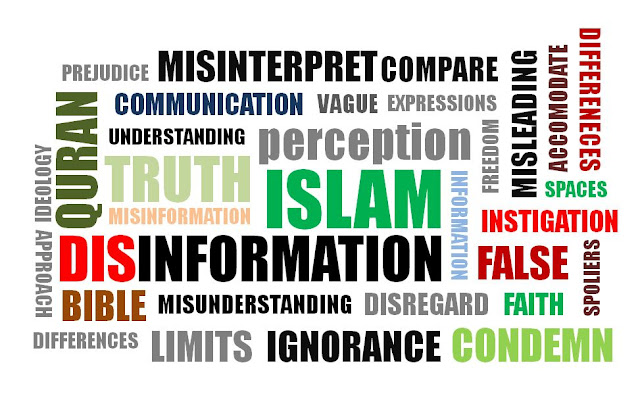
Today, we add yet another Reference Page "Islam and the rest of the World" where subjects related to Islam and matter related to Islam and the rest of the world like Islamophobia, Hijab, Da'wah (calling non-Muslims to Islam and like will be grouped. I hope our readers will find this reference page handy in finding posts that related to the matters related to Islam and the rest of the world.

The list of posts is given below. Please click on the image to be directed to the desired post:

In Sha Allah, we will continue to expand our website and add as much information as we can to help our Muslim brothers and sisters and even the non-Muslims to know more about Islam so as to be on the right path with no ambiguity and misleading apprehensions disturbing our minds.

Photo
Reading the Qur'ān should be a daily obligation of a Muslim - Reading it with translation will make it meaningful. But reading its Exegesis / Tafsir will make you understand it fully. It will also help the Muslims to have grasp over social issues and their answers discussed in the Qur'an and other matter related to inter faith so that they are able to discuss issues with non-Muslims with authority based on refences from Qur'an.

If you like Islam: My Ultimate Decision, and to keep yourself updated on all our latest posts to know more about Islam, follow us on Facebook

Please share this page to your friends and family members through Facebook, WhatsApp or any means on social media so that they can also be benefited by it and better understand Islam and the Qur'ān - Insha Allah (Allah Willing) you shall be blessed with the best of both worlds.

Saturday, 12 February 2022

When planning to do something, always say "In sha’ Allah" (God Willing)

Today in our series of posts on Selected Verses from Qur'an, we share a very important verse from Surah 18 Al Kahf (verse 24) that every Muslim should remember and must use it much too often so as to include Allah's willingness in everything one intends doing. This small word " اِنۡ شَآءَ اللّٰهُ  " has very far reaching meaning and effect on our intentions and planning. It expresses the belief that nothing happens unless God wills it and that his will supersedes all human will.

Let us read two verses from the Qur'an, Surah Al Kahf (23-24 verse) and understand the significance of saying " اِنۡ شَآءَ اللّٰهُ  ":

The background is the anecdote of People of Cave. The disbelievers asked the Prohet of Allah about the people of the cave one day. Since Prophet Muhammad ﷺ did not know the answer, he replied that he would answer tomorrow, knowing that he would get some Divine indication to the query of the disbelievers. 

This plain answer was disliked by Allah and the Prophet ﷺ was straightaway admonished:

وَلَا تَقُوۡلَنَّ لِشَاىۡءٍ اِنِّىۡ فَاعِلٌ ذٰ لِكَ غَدًا ۙ‏ 
(18:23) And never say about anything: "I shall certainly do this tomorrow"
In its stead the Prophet ﷺ was advised that unless Allah wills a thing, nothing can move or happen. Let us read the next ayat and its explanation to understand why we should never commit ourselves to anything and why should we always say " اِنۡ شَآءَ اللّٰهُ  " to include willingness of Allah. We must never rely upon our own resources so much as to forget Allah. If by any chance we do forget, we must come back to Him and keep Him in remembrance 

اِلَّاۤ اَنۡ يَّشَآءَ اللّٰهُ​ وَاذۡكُرْ رَّبَّكَ اِذَا نَسِيۡتَ وَقُلۡ عَسٰٓى اَنۡ يَّهۡدِيَنِ رَبِّىۡ لِاَقۡرَبَ مِنۡ هٰذَا رَشَدًا‏ 
(18:24) unless Allah should will it. And should you forget (and make such a statement), remember your Lord and say: "I expect my Lord to guide me to what is nearer to rectitude than this."
This is a parenthetical clause which has been inserted here because of its relevancy to the preceding verse, in which it was asserted that the correct number of the Sleepers of the Cave is known only to Allah and a research into it is a useless task. Therefore one should refrain from investigating into unimportant things, nor enter into discussions about them. This has led to the instruction contained in the parenthetical clause for the benefit of the Holy Prophet and the Believers who have been told never to make a positive assertion like this: "I will do this thing tomorrow", for you do not know whether you will be able to do that thing or not: you have neither the knowledge of the unknown nor have full powers to do what you like. If ever inadvertently you utter anything like this, you should at once remember your Lord and say, "Insha Allah." Besides this you do not know whether there will be any good for you in the thing about which you say, “I will do this.” It is possible that you may do another thing better than that. Therefore you should trust in God and say, "I hope that my Lord will guide me in this matter with that thing which is nearer to the right way for me."

Tafsir Ibn-Kathir: Saying "If Allah wills" when determining to do Something in the Future
Here Allah, may He be glorified, shows His Messenger the correct etiquette when determining to do something in the future; this should always be referred to the will of Allah, the Knower of the Unseen, Who knows what was and what is yet to be and what is not to be, and how it will be if it is to be. It was recorded in the Two Sahihs that Abu Hurayrah said that the Messenger of Allah said:
(Sulayman bin Dawud (peace be upon them both) said: "Tonight I will go around to seventy women ﴿according to some reports, it was ninety or one hundred women﴾ so that each one of them will give birth to a son who will fight for the sake of Allah.'' It was said to him, ﴿according to one report, the angel said to him﴾ "Say: `If Allah wills'", but he did not say it. He went around to the women but none of them gave birth except for one who gave birth to a half-formed child.) The Messenger of Allah said, (By the One in Whose hand is my soul, had he said, "If Allah wills,'' he would not have broken his oath, and that would have helped him to attain what he wanted. ) According to another report, (They would all have fought as horsemen in the cause of Allah.)
(وَاذْكُر رَّبَّكَ إِذَا نَسِيتَ And remember your Lord when you forget) It was said that this means, if you forget to say "If Allah wills", then say it when you remember. This was the view of Abu Al-`Aliyah and Al-Hasan Al-Basri. Hushaym reported from Al-A`mash from Mujahid that concerning a man who swears an oath, Ibn `Abbas said "He may say `If Allah wills' even if it is a year later.'' 

Ibn `Abbas used to interpret this Ayah: (And remember your Lord when you forget) in this way. Al-A`mash was asked, "Did you hear this from Mujahid" He said, "Layth bin Abi Salim told it to me.'' The meaning of Ibn `Abbas' view, that a person may say "If Allah wills'', even if it is a year later, is that if he forgets to say it when he makes the oath or when he speaks, and he remembers it later, even a year later, the Sunnah is that he should say it, so that he will still be following the Sunnah of saying "If Allah wills'', even if that is after breaking his oath. This was also the view of Ibn Jarir, but he stated that this does not make up for breaking the oath or mean that one is no longer obliged to offer expiation. What Ibn Jarir said is correct, and it is more appropriate to understand the words of Ibn Abbas in this way. And Allah knows best.

Javed Ahmad Ghamidi Explanation:
Ie., when they test the Prophet (sws) by asking him such questions as who the dwellers of the caves were and what their story was, he should not promise them from his own self. It is possible that about a certain question the wisdom of God entails that an answer not be given or given later. For this reason, he should not make an unconditional promise by relying on divine revelation. In fact, all promises should be made conditional to the will of God.

Qur'an Wiki:
Every action a human being does or omits to do, indeed every breath a human being takes, is subject to God’s will. The curtains hiding the future are stretched in full so as to hide everything beyond the present moment. Our eyes cannot discern what is behind that curtain, and our minds are finite, no matter how advanced our knowledge may be. Hence a human being must never say that he is definitely doing something tomorrow unless he attaches his intention to God’s will. This is because tomorrow belongs to the realm that lies beyond the reach of human perception. As such, it is known only to God. Hence, we do not make any assertion about it.
 
This does not mean that man should be fatalistic, giving no thought to the future and making no plans for it. He should not live for the present moment, cutting himself off from his past and future.

Please listen to explanation of the ayat by eminent Muslim scholar Nouman Ali Khan:
May Allah help us understand Qur'ān and help us to act upon the commandments of Allah contained therein. May Allah also helps to say " اِنۡ شَآءَ اللّٰهُ  " whenever we make any intention to do a think to include willingness of Allah and bless our work and oaths. Aameen.

For more Selected Verses, please refer to our reference page: Selected Verses from the Qur'anYou may also refer to our Reference Pages for knowing more about Islam and Qur'ān.
Photo | Reference: | 1 | 2 | 3 | 4 | 5 | 6 |
Reading the Qur'ān should be a daily obligation of a Muslim - Reading it with translation will make it meaningful. But reading its Exegesis / Tafsir will make you understand it fully.

An effort has been made to gather explanation / exegesis of the surahs of the Qur'ān from authentic sources and then present a least possible condensed explanation of the surah. In that the exegesis of the chapters of the Quran is mainly based on the "Tafhim al-Qur'an - The Meaning of the Qur'an" by one of the most enlightened scholars of the Muslim World Sayyid Abul Ala Maududi.  
In order to augment and add more explanation as already provided, additional input has been interjected from following sources: 
  • Towards Understanding the Quran
  • Tafsir Ibn Khatir
  • Muhammad Asad Translation
  • Javed Ahmad Ghamidi / Al Mawrid
  • Al-Quran, Yusuf Ali Translation
  • Verse by Verse Qur'an Study Circle
In addition the references of other sources which have been explored have also been given above. Those desirous of detailed explanations and tafsir (exegesis), may refer to these sites.

If you like Islam: My Ultimate Decision, and to keep yourself updated on all our latest posts to know more about Islam, follow us on Facebook

Please share this page to your friends and family members through Facebook, WhatsApp or any means on Social Media so that they can also be benefited by it and better understand Islam and the Qur'ān - Insha Allah (Allah Willing) you shall be blessed with the best of both worlds.

Twitter Delicious Facebook Digg Stumbleupon Favorites More