.
Showing posts with label verse 62. Show all posts

Sunday, 16 August 2026

One of the strongest verse of Al Qur'an about Tawakkul - complete reliance upon Allah after doing what one can

Let us illustrate the absolute Tawakkul displayed by Prophet Musa (Moses) which only men of true conviction of faith can exhibit. 

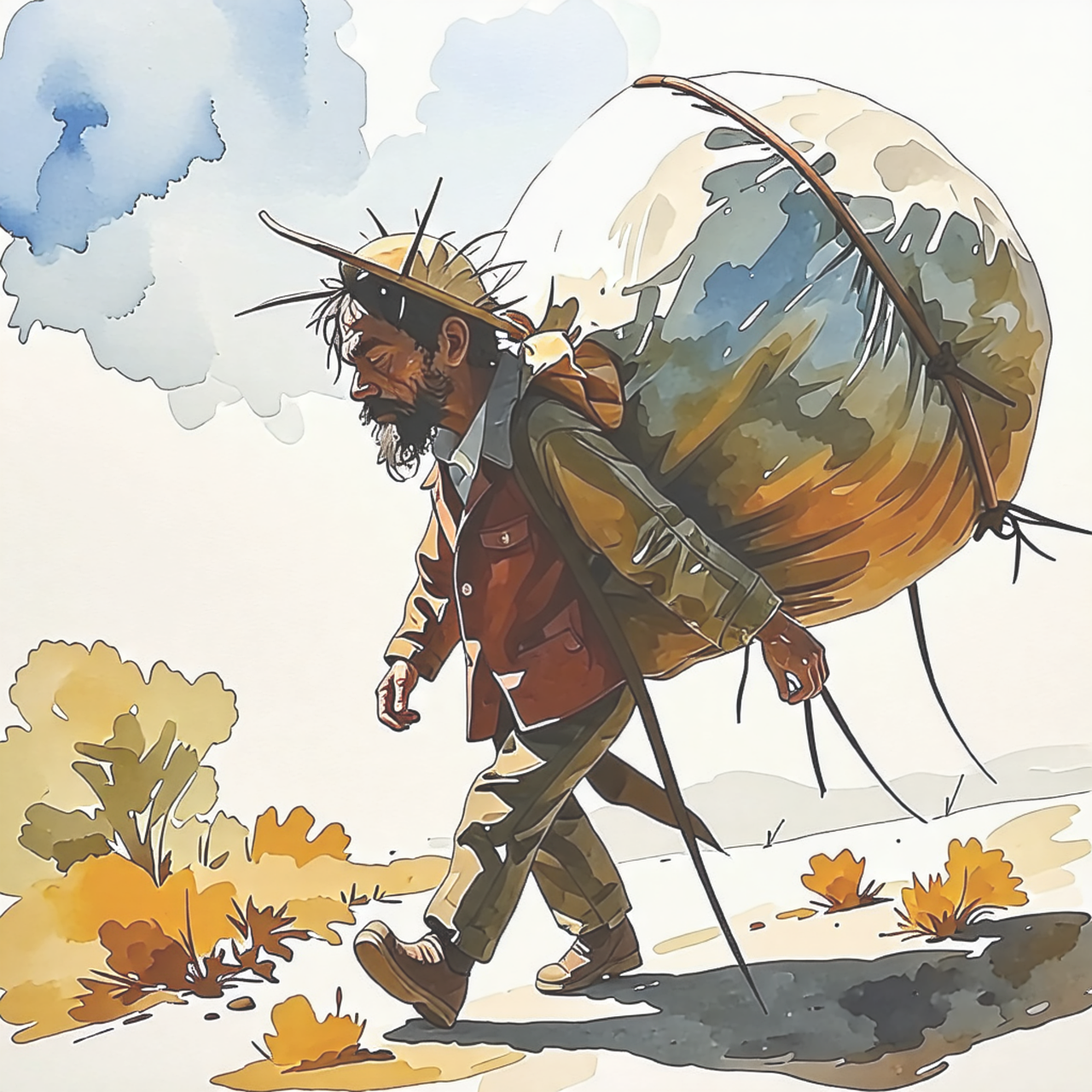
Imagine the vast, roaring expanse of the Red Sea stretched out as far as the eye can see—an impassable barrier. On the shores stand the Children of Israel, exhausted from their flight out of Egypt. The air is thick with panic and despair. Dust billows in the distance, growing closer by the second. The ground trembles under the weight of Pharaoh's massive, heavily armed military force. Chariots, weapons, and ruthless soldiers are rapidly closing in. The Israelites look forward at the deep waters and backward at the approaching army. In the previous verse (26:61), they cry out in absolute terror: "Indeed, we are to be overtaken!"

In the center of this chaos stands Prophet Musa (Moses). From a worldly perspective, there is no escape; they are completely trapped. Yet, Musa does not flinch. He doesn't look at the army, nor does he despair at the sea. But for Moses, that was the moment of absolute conviction. He stands tall, radiating absolute tranquility and unwavering faith. When his people say they are doomed, he points to his heart and to the heavens, illustrating an unbreakable bond with the Divine: "Indeed, with me is my Lord; He will guide me."

Immediately following this profound declaration of trust (Tawakkul), God commands Musa to strike the sea with his staff. The immense waters crash and split into towering mountains of water, revealing a dry, safe path for his people to cross, turning a moment of impossible despair into one of the greatest miracles in history.

This verse beautifully illustrates that even when the "sea" is in front of you and the "army" is behind you, true faith means knowing that God's guidance and deliverance can make a way where there seems to be absolutely no way out. This illustration is based on a verse from Al Qur'an, Surah Ash-Shuʿarāʾ 26:62, which is one of the Qur’an’s most powerful statements of tawakkul — complete reliance upon Allah after doing what one can. Let us expand this verse and ask ourselves of our status of Tawakkul in our Creator:

The Versee

قَالَ كَلَّا إِنَّ مَعِيَ رَبِّي سَيَهْدِينِ
“Moses said, ‘No! Indeed, my Lord is with me; He will guide me.’” — Qur’an 26:62

The dramatic context
The verse comes at what appears, humanly speaking, to be the end of the road. Prophet Mūsā عليه السلام had led Banī Isrā’īl out of Egypt by Allah’s command. Pharaoh then pursued them with his forces. When the Israelites reached the sea, they found themselves trapped: the sea was in front of them, Pharaoh’s army was behind them, and there appeared to be no escape.

So when the two groups came within sight of one another, Prophet Mūsā’s followers cried:

إِنَّا لَمُدْرَكُونَ “We will surely be overtaken!” — 26:61

Their conclusion was perfectly understandable from the standpoint of what their eyes could see. But Prophet Mūsā saw something their fear had temporarily hidden from them. 
  • He replied: كَلَّا “Never!”
  • Then came the reason: إِنَّ مَعِيَ رَبِّي “Indeed, my Lord is with me.”
  • And finally: سَيَهْدِينِ “He will guide me.”
Immediately afterward Allah commanded Mūsā to strike the sea with his staff, and the sea parted, creating the very escape route that no human being could have anticipated.

That sequence is essential: No visible road → trust in Allah → divine guidance → an unexpected road opens.

What Mūsā’s words really mean Prophet Mūsā did not say: “I know exactly how we are going to escape.” Rathher, e effectively said: “I do not yet know the way out, but I know the One who will show me the way out.”

That distinction is the heart of tawakkul. Tawakkul does not require knowing how Allah will solve your difficulty. It means trusting Allah even when the how remains invisible.

Scholarly explanation

1.    Ibn Kathīr explains the passage as demonstrating Mūsā’s certainty in Allah while his people feared they would be captured. Allah then fulfilled that confidence by instructing him to strike the sea. In other words, Mūsā's confidence was not optimism without foundation. It rested upon Allah's promise, command and protection.

2.    Maududi interprets “My Lord is with me; He will direct me” as Mūsā's certainty that Allah would show him a way out of the calamity. This gives tawakkul an important dimension: sometimes Allah does not remove the crisis immediately; rather, He guides you through it.

3.    Yusuf Ali draws attention to the contrast between the frightened Israelites and Mūsā's faith. He understands “He will guide me” as Allah showing a way of escape from the danger—which is precisely what subsequently occurred.

So the verse contrasts two ways of looking at exactly the same situation: (1) The people saw Pharaoh + the sea. (2) Mūsā saw Allah above both.

Why is tawakkul necessary?
Because there are limits to what human beings can control. We can plan, calculate, work, save money, consult physicians, seek employment, educate children, conduct business and take precautions—but eventually we reach a boundary beyond which outcomes are not ours to command.

The Qur'an therefore does not teach: “Do nothing and trust Allah.” - It teaches: “Do what Allah has enabled you to do, then entrust what you cannot control to Allah.”

Prophet Mūsā himself illustrates this perfectly. He did not remain in Egypt saying, Allah will rescue us. He left Egypt and led his people. He travelled toward the sea. And when Allah commanded: “Strike the sea with your staff,” he struck it. 

So tawakkul came alongside action, not instead of action.

This is why the Prophet ﷺ famously expressed the same principle in the hadith about birds: they leave their nests hungry in the morning and return full. Their provision is from Allah—but they still fly out searching for it.


Tawakkul is therefore not fatalism
There is an important difference:

        Fatalism                                             Tawakkul
“Whatever happens, happens.” “Allah controls the outcome.”
Avoids responsibility                 Fulfils responsibility
May produce inactivity                 Encourages appropriate action
Depends upon circumstances         Depends upon Allah
Gives up when doors close         Trusts that Allah may open another door

The sea itself is perhaps the perfect metaphor
  • To the Israelites:  The sea was the end of the road.
  • To Allah: The sea became the road.
That is the lesson of سَيَهْدِينِ — “He will guide me.”

How can we practice 26:62 today?

1.    Suppose someone loses a job. Tawakkul does not mean sitting at home saying, “Allah will provide.” It means updating the CV, contacting people, applying for jobs, improving one's skills, making duʿā—and while doing all this thinking: إِنَّ مَعِيَ رَبِّي سَيَهْدِينِ My Lord is with me; He will guide me.

2.    Suppose a person becomes ill. Tawakkul does not mean rejecting medical treatment. One consults competent doctors, takes prescribed medicine, seeks another opinion when appropriate—and remembers that ultimately healing belongs to Allah: وَإِذَا مَرِضْتُ فَهُوَ يَشْفِينِ “And when I am ill, it is He who heals me.” — 26:80

3.    Suppose one faces financial difficulty. Reduce unnecessary expenditure, seek lawful income, restructure obligations, ask trustworthy people for advice—and do not allow anxiety to convince you that Allah's provision has disappeared.

4.    Suppose a family problem seems insoluble. Communicate, seek reconciliation, consult wise people and fulfil your own responsibilities—but do not assume that because you cannot presently see the solution, there is no solution.

That is precisely the mistake Banī Isrā’īl made at the sea. They said: “We are finished.” But Prophet Mūsā said: “Allah will show the way.”

Perhaps the deepest lesson of 26:62
There are moments in life when Allah allows us to reach our own metaphorical Red Sea:
  • Behind us may be something we cannot return to.
  • Ahead of us may appear to be something we cannot cross.
  • And we may have no idea what happens next.
At that moment tawakkul does not necessarily say: “Everything will happen exactly as I want.” - Rather it says: “Allah knows where I am. Allah has not lost control of my circumstances. I will obey Him, use the means available to me, and trust Him with what I cannot see.”

That is a much deeper faith. And this may be why Mūsā did not say merely: “Allah will save us.” Instead he said: إِنَّ مَعِيَ رَبِّي سَيَهْدِينِ “Indeed, my Lord is with me; He will guide me.”

Sometimes the greatest manifestation of tawakkul is not knowing where the road is, while remaining certain that Allah knows where it is! So trust in Allah after doing your best and be rest assured whatever is good for you will happen -may not what you wanted it to be. Please ponder over it.
May Allāh (سبحانه و تعالى‎) help us understand Qur'ān and follow the Sunnah of Prophet Muhammad ﷺ, which is embodiment of commandments of Allah contained in the Qur'ān. May Allah help us to be like the ones He loves and let our lives be lived helping others and not making others' lives miserable or unlivable. May all our wrong doings, whether intentional or unintentional, be forgiven before the angel of death knocks on our door. 
وَمَا عَلَيۡنَاۤ اِلَّا الۡبَلٰغُ الۡمُبِيۡنُ‏ 
(36:17) and our duty is no more than to clearly convey the Message.”
That is Our duty is only to convey to you the message that Allah has entrusted us with. Then it is for you to accept it or reject it. We have not been made responsible for making you accept it forcibly, and if you do not accept it, we shall not be seized in consequence of your disbelief, you will yourselves be answerable for your actions on Day of Resurrection.

May Allah forgive me if my posts ever imply a piety far greater than I possess. I am most in need of guidance.

Reading the Qur'ān should be a daily obligation of a Muslim - Reading it with translation will make it meaningful. But reading its Exegesis / Tafsir will make you understand it fully. It will also help the Muslims to have grasp over social issues and their answers discussed in the Qur'an and other matter related to inter faith so that they are able to discuss issues with non-Muslims with authority based on refences from Qur'an.

Note: When we mention God in our posts, we mean One True God, we call Allah in Islam, with no associates. Allah is the Sole Creator of all things, and that Allah is all-powerful and all-knowing. Allah has no offspring, no race, no gender, no body, and is unaffected by the characteristics of human life.

You may refer to more Selected Verses from Sürah 26 Ash-Shuʿarāʾ already published.

You may also refer to our exclusive reference pages: 
You may also refer to our Reference Pages  and Understanding Al Qur'an for knowing more about Islam and Qur'ān.
| Resources Reference: | 1 | 2 | 3 | 4 |

An effort has been made to gather explanation / exegesis of the surahs and selected verses of Al-Qurʾān from authentic sources and then present a least possible condensed explanation of the surah. In that the exegesis of the chapters of the Quran is mainly based on the "Tafhim al-Qur'an - The Meaning of the Qur'an" by one of the most enlightened scholars of the Muslim World Sayyid Abul Ala Maududi.  
    In addition, other sources which have been explored and views of other scholars have been incorporated while explaining meaning of a verse. Those desirous of detailed explanations and tafsir (exegesis), may refer to these sites. For expansion of meaning and themes / contextual background help from ChatGPT is also taken.

    Disclaimer: The material for this post has been collected from the references given above. If anyone differs with the material contained in this post, one may consult the references and their authors.  If someone has more material about the subject, he/she is most welcome to share in the comments box to make the post all encompassing.

    If you like Islam: My Ultimate Decision, and to keep yourself updated on all our latest posts to know more about Islam, follow us on Facebook. You may also refer to our Facebook  Group Islam: The Ultimate Truth for more on Islam and Da'wah.

    Please share this page to your friends and family members through Facebook, WhatsApp or any means on social media so that they can also be benefited by it and better understand Islam and the Qur'ān - Insha Allah (Allah Willing) you shall be blessed with the best of both worlds.

    Wednesday, 29 July 2026

    Prostration: The ultimate expression of absolute humility and thankfulness

    Thanking one another is one of the most universal expressions of human civilization. Across cultures, people instinctively express gratitude because they recognize that they have received a benefit they did not owe to themselves. Gratitude acknowledges goodness, strengthens relationships, and reflects humility rather than entitlement. Thanking others may be expressed physically by hugging or a thank you note or a small gift.

    This also helps us understand why sujūd (prostration) is the highest form of gratitude to Allah. If we naturally thank fellow human beings with words, gifts, smiles, or acts of appreciation for relatively small favors, then how should we thank the One who gave us life, faith, intellect, health, sustenance, family, forgiveness, and every blessing we possess? Ordinary words alone cannot fully express such gratitude. The believer therefore lowers the most honored part of the body—the forehead—to the ground before the Creator. In sujūd, gratitude reaches its fullest expression: the heart acknowledges the Giver, the tongue praises Him, and the body itself testifies in humble submission. This is why the Qur'an culminates Surah An-Najm with the command: "So prostrate yourselves before Allah and worship Him" (53:62)—the ultimate response to recognizing His countless favors, which is being shared in this post..

    Thus prostration is the ultimate expression of humility and thankfulness, the two of the greatest qualities encouraged in the Qur'an and the Sunnah. They complement one another: humility is recognizing our true position before Allah and before people, while thankfulness is recognizing the source of every blessing. A humble heart naturally becomes grateful, and a grateful heart naturally becomes humble. Before we go on to the mode of thanking our Creator, let us briefly understand what are these two terms:

    What is humility?
    Humility (tawāḍuʿ) is not thinking poorly of yourself; rather, it is thinking of yourself truthfully. It is acknowledging that every ability, achievement, and blessing comes from Allah and that no one has reason to be arrogant. Allah says:

    "Do not turn your cheek in contempt toward people, nor walk through the earth exultantly. Indeed, Allah does not like every self-deluded and boastful person." (Qur'an 31:18) - And He says:

    "The servants of the Most Merciful are those who walk upon the earth humbly..." (Qur'an 25:63)

    The Prophet ﷺ said: "No one humbles himself for the sake of Allah except that Allah raises him in status." (Sahih Muslim, Hadith 2588)

    What is thankfulness?
    Thankfulness (shukr) is recognizing Allah as the Giver of every blessing and expressing gratitude with the heart, the tongue, and one's actions. Allah says:

    "If you are grateful, I will surely increase you; but if you are ungrateful, indeed My punishment is severe." (Qur'an 14:7), and

    "Whatever blessing you have is from Allah." (Qur'an 16:53)

    The Prophet ﷺ would stand in prayer until his feet became swollen. When asked why he exerted himself so much although his sins had been forgiven, he replied: "Should I not be a grateful servant?" (Sahih al-Bukhari 1130; Sahih Muslim 2819)

    This teaches that gratitude is not merely spoken—it is lived.

    How do we express thankfulness in absolute humility
    The last verse of Surah An-Najm is among the most powerful commands in the Qur'an which tell us how to thank Allah in total humility: In the 62nd verse of Surah  An Najm it is said:

     ۩فَاسْجُدُوا لِلَّهِ وَاعْبُدُوا
    "So prostrate yourselves before Allah and worship Him." (Surah An-Najm 53:62)

    This command comes after an entire surah that establishes Allah's absolute majesty, the truthfulness of revelation, the certainty of resurrection, the fate of earlier nations, and the futility of worshipping anything besides Him. It is therefore no coincidence that the surah concludes not with another argument, but with an act of worship. Once the truth has become clear, the only fitting response is to bow.

    Note: Wherever the symbol ۩ appears in Al Qur'an, it is recommended to prostrate.

    What is prostration (Sujūd)?
    Linguistically, sujūd means to lower oneself, to humble oneself, and to submit completely. In Islamic worship it is the physical act of placing the forehead, nose, both palms, both knees, and the toes of both feet upon the ground solely for Allah.

    Yet the Qur'an presents sujūd as much more than a bodily movement. It is the moment when:
    • the intellect surrenders to Divine wisdom,
    • the heart acknowledges its dependence,
    • the ego is broken,
    • the servant admits his complete poverty before the Creator.
    The Prophet ﷺ said: "The nearest a servant comes to his Lord is while he is prostrating, so increase your supplications." — Sahih Muslim, Hadith 482

    The closest point is not when a believer is standing proudly, but when he is lying upon the earth from which he was created.

    Why is prostration the ultimate expression of humility?
    Allah created man from dust. Human beings naturally wish to lift their heads, display their status, protect their dignity and be admired by others. Sujūd reverses all of these instincts.

    In prostration the highest part of the body, the forehead, touches the lowest place, the earth;
    wealth, rank, intelligence and beauty disappear;
    kings and labourers look identical;
    only servanthood remains.

    It is a declaration that: "Nothing about me deserves worship. Everything about You deserves worship."

    That is why Satan's downfall began with refusing to prostrate before Adam (38:74-76). Pride prevented submission. Every sincere sujūd therefore destroys a little of the arrogance that destroyed Iblis.

    Why is sujūd the highest expression of thankfulness?
    Thankfulness (shukr) is not merely saying Alhamdulillah. The Qur'an teaches that gratitude has three dimensions:
    • The heart recognises the Giver.
    • The tongue praises Him.
    • The limbs obey Him.
    Sujūd combines all three simultaneously.

    The Prophet ﷺ would perform Sujūd ash-Shukr (the prostration of gratitude) upon receiving joyful news or experiencing Allah's favour, demonstrating that overwhelming gratitude naturally expresses itself through prostration.

    When one is in the posture of prostrations, suddenly everything start to feel meaningless for while one is pressing his forehead on the ground in absolute humility. One's family, life, job, go back in the background while the countless unseen blessings start to come to one's mind. This is the time when mere words begin to feel insufficient and one's body resists from getting up when in the presence of its Creator.

    Why does Surah An-Najm end with prostration?
    The entire surah gradually leads the listener toward surrender. The surah gradually builds up a 

    1. Revelation is true
    The Prophet ﷺ did not speak from personal desire. "Nor does he speak from his own desire. It is nothing but revelation revealed." (53:3-4). If revelation is from Allah, then submission becomes the only rational response.

    2. False gods are exposed
    The idols al-Lāt, al-'Uzzā, and Manāt are shown to possess no divine authority (53:19-23). When every false object of worship falls, only Allah remains worthy of prostration.

    3. Every soul is responsible
    The surah declares: "No bearer of burdens shall bear the burden of another." (53:38) That is each individual must personally stand before Allah. Thus each individual must also personally bow before Him. No one can perform that surrender on another's behalf.

    4. Every effort belongs to Allah
    Success is not inherited since "Man will have only what he strives for." (53:39). Sujūd thus becomes the practical proof that one's striving is directed toward Allah alone.

    5. Allah is the ultimate end
    One of the most profound verses of the surah states: "And to your Lord is the final destination." (53:42). That is if every journey ends with Allah, then why should our worship end anywhere else? Therefore our final destination deserves our first prostration.

    Why did the Companions immediately prostrate?
    When the Prophet ﷺ recited Surah An-Najm publicly for the first time, he ended with: "So prostrate to Allah and worship Him." Thereafter, he himself immediately prostrated, and his companions too prostrated. The scene was so overwhelming by the force of the recitation that even many of the pagan Quraysh instinctively fell into prostration. This incident is authentically reported in Sahih al-Bukhari.

    It illustrates that the Qur'an speaks not only to the intellect but also to the innate human disposition (fiṭrah). When hearts are momentarily stripped of pride, they recognize the truth and incline toward submission.

    Reflections from classical and contemporary scholars
    1. Ibn Kathir Ibn Kathir explains that after establishing the truth of revelation, exposing idolatry, and reminding people of resurrection and accountability, Allah concludes with a direct command to worship Him alone. The proper response to all the evidence presented in the surah is immediate obedience through prostration.

    2. Al-Tabari Al-Tabari understands the verse as a decisive conclusion: abandon every form of worship directed to other than Allah and devote all acts of humility and worship exclusively to Him.

    3. Sayyid Abul A'la Maududi Maududi notes that the surah first appeals to reason, then to history, then to conscience, and finally to the human heart. After all these proofs, argument ends and worship begins. Genuine knowledge of Allah must culminate in humble submission.

    4. Nouman Ali Khan Nouman Ali Khan often emphasizes that Islam is not merely about being intellectually convinced. Real faith transforms the body. When the Qur'an reaches the heart, it naturally brings the forehead to the ground. Sujūd is faith made visible.

    Lessons for us today
    Modern society encourages self-glorification, independence, and constant self-promotion. The Qur'an teaches the opposite: true honor lies in humble servitude to Allah. This verse teaches that true knowledge should lead to worship. The Qur'an is not merely meant to be admired intellectually; it is meant to transform the heart into humility and obedience. In a world that often glorifies human achievement, wealth, or ego, the verse reminds us that the highest honour belongs to the one who bows before Allah alone. Every truth established in the surah ultimately calls us to one practical response: submit, worship, and live in devotion to the Creator.

    Sujūd reminds us that:
    • every blessing comes from Allah;
    • every achievement is by His permission;
    • every difficulty is under His wisdom;
    • every success should lead to gratitude, not pride;
    • every sin should lead to repentance, not despair.
    A believer who regularly prostrates with understanding gradually becomes less arrogant, more thankful, more patient, and more conscious of Allah.

    A final reflection
    Surah An-Najm begins by drawing our attention upward—to the star that descends from the heavens—and ends by directing our foreheads downward to the earth. This movement is deeply symbolic. Divine guidance descends from above, and the appropriate human response is to lower oneself in humble worship. The one who truly recognizes Allah's greatness cannot remain standing in pride. He bows, placing his forehead on the ground from which he was created, acknowledging that every blessing is from Allah, every return is to Allah, and every act of gratitude finds its highest expression in sujūd. Thus, the command "So prostrate yourselves to Allah and worship Him" (53:62) is not merely the conclusion of the surah—it is the natural culmination of faith itself.
    May Allāh (سبحانه و تعالى‎) help us understand Qur'ān and follow the Sunnah of Prophet Muhammad ﷺ, which is embodiment of commandments of Allah contained in the Qur'ān. May Allah help us to be like the ones He loves and let our lives be lived helping others and not making others' lives miserable or unlivable. May all our wrong doings, whether intentional or unintentional, be forgiven before the angel of death knocks on our door. 
    وَمَا عَلَيۡنَاۤ اِلَّا الۡبَلٰغُ الۡمُبِيۡنُ‏ 
    (36:17) and our duty is no more than to clearly convey the Message.”
    That is Our duty is only to convey to you the message that Allah has entrusted us with. Then it is for you to accept it or reject it. We have not been made responsible for making you accept it forcibly, and if you do not accept it, we shall not be seized in consequence of your disbelief, you will yourselves be answerable for your actions on Day of Resurrection.

    May Allah forgive me if my posts ever imply a piety far greater than I possess. I am most in need of guidance.

    Reading the Qur'ān should be a daily obligation of a Muslim - Reading it with translation will make it meaningful. But reading its Exegesis / Tafsir will make you understand it fully. It will also help the Muslims to have grasp over social issues and their answers discussed in the Qur'an and other matter related to inter faith so that they are able to discuss issues with non-Muslims with authority based on refences from Qur'an.

    Note: When we mention God in our posts, we mean One True God, we call Allah in Islam, with no associates. Allah is the Sole Creator of all things, and that Allah is all-powerful and all-knowing. Allah has no offspring, no race, no gender, no body, and is unaffected by the characteristics of human life.

    You may refer to more Selected Verses from Sürah (53) An-Najm النجم‎ (The Star) already published.

    You may also refer to our exclusive reference pages: 
    You may also refer to our Reference Pages  and Understanding Al Qur'an for knowing more about Islam and Qur'ān.
    Photo | Reference: | 12 | 3 |

    An effort has been made to gather explanation / exegesis of the surahs and selected verses of Al-Qurʾān from authentic sources and then present a least possible condensed explanation of the surah. In that the exegesis of the chapters of the Quran is mainly based on the "Tafhim al-Qur'an - The Meaning of the Qur'an" by one of the most enlightened scholars of the Muslim World Sayyid Abul Ala Maududi.  
      In addition, other sources which have been explored and views of other scholars have been incorporated while explaining meaning of a verse. Those desirous of detailed explanations and tafsir (exegesis), may refer to these sites. For expansion of meaning and themes / contextual background help from ChatGPT is also taken.

      Disclaimer: The material for this post has been collected from the references given above. If anyone differs with the material contained in this post, one may consult the references and their authors.  If someone has more material about the subject, he/she is most welcome to share in the comments box to make the post all encompassing.

      If you like Islam: My Ultimate Decision, and to keep yourself updated on all our latest posts to know more about Islam, follow us on Facebook. You may also refer to our Facebook  Group Islam: The Ultimate Truth for more on Islam and Da'wah.

      Please share this page to your friends and family members through Facebook, WhatsApp or any means on social media so that they can also be benefited by it and better understand Islam and the Qur'ān - Insha Allah (Allah Willing) you shall be blessed with the best of both worlds.

      Tuesday, 26 August 2025

      Man is Divinely reassured that he will not be burdened beyond his capacity

      Man cannot perform optimally if he is given responsibilities beyond his capability and ability. And if this is done, several outcomes are possible, depending on the context, his response, and the support available. Likewise Allah has established people’s duties as He knows their inclinations and abilities. He will hold them to account on the basis of what they do within their ability. He neither charges them with what they cannot bear, nor dismisses any little thing they do. All their deeds are documented in a ‘record that speaks the truth,’ highlighting it in its full value. Needless to say, God is precise in His reckoning.

      This is the theme of the 62nd ayat / verse of Sürah  23. Surah Al Muminoon, being shared herein under. However, this is not the only one such verse as at many other places, Allah reminds and reassures man that they are never overburdened and will always be laded as per their abilities and capabilities.

      The Verse
      وَلَا نُكَلِّفُ نَفْسًا إِلَّا وُسْعَهَا وَلَدَيْنَا كِتَابٌ يَنطِقُ بِٱلْحَقِّ وَهُمْ لَا يُظْلَمُونَ
      We do not burden any soul beyond its capacity. And with Us is a Record that speaks the truth; and they will not be wronged.” (23:62)

      Context in Surah Al-Mu’minun
      This verse appears in a passage (23:57–67) describing:
      • The qualities of sincere believers (fear of Allah, humility, charity, hope in the Hereafter).
      • The justice of Allah in holding people accountable.
        • Here, Allah reassures that:
        • His commands are within human ability.
        • His judgment is based on an accurate record of every deed.
        • No one will be treated unjustly.
      It serves as a contrast to the arrogant rejecters mentioned later in the passage, who refuse the truth despite being capable of following it.

      Phrase-by-Phrase Explanation
      "We do not burden any soul beyond its capacity"
      • Allah’s laws, obligations, and tests are always within a person’s ability.
      • This applies to acts of worship, moral duties, and life’s trials.
      • What is truly impossible for someone is not required of them.
      • Cross-reference: 2:286 – “Allah does not burden a soul beyond what it can bear…”
      "We have a Book with Us that speaks the truth"
      • Refers to the Preserved Record (al-Lawh al-Mahfuz) and also the Book of Deeds for each individual.
      • “Speaks the truth” means the record will present events exactly as they happened — no additions, no omissions.
      • Cross-reference: 18:49 – “The Book will be placed, and you will see the criminals fearful of what is in it…”
      "They will not be wronged"
      • No one will be punished for what they did not do.
      • Rewards will be given in full; punishments will be just.
      • Cross-reference: 4:40 – “Indeed, Allah does not do injustice, [even] as much as an atom’s weight…”
      Related Hadith
      • Ease in Religion 
        • Prophet ﷺ said: “This religion is easy, and no one makes it difficult except that it will overpower him. So, be moderate, do your best…” (Sahih al-Bukhari 39)
        • Confirms that obligations are within capacity.
      • Excuse for Inability
        • Prophet ﷺ said: “If I command you to do something, do as much of it as you can; and if I forbid you from something, then avoid it completely.” (Sahih al-Bukhari 7288, Sahih Muslim 1337)
        • That is Allah’s commands are tied to ability.
      • Precise Accountability: Prophet ﷺ described the Day of Judgment: “The scrolls will be laid open… nothing will be left out, small or great, except that it is recorded.” (Ahmad, authentic)
      Core Lessons
      • Divine Justice — Allah never demands the impossible from anyone.
      • Personal Responsibility — Everyone is judged according to their capacity, knowledge, and opportunities.
      • Accountability is Accurate — No misrepresentation; every deed is recorded as it truly was.
      • No Oppression — On Judgment Day, there will be no unfairness — only truth and justice.
      Relevance Today
      • This verse encourages hope — whatever Allah asks of you, you can do it.
      • It also teaches self-awareness — obligations are proportional to your means, but excuses cannot be fabricated for negligence.
      • For those overwhelmed by life’s trials, this is reassurance that Allah knows your limits.
      • For those complacent, it’s a reminder that since Allah’s commands are within your capacity, 
      Al Qur'an warns, instructs and guides in very easy to understand ayat / verses. These ayat can be interpreted by man even of marginal intelligence. Yet in some countries, the pseudo scholars and imams who ask their followers from not learning Qur'an on their own and be always dependent on them so that their institution is not threatened. Let us then do our best to read Al Qur'an and try to understand on our own. A little effort can unfold the doors to Divine guidance for us.

      You may refer to more Selected Verses from Sūrah 23. Al-Mu’minūn “The Believers” already published.
      May Allāh (سبحانه و تعالى‎) help us understand Qur'ān and follow the Sunnah of Prophet Muhammad ﷺ, which is embodiment of commandments of Allah contained in the Qur'ān. May Allah help us to be like the ones He loves and let our lives be lived helping others and not making others' lives miserable or unlivable. May all our wrong doings, whether intentional or unintentional, be forgiven before the angel of death knocks on our door. 
      وَمَا عَلَيۡنَاۤ اِلَّا الۡبَلٰغُ الۡمُبِيۡنُ‏ 
      (36:17) and our duty is no more than to clearly convey the Message.”
      That is Our duty is only to convey to you the message that Allah has entrusted us with. Then it is for you to accept it or reject it. We have not been made responsible for making you accept it forcibly, and if you do not accept it, we shall not be seized in consequence of your disbelief, you will yourselves be answerable for your actions on Day of Resurrection.

      May Allah forgive me if my posts ever imply a piety far greater than I possess. I am most in need of guidance.

      Reading the Qur'ān should be a daily obligation of a Muslim - Reading it with translation will make it meaningful. But reading its Exegesis / Tafsir will make you understand it fully. It will also help the Muslims to have grasp over social issues and their answers discussed in the Qur'an and other matter related to inter faith so that they are able to discuss issues with non-Muslims with authority based on refences from Qur'an.

      Note: When we mention God in our posts, we mean One True God, we call Allah in Islam, with no associates. Allah is the Sole Creator of all things, and that Allah is all-powerful and all-knowing. Allah has no offspring, no race, no gender, no body, and is unaffected by the characteristics of human life.

      You may also refer to our exclusive reference page: Selected verses from selected Surahs of Al-Qurʾān for compiled verses from other surahs.

      For more Selected Subjects, please refer to our reference page: Selected Verses from Al Qur'an about a Specific Subject (Reference Page) to know more about what Qur'an says about specific subjects and our reference page: Selected Verses from the Qur'an. .

      You may also refer to our Reference Pages  and Understanding Al Qur'an for knowing more about Islam and Qur'ān.
      Photo | Reference: | 1 | 2 | 3 |

      An effort has been made to gather explanation / exegesis of the surahs and selected verses of Al-Qurʾān from authentic sources and then present a least possible condensed explanation of the surah. In that the exegesis of the chapters of the Quran is mainly based on the "Tafhim al-Qur'an - The Meaning of the Qur'an" by one of the most enlightened scholars of the Muslim World Sayyid Abul Ala Maududi.  
        In addition, other sources which have been explored and views of other scholars have been incorporated while explaining meaning of a verse. Those desirous of detailed explanations and tafsir (exegesis), may refer to these sites. For expansion of meaning and themes / contextual background help from ChatGPT is also taken.

        Disclaimer: The material for this post has been collected from the references given above. If anyone differs with the material contained in this post, one may consult the references and their authors.  If someone has more material about the subject, he/she is most welcome to share in the comments box to make the post all encompassing.

        If you like Islam: My Ultimate Decision, and to keep yourself updated on all our latest posts to know more about Islam, follow us on Facebook. You may also refer to our Facebook  Group Islam: The Ultimate Truth for more on Islam and Da'wah.

        Please share this page to your friends and family members through Facebook, WhatsApp or any means on social media so that they can also be benefited by it and better understand Islam and the Qur'ān - Insha Allah (Allah Willing) you shall be blessed with the best of both worlds.

        Wednesday, 9 July 2025

        Who is He Who heeds the prayers of the distressed when he calls out to Him

        This is our first post in our series of posts on Who is He, that we will publish in due course about an invisible and unseen Divine Deity which many people do not beleive in. We Muslims, and many other who follow the Divine religions in true letter and spirit, know that Allah is that unseen and invisible Divine Deity that controls and manages the entire universe which none other than He created - a universe that astronomers believe is continueing to expand and no one shall ever be able to reach its farthesest boundaries.

        Today we share the 62nd verse of Surah 27. An Naml (The ant) in which Allah answers that who is He who heeds the prayers of the distressed when he calls upon Him:

        اَمَّنۡ يُّجِيۡبُ الۡمُضۡطَرَّ اِذَا دَعَاهُ وَيَكۡشِفُ السُّوۡٓءَ وَيَجۡعَلُكُمۡ خُلَفَآءَ الۡاَرۡضِ​ ؕ ءَاِلٰـهٌ مَّعَ اللّٰهِ ​ؕ قَلِيۡلًا مَّا تَذَكَّرُوۡنَ ؕ‏ 
        (27:62) Who is it Who heeds the prayers of the distressed when he calls out to Him and Who removes his affliction?76 And who is it Who makes you vicegerents of the earth? Is there any god associated with Allah (in this task)? How little do you reflect!

        The phrase أَإِلَـٰهٌ مَّعَ اللَّـهِ "A deity with Allah?" is repeated 5 times in this Surah. This phrase does not occur in any of the Surah of the Qur'an and is unique to Surah an-Naml.

        The Arab polytheists themselves knew and acknowledged that Allah alone could avert a disaster. Therefore, the Quran reminds them again and again that they implore Allah alone for help when they are confronted by a calamity. But when the calamity is removed, they start invoking others besides Allah. And this is not only true of the Arab polytheists but of all polytheists; so much so that even the Russian atheists who are regularly campaigning against God-worship, had to invoke God when in the Second World War they were tightly encircled by the German forces.

        "Is there any god associated with Allah (in this task)? How little do you reflect!" This has two meanings: (1) “He raises one generation after the other and one nation after the other”; and (2) “He gives you power and authority to rule in the earth”.

        After the brief explanation above, let's now deeply explore Surah An-Naml (27:62) which is a powerful verse about du‘ā (supplication), vulnerability, and Allah’s unmatched mercy.

        Verse Breakdown and Explanation
        1. “أَمَّن يُجِيبُ ٱلْمُضْطَرَّ إِذَا دَعَاهُ” - “Who is it that responds to the one in desperate need when he calls upon Him?”
        • Al-Muḍṭarr (المضطر) = the one who is utterly desperate, helpless, and broken — someone who has exhausted all worldly options.
        • This part of the verse emphasizes Allah’s exclusive power to answer du‘ā when no one else can.
        • Reflection
          • Allah responds not just to words, but to the depth of your heart’s need. When no one else hears or understands, He does — fully and instantly.
          • Allah has such power that when He decides to help someone all sources found in the universe needed for it are gathered by Him in the blink of an eye and He delivers that person from his grief and difficulty.
          • However, there is one thing to understand and that is when Allah says He hears and redresses one's grievance, it does not mean an instant redressal of the frievance. It is because every piece of the jigsaw puzzle tkaes its own time to fit in. What one may consider something to his benefit, it may not be suitable in the eyes of Allah. So instead Allah may bless him with something better beyond one's imagination. This may be immediate ot may take some time as per the plan of Allah. 
        2. “وَيَكْشِفُ ٱلسُّوٓءَ” - “And who removes evil/harm?”
        • Yakshifu as-sū’ = removes not just pain, but any form of suffering: physical, emotional, spiritual, social.
        • Allah removes it in His wisdom — sometimes immediately, sometimes gradually, sometimes by giving strength to endure it.
        • Reflection: When you feel buried under hardship, this verse is a promise that Allah lifts what no one else can — when you turn to Him sincerely.
        3. “وَيَجْعَلُكُمْ خُلَفَآءَ ٱلْأَرْضِ” “And who makes you successors (khalīfah) on the earth?”
        • A reminder: Allah didn’t just create you — He entrusted you with a role on earth.
        • This is a reference to the established practice of Allah in accordance with which a nation becomes prominent, plays its role and then permanently leaves the stage of this world to vacate its place for the next. It is as if nations also follow the law of life and death which we observe among human beings. This obviously is a task in the sphere of Allah which can only be carried out by the creator of the heavens and the earth.
        • It is Allah who despite your weakness in moments of distress, empowers you to rise, recover, and carry responsibility.
        • Reflection: Even in desperation, you are still honored by Allah. You are not abandoned. You are chosen to carry meaning.
        4. “أَءِلَـٰهٌۭ مَّعَ ٱللَّهِ؟” “Is there any god besides Allah?”
        • A rhetorical, powerful question. No one else hears your heart like Allah. No one can respond the way He can.
        • Reflection: Allah invites you to detach from false hopes in people or things — and attach yourself to Him alone.
        5. “قَلِيلًۭا مَّا تَذَكَّرُونَ” “Little is it that you remember.”
        • A gentle reproach. Allah reminds us how easily we forget — especially when life is smooth.
        • The verse calls us to renew awareness, not just in distress, but always.
        Overall Meaning and Message
        • This verse is divine reassurance for:
          • The broken-hearted
          • The helpless
          • The overwhelmed
        • It tells you: ❝ In your most desperate moment, when even your voice trembles — Allah is listening. And only He has the power to respond with full knowledge, mercy, and wisdom. ❞
        • This verse teaches:
          • Sincerity in du‘ā matters more than eloquence
          • Desperation is a door to Allah’s nearness
          • Tawḥīd (Oneness of God) isn’t just belief — it’s trusting only Allah in your hardest moments
        Real-Life Spiritual Takeaway
        When you're feeling Abandoned, Anxious, Drowning in a situation, ecite this verse. Reflect on it. Whisper your du‘ā.

        And know this: The One who answered Yunus (عليه السلام) in the belly of the whale, and Maryam (عليها السلام) in childbirth, and Zakariyya (عليه السلام) in old age — is the same One who promises to hear you. 
        أمن يجيب المضطر إذا دعاه” - “Who is it that responds to the one in desperate need when he calls upon Him?

        There is a very deep coherence between اَمَّنْ يُّجِيْبُ الْمُضْطَرَّ اِذَا دَعَاهُ (are they better or that [Lord] Who listens to the oppressed when he calls Him) and وَيَجْعَلُكُمْ خُلَفَآءَ الْاَرْضِ (and makes you the heir of the earth) the two parts of the verse. The implication is that they do not learn a lesson from these difficulties which they face in their lives nor from the rise and fall of nations. So, who can teach those who have such a weak memory?

        Let's explore Surah An-Naml (27:62) in light of the Hadith, connecting both to reveal a deeper spiritual truth.
        • Qur’an:
          • "Amman yujeebu al-muḍṭarra itha da‘āhu wa yakshifu as-sū’a..." - "Who is it that responds to the distressed one when he calls upon Him, and who removes evil...?"
          • Meaning: Allah poses a rhetorical question here to emphasize His unique power and mercy:
            • He is the only one who truly responds when someone is in deep distress (muḍṭarr) — desperate, broken, with no one else to turn to.
            • He removes harm (yakshifu as-sū’) when none else can.
          • This verse highlights Allah’s nearness, His mercy, and His direct response to sincere du‘ā.
        • Relevant Hadiths That Reflect This Verse
          • "There is no Muslim who calls upon Allah... except He will give it."
            • The Prophet ﷺ said: “There is no Muslim who calls upon Allah with a supplication in which there is no sin or severing of family ties, except that Allah will give him one of three: either He will answer his du‘a immediately, or He will save it for him in the Hereafter, or He will divert some evil from him because of it.” (Musnad Ahmad, Sahih)
            • Connection to the Verse: Allah always responds — not always in the way we imagine, but in the way we most need, especially in distress.
          • "Know that Allah does not answer the du‘a from a distracted heart."
            • The Prophet ﷺ said: “Call upon Allah while being certain of a response. And know that Allah does not respond to the supplication that comes from a heedless and inattentive heart.” (Tirmidhi, Hasan)
            • Connection: Surah An-Naml 62 emphasizes sincere, desperate calling — “when he calls out to Him”. The more broken and focused the heart, the closer the response.
          • "Three whose du‘a is never rejected..."
            • The Prophet ﷺ said: “Three prayers are never rejected: the du‘a of the oppressed, the du‘a of the traveler, and the du‘a of the parent for his child.” (Tirmidhi, Abu Dawood)
            • Connection: Distress (iḍṭirār) can be physical (oppression, travel), emotional, or spiritual — and Allah’s response is guaranteed for such du‘ā.
        Spiritual Insights from the Qur’an and Hadith
        • Du‘ā in Desperation is Powerful: When all else is stripped away, and you cry to Allah with a heart full of dependence, it unlocks divine mercy.
        • Allah Loves When You Turn to Him Alone: The verse in Surah An-Naml calls you to abandon reliance on creation and run to the Creator.
        • His Help May Not Look Like What You Expect: The hadith shows that Allah’s response can come in different forms:
          • Immediate help
          • Hidden benefit
          • Averted harm
          • Reward in the next life
        • Desperation Is Not Weakness — It’s a Door to Divine Strength; When the world lets you down, Allah is drawing you nearer to Him.
        Final Reflection:
         “The louder your heart cries in du‘ā, the nearer the Help of Allah comes — because He is the One who answers the distressed when they call.”

        Let us focus on the presence of Allah, though not viisble, but His presence is felt if we have faith in His presence and firm belief that none other than He can be our deliverer, redresser of our grievances and provider of relief from our pains and state of anuguish.

        May Allāh (سبحانه و تعالى‎)  help us understand Qur'ān and follow the Sunnah of Prophet Muhammad ﷺ, which is embodiment of commandments of Allah contained in the Qur'ān. May Allah help us to be like the ones He loves and let our lives be lived helping others and not making others' lives miserable or unlivable. May all our wrong doings, whether intentional or unintentional, be forgiven before the angel of death knocks on our door. 
        وَمَا عَلَيۡنَاۤ اِلَّا الۡبَلٰغُ الۡمُبِيۡنُ‏ 
        (36:17) and our duty is no more than to clearly convey the Message.”
        That is Our duty is only to convey to you the message that Allah has entrusted us with. Then it is for you to accept it or reject it. We have not been made responsible for making you accept it forcibly, and if you do not accept it, we shall not be seized in consequence of your disbelief, you will yourselves be answerable for your actions on Day of Resurrection.

        Reading the Qur'ān should be a daily obligation of a Muslim - Reading it with translation will make it meaningful. But reading its Exegesis / Tafsir will make you understand it fully. It will also help the Muslims to have grasp over social issues and their answers discussed in the Qur'an and other matter related to inter faith so that they are able to discuss issues with non-Muslims with authority based on refences from Qur'an.

        May Allah forgive me if my posts ever imply a piety far greater than I possess. I am most in need of guidance.

        Note: When we mention God in our posts, we mean One True God, we call Allah in Islam, with no associates. Allah is the Sole Creator of all things, and that Allah is all-powerful and all-knowing. Allah has no offspring, no race, no gender, no body, and is unaffected by the characteristics of human life.

        Please refer to our exclusive Reference Post on Wh is He to know anwers to many mreo questions taht may eclipse our thinking from negativities.

        For more Selected Subjects, please refer to our reference page: Selected Verses from Al Qur'an about a Specific Subject (Reference Page) to know more about what Qur'an says about specific subjects and our reference page: Selected Verses from the Qur'an. .

        You may also refer to our Reference Pages  and Understanding Al Qur'an for knowing more about Islam and Qur'ān.
          Photo | Tafsir References: | 1 | 2 | 3 | 3 | 4 | 

          An effort has been made to gather explanation / exegesis of the surahs and selected verses of the Qur'ān from authentic sources and then present a least possible condensed explanation of the surah. In that the exegesis of the chapters of the Quran is mainly based on the "Tafhim al-Qur'an - The Meaning of the Qur'an" by one of the most enlightened scholars of the Muslim World Sayyid Abul Ala Maududi.  
          In addition, references of other sources which have been explored have also been given above. Those desirous of detailed explanations and tafsir (exegesis), may refer to these sites. For expansion of meaning and themes / contextual background help from ChatGPT is also taken.

          Disclaimer: The material for this post has been collected from the references given above. If anyone differs with the material contained in this post, one may consult the references and their authors.  If someone has more material about the subject, he/she is most welcome to share in the comments box to make the post all encompassing.

          If you like Islam: My Ultimate Decision, and to keep yourself updated on all our latest posts to know more about Islam, follow us on Facebook. You may also refer to our Facebook  Group Islam: The Ultimate Truth for more on Islam and Da'wah.

          Please share this page to your friends and family members through Facebook, WhatsApp or any means on social media so that they can also be benefited by it and better understand Islam and the Qur'ān - Insha Allah (Allah Willing) you shall be blessed with the best of both worlds.

          Twitter Delicious Facebook Digg Stumbleupon Favorites More